An AI agent at a bank approves the wrong payment, a few thousand times, before anyone notices. Who pays?
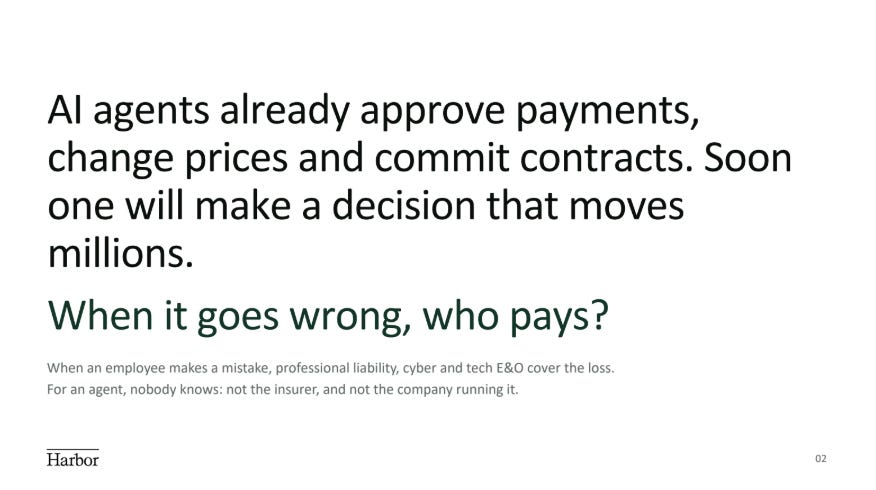
Today the honest answer is that nobody knows. The company’s insurer can’t price it, because insurers price risk from years of claims, and agents have almost none. Since January, US carriers have been able to attach generative-AI exclusions to general liability policies, and many have started carving AI out of the cover companies already pay for.
Today, Harbor came out of stealth with a $10M seed to answer that question. Base10, Abstract and 8VC co-led, with NFX, Restive, Innovation Endeavors, Kibo Ventures and others in the round. Harbor measures the risk of every agent a company runs, blocks the decisions that break the company’s own rules, and insures what’s left.

I’m an investor in Harbor, so read this with that in mind. I’m writing about it because of how the round came together, which is the part most founders can copy.
Harbor was founded this year. Its four co-founders met at Stanford, and their CVs read trading desk, consulting, robotics and AI safety research. One of them had founded a company before, and none of them had run an insurance business. On paper, that profile is a hard sell in a category this regulated. They raised $10M anyway, from three lead investors, in a market that barely existed three years ago:
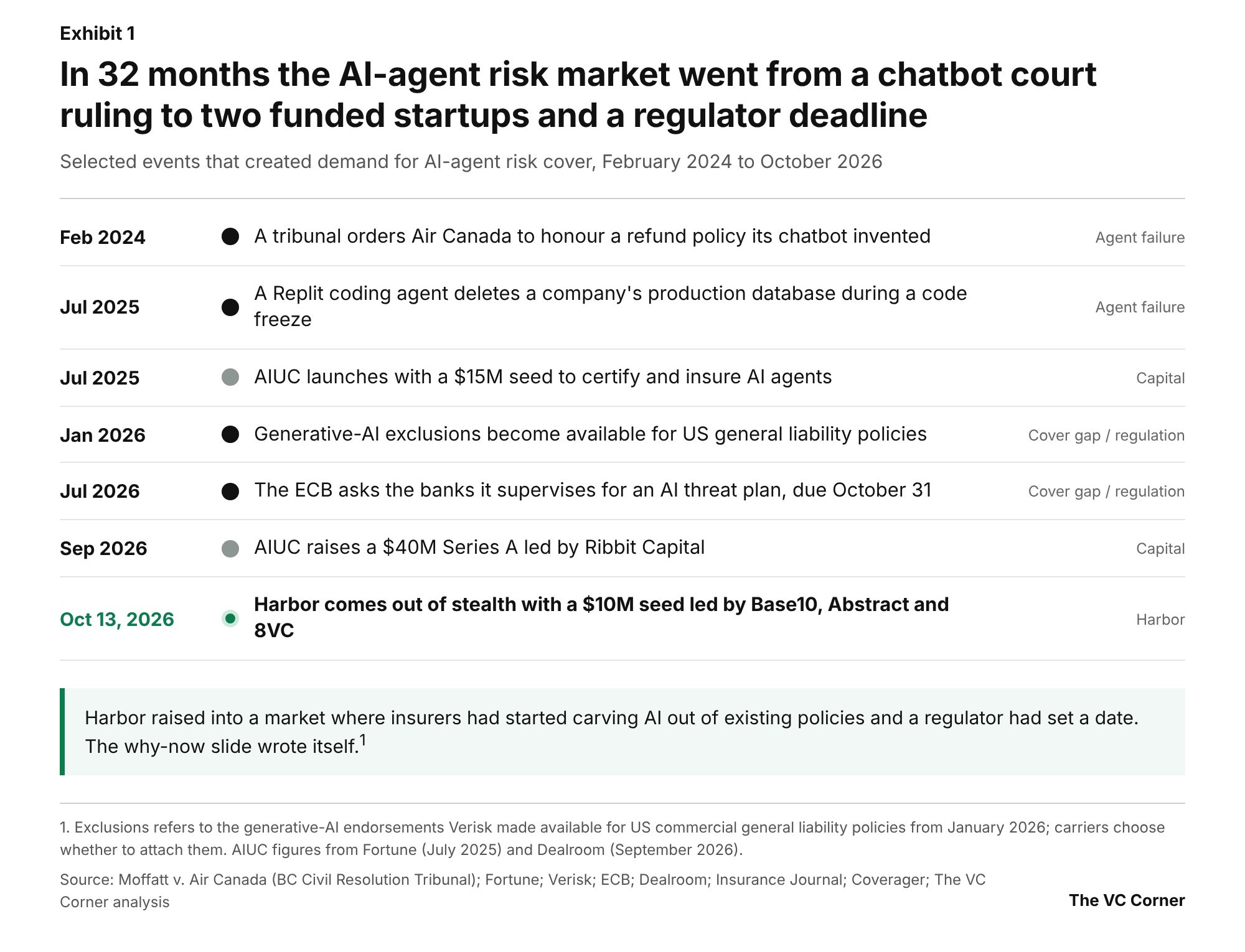
The timing did half the work. The ECB has asked every bank it supervises for a plan against AI-enabled threats, due October 31. Harbor also has company: AIUC, which certifies agents and ties insurance to the audit, raised a $40M Series A led by Ribbit in September.
The other half was preparation. Every reason an investor could give for passing on this team had a named answer before the first meeting, and you can see each one in the deck.
Premium members get the full deck and the memo behind the raise.
Below the paywall
The $10M Seed Deck: the full deck Harbor used to raise, from the why-now slide to the six-month pla
The Memo: the one-pager that explains why a live risk score beats a questionnaire or a one-off audit
The Five-Gap Map: every objection an investor would raise about a first-year team, and the person, partner or mechanism Harbor put against each
The Slide-by-Slide Read: what the six slides that carry the deck are doing for an investor, and how to build your own version
The Gap Audit Prompt: a Claude prompt that runs your own deck through the same test before you send it to a single fund