

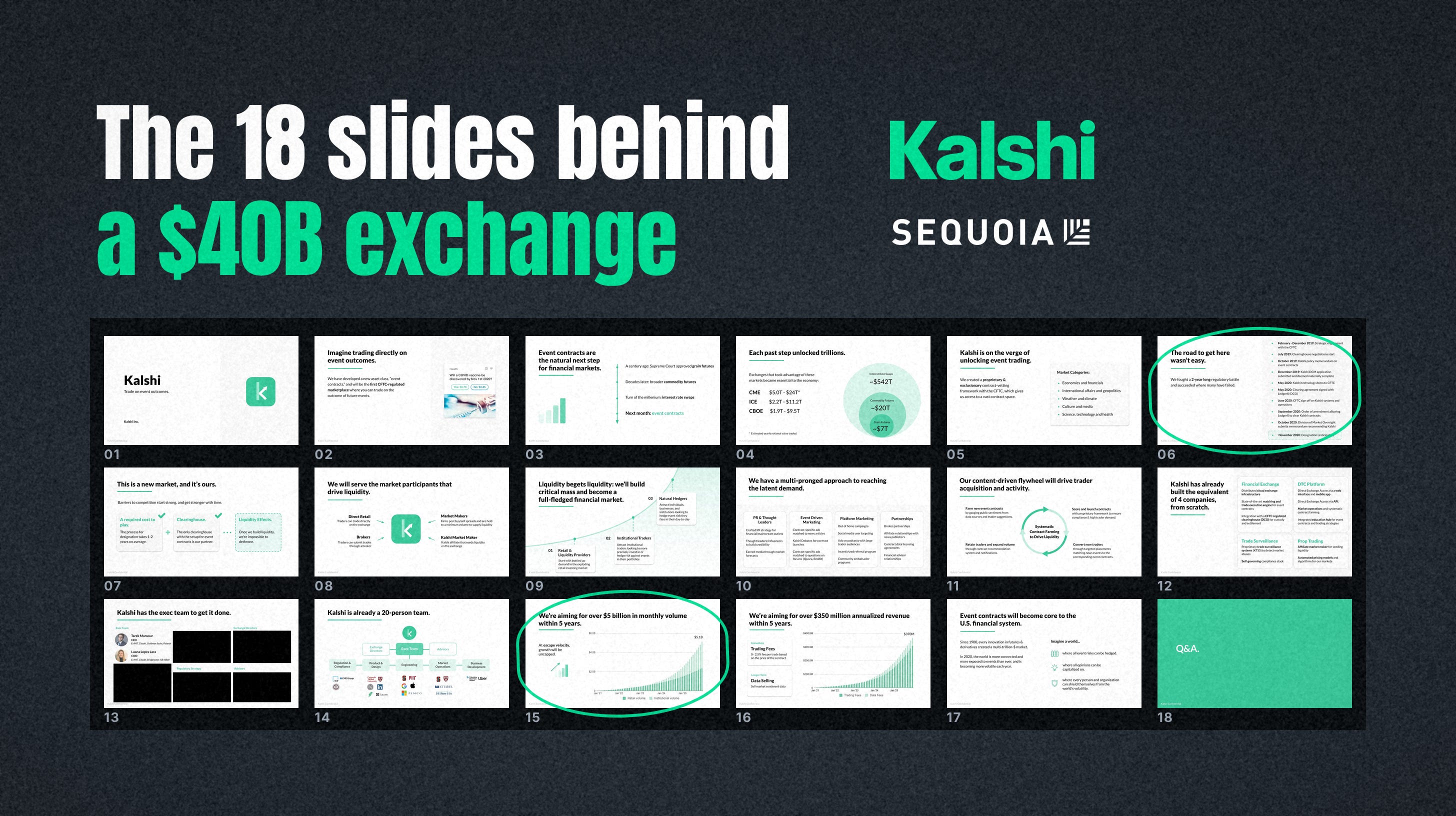
On October 29, Kalshi (YC) raised a $1B Series G at a $40B post-money valuation, co-led by Sequoia and Wellington. 3 days later, I’m sharing the entire Series A deck that Tarek Mansour and Luana Lopes Lara used to pitch Sequoia in 2020.
The 18 slides include a hockey-stick chart and a founder headshot Alfred calls “finance intern” quality, and they called the company’s next 5 years with striking accuracy.
This issue covers the rounds and the volume against Polymarket, then every slide of the deck with what to copy.
The rounds: $2B to $40B in 16 months
Kalshi raised a $30M Series A led by Sequoia in February 2021, right after the CFTC designated it as a contract market. A $70M round followed in November 2021, per an SEC Form D. Then came a quiet stretch of more than 3 years before the next announced round.
The money arrived all at once. Paradigm led a $185M Series C at $2B in June 2025. Sequoia and a16z co-led $300M at $5B in October 2025. The Series C lead returned to lead $1B at $11B in December 2025, Coatue led $1B at $22B in May 2026, and Sequoia and Wellington closed the Series G at $40B on October 29.
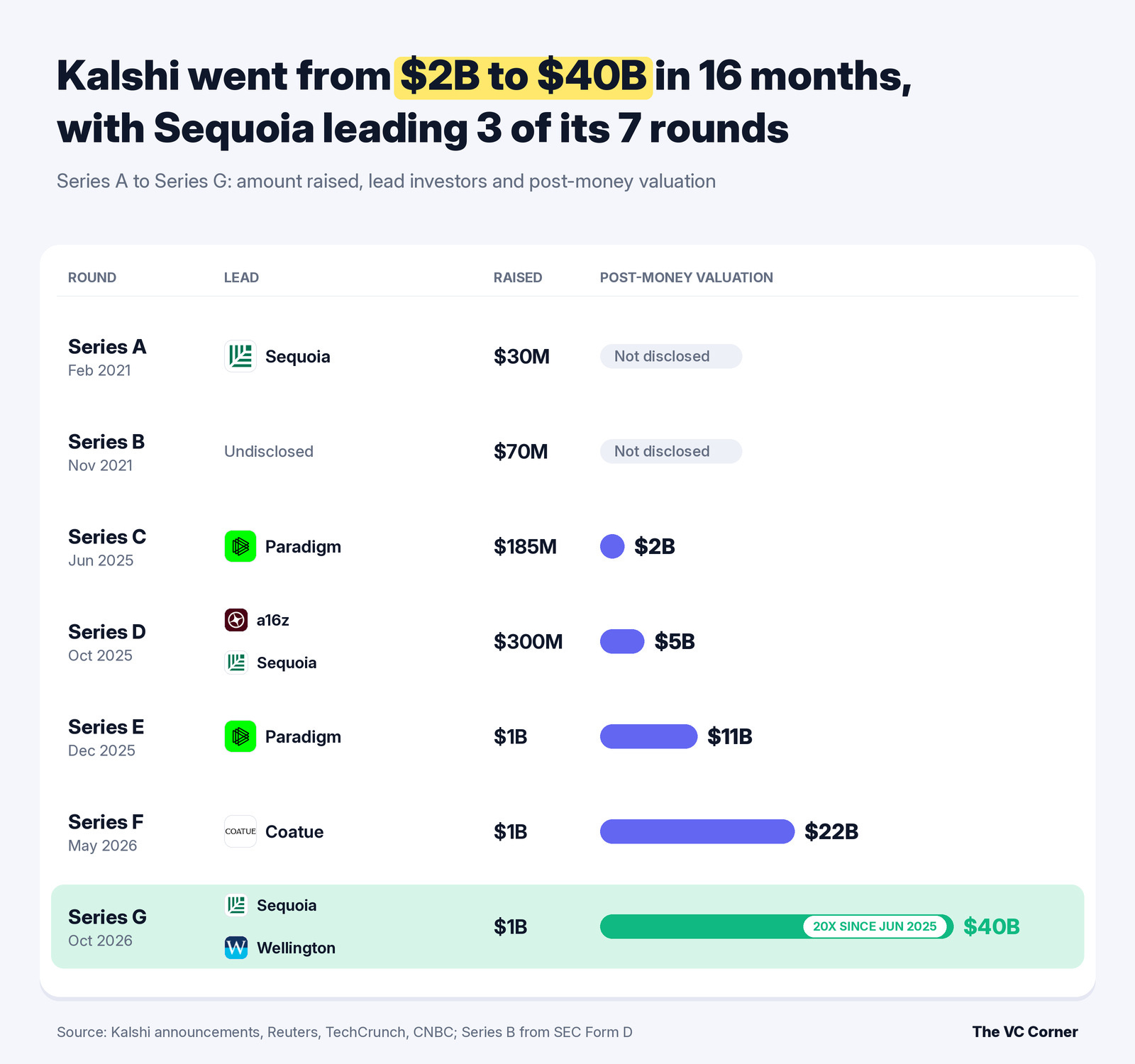
The pattern worth studying is Sequoia’s. Alfred led the Series A and joined the board, and Sequoia then put more money in at $5B and again at $40B. Our 16 Unicorn Pitch Decks issue collects more early decks from companies that went on to billion-dollar valuations.
The volume: level with Polymarket a year ago, nearly 5x now
In October 2025, Kalshi traded $4.4B in contracts and Polymarket traded $4.1B, per DeFi Rate. One year later, Kalshi traded $97.8B in a single month, a record, while Polymarket’s international exchange and its new US exchange together did $20.2B.
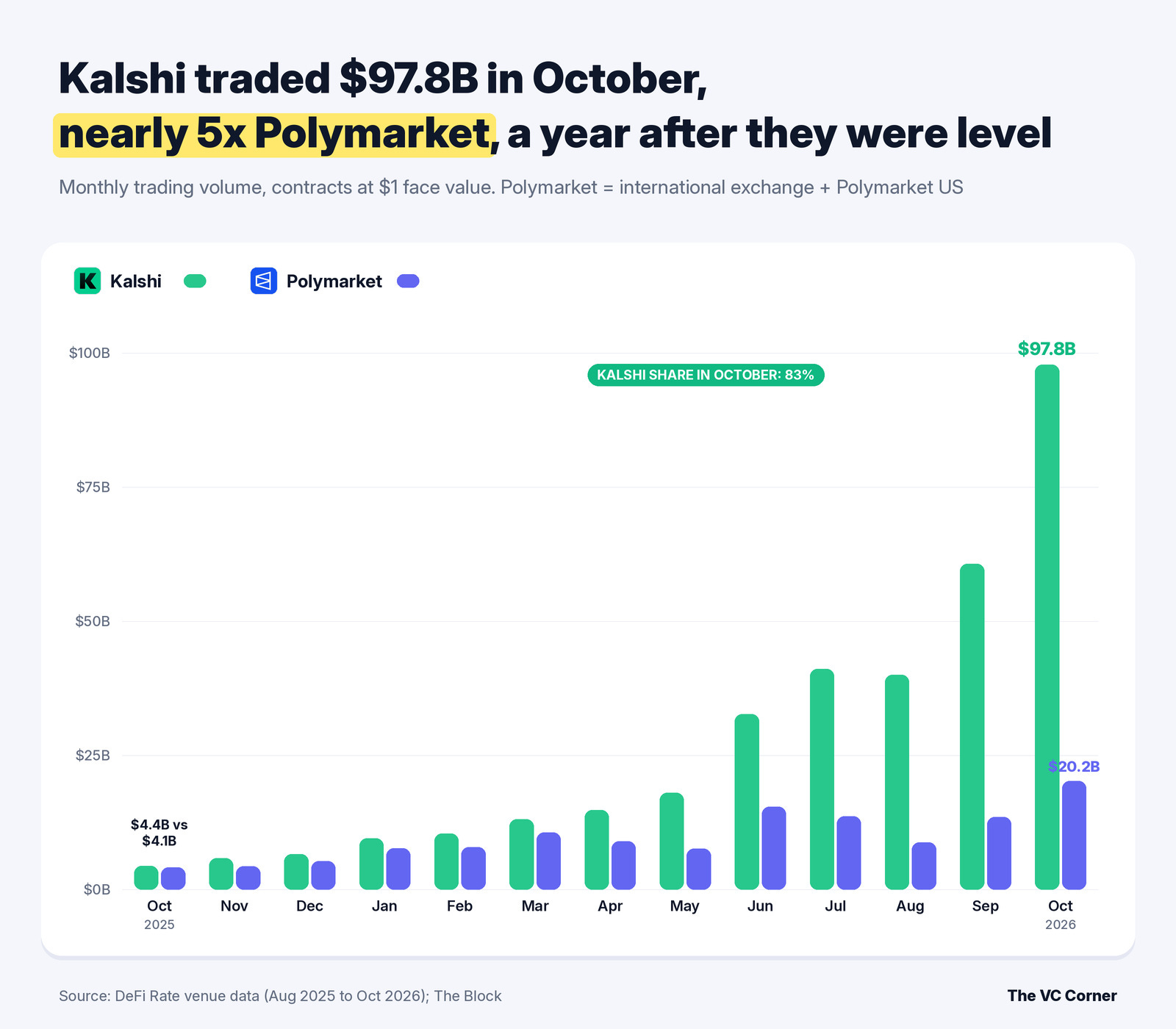
The valuation gap follows the volume. Polymarket raised $1B at $21B in August, per Bloomberg, and Kalshi is now valued at almost twice that. Kalshi says its annualized volume has passed $1 trillion across prediction markets, commodities, crypto and perpetual futures.
The regulated US market is where the growth went. The Block notes that Kalshi and Polymarket US, both CFTC-regulated, took 95.6% of October’s volume across the 3 venues. Kalshi chose that path in 2018, and the deck shows how deliberately.
Slide 1: The title
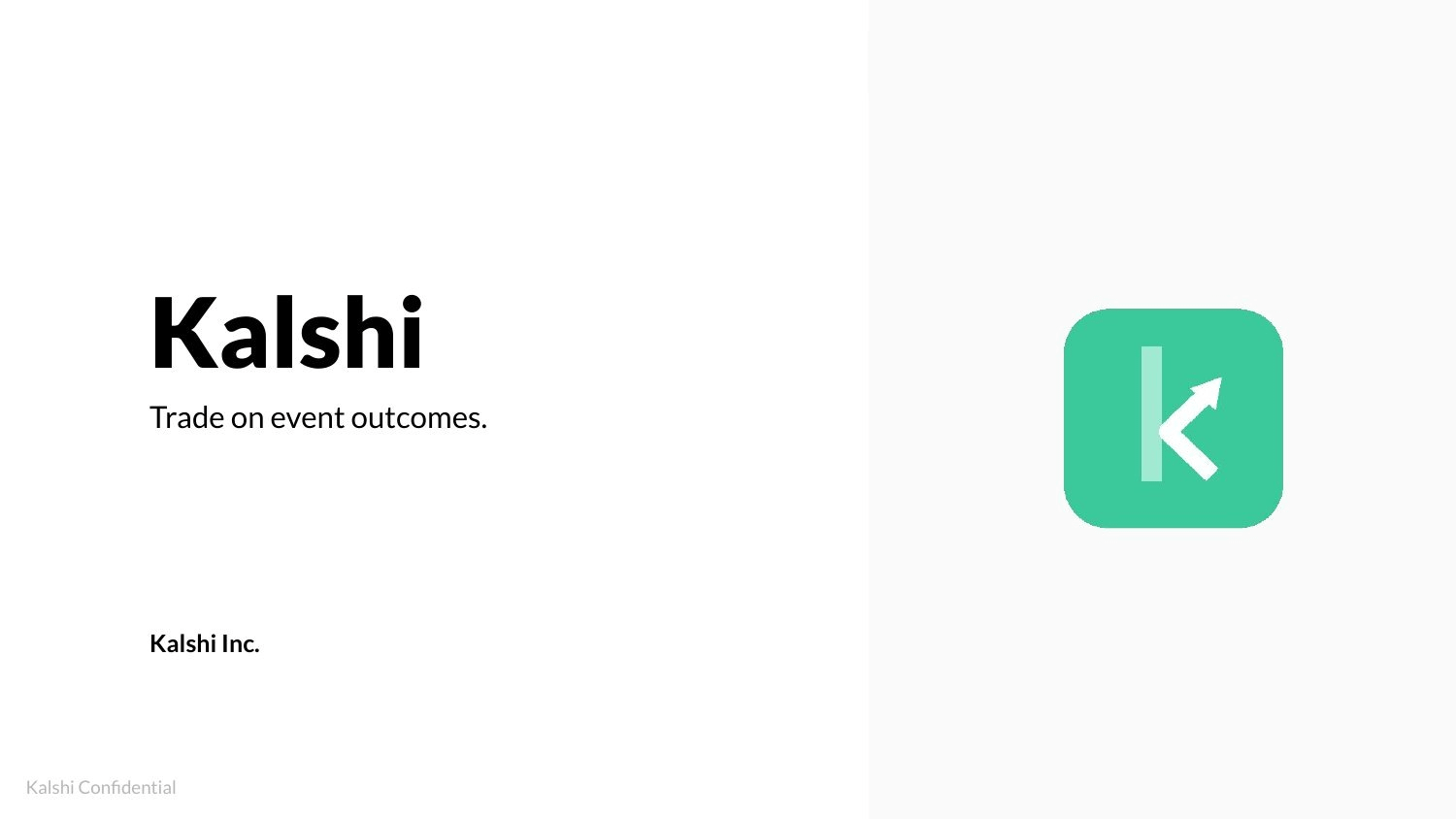
Beside the logo, the title slide reads “Trade on event outcomes.” That 4-word tagline does the job most founders spread across several slides, naming both the action and the asset.
Compare it with the taglines in our AI Pitch Decks collection, where the strongest openers also fit the whole company into one short sentence. If your tagline needs a comma, try again.
Keep reading:
Slides 2 to 18 are below for premium members, each with the lesson to copy, plus a forecast-vs-reality table and a 10-question scorecard to run your own deck through before you pitch.
Inside the premium edition:
All 17 remaining slides of the Kalshi Series A deck, each one analyzed
The hockey-stick chart set against what Kalshi actually traded
A forecast-vs-reality table: 5 promises from the 2020 deck checked against the data
The Kalshi Scorecard: 10 questions to run on your own deck before the first meeting
Get 50% off for 1 year. Premium also opens the full library: the Resources hub, every Pitch Deck teardown, the Financial Models and all Investor Lists.