

TL;DR
The model: Opus 5.5 performs at Fable 5.1 level on most work and costs 40% less to run than Opus 5. Output is 30% faster, and a new fast mode hits 2.5x.
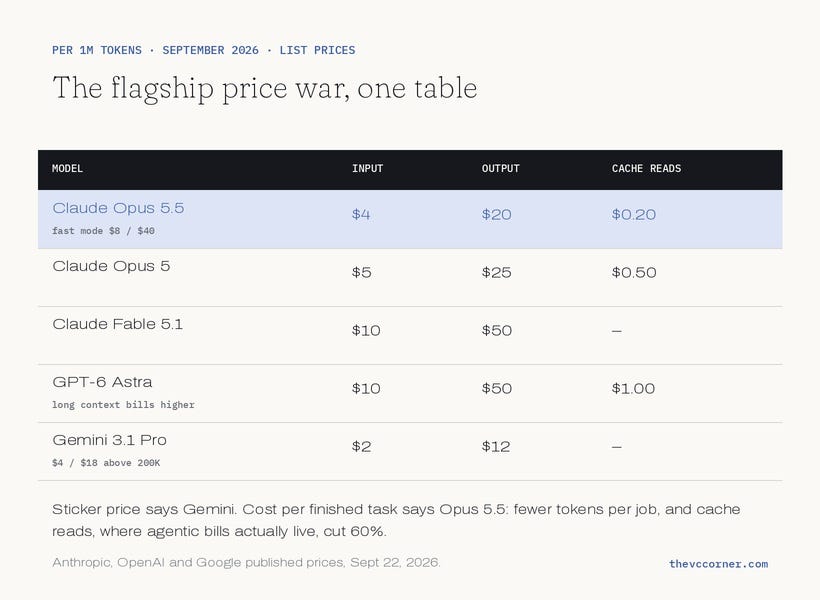
The price: $4 per million input tokens, $20 output, and cache reads at $0.20, a 60% cut. Cache reads are where agentic bills actually live.
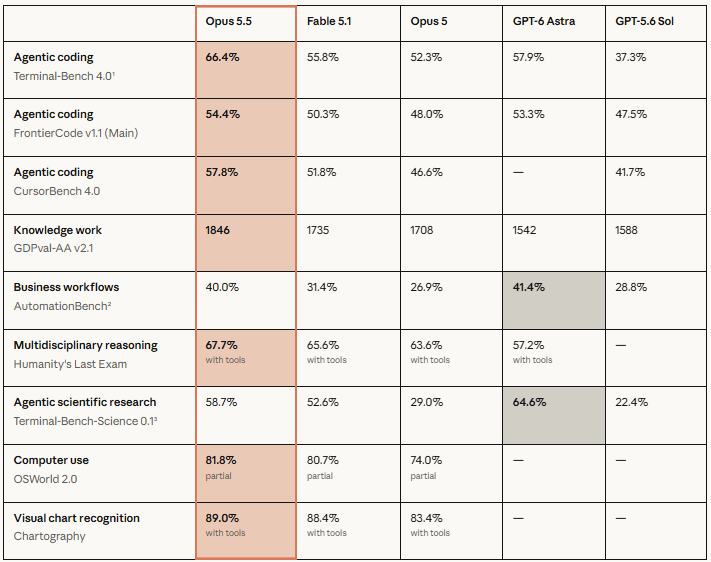
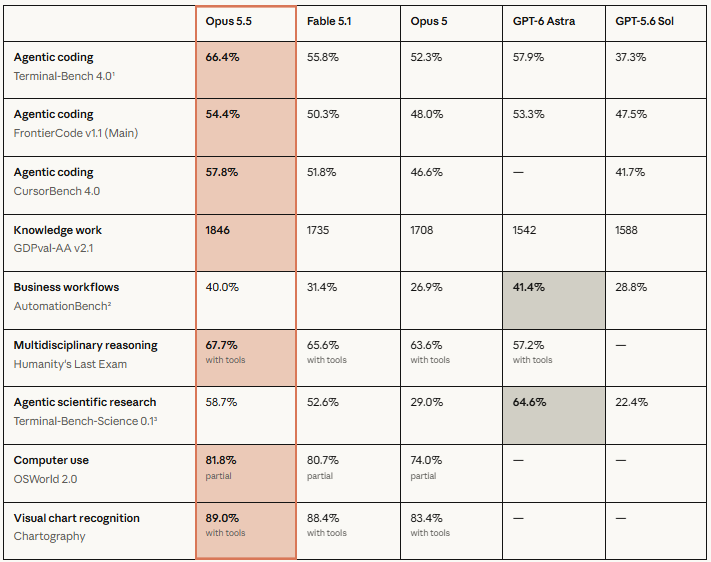
The insight: the default effort is now medium, and medium beats GPT-6 Astra at max on knowledge work at roughly a fifth of the cost per task. The cheap setting on the new model outperforms the expensive setting on the competition.
The catch: benchmark margins mean less than they look, some cyber and bio prompts quietly reroute to older models, and API accounts created after August 31 hit new friction.
I run a content and data operation on Claude every day, so I read this launch the way you read a change to your own cost structure. Three times.
Here is what stuck. Anthropic’s internal test asked models to research a company’s quarterly numbers on a copy of the web where the earnings release was hard to find, then graded every figure and quote against sources. Sixteen of eighteen Opus 5.5 reports passed a bar where a single invented number fails you. Fable 5.1 and Opus 5 passed zero.
For fundraising, that result matters more than any leaderboard, because a raise is research, modeling, and memos, and one fake TAM figure ends a partner meeting. The work a raise is made of just became cheaper and considerably harder to catch lying.
And the economics compound. On GDPval, the knowledge-work benchmark across 44 occupations, Opus 5.5 at its default medium effort beats GPT-6 Astra at max effort for about a fifth of the cost per task. Artificial Analysis put it at the top of its Intelligence Index at 58, five points ahead of both Astra and Fable 5.1.
One credit to Anthropic before the skepticism: their own launch post says benchmark margins “have become a less reliable guide to real-world differences” and that the gap with Fable 5.1 is narrower than the charts suggest. A vendor grading its own homework and then telling you to discount the grade is rare, and the humility is the part I’d trust.
The part I’d watch: several benchmark runs had production safeguards on, so cyber and biology tasks rerouted to older models mid-eval, and the same rerouting applies to your real prompts in those areas. Astra still wins AutomationBench and Terminal-Bench-Science. This is a lead with a counterattack coming, priced accordingly by everyone involved.
Here is one workflow from the playbook, free, so you can feel the thing before deciding:
The investor update, at low effort:
Write my monthly investor update. Structure: TL;DR in 3 lines, key metrics table (MoM and vs plan), wins, lowlights told honestly, asks (intros, hires, advice), and runway. Here is my data: [paste]. Rules: no hype words, numbers before adjectives, lowlights get equal weight to wins. Under 500 words.
Cost per run at today’s prices: roughly $0.20 to $0.40. That used to be an hour you dreaded monthly.
Six more of those sit below, covering the entire raise, each with its effort setting and cost.
Below the paywall
The six remaining workflows, copy-paste prompts included: investor list building and scoring, investor research and enrichment, the Excel financial model, the hostile data room audit, the verified market memo, and the deck teardown
The effort dial decision guide, with the finding nobody expected: Deloitte caught more bugs at Opus 5.5’s lowest setting than Opus 5 found at high
What changed for daily subscribers: the usage limit increase, the saveable rate-limit reset, fast mode
The honest caveats that will bite API builders this week
A membership also opens the full fundraising library: 10,000+ named investors across every list, the 375 Prompt Book for Fundraising, 200+ pitch decks that raised capital, the financial models library, and the investor outreach system every workflow below feeds into. For the deeper Claude technique stack, the power user guide and context engineering live on The AI Corner.
The playbook
Two rules before the prompts: