

On a Friday evening in January 2011, Y Combinator called its newest batch into the office in Mountain View without saying why. SV Angel’s team stood in the room, and Yuri Milner joined by video from Europe. Then they made an offer to all 43 startups at once: $150,000 each, on a convertible note with no valuation cap and no discount, before Milner had seen most of the companies. By 3 p.m. the next day, 39 had signed.
They called it the Start Fund. Milner’s DST had put $200 million into Facebook two years earlier, and here he was buying YC’s filter instead of any single startup. SV Angel’s David Lee put it plainly to TechCrunch the next day.
“These aren’t gifts, we’re not a charity.” David Lee, SV Angel, January 2011
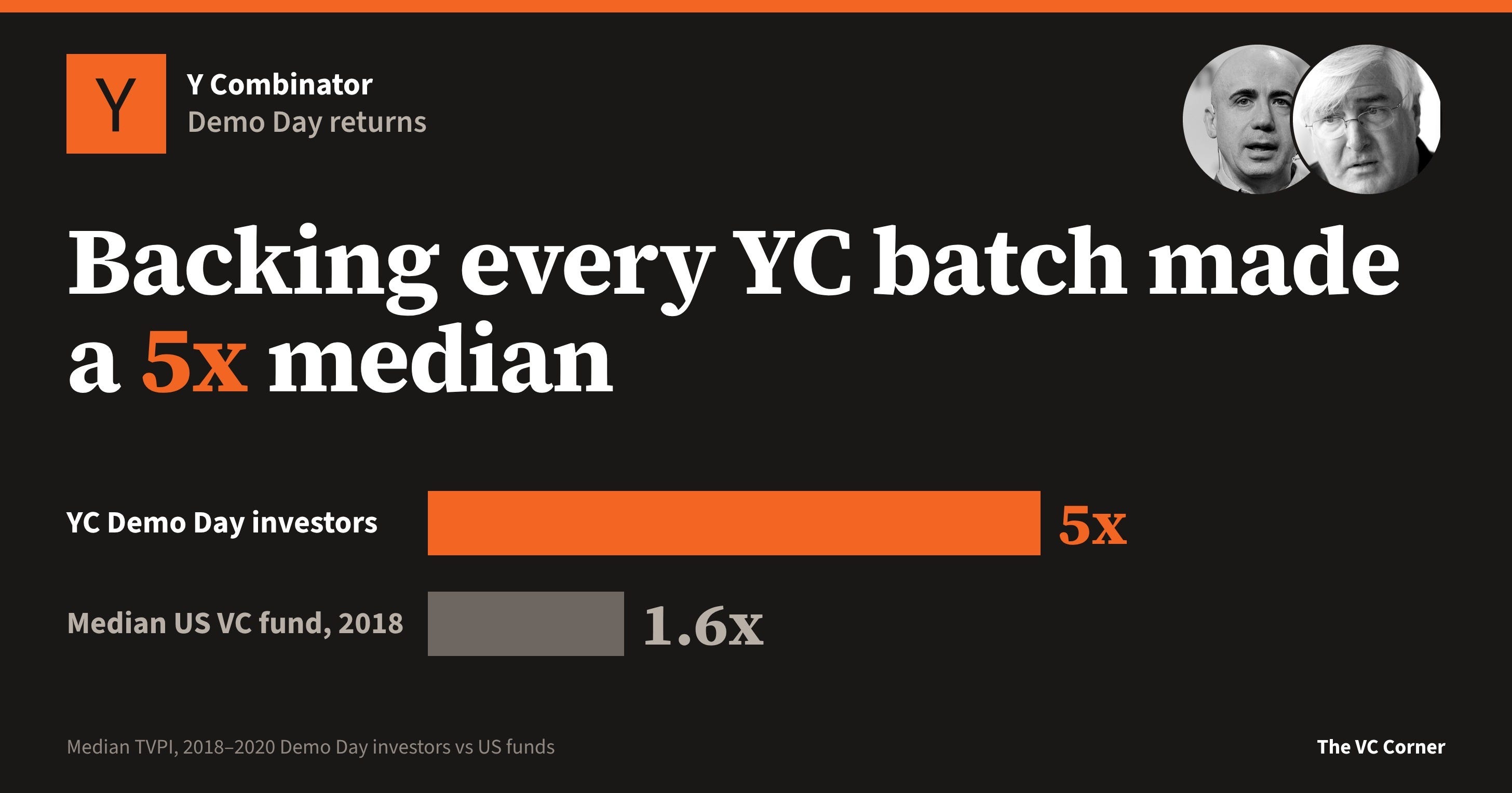
Fifteen years later we can check the bet. Investors who backed at least 3 startups at every YC Demo Day from 2018 to 2020 made a 5x median multiple, according to YC’s own study. The median venture fund of those years made 1.1x to 1.6x, per Carta.
I have skin in this. Guillermo Flor and I run GR Angel, and we back 5 startups from every YC batch, so I wanted to know whether the data supports spreading bets across batches or whether Milner just got lucky with timing. This is what I found, plus a playbook to do it yourself.
The Start Fund, batch by batch
Milner’s offer ran for four batches, from Winter 2011 to Summer 2012. In November 2012 YC replaced it with YC VC: $80,000 per startup, $20,000 each from Milner, a16z, General Catalyst and Maverick. SV Angel stepped out, and Khosla Ventures took Milner’s seat in December 2013.
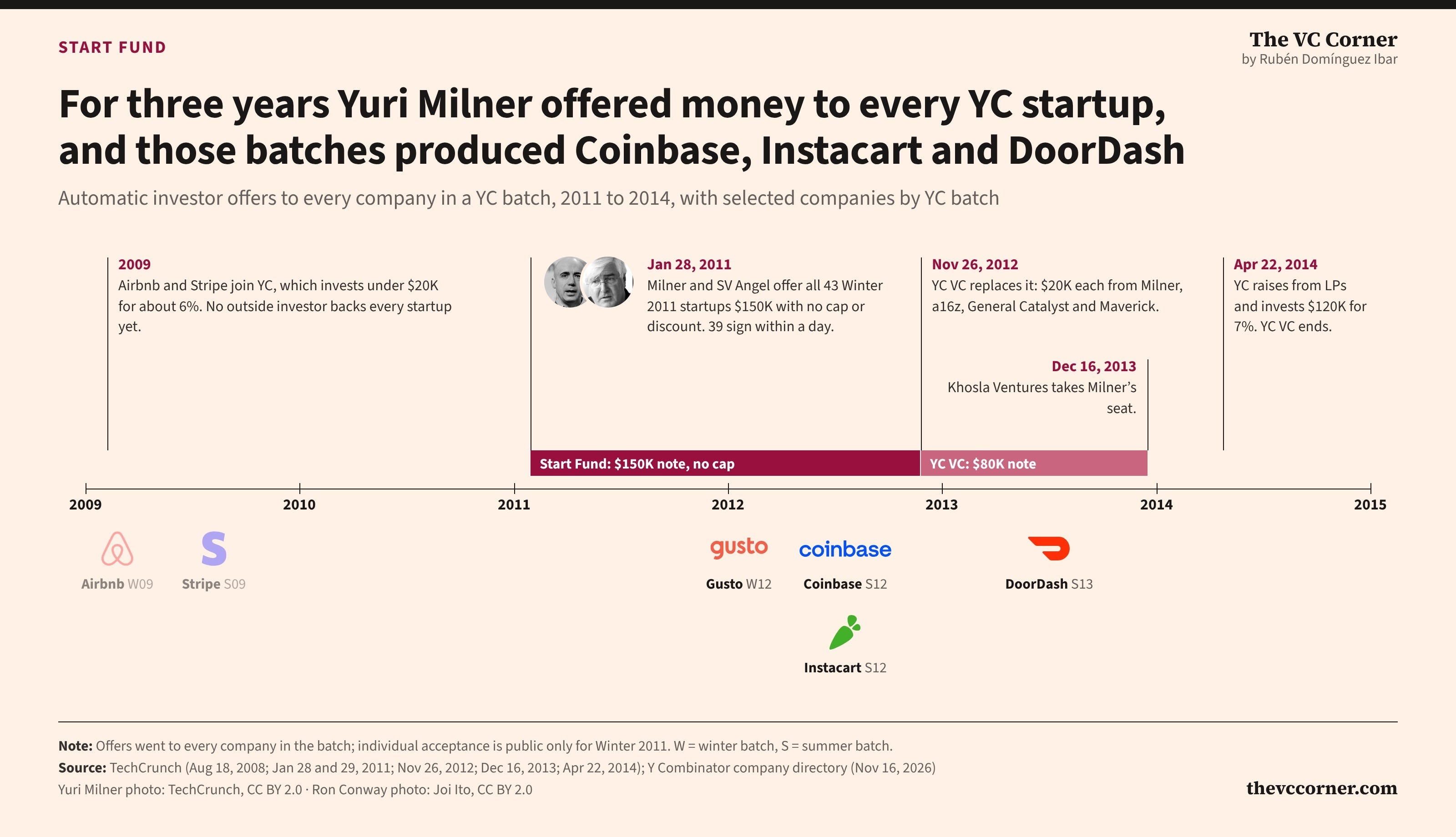
Those batches produced Coinbase and Instacart (both Summer 2012), Gusto (Winter 2012) and DoorDash (Summer 2013).
What a YC startup gets on day one
In 2008 YC invested under $20,000 for about 6%. Milner’s note made the first jump, to about $170,000 per company with YC’s own check. Today YC invests $500,000: $125,000 for 7% on a post-money SAFE plus $375,000 on an uncapped MFN SAFE.
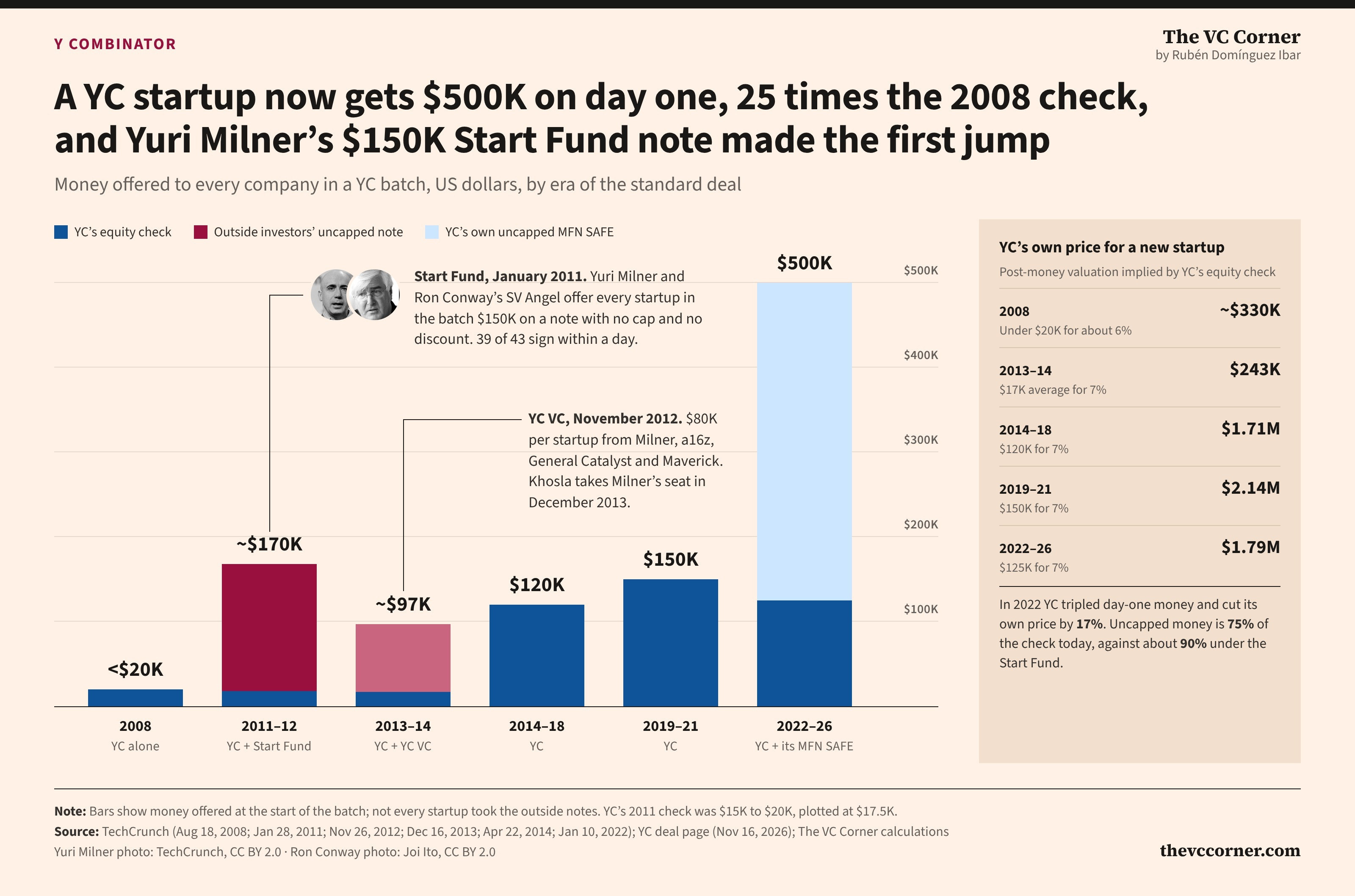
The side box is the part I keep coming back to. When YC moved to $500,000 in January 2022, it tripled the money and cut its own price per startup by 17%, from a $2.14M implied post-money to $1.79M. Three quarters of the check is now uncapped, the same structure Milner used, with YC taking his seat.
The returns
The chart below puts YC’s Demo Day investors next to 2,906 US venture funds tracked by Carta.
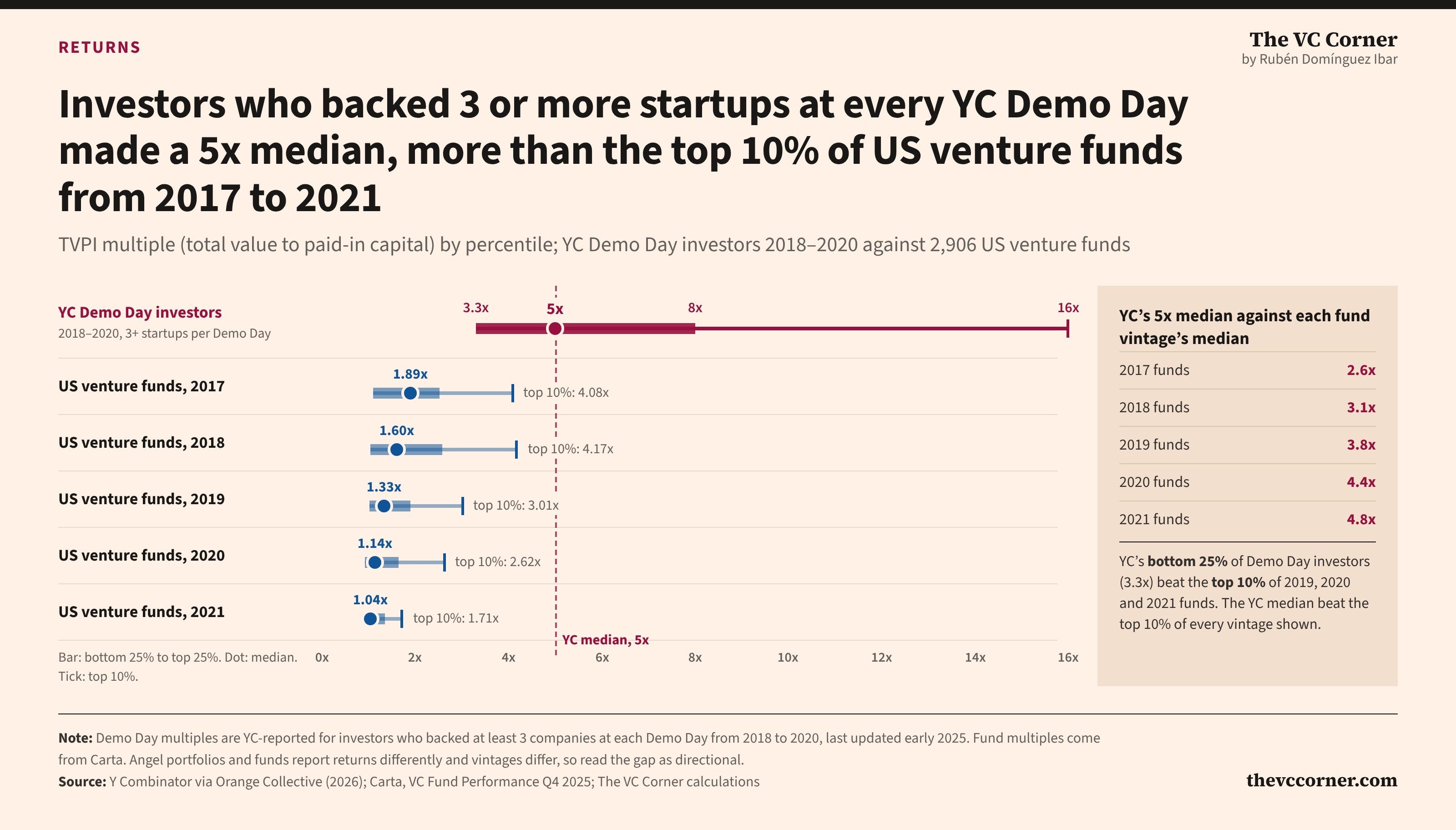
The bottom quarter of YC Demo Day investors made 3.3x. That beats the top 10% of US funds from the 2019, 2020 and 2021 vintages, and the YC median of 5x beats the top 10% of every vintage shown.
Here’s where I’m skeptical. These are YC’s own numbers, repeated by funds that sell YC exposure, and I’d want an independent audit before quoting them in an LP letter. They also compare angel portfolios marked at the latest round against funds reporting after fees, so the gap is wider on paper than in a bank account. I still think the direction holds, because the independent data points the same way.
The batch you pick matters a lot
AngelList’s Demo Day funds publish net returns by batch. The Winter 2019 fund sits at 11.45x, Winter 2018 at 9.88x, and Summer 2016 at 0.47x. Same strategy, and the outcome swung 24-fold depending on which six months you showed up. Milner’s edge was staying in every batch, which is the part most investors skip.
Why the filter works
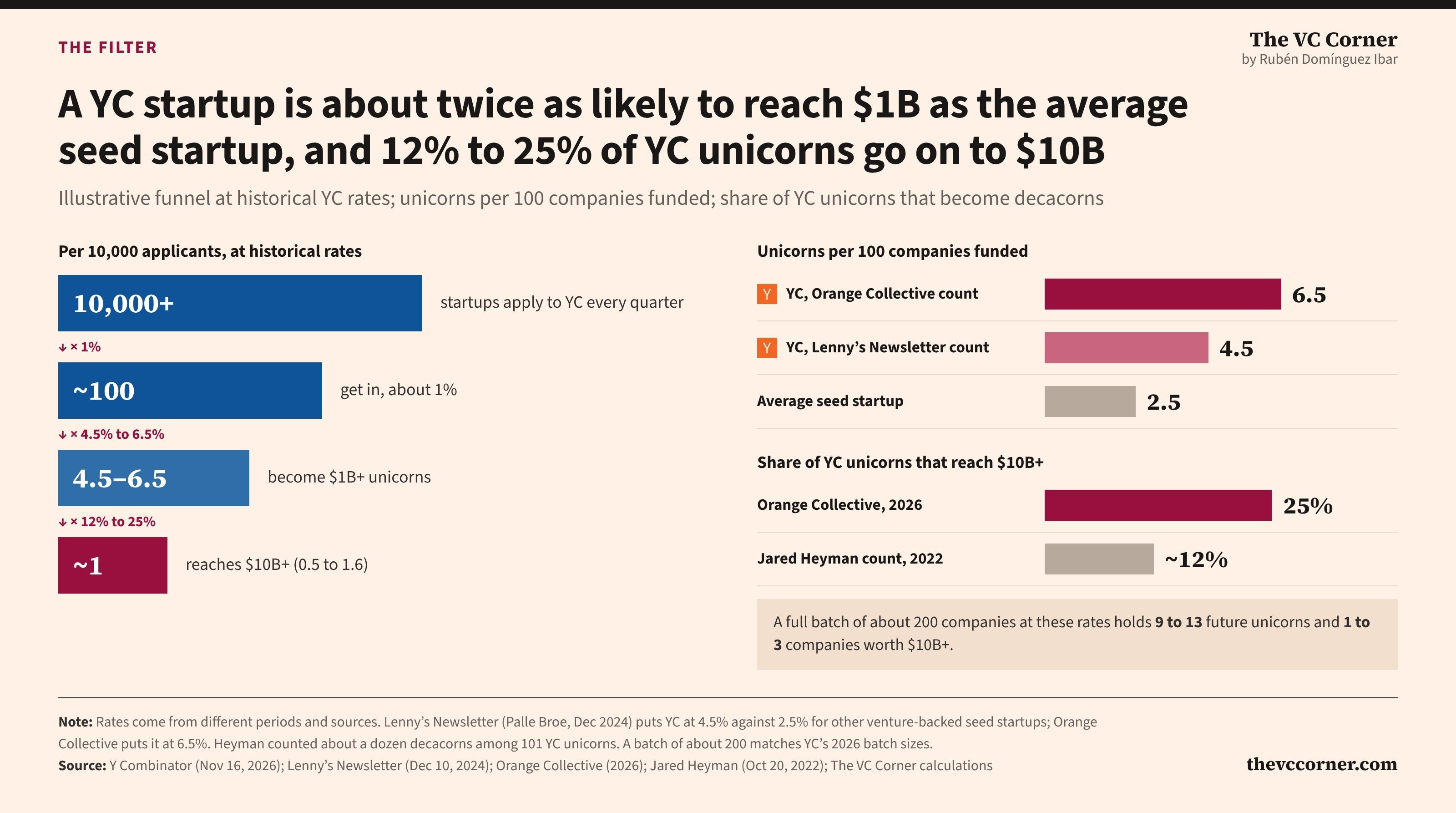
YC says 10,000+ startups apply every quarter and about 1% get in. Of the ones that get in, 4.5% become unicorns by Palle Broe’s count in Lenny’s Newsletter and 6.5% by Orange Collective’s, against 2.5% for the average seed startup.
The decacorn question splits the sources most. Orange Collective says 25% of YC unicorns reach $10B. Jared Heyman’s 2022 count found about a dozen among 101 unicorns, closer to 12%.
Heyman also found that unicorns produce about 93% of the cash returned to YC seed investors. Every return in this asset class comes from a handful of companies per batch, and you have to own them to get it.
An investor who skips a batch can miss the one company that pays for the decade.
Get the YC Index Playbook
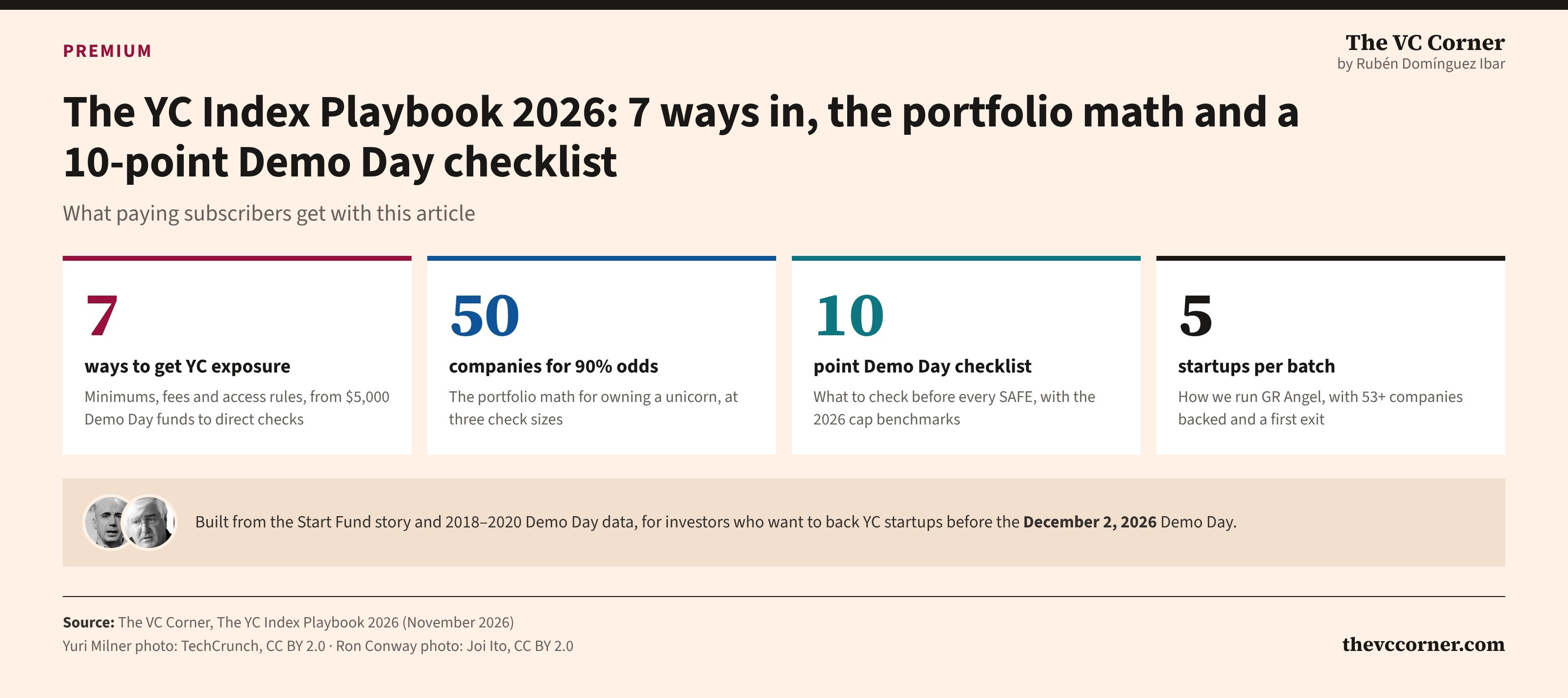
The free half shows that backing whole batches worked. The playbook shows how to do it with your own money before the Fall 2026 Demo Day on December 2.
7 ways to get YC exposure in 2026, with minimums, fees, access rules and who each one fits, from $5,000 Demo Day funds to direct checks
The portfolio math: how many YC companies you need to hold for a 50%, 75% or 90% chance of owning a unicorn, and what it costs at three check sizes
The 10-point Demo Day checklist to run before every SAFE, with the 2026 cap benchmarks
How we run GR Angel, 5 startups per batch, with 53+ companies backed and a first exit
Premium also gets you 10,000+ investors in our investor lists, every model in our financial models library and the decks in our pitch deck library.
Cancel anytime. First subscribers get 50% off forever.