

What the Best AI Companies of the Future Will Look Like
For years, the old SaaS bargain was simple.
You spent eighteen months building a clunky database, locked clients into a multi-year contract, and watched the cash roll in while competitors tried to catch up.
It was boring, but it worked.
Today, that bargain is gone. Build something great on Monday and a competitor clones it by Wednesday. Your technical moat has evaporated overnight.
To survive, founders are acting less like engineers and more like creative directors. Selling a vibe, a point of view, a feeling.
It sounds incredibly glamorous. Like running a high-end fashion house.
One thing before we get into it:
Most founders already have a CPA. The problem is what the CPA is NOT doing.
They filed on time. Then went quiet until March. By then the options are gone:
▫️ PTE elections missed in Q2
▫️ S-corp savings you couldn't claim without an entity in place
▫️ Retirement contributions nobody mentioned
The moves that reduce your tax bill happen now. Gelt gives you a team of tax strategists who reach out to you, backed by AI, built for founders with real income complexity.
Taking on new clients this quarter:
Back to the creative director problem. Because there is a catch nobody talks about.
Fashion houses burn through creative directors like cheap matches.
This new era of AI is beautiful, fast, and far more dangerous than it looks.
Table of Contents
The Death of the Software Moat
Taste Is the Price of Entry, Not the Prize
The Creative Director Has a Body Count
The Forty-Year Cycle, Compressed Into a Quarter
Brands Die When the Ground Moves
The Only Advantage AI Cannot Copy
1. The Death of the Software Moat
How AI Killed Your Moat Before It Ever Touched Your Jobs
Start with what AI destroyed, because it was never jobs or code first. The first thing AI destroyed was defensibility.
For two decades the durable software company rested on a handful of advantages that took real time to build.
Proprietary technology, integration depth, a data advantage and the sheer inertia of an installed base.
AI corrodes most of these at once.
When the hard technical work compresses into a prompt and a weekend, proprietary technology stops being a wall and becomes a head start measured in months.
Even the data advantage, long treated as the deepest defence in software, looks thinner now, because a competitor with a strong base model and a narrow, well-chosen dataset can close gaps that used to take years to accumulate.
Your Competitive Edge Now Expires in a Quarter
Aditya Agarwal and Elad Gil, both of whom have built and backed software at scale, recently argued that incumbent reaction times have gone from five years to five months. A feature that used to buy you a multi-year lead now buys a quarter.
That single number reorders everything.
If your advantage decays in a quarter, you cannot win by building one defensible thing and harvesting it for a decade. You have to keep producing, season after season, the way a fashion house produces collections.
The investor Jack Cantillon recently put this plainly. The technology company is starting to resemble a fashion house and the founder is starting to resemble a creative director. When the product itself stops being a moat, the company that wins is the one with the strongest point of view and the fastest hands.
The truth is that building is no longer the hard part.
Deciding what to build and shipping it before the feeling goes stale, is.
2. Taste Is the Price of Entry, Not the Prize
Why Taste Is Not the Moat You Think It Is
Here is where the optimistic version of this oversells itself.
The argument usually lands on taste as the new moat.
If models are commoditized and anyone can build, then judgment, aesthetic sense, the ability to feel what is right, becomes the thing that separates the winners from everyone else.
The problem is that taste behaves like every other advantage AI touches. It commoditizes too.
Paul Graham, writing recently about the rise and fall of the Swiss watch industry, drew a distinction that is the sharpest tool in this whole conversation.
Branding is centrifugal, always pushing toward being different. Good design is centripetal, pulling toward the right answer and right answers converge.
When Good Judgment Becomes the Minimum Not the Advantage
The implication is uncomfortable for anyone selling taste as a permanent edge.
If good taste means finding the right answer, then as taste spreads through a market, everyone’s answers start to look the same.
The better the judgment everywhere, the less any single act of judgment stands out.
So perhaps taste is not the moat. It becomes the threshold, the bar you clear to be allowed into the game, below which you are dead and above which you no longer stand out for having it.
That reframing changes the founder’s job.
Taste gets you a seat at the table. It does not, on its own, keep you there. Which raises the only question worth asking next.
Once everyone at the table has taste, what keeps you in your chair?
3. The Creative Director Has a Body Count
The fashion-house comparison is more honest than its fans realize, because the creative director is one of the least secure roles in business. Houses burn through them.
John Galliano was the most talented designer of his generation and Dior still pushed him out.
Talent and taste don’t save the chair.
If the founder is the creative director, they inherit that fragility.
The faster you ship, the faster the market judges your last bet, making the role more disposable, not less.
Who owns the house
Creative directors are replaceable because the house is permanent.
Jonathan Anderson can be replaced because Dior cannot. The house owns the ateliers, the supply chain, the heritage and the balance sheet. The director rents the spotlight for as long as collections sell.
Bernard Arnault doesn’t design handbags. He finds talent, hands them infrastructure and keeps the asset when they move on. The creative director is labor. The house is capital.
Atelier or spotlight
In the AI stack, the ateliers, model weights, compute and distribution, are owned by a small number of labs and platforms.
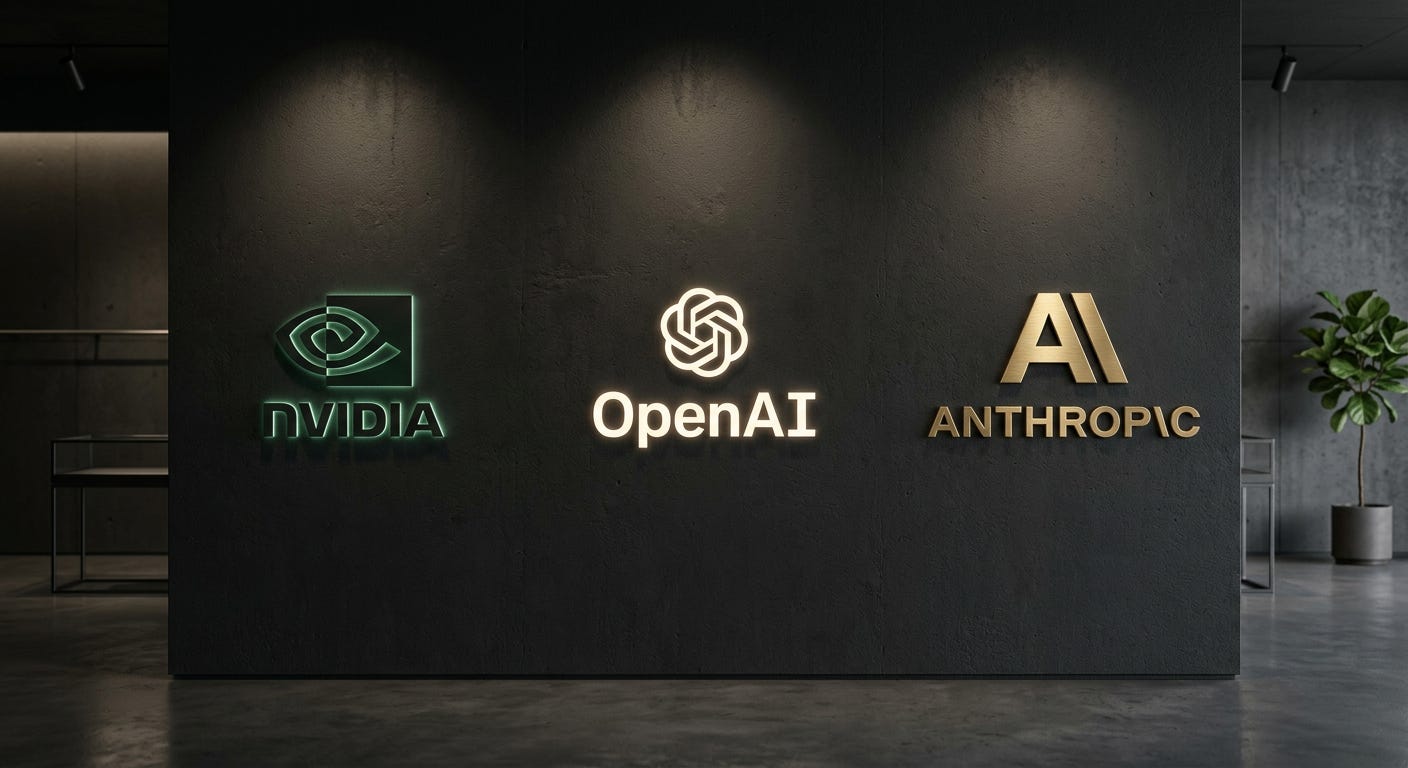
NVIDIA, OpenAI and Anthropic are not fashion houses. They are railroads, built on exactly the capital advantages the thesis claims have died.
So before adopting the creative-director identity, ask one blunt question.
Are you the house, or are you renting space inside someone else’s?
The application layer is glamorous, fast and fragile.
The layer beneath it is patient, capital-heavy and durable.
Confusing the two is how founders end up doing brilliant, exhausting work while someone else keeps the compounding asset.
4. The Forty-Year Cycle, Compressed Into a Quarter
The luxury industry does not just offer a flattering metaphor. It offers a timeline and the timeline is the part founders should study.
Three acts
The Swiss watch industry ran through three distinct eras. A golden age from 1945 to 1970, when watchmakers competed on real merit, thinness and accuracy and made beautiful objects.
Then a crisis from roughly 1970 to 1985, when quartz movements turned accurate timekeeping into a commodity and unit sales fell by almost two-thirds in a single decade. The thing that had been hard, knowing the exact time, became free.
Then a brand age from 1985 onward, when the survivors stopped selling engineering and started selling status.
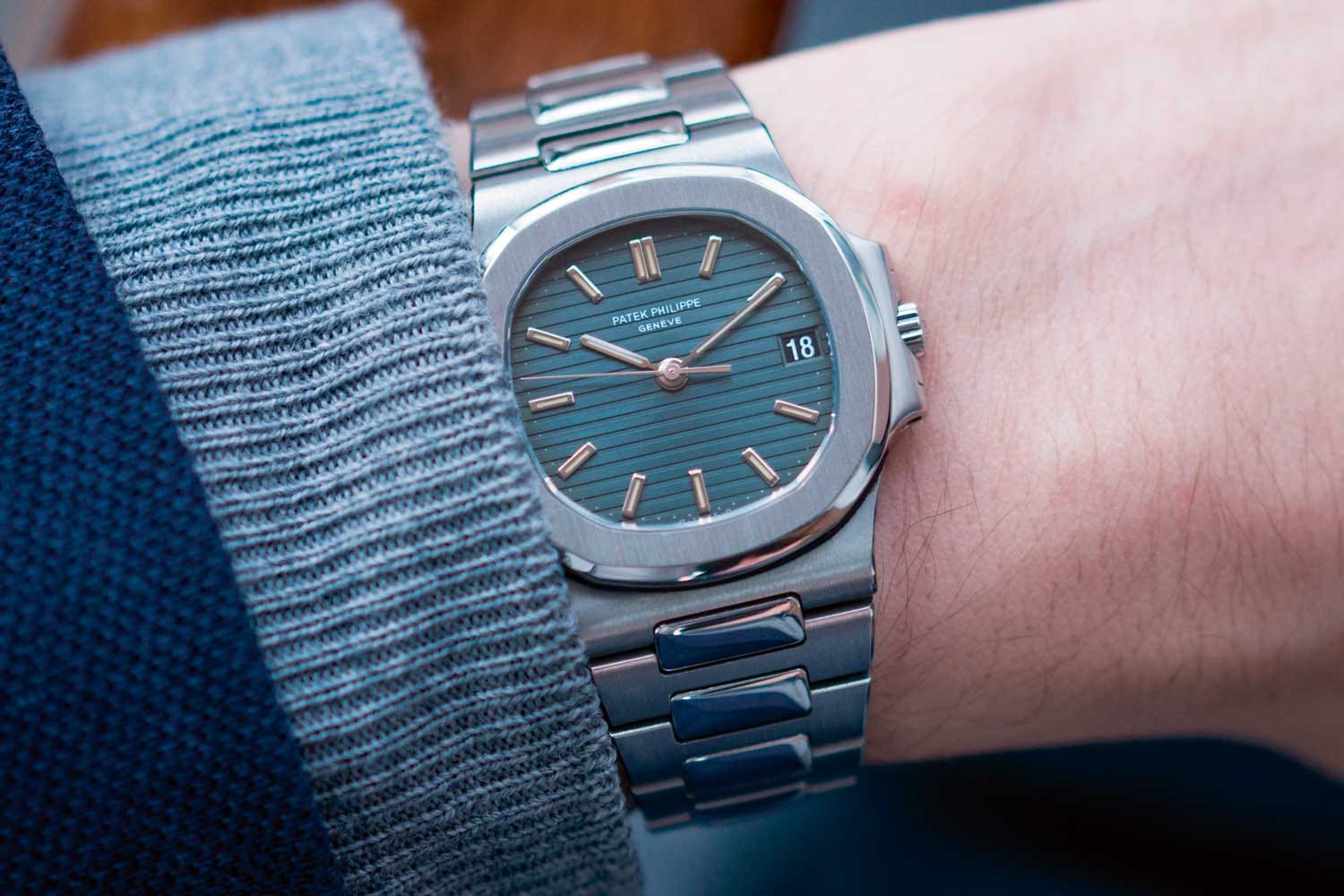
The Patek Philippe Nautilus grew to forty-two millimeters, far larger than the elegant thirty-three-millimeter watches of the golden age, not to work better but to be recognized across a room.
Three acts. A field discovers something real, technology makes it free and the survivors retreat into brand. It took the watchmakers forty years to walk that path.
One product season
Now watch how fast software runs the same loop.
An AI product launches with a real advantage, a model used in a clever new way that works noticeably better. That is its golden age and it might last a few months.
Then the underlying models improve, competitors match it and the advantage that defined the product becomes table stakes.
That is its quartz crisis and it arrives within a quarter or two.
What is left is the experience, the feel, the brand, the reasons to stay that have nothing to do with raw capability. That is its brand age and the founder enters it almost immediately.
Cursor is the live example. It cannot win on the model, because the model is rented and improving for everyone at once, so it competes on feel and integration instead.
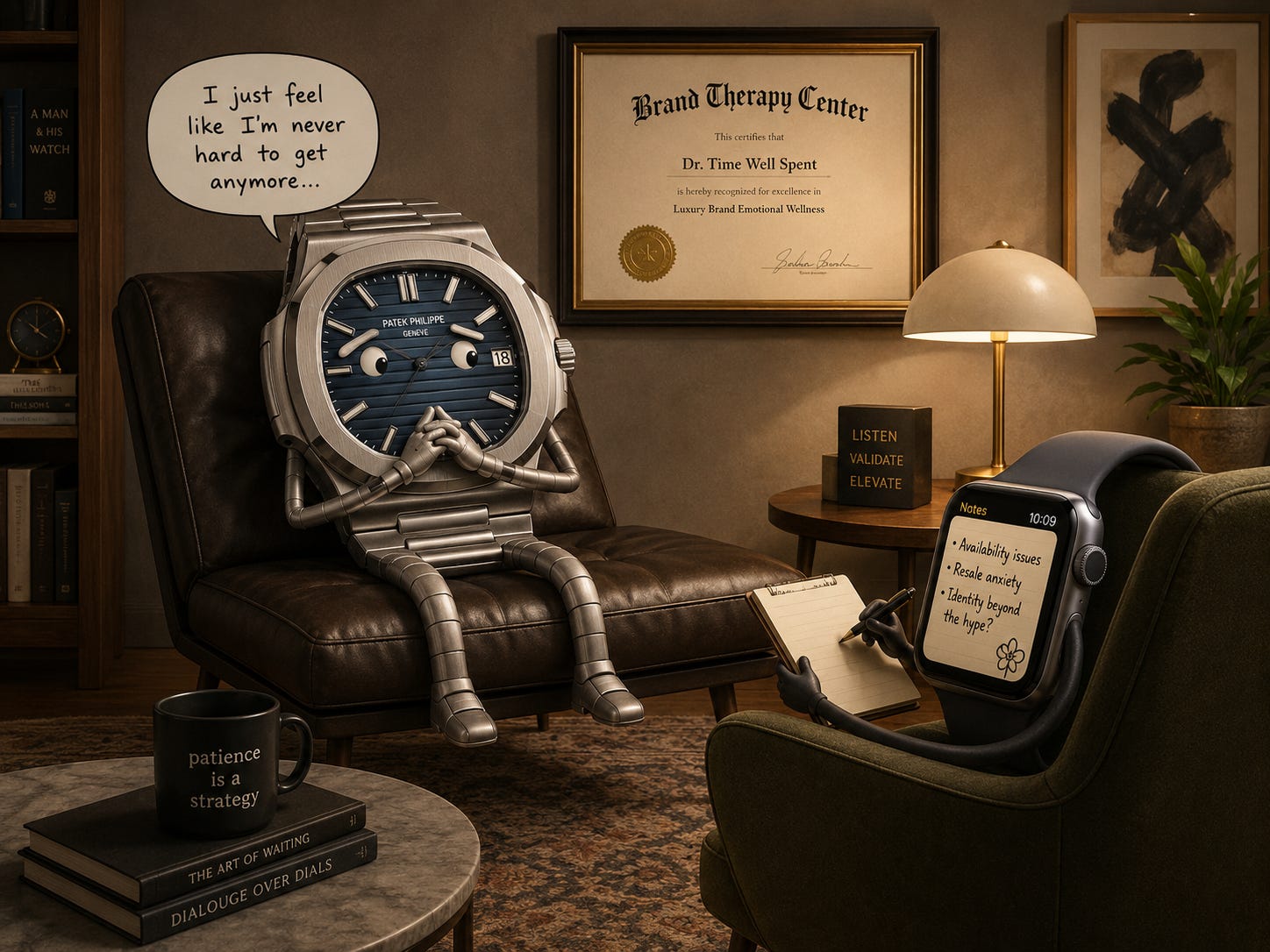
The forty-year journey from instrument to brand now happens inside a single product’s life, sometimes inside a single year.
Nobody tells you this part. You didn’t choose the creative director role.
The market chose it for you. Ship something good, and before you’ve caught your breath, you’re already defending it. Then you do it again, faster than before.
5. Brands Die When the Ground Moves
If the cycle ended at the brand age, the luxury thesis would at least promise a stable destination.
It does not and the reason should worry anyone planning to coast on brand.
The brand age has an expiry date
Graham points out, almost in passing, that the mechanical watch brand age will end the day a second device colonizes the wrist, because nobody wears three things and the mechanical watch becomes an old man object overnight.
He is describing the Apple Watch without naming it.
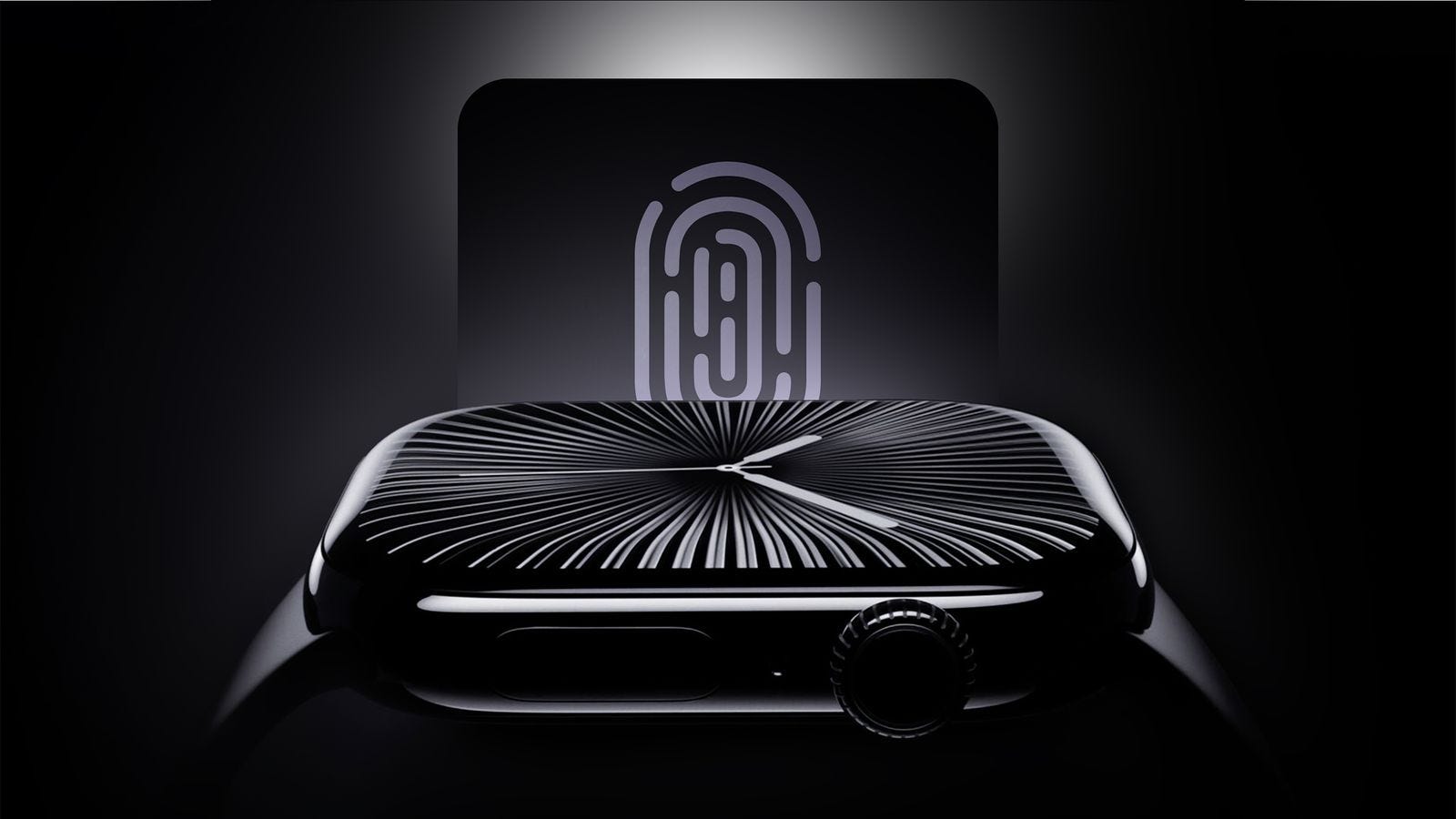
More to the point, he is describing how every brand age ends. A brand does not die from weaker branding.
It dies when a new technology arrives underneath it and resets the whole stack, erasing the difference the brand was standing in for.
The ground under AI never stops moving
This is the part the luxury comparison leaves out. A brand feels permanent right up until the ground moves beneath it and under AI the ground moves constantly.
The substrate your brand sits on, the model, the interface, the device, the very way people summon software, can reset inside the life of one company.
No fashion house is safe from the next quartz crisis. There is only the cycle, now fast enough that a founder lives through the whole of it more than once.
6. The Only Advantage AI Cannot Copy
Strip away the glamour and a short list of durable advantages remains, none of them taste.
What actually survives
Not taste, which is the threshold and commoditizes with everything else. Not brand, which gets reset to zero every time the substrate moves.
Not raw speed, which without direction just delivers you to the brand age faster.
What survives is the ability to keep finding the next real problem before the current one hardens into status and decoration.
The irony underneath the thesis
The founders who last are not the ones with the most refined taste, because by the time you reach the table everyone has it.
They are the ones who grow restless with the thing they just built, who can feel the commoditization coming for their own product before the market does and who go looking for the next genuine problem while the last win is still working.
This is the irony underneath the entire luxury brand thesis.
The advice that sounds most opposed to it, build for real, chase hard problems, ignore the brand games, turns out to be the only way to keep the brand alive.
You protect a brand age by refusing to settle into it.
So the practical takeaway for a founder is not to learn to dress like a creative director. It is to build the kind of company that can survive being one. Own as much of the atelier as you can, treat every product as a collection rather than a fortress and keep your judgment pointed at problems instead of at appearances.
The next great AI company will look like a luxury brand from the outside, all taste and velocity and reinvention.
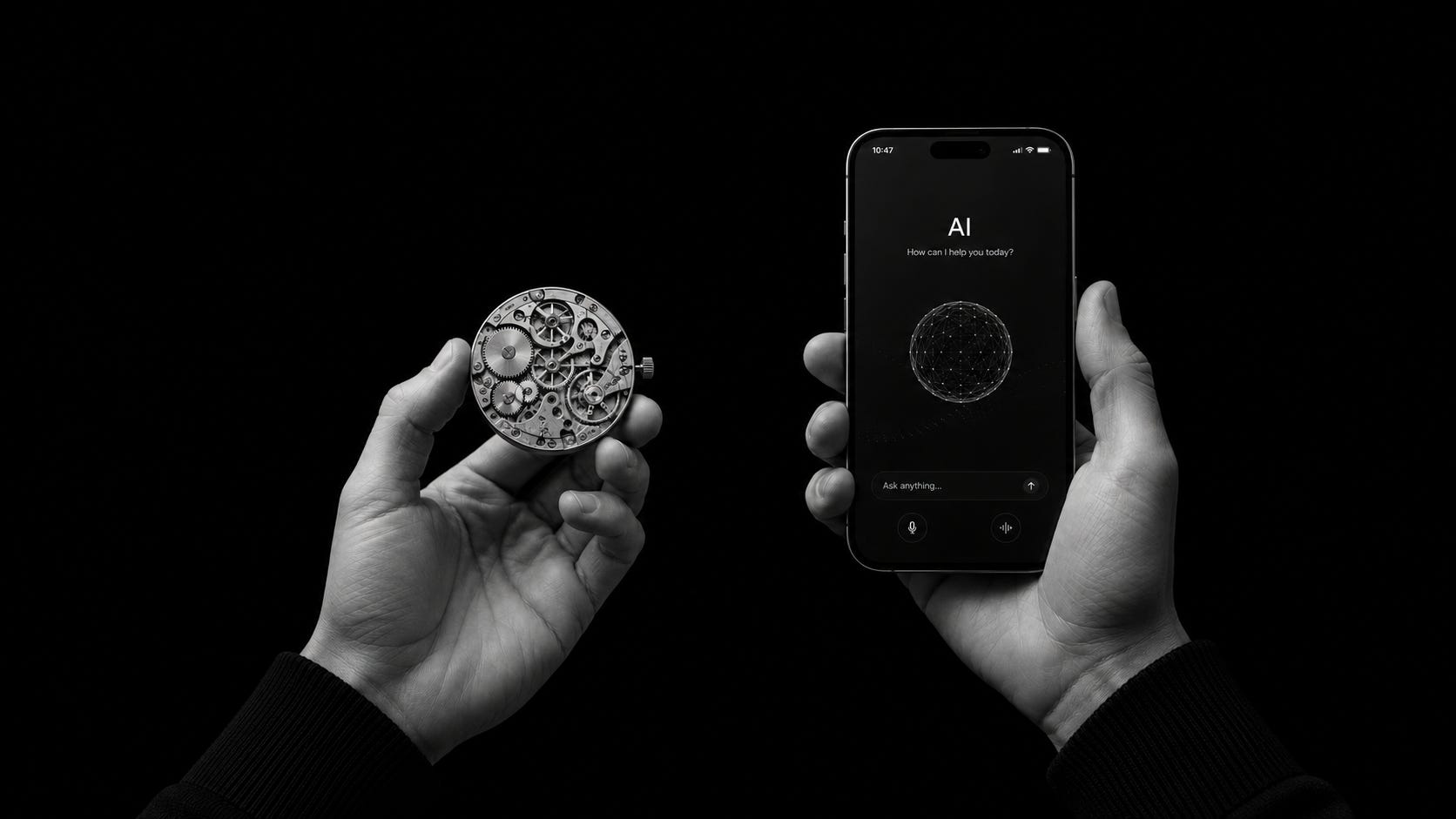
AI makes ingredients more accessible but it doesn't mean everyone can copy the restaurant.