

In the early days of a B2B SaaS startup, crossing $1M in Annual Recurring Revenue is the first true validation that you’ve built something people actually want.
For venture capital funds aiming for that 10-100x return, the fund returner, the velvet rope has always been the $10M ARR target.
In the zero-interest-rate world of 2021, gaining entry to the $100M club was the ultimate status symbol. Frequently rewarded with eye-watering 50x or even 100x valuation multiples based purely on the velocity of top-line growth.
Today looks very different. As of late 2025, the median public software company traded closer to 5x revenue, with some data points in early 2026 near 4x.
Revenue growth and multiples are talked about differently now. Capital efficiency and durable retention have taken the front seat.
The whole SaaS industry is being repriced. On risk. On duration. On retention. On cash. On competition.
Today’s guide is presented by our partners at Vanta
Speaking of risk: in 2024, Synthesia became the first AI video company to achieve ISO 42001 certification. Today, the startup is valued at $2bn.
For startups, ISO 42001 is quickly becoming the governance signal that serious enterprise buyers look for, right after SOC 2 and ISO 27001.

If you’re thinking about what comes next, Vanta put together a free checklist covering:
✅ The policies, risk assessments, and controls ISO 42001 requires
✅ What to document across the AI lifecycle
✅ How to prepare for and pass an ISO 42001 audit
And yes, AI did accelerate this transition but did not initiate it. AI has redirected incremental budget and compressed expansion economics within existing enterprise software stacks.
The $10 million milestone remains the finish line for the early stage, but the weight of the crown has changed. We are pulling back the curtain on the new, unforgiving math that determines who actually belongs in the elite circle today.

Table of Contents
1. When 10× Was Ordinary
2. The Growth Deceleration Nobody Wanted to Price
3. AI Is Not Killing SaaS. It Is Reallocating Budget.
4. Workflow Substitution and the Seat Compression Problem
5. AI Lowers the Barrier to Entry and Raises the Bar for Survival
6. The Great Bifurcation of SaaS
7. Public Markets Repriced First. Private Markets Are Catching Up.
8. The New Survival Logic
1. When 10× Was Ordinary
The idea that a high-quality software company should trade at 10× revenue was not purely speculative but was born in a capital environment that amplified long-duration cash flows and in operating metrics that appeared sustainably strong.
The ZIRP Duration Effect
Between 2015 and 2021, the world lived under Zero Interest Rate Policy (ZIRP). . Falling discount rates acted as a tailwind for the present value of future cash.
Subscription businesses with predictable recurring revenue, high gross margins, and multi-year expansion paths behaved like duration assets. When risk-free rates hovered near zero, terminal value carried disproportionate weight in valuation models.
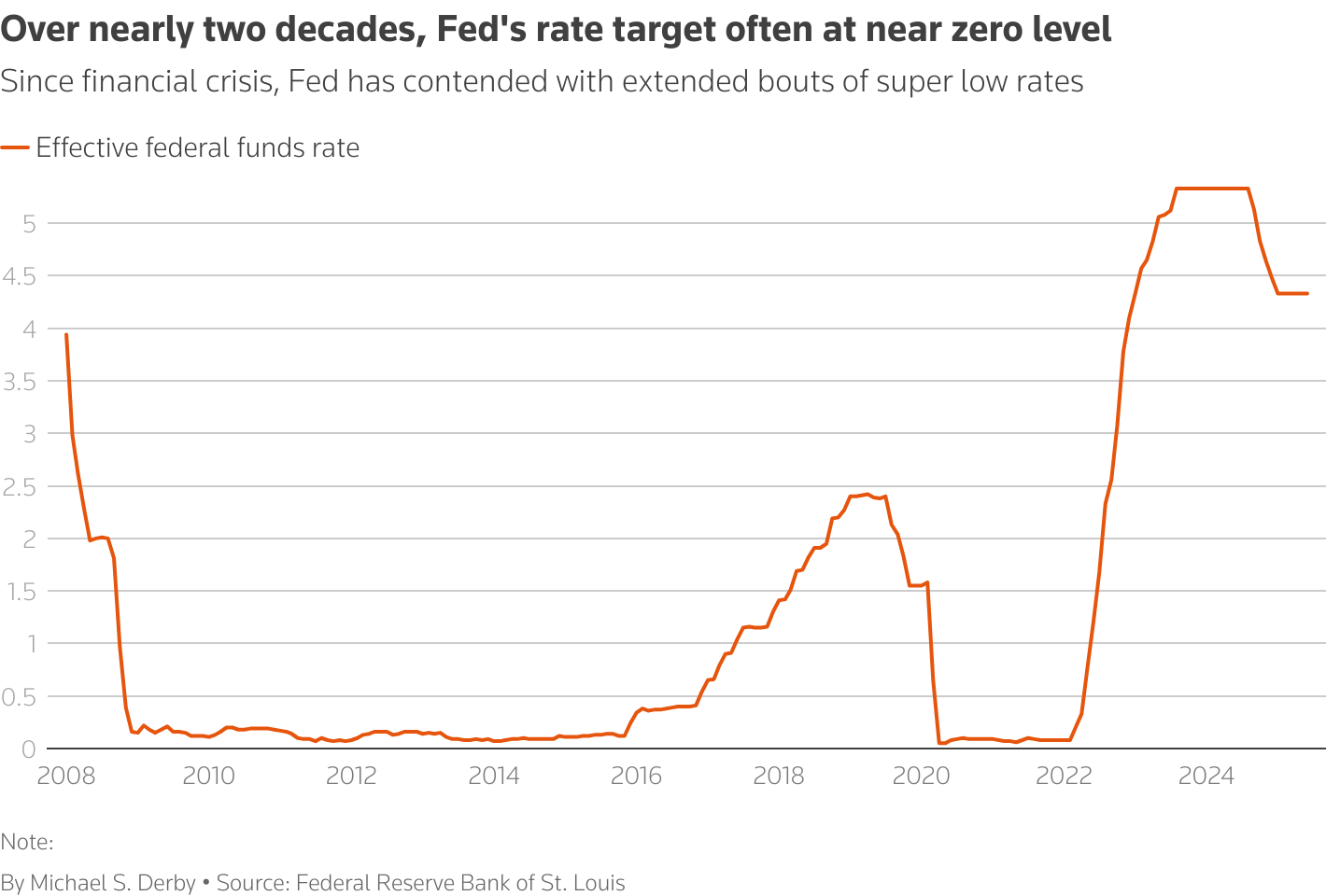
Investors viewed these companies like long term bonds that grew every year. When risk free rates are near zero, money earned ten years from now is worth nearly as much as money earned today.
Under those inputs, even 20× revenue could be defended in a discounted cash flow framework. Crossing 10x ARR became a shorthand for meeting those assumptions.
The Premium SaaS Template
At the height of the market, the entry fee for the “10x Club” was a specific set of SaaS operating metrics. To command a premium valuation, a company typically needed to hit these benchmarks:
Growth: Revenue expanding at 40% to 50% annually.
Net Revenue Retention (NRR): Staying north of 120%, proving that existing customers were buying more seats and modules.
Gross Margins: Hovering near 80%.
Rule of 40: A combined score of growth and profit margin exceeding 50%.
Capital was a commodity during this period. Investors ignored negative free cash flow because they believed expansion velocity would eventually turn scale into a massive cash machine. Seat expansion and multi-year contracts created an illusion of permanent compounding.
The environment changed when interest rates rose and growth proved more fragile than expected. As the cost of capital increased, the market stopped paying for “someday” and started paying for “today.”
2. The Growth Deceleration Nobody Wanted to Price
The “Great Reset” wasn’t actually triggered by the rise of AI. The primary culprit was a far more traditional market force called growth normalization.
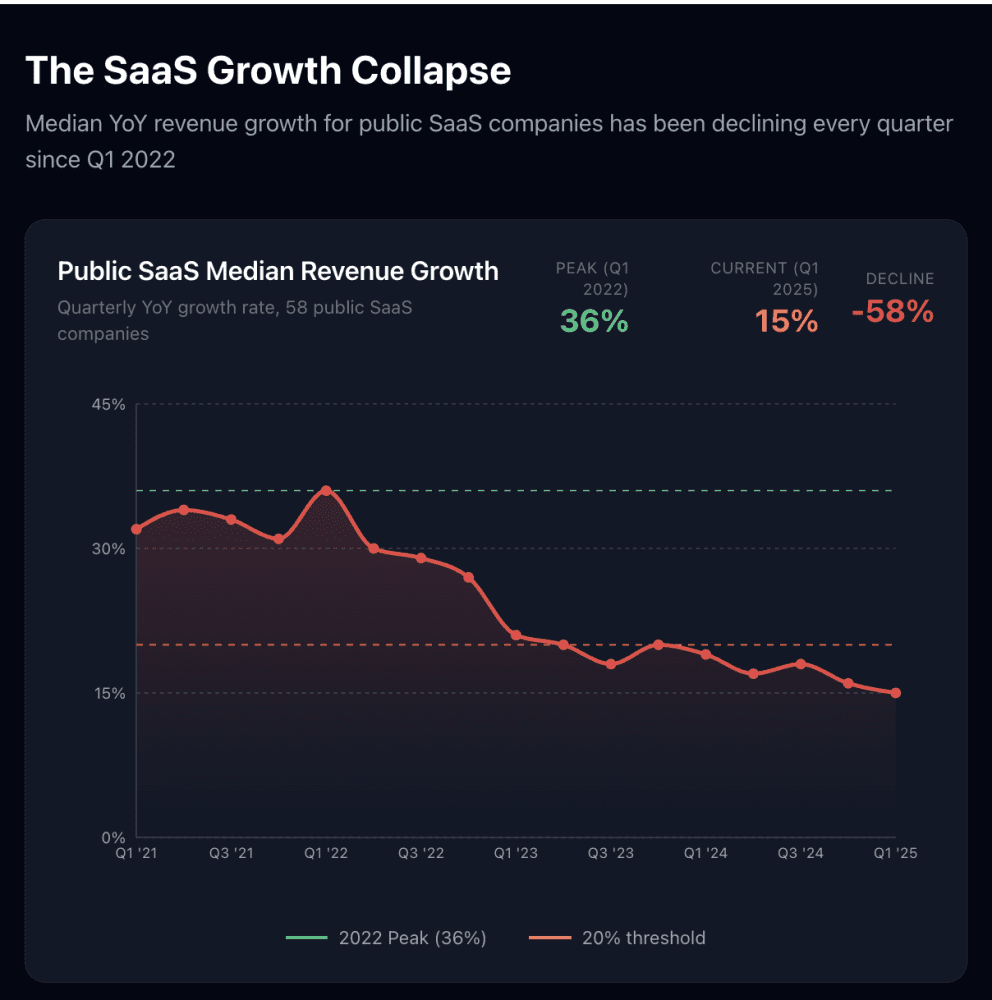
During the pandemic, digital adoption was compressed from years into a few frantic quarters, causing public software growth to peak. In that environment, seeing revenue growth north of 30% across large-cap cloud companies became the standard.
By 2022, that fever broke. Since then, we have witnessed a steady, broad-based deceleration. Median growth rates have slid from the high twenties to the mid-teens, and in early 2026, many are drifting toward the low teens.
The Shift from New Logos to Expansion
As momentum cooled, the industry’s “dirty little secret” started to show. Many companies began leaning heavily on their existing accounts to stay afloat. Price increases, bundled features, and add-on modules were used to prop up reported expansion numbers.
But here’s the thing. Expansion revenue that comes from deeper workflow adoption is durable and healthy. On the other hand, expansion used to mask a failure in customer acquisition is a ticking time bomb.
When net new logo growth slows and sales cycles stretch, it eventually shows up in the cohort performance. We aren’t seeing a “demand collapse,” but we are seeing a maturation.
Enterprise software has already penetrated the easy-to-reach early adopters, so winning now requires displacing an incumbent or selling to far more price-sensitive segments.
Why the Math Broke
For a long time, the market underwrote a “reacceleration” thesis. That was the idea that this was just a temporary dip. That hasn’t happened. For duration assets like SaaS, even modest changes in growth assumptions fundamentally break the valuation.
The 15% Reality: Dimming a forward growth assumption from 30% down to 15% not only halves growth, but it massively reduces the projected terminal revenue in a model as well.
The Valuation Lag: Even if profitability remains intact, a slower-growing company is worth significantly less to an investor looking for a “fund returner.”
The resulting compression in multiples was a recalibration of expectations. AI may have added competitive pressure, but the repricing truly began when the structural growth slowed and the underlying math no longer supported the hype.
3. AI Is Not Killing SaaS. It Is Reallocating Budget.
AI now dominates enterprise investment discussions, but its impact on software economics is often overstated.
The threat isn’t a sudden wave of product displacement or “SaaS extinction.” Instead, we are seeing a massive, strategic evolution in how capital is allocated within a fixed IT envelope.
The Fixed Spending Envelope
Most enterprises don’t have infinite pockets. They operate within a defined IT spending budget. When boards decide that AI capability is a strategic necessity, that money has to come from somewhere.
Incremental dollars are now flowing toward model access, data pipelines, and GPU capacity. These funds are being cannibalized from existing software allocations.
In practice, organizations aren’t ripping out core systems like Salesforce or Workday since those platforms are too deeply embedded in compliance and workflow. Instead, the “AI Tax” is being paid at the margins:
Seat Expansion Stalls: AI agents are beginning to automate tasks that previously required more human “seats,” breaking the historical link between headcount and revenue growth.
Module Deferral: Discretionary add-on modules are being deferred or renegotiated as companies prioritize AI tooling.
Extreme Scrutiny: Every new application purchase now faces a “Why isn’t this an AI feature in our existing stack?” hurdle.
Obsolescence vs. Compression
It is vital to distinguish between obsolescence and compression. SaaS isn’t becoming obsolete, but its expansion economics are simply being squeezed.
Historically, the “10x Club” relied on expansion revenue to drive durable compounding. When forward expansion assumptions are compressed, revenue trajectories flatten almost instantly. This results in a ruthless reordering of priorities.
The winners in this new era are companies that can capture AI-related spend within their own platforms. The losers are those dependent on headcount growth or “nice-to-have” discretionary modules.
As expansion rates moderate, valuations have no choice but to adjust to this more constrained reality.
4. Workflow Substitution and the Seat Compression Problem
Traditional SaaS economics relied on a direct tether where more employees meant more seats, and more seats meant more revenue. This created a predictable “growth tax” on every company.
But things are starting to change…
Automation Without Replacement
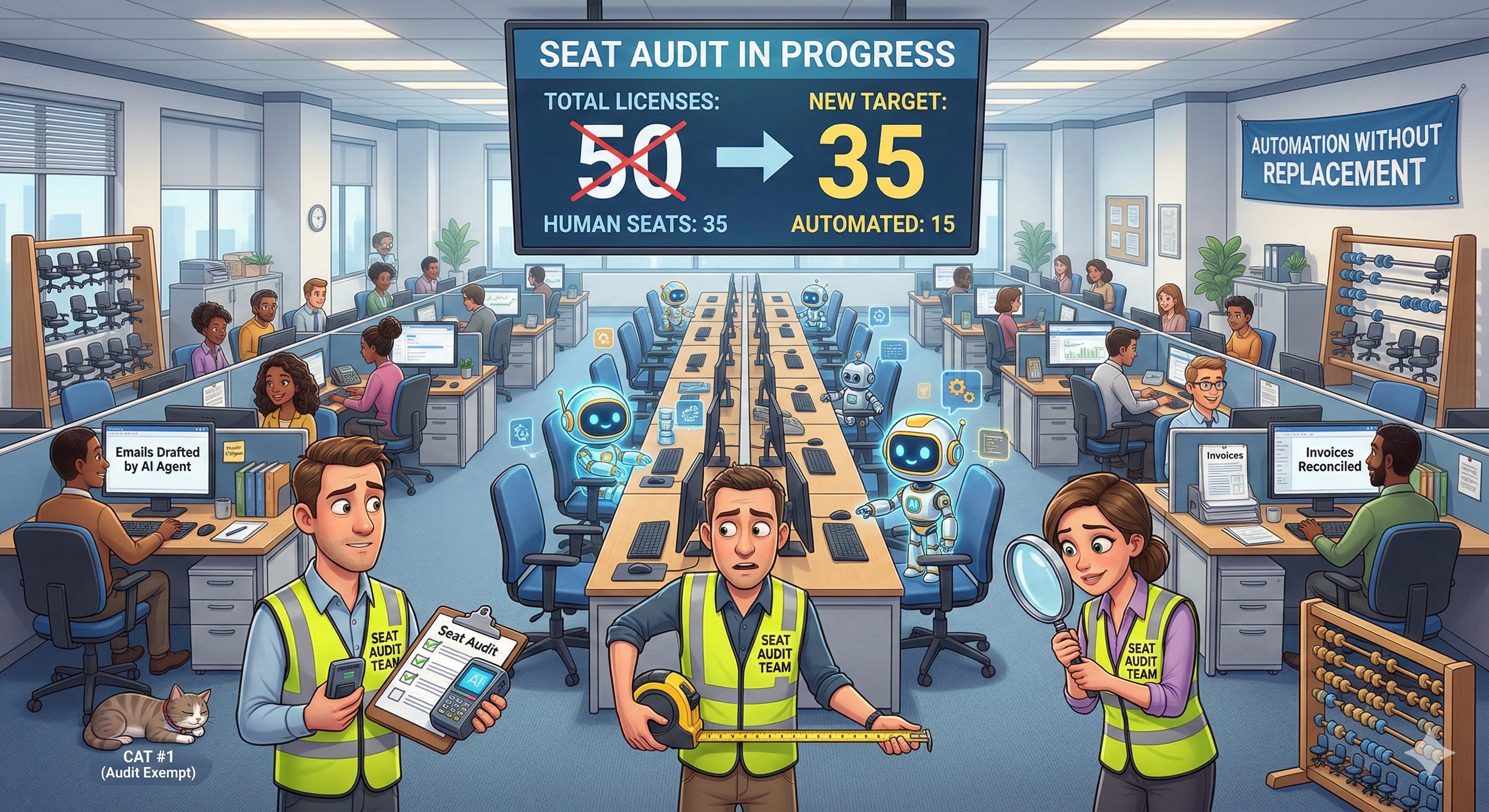
Modern AI agents do not require you to rip out your existing tech stack to change the financial outcome. They simply live inside your current systems and automate the high volume tasks that once required human fingers. Things like drafting emails, reconciling invoices, or summarizing support tickets.
The “System of Record” stays in place, but the workflow around it changes entirely.
So paradoxically, as productivity climbs, headcount growth stalls. This leads to the so-called “Seat Audit.”
A firm that once needed 50 licenses might realize they now only need 35 to do the same volume of work. The customer doesn’t leave, but the revenue shrinks. This impact is a slow burn where expansion numbers drop long before you see actual churn.
The Vulnerability of Seat-Based Pricing
Seat-based pricing assumes that value scales in a linear fashion where:
Value = Price x Users
When automation cuts the number of users needed, this formula fails the vendor. Customers are no longer willing to pay for potential usage. Instead, they are evaluating software based on measurable output.
Cash flow pressure arrives before the customer actually cancels. Annual contracts might hide the damage for a year, but the internal numbers cannot. They will show how expansion slows, downgrades rise, and net retention numbers begin to drift.
So, this completely changes how value is captured. And pricing is where the key is.
Companies that move toward usage or outcome-based pricing can find a floor. Those that stay tied to headcount face a slow, persistent erosion of their growth.
5. AI Lowers the Barrier to Entry and Raises the Bar for Survival
The economics of building software are fundamentally changing. And we don’t think it’s temporary.
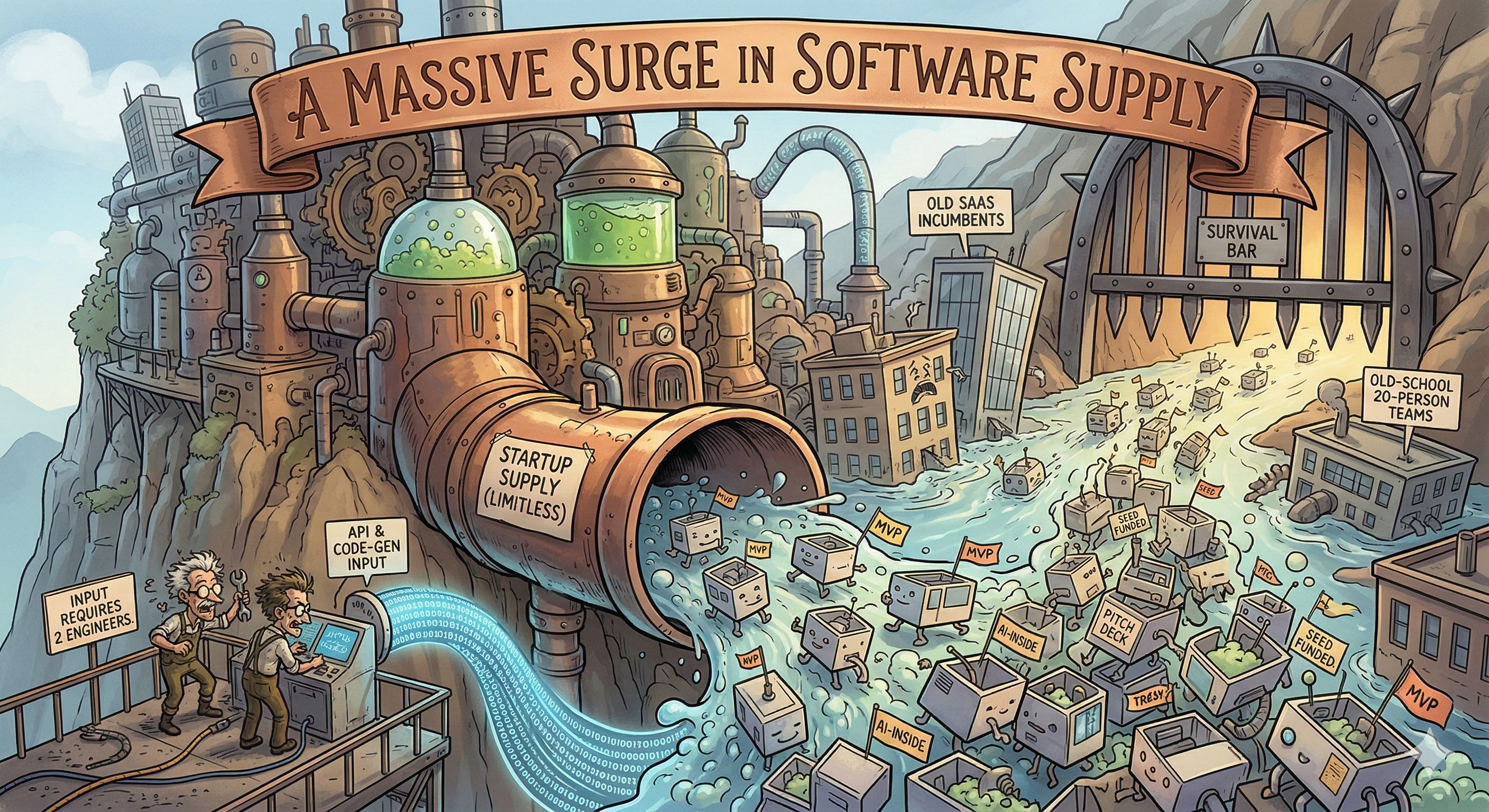
Two engineers with the right model APIs and code-generation tools can now ship a product that previously required a 20-person engineering team. This has caused a massive surge in software supply, especially in the form of early-stage startups.
When Features Become Commodities
It is easier than ever to reach your first $1M or even $5M in ARR. However, when everyone is building on the same foundation models, differentiation gets thin fast. Capabilities that looked like “magic” in early 2024 became baesline features by 2025.
AI has compressed the time-to-market, but it has also shortened the half-life of a feature’s defensibility. Reaching $10M ARR used to be a signal of a lasting moat; now, it might just mean you were first to a specific API use case.
The Assets That Still Matter
As code becomes cheap, the value moves to the things that are hard to replicate:
Deep Distribution: Owning the relationship with the customer.
Proprietary Data: Having the info that makes the model smarter than a generic one.
Workflow Entrenchment: Being so tied into a company’s compliance or operations that ripping you out is a nightmare.
Investors are now rewarding companies that convert rapid product cycles into sustained economics rather than just transient, “flash-in-the-pan” growth.
6. The Great Bifurcation of SaaS
Software is no longer priced as a single asset class. Dispersion has widened, and valuation gaps increasingly reflect differences in durability and integration depth rather than just sector sentiment.
This is why we are seeing two types of SaaS companies emerging.
Cohort A: Commodity SaaS
One cohort consists of horizontal tools with moderate differentiation and limited workflow lock-in. These businesses often rely on marketing-led acquisition, serve broad use cases, and integrate lightly into customer operations.
Net retention trends toward or below 110%, and expansion depends heavily on seat growth or incremental feature upsell.
AI capabilities are frequently layered onto these products, but they rarely deepen integration or materially raise switching costs. Within quarters, many such features become standard across competitors.
So because their AI features are easily copied, their multiples have crashed back to historical norms. Growth here is treated as cyclical and risky.
Category-Defining SaaS
The second cohort is embedded in mission-critical workflows where operational, financial, or regulatory stakes are high. Integration runs deep, and customer processes often adapt to the platform rather than the reverse.
Their Net Revenue Retention (NRR) stays above 120% because customers are integrating more data, not just adding more seats. # Strong capital efficiency and improving Rule of 40 performance reinforce durability.
These companies still command premium valuations because they behave like embedded infrastructure rather than replaceable software.
7. Public Markets Repriced First. Private Markets Are Catching Up.
Public markets adjusted before private balance sheets did. As listed cloud companies began trading closer to 4-6x revenue multiples, they set a new floor for the entire ecosystem. Private valuations cannot live in a vacuum.
Private valuations cannot live in a vacuum. If a public peer is worth 5x revenue, a late-stage startup at 20x is a mathematical outlier that eventually has to fall.
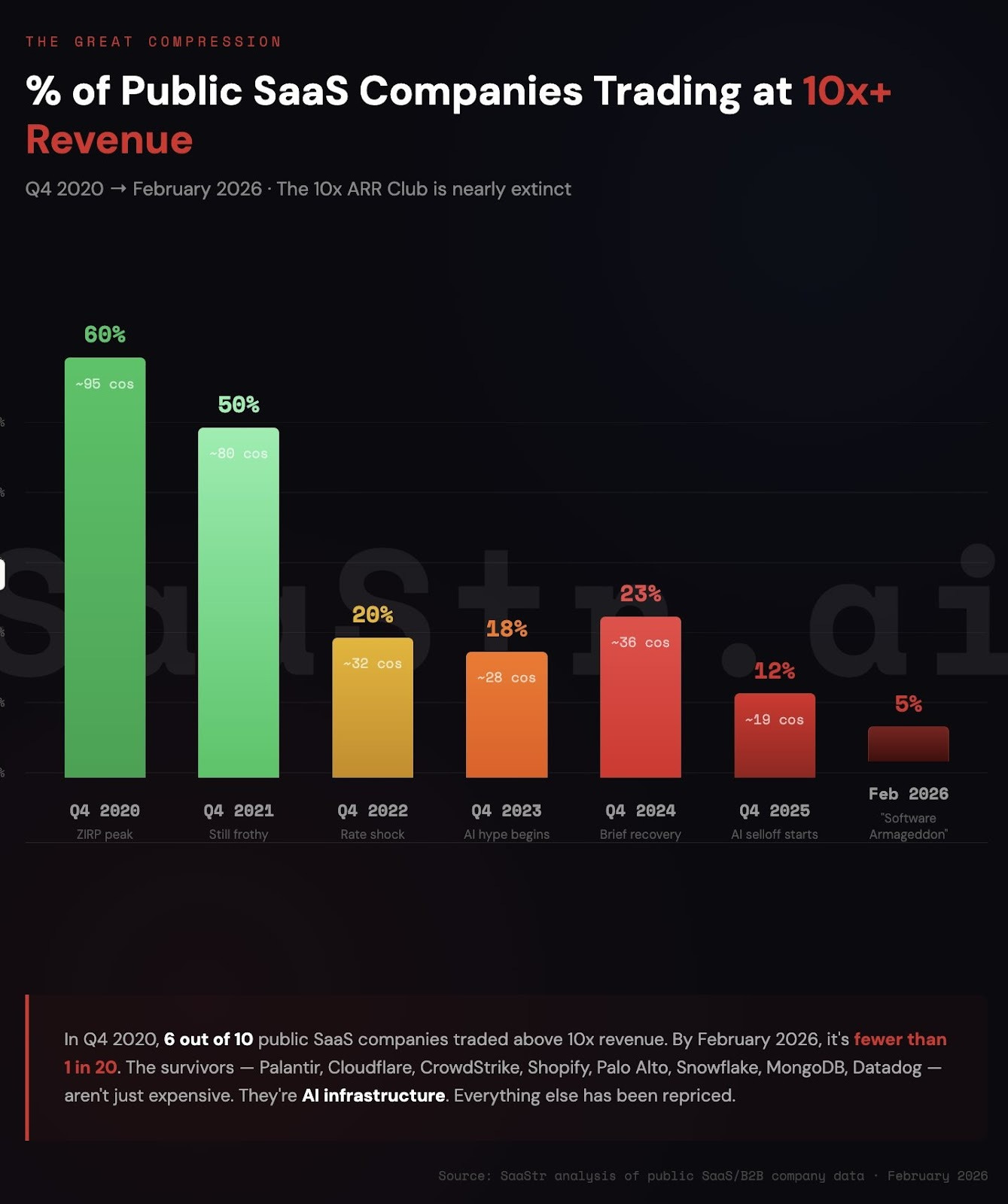
And it’s true. The so-called 10x ARR Club is now a ghost town. In 2020, roughly 60% of all public B2B companies held a 10x multiple or higher. By early 2026, that elite circle has shriveled to just 5% of the market.
The median multiple has plummeted from a peak of 18x to a gritty 4x. Even Salesforce, the original king of SaaS, is now trading below a 4x multiple.
The Great Divergence
We are seeing a violent split between those who provide infrastructure and those who sell tools.
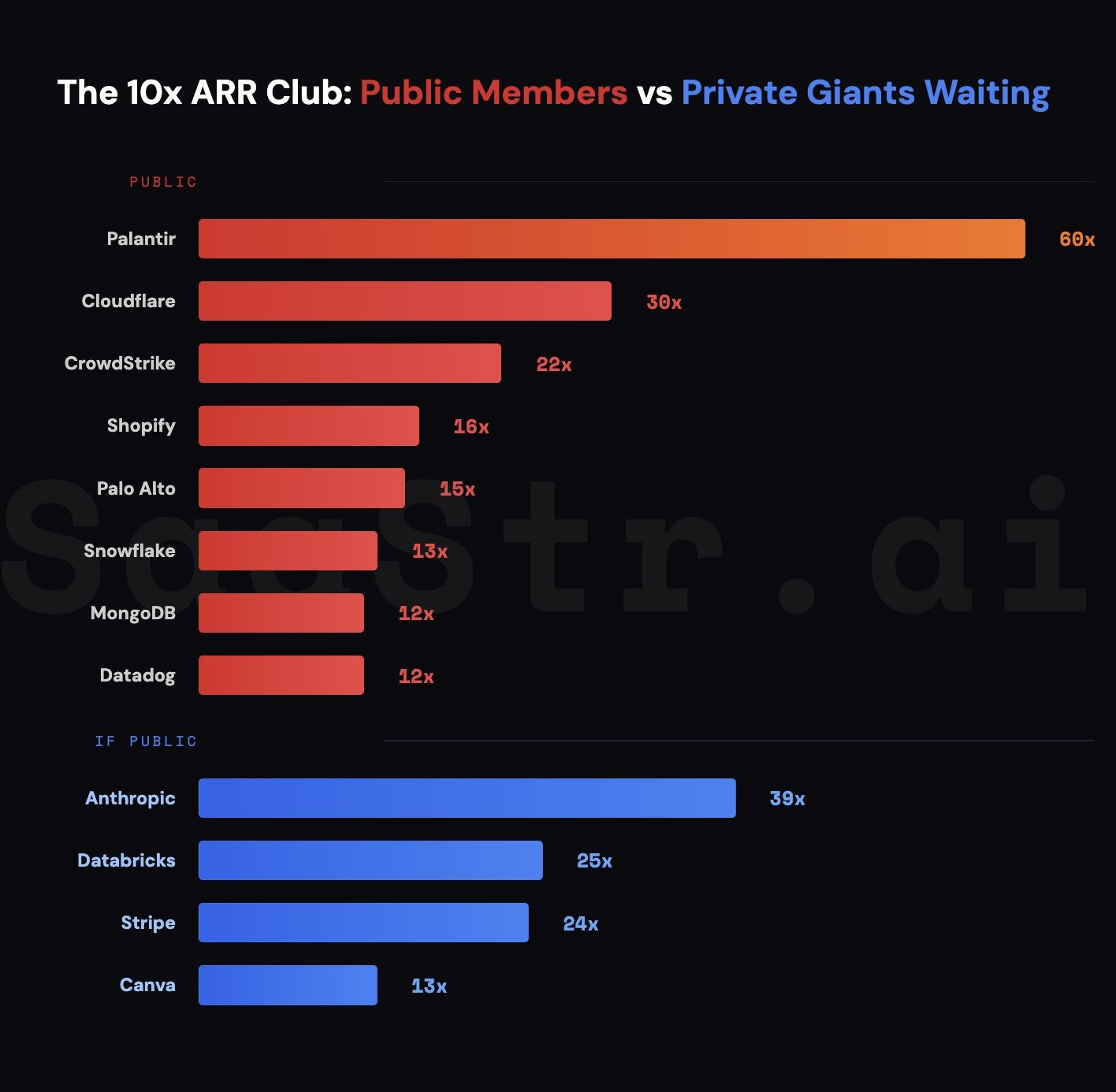
The Outliers: Palantir is essentially a club of one, commanding a 60x multiple because it has become the “AI Operating System” for the enterprise.
The Fallen: Figma, which IPO’d at a 56x multiple, has lost 80% of its market cap as investors fear AI agents will automate the design workflows Figma once owned.
The “Must-Haves”: Companies like CrowdStrike and Cloudflare still command 20x+ multiples because security and edge connectivity are non-discretionary.
We see this convergence playing out in growth-stage financing too. That’s the canary in the coal mine.
Down rounds and flat rounds are no longer exceptions. Investors have moved their focus from headline growth to the quality of retention and capital efficiency.
Private equity and private credit face related pressure. Many of these deals were underwritten on the belief that seat expansion was guaranteed.
Eventually, private portfolios must reconcile with these public benchmarks.
8. The New Survival Logic
The period when abundant capital amplified growth narratives has passed. SaaS is not about more seats and digitisation anymore. Growth now depends on deeper workflow integration, measurable outcomes, and disciplined operating models.
So in order for a company to warrant a membership at the 10x ARR Club, it needs deeper workflow integration, measurable outcomes, and disciplined operating models.
The goal for startup founders shouldn’t be hitting the $10M target. The goal is to prove your platform is the bedrock, not the rubble.
The weight of the crown has changed, but for the elite few who adapt, the view from the top is finally grounded in reality. The “Great Reset” is a filter, and only the most durable will pass through.

Great piece though I think you’re wrong about how much ai “agents” can do. A great deal of fluff and fake stuff there. But this was awesome.
https://www.wheresyoured.at/saaspocalypse-now/
Wrote something similar in 2024 about this and happy to see others can see it too. Bad days ahead for SaaS
The seat audit problem is the sleeper issue — contraction shows up in expansion numbers a full year before a customer cancels.
By the time you see actual churn, you've already lost the expansion runway — the damage is baked in 12 months earlier.