

Y Combinator’s Fall 2026 batch pitches on December 2. That leaves investors about two weeks to sort through 235 startups, and the data says the sorting matters more than most people assume.
AngelList runs a Demo Day fund for every YC batch under the same rules each time: four YC founders and former partners invest in their YC deals, and LPs get the whole basket. The Winter 2019 fund sits at 11.45x net. The Summer 2016 fund sits at 0.47x. Same strategy, same platform, and a 24-fold gap that came down to which six months you showed up for.
Yesterday I published how Yuri Milner backed every YC startup in 2011 and why investors who index YC made a 5x median. This piece is the practical follow-up for the batch in front of us: YC returns batch by batch, how long the money takes to come back and what’s inside Fall 2026. Paid subscribers also get the full directory and the 30 startups I rate highest.
What YC returns look like, batch by batch
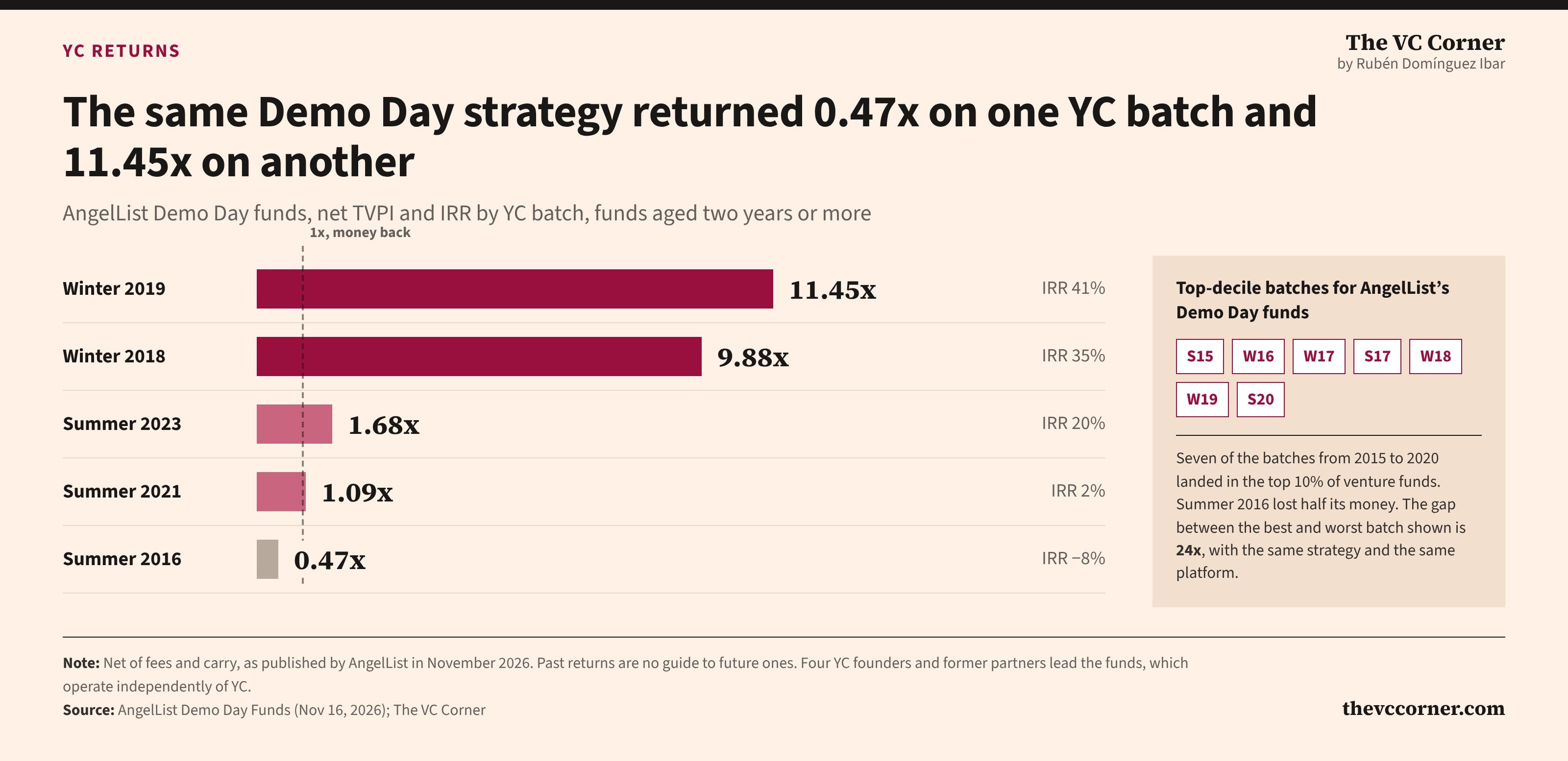
Seven batches between 2015 and 2020 put AngelList’s Demo Day funds in the top 10% of venture funds. The younger funds tell a different story: Summer 2021 sits at 1.09x and Summer 2023 at 1.68x, because most of their value is still marked at the last round and years away from cash.
I take two lessons from this table. Spread your money across batches, since the outlier can land in any six-month window. And inside each batch, own enough companies, because one of them usually carries the whole fund.
The batch you pick can swing your multiple 24-fold, and showing up for every batch is the best hedge I know.
How long the money takes
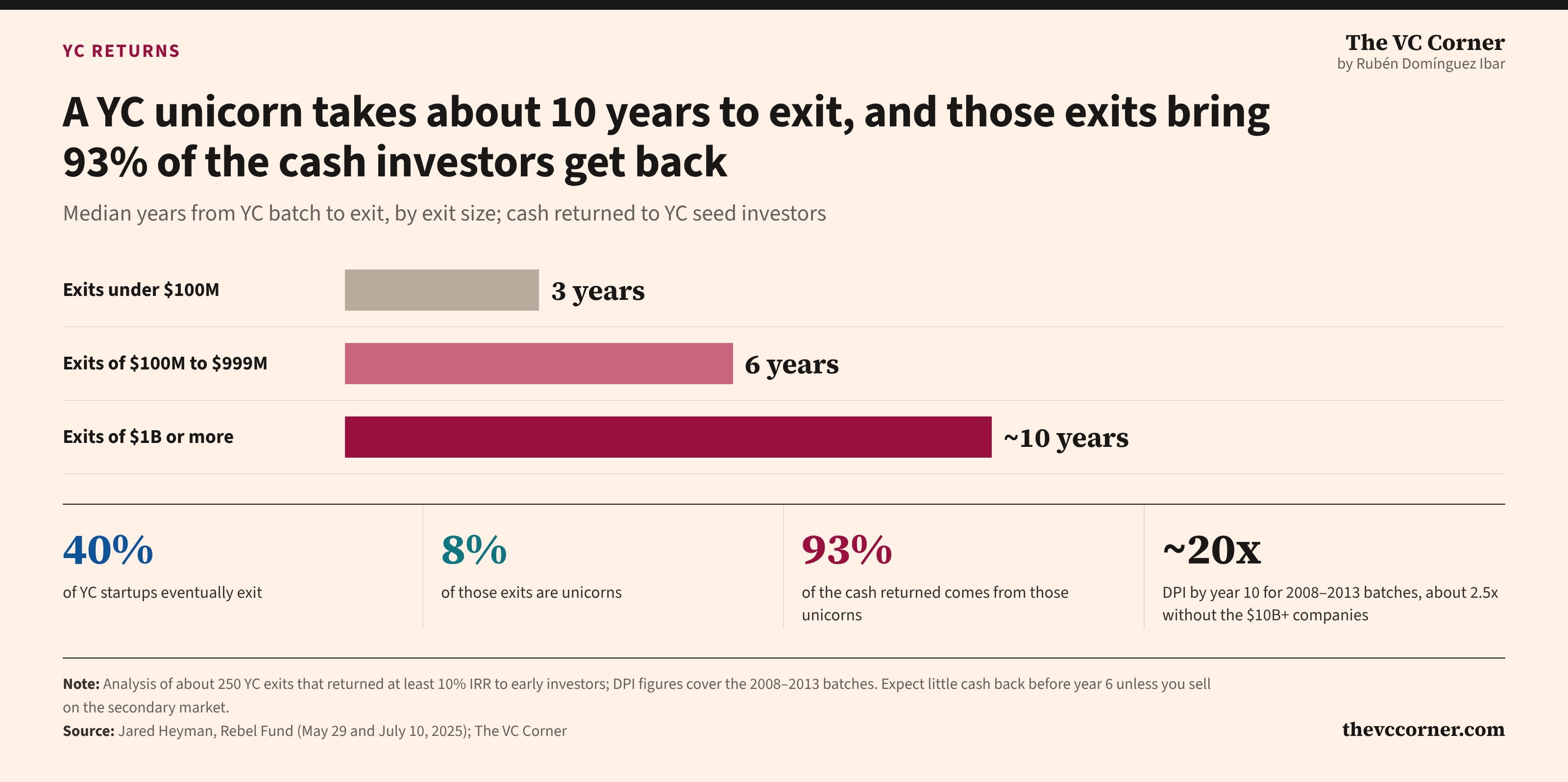
Jared Heyman at Rebel Fund studied about 250 YC exits. Roughly 40% of YC startups exit eventually, and the median exit comes about four years after the batch. The size of the exit sets the clock: about 3 years for exits under $100M, 6 years for $100M to $999M and about 10 years for $1B or more.
The cash comes from the tail. Unicorns make up 8% of YC exits and bring 93% of the cash returned to seed investors. The 2008 to 2013 batches reached about 20x DPI by year 10, and about 2.5x once you take out the handful of $10B+ companies. Every batch in his data stayed below 1x DPI until year 6.
So budget for a decade. If you need your money back sooner, plan on selling in the secondary market and price in the discount that comes with it.
What’s inside the Fall 2026 batch
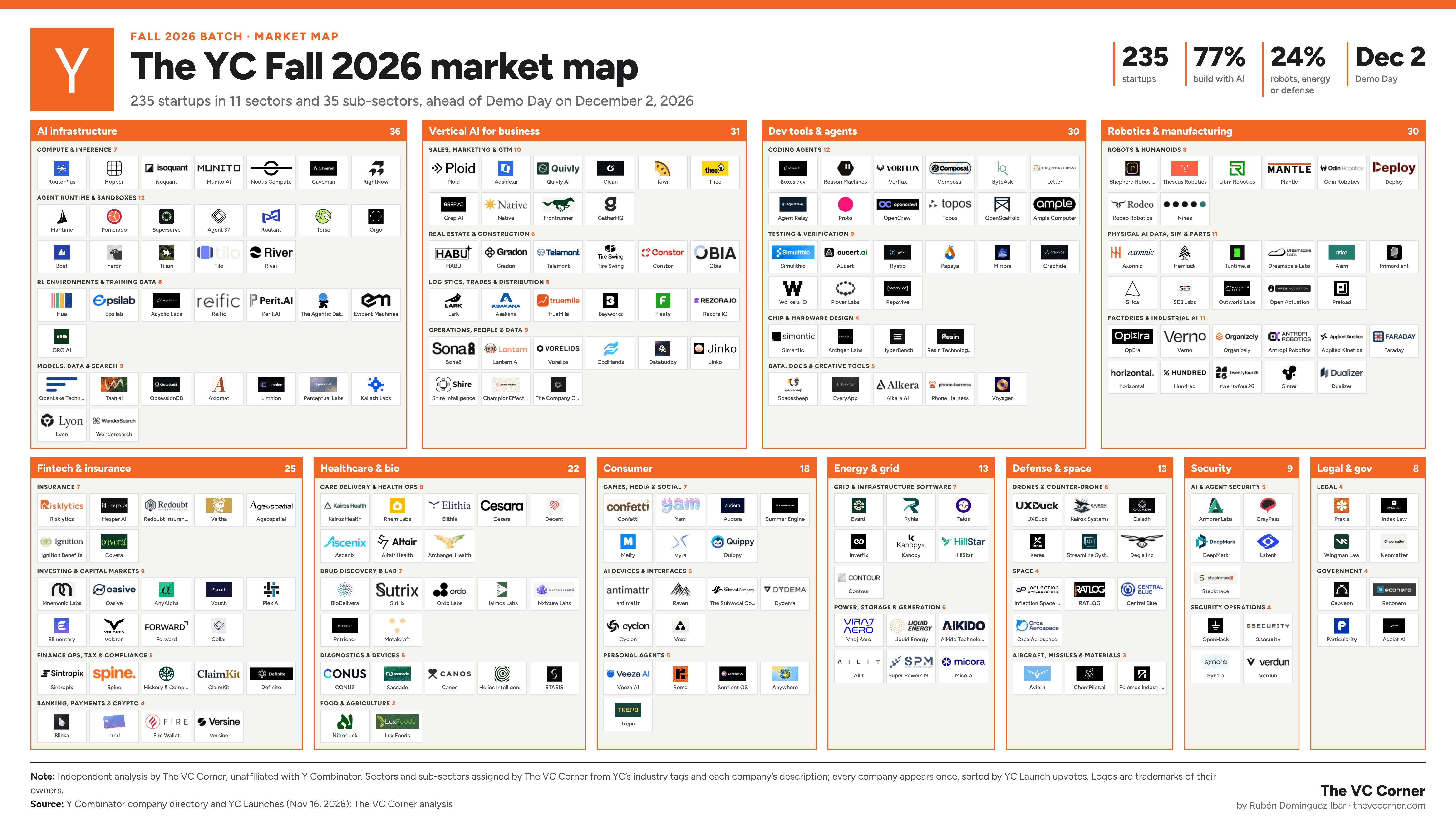
I pulled every company from YC’s directory and placed each one on the map, in one of 11 sectors and 35 sub-sectors. Coding agents and agent runtimes are the biggest sub-sectors with 12 startups each, followed by physical AI and factory automation with 11 each.
Paid subscribers get a second version of this map with my 30 picks marked on it, each with the tier I give it. That’s the list GR Angel’s Fall 2026 checks will come from, and it sits in the premium section below together with the full directory.
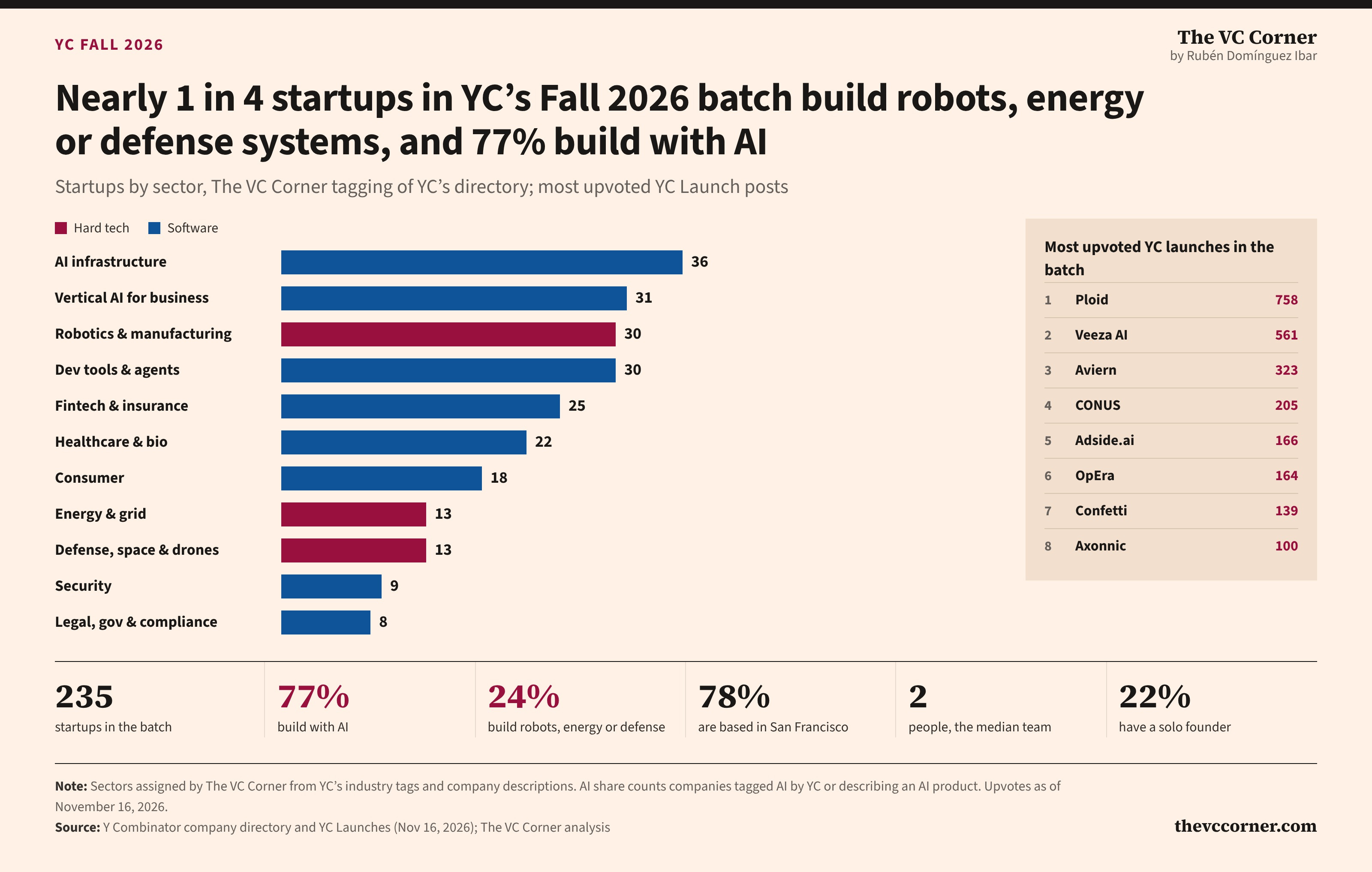
Five numbers stood out:
235 startups, with 182 (77%) building with AI and 183 based in San Francisco
56 build robots, energy or defense systems, almost a quarter of the batch
AI infrastructure is the biggest sector with 36 companies, ahead of vertical AI at 31
The median team has 2 people, and 49 of the 225 companies that list founders have a solo founder
179 were founded in 2026, so most of these companies are months old
Launch upvotes are the first public signal, and they mostly measure the founders’ reach inside the YC community. Ploid leads with 758, Veeza AI has 561 and Aviern 323. Only 2 of my 30 picks rank in the top 10, and each of my three Tier S companies has 8 upvotes or fewer. I read upvotes as distribution skill, which counts, and I weigh the founders’ track record more.
How we invest in YC at GR Angel
Guillermo Flor and I started GR Angel in 2025 with our own money. We’ve backed 42 YC companies, which have raised $1.2B+. HappyRobot is worth $1.2B, and weeks ago we confirmed our first exit: a YC AI company that grew from about $100K to $7M ARR in a year and sold to a major AI lab before its Series A.
We back about 5 startups per batch, 20 a year, through SPVs, and we put our own money into every deal on the same terms as our LPs. The 30 picks below the paywall are our working shortlist for Fall 2026, and almost every company GR Angel backs in this batch will come from that list.
If you’re a founder in the batch and raising, write to me at ruben@thevccorner.com.
Get the YC Fall 2026 Directory
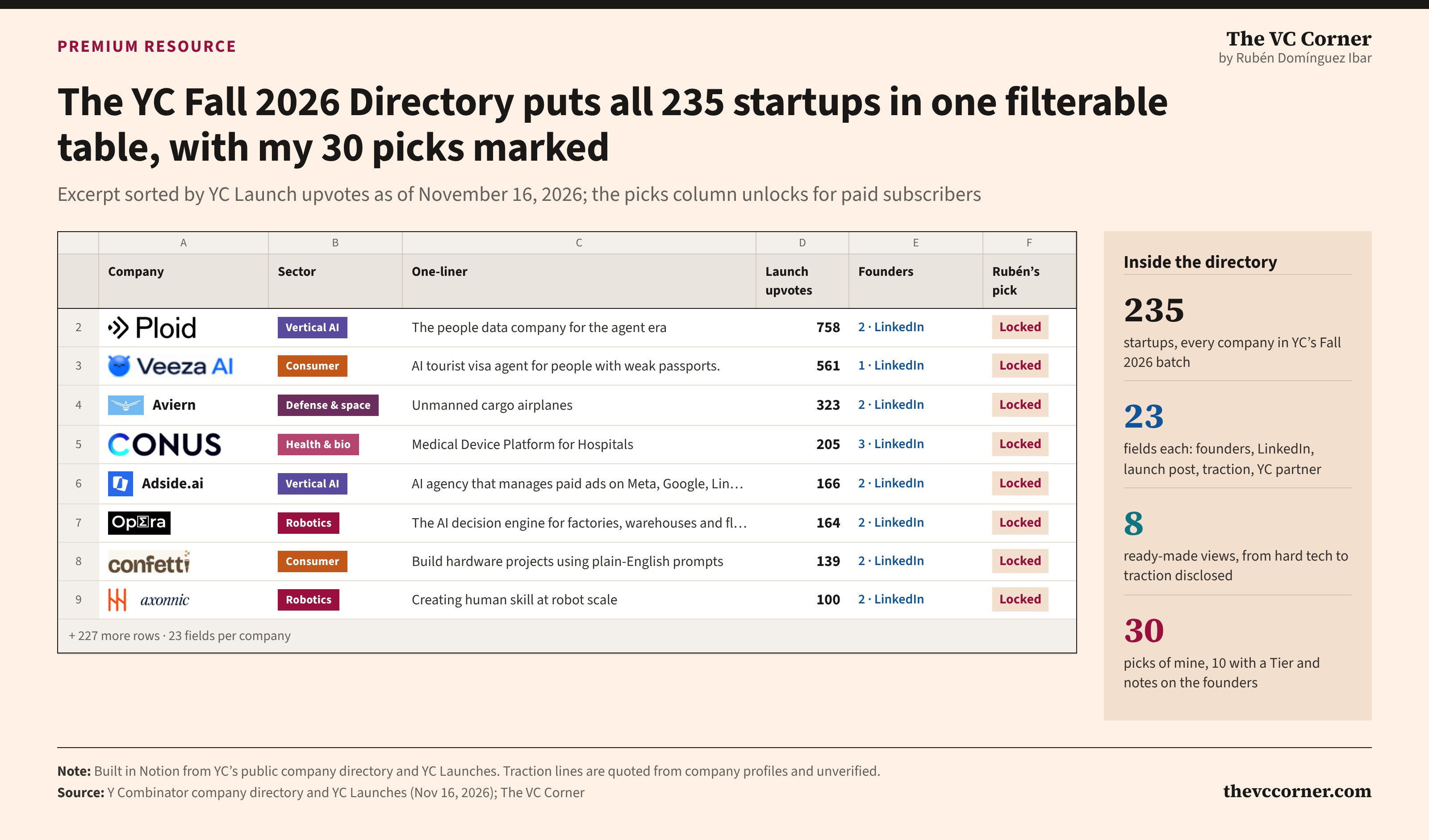
The free half shows how YC returns work. The directory gives you the batch itself, ready to filter before December 2.
All 235 Fall 2026 startups in one Notion table with 23 fields each: founders, LinkedIn profiles, website, YC profile, top launch post and upvotes, published traction, YC group partner, team size and location
8 ready-made views, from hard tech and AI infrastructure to every company that disclosed traction
My 30 picks, with Tier S and Tier A notes on the founders of the top 10 and the market map with every pick marked
How I’d work the batch in the two weeks before Demo Day
Premium also gets you 10,000+ investors in our investor lists, every model in our financial models library and the decks in our pitch deck library.
Cancel anytime. First subscribers get 50% off forever.
Here’s the directory.