

Sometimes it feels as if some people move through life carrying a gravitational advantage.
Others play by the book. They work hard, stay consistent, and still find themselves stuck in linear, predictable outcomes.
So what separates the two?
The difference is rarely talent. It is almost always how they interpret risk.
Most people are taught to focus on the probability of failure. They ask “what if this does not work?” and stop there. The people who consistently end up with an unfair upside see something different. They pay attention to the ratio between downside cost and upside potential. If the downside is survivable and the upside could be transformative, they lean in. They worry less about being wrong and more about what happens if they are right.
A quick word before we continue:
The asymmetric bet mindset applies to how you grow your business, not just how you invest. One of the highest-ROI moves any founder can make right now is getting ahead of security compliance before it blocks a deal.
ISO 27001 certification helps you win bigger contracts, enter regulated markets, and prove your security posture to enterprise customers anywhere in the world. The problem is that doing it manually costs a lot of time and money most early-stage teams do not have.

Vanta automates the work, getting you audit-ready in weeks instead of months and saving up to 85% of associated costs. They cover ISO 27001 alongside SOC 2, ISO 42001, and other frameworks your customers will ask for.
It covers how to implement an Information Security Management System, how to prepare for an independent audit, and how to streamline certification with automation. Takes 2 minutes to download. Could save you months of work when a big deal asks for it.
We now live in a world defined by nonlinear outcomes. Technology, AI, and global distribution concentrate value in a small number of companies, products, and individuals.
A few startups capture most of the market.
A few investors capture most of the returns.
A few career moves create most of the acceleration.
So how do you design your life around asymmetric bets? Not reckless gambles or dramatic reinventions, but small, repeatable decisions where the worst case is acceptable and the best case decides your trajectory?
Table of Contents
What Is an Asymmetric Bet? The Core Definition
Why Asymmetry Is the Engine of Outlier Outcomes
The Anatomy of a High-Quality Asymmetric Bet
Where Asymmetric Bets Hide: A Cross-Domain Look (Founders, VCs, Professionals)
Why Most People Misjudge Asymmetric Bets and Miss Them Entirely
A Practical Framework: How to Evaluate Any Decision Through an Asymmetric Lens
Closing: The Asymmetry Mindset
1. What Is an Asymmetric Bet?
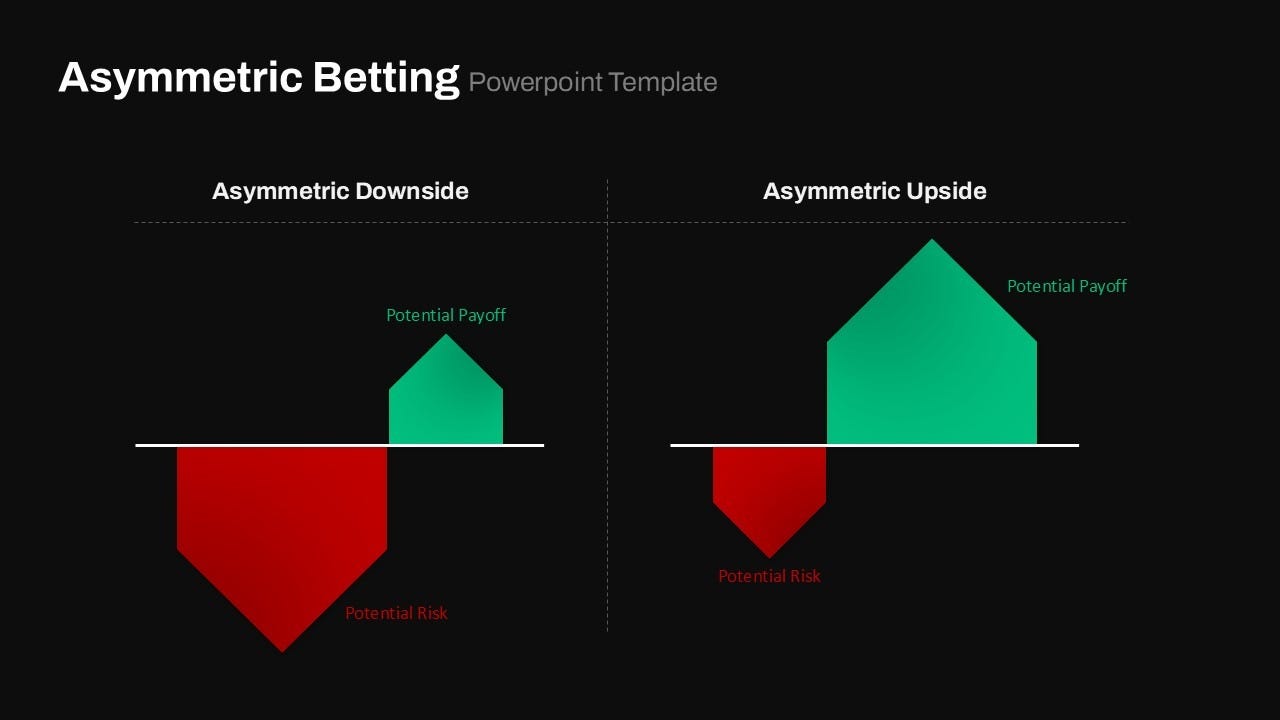
Every asymmetric decision has a simple structure. The potential upside has to exceed the potential downside, often by an order of magnitude or more.
You don’t need to be right often. You just need to survive long enough for the right idea, investment, or effort to land. The defining feature is not boldness, it is proportion.
Upside Over Probability
If you take one thing from this essay, it should be this.
What matters is not how often you are right, but how much you earn when you are right.
This is why traders, founders, and investors willingly take low-probability shots, because the payoff, when it materializes, overwhelms the cost of every attempt that failed before. It is why the rare idea that compounds will outperform a lifetime of predictable credentials.
The Three Forms of Asymmetry
Asymmetry shows up across domains, but it usually takes one of three shapes.
Financial asymmetry happens when the downside is capped (small capital, small loss) but the upside is theoretically uncapped. This is the foundation of asymmetric bets in venture investing and angel portfolios.
Informational asymmetry emerges when you see something earlier, or more clearly, than others. A founder with a proprietary insight or a professional who understands a new technology before it becomes consensus is operating with leverage that others do not possess.
Reputational asymmetry occurs when a single small action, whether that’s writing in public, shipping a project, or taking on a visible challenge, has the potential to create credibility at a scale far larger than the cost of the action.
Across all three, the logic is identical: small downside; nonlinear upside.
Asymmetry Is Not Recklessness
People often mistake asymmetric bets for risk-taking, but this is not risk-taking. Think of it as risk structuring.
Recklessness exposes you to large losses. Asymmetry ensures that your losses are survivable and your wins are meaningful, and the difference is more practical than philosophical.
Asymmetry is the art of building a life where your mistakes cost little and your breakthroughs define everything.
2. Why Asymmetry Is the Engine of Outlier Outcomes
Most people underestimate how unevenly value is distributed, they assume progress follows effort in a straight line. But it doesn’t.
The world rewards work in spurts; nothing for long stretches, then sudden inflections that rewrite careers, companies, and industries. These inflections don’t happen because someone worked incrementally harder, they happen because someone placed a bet whose upside was allowed to run far beyond the limits of the downside.
The Mathematics of Nonlinear Returns
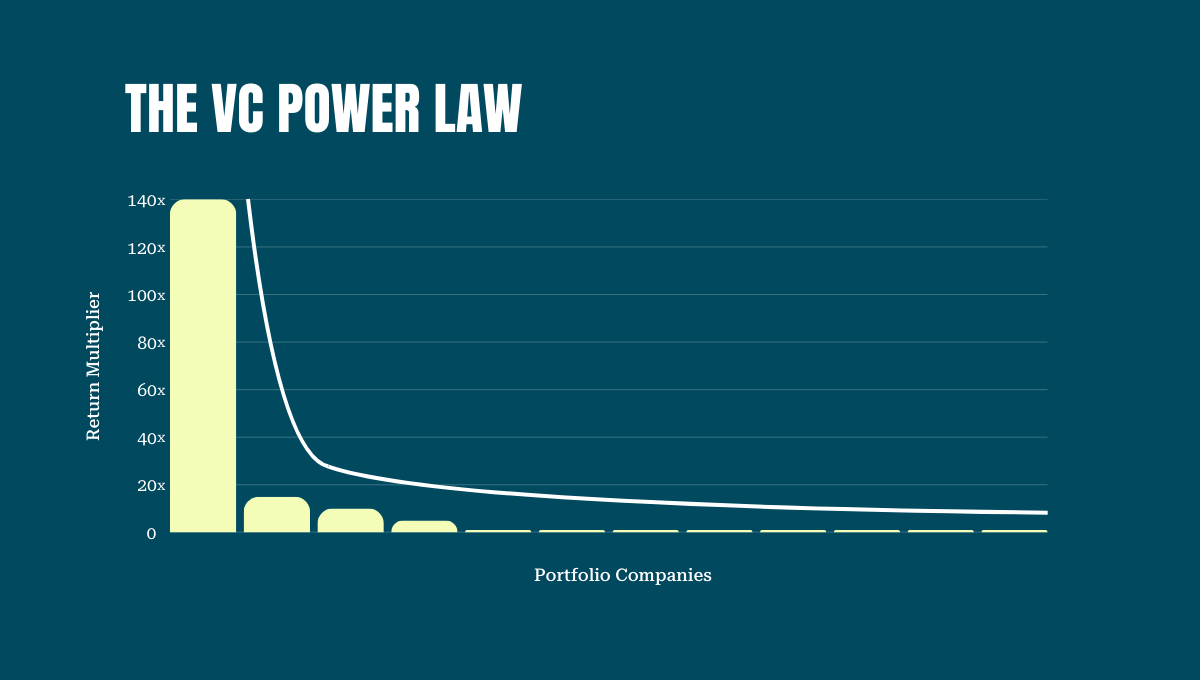
Venture capital provides the clearest proof. Across three decades of data, fewer than 1% of startup investments accounted for the majority of all returns.
A tiny minority of deals, sometimes just one per fund, delivered outcomes large enough to offset every loss. This is the power-law shape of modern opportunity environments and the average is meaningless, the tail is everything.
This dynamic doesn’t belong only to investors. Founders experience it when one unexpected distribution channel unlocks exponential growth. Professionals experience it when one project or skill creates disproportionate credibility. Creators experience it when one piece of work escapes the network and compounds while everything else remains dormant.
Modern Leverage Amplifies Asymmetry
Technology and AI have intensified this skew. Today a single line of code, a single insight into how agents behave, a single distribution breakthrough, or a single well-structured public idea can scale to hundreds of thousands or millions with no additional cost. The downside of these attempts is mostly time or ego. The upside is global.
This is why asymmetry is no longer optional. In systems dominated by nonlinear returns, people who cling to linear thinking limit themselves to environments where returns remain predictable, and meager.
Why Probability Matters Less Than Magnitude
A decision that succeeds 10% of the time but returns 50x on success is mathematically superior to a decision that succeeds 90% of the time but barely moves your life forward.
So if you can take bets with a 10% chance of 50x upside, you should take them every time, because one win funds every loss. This is ultimately the expected-value thinking applied to human potential.
If outcomes are nonlinear, your decisions must be asymmetric.

3. The Anatomy of a High-Quality Asymmetric Bet
Every asymmetric bet is built on a structural advantage. It is not defined by boldness or personality but by the relationship between cost, payoff, and learning.
When these elements align, uncertainty becomes productive instead of threatening. The following components create that structure. Each contributes to the ratio that separates mediocre decisions from life-changing ones.
Bounded Downside
A bet becomes asymmetric only when the downside is contained. Losses must be survivable, predictable, and small enough that they do not alter your long-term trajectory.
This is why time-boxing matters in this case. You define the period within which the experiment is allowed to run, and you control the capital you are willing to lose. You avoid irreversible commitments.
When downside is capped intentionally, uncertainty becomes manageable. It also becomes repeatable, which is essential for compounding shots at upside.
High Learning Yield Regardless of Outcome
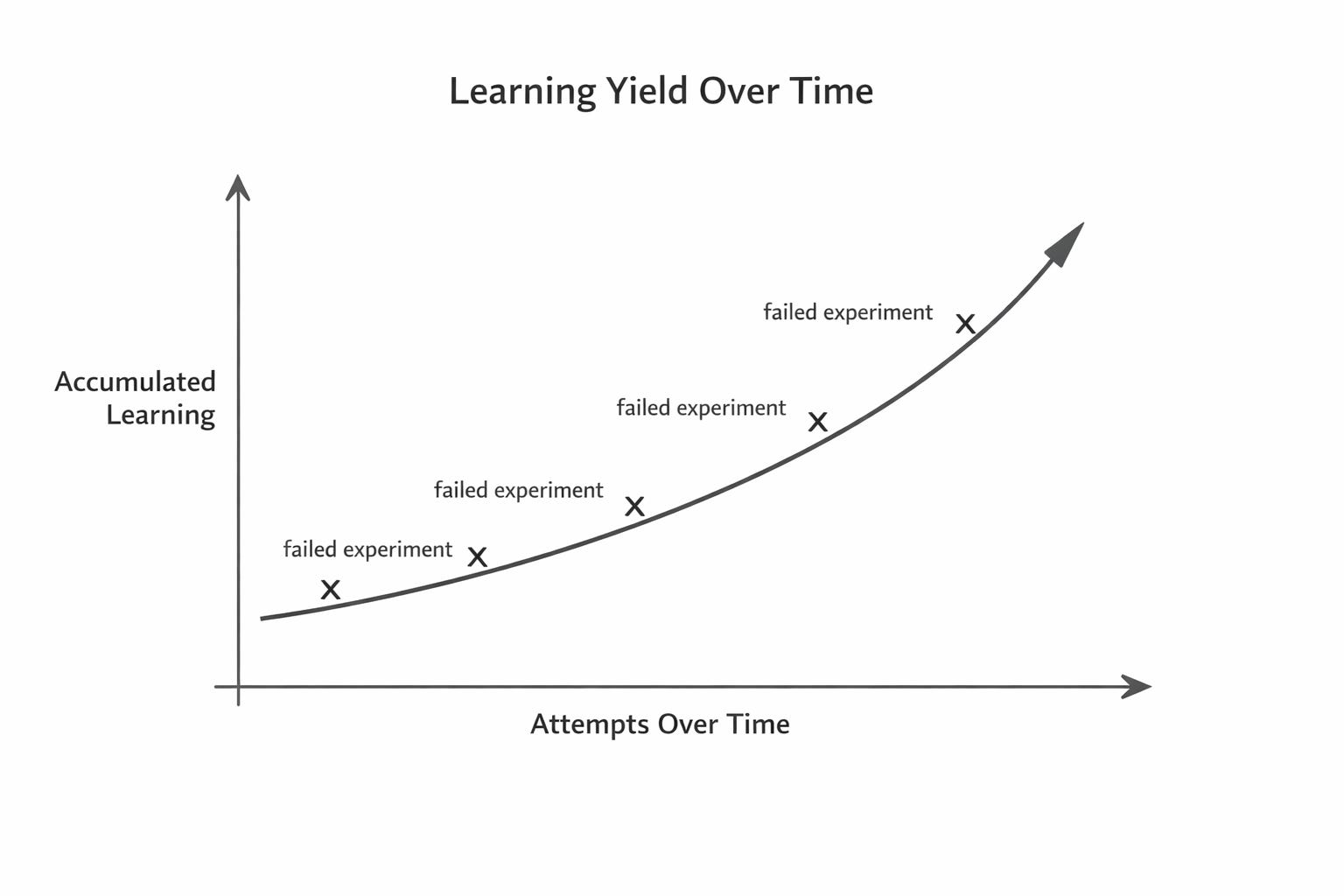
A high-quality asymmetric bet produces useful information even when it does not succeed. This information can take the form of insight, pattern recognition, data, relationships, or skill development.
When the learning yield is high, failure becomes a cheap form of intelligence gathering. This reduces psychological resistance to trying again.
Repeated attempts over time create a portfolio of insights that compounds into better judgment. Judgement itself becomes a form of optionality.
Leverage and Compounding
An asymmetric bet becomes powerful when its upside interacts with leverage. Leverage can come from distribution, technology, networks, compounding skills, or capital.
The interaction between a small initial action and a large amplification mechanism is where nonlinearity shows up.
A single insight can scale if paired with distribution. A small skill can become valuable when placed inside the right technological stack. A modest financial position can grow rapidly when tied to compounding returns.
Leverage increases the slope of the payoff curve while keeping the downside static.
Underexploited or Mispriced by Others
The strongest asymmetric opportunities are often ignored. They hide in places where incumbents underestimate potential, where social norms discourage participation, or where information is unevenly distributed.
Mispricing occurs because most people evaluate opportunities through a linear lens. They see uncertainty and assume risk. They see early markets and assume irrelevance. They see unconventional paths and assume danger.
Asymmetry appears when these assumptions are wrong in a predictable way, and identifying mispricing is often the foundation of strategic advantage.
Small Bet Size Relative to Payoff
A strong asymmetric bet does not require a large commitment. In fact, it rarely should.
The total cost is usually smaller than people assume. It can be a short exploratory project, a limited allocation of capital, a reversible decision, or a skill that takes evenings to learn.
The purpose is not to exert brute force but to generate meaningful exposure to upside in a way that preserves your ability to try again. When the cost is low and the potential payoff is high, the expected value becomes attractive.
This is the exact logic behind building multiple small shots instead of one concentrated gamble.
4. Where Asymmetric Bets Hide: A Cross-Domain Look (Founders, VCs, Professionals)
Asymmetric opportunities rarely look dramatic when they first appear. They tend to be quiet, ambiguous, and easy to overlook.
What separates people who benefit from them is not superior intelligence but superior pattern recognition. And once you understand the conditions under which asymmetry tends to emerge, you will end up finding a structural advantage. You learn to recognize the terrains where small actions can convert into disproportionate outcomes.
Asymmetry clusters in certain environments because those environments contain leverage, uncertainty, and mispricing in the right ratio.
Founders: Environments Where Small Inputs Create Large Step Changes
Founders operate inside systems that reward initiative, speed, and non-consensus exploration. This creates natural pockets of asymmetry.
The cost of early attempts is low, but the potential payoff is large. Here’s a few environments consistently produce meaningful upside.
Early Experiments With Uncertain Upside and Cheap Cost
Small tests, prototypes, or exploratory builds that require limited resources but hold the potential to reveal unexpected demand or unlock new strategic directions. The downside is low, but the information yield is high.
New Distribution Channels
Channels that are not saturated, not fully understood, or not yet institutionalized often generate leverage disproportionate to effort. That’s where early movers benefit from attention, scarcity, and network effects.
Think discord, reddit, twitter, tiktok, but before they went mainstream.

Category Creation Before Consensus Forms
Entering a market or building a category before it becomes obvious creates informational asymmetry. Once consensus arrives, the asymmetry collapses.
Boring or Unsexy Problem Spaces With Hidden Scale Potential
Problems that seem mundane often hide large markets or strong retention dynamics. These areas tend to be ignored by incumbents and overcrowded by neither competitors nor hype cycles.
Small Early Hires Who Bring Massive Leverage
A high-leverage hire in the early days can alter velocity, expand surface area for opportunity, or create technical capability that compounds. The hiring cost is finite, but the potential upside spans years.
Proprietary Insights Others Ignore
Insights gathered from unusual experiences, customer intimacy, random encounters or overlooked data create a unique advantage. When others cannot see what you see, your decisions gain positive optionality.
VCs: Terrains Where Mispricing and Optionality Align
Investors operate in power-law environments where a small number of outcomes dominate returns. Asymmetry is their native language.
But where do asymmetric deals typically emerge?
Outlier Founders With Strong Non-Consensus Insight
Founders who see something the market has not yet internalized create informational leverage. They might seem bold, contrarians, or even insane. But If the insight proves correct, the return multiple overshadows the entire portfolio.

Emerging Markets Before Pattern Recognition Is Established
Markets that lack established heuristics produce mispricing. Early capital in these spaces captures the steepest part of the growth curve.
Unpopular or Misunderstood Technologies
Technologies that are dismissed prematurely often contain latent leverage. As they mature, upside expands while downside remains limited to the initial check size.

Funds of Funds in Overlooked Geographies or Networks
Access to overlooked ecosystems offers exposure to opportunities that remain invisible to the mainstream. The optionality often outweighs the cost.
Small Exploratory Checks That Offer High Option Value
When a small check creates long-term access to a founder, market, or insight, the upside becomes unbounded relative to the capital deployed. The check functions as a low-cost option on future nonlinear events.
Professionals: Career Spaces Where Leverage, Visibility, and Timing Intersect
Professionals often underestimate how much asymmetry exists within their own career paths. The following terrains consistently produce outcomes that far exceed their cost.
Skills With Steep Compounding Curves
Capabilities such as clear writing, quantitative reasoning, public thinking, analytical problem-solving, or coding accumulate leverage year after year. The learning cost is small, but the payoff compounds indefinitely.
Projects That Increase Visibility or Proof-of-Work
Visible work produces reputation, serendipity, inbound opportunities, and network expansion. Even small projects can create a credibility loop that could completely change a career direction.
Joining Small, Fast-Learning Environments
Teams that iterate quickly, ship frequently, and expose members to broad responsibility create strong informational asymmetry. The learning velocity is a form of leverage.
Pivoting Into Frontier Domains Early
Emerging fields with low talent density and little institutional structure offer outsized returns to early adopters. Early competence becomes long-term advantage.
Writing, Building, or Publishing in Public Spaces
Public work amplifies distribution, surfaces opportunity, and increases the surface area for luck. The cost is time and discomfort, and the upside is nonlinear.
5. Why Most People Misjudge Asymmetric Bets (and Miss Them Entirely)
Asymmetric opportunities rarely fail because they are mathematically weak. They fail because they are psychologically uncomfortable.
The average person does not reject upside because they lack ambition. They reject it because their instincts evolved in environments where survival mattered more than expected value.
Modern life rewards a different instinct, yet most people continue operating with the old one. As a result, they consistently walk away from situations where small risks produce large returns.
Asymmetry hides in plain sight, but it feels dangerous. That emotional mismatch is what causes people to misjudge it.
Humans Overweight Downside Because It Is Vivid and Immediate
Downside is experienced as loss, embarrassment, discomfort, or uncertainty. It is concrete and easy to imagine. Because the human nervous system responds strongly to loss signals, people treat small, survivable downsides as catastrophic.
A minor risk feels like a moral failure. A reversible experiment feels like a reputational threat. But this internal magnification distorts judgment.
Upside does not trigger the same response. It is abstract and hypothetical. The brain discounts it heavily, so returns that may be transformational are evaluated as if they are negligible.
Upside Is Delayed or Invisible, So People Undervalue It
Asymmetric upside rarely arrives immediately. It compounds through time, leverage, and nonlinear events. This delay makes it hard to appreciate at the moment of decision because the mind always prefers concrete benefits over uncertain, far-future outcomes.
And because upside unfolds slowly, most people never connect small experiments with the large rewards that could eventually follow.
This tendency causes them to overvalue safe paths where payoff is immediate but capped, and undervalue exploratory paths where payoff is uncertain but potentially exponential.
Institutions Train Linear Thinking
Schools reward correctness instead of exploration. Corporations reward predictability, not variance. Credential-heavy environments reward stability over experimentation. These systems teach people to avoid anything that introduces the possibility of variance.
And thus, linear thinking becomes the default frame: predictable inputs, predictable outputs, predictable consequences.
Asymmetric opportunities do not conform to these rules. Their outcomes are unbounded, unpredictable, and often invisible in the short term. Institutional conditioning treats this as a threat, not a feature.
Because of this, many people reject asymmetric bets because they have internalized an environment where predictability determines status.
Fear of Reputational Risk Blocks Exploration
Reputational fear is one of the strongest psychological barriers. People overestimate how much others are watching them and overvalue the social cost of being wrong. This imagined audience creates a false ceiling on experimentation.
However, reputational downside is usually small and temporary, few people remember when you fail, and even fewer care, no one tracks your early attempts with precision.
On the other hand, reputational upside is asymmetric. One public project, one visible contribution, or one unconventional move can permanently expand opportunity surface area. Most people never access this upside because they treat reputation as fragile instead of renewable.

Status Quo Bias Makes Comfort Feel Rational
People instinctively equate familiarity with safety. The predictable job, the familiar role, the incremental project, they feel responsible because they lack volatility. But volatility and risk are not the same. Many paths that feel safe instead offer capped upside and limited optionality.
Status quo bias makes a linear environment appear rational even when it restricts long-term growth. It shifts attention toward short-term comfort and away from long-term expected value. By the time someone realizes this, the opportunity window has already narrowed.
Asymmetry Feels Risky Even When It Is Strategically Optimal
This is the central paradox. The most rational decisions often feel emotionally risky. Asymmetric bets offer small, controlled downside, large or unbounded upside, high learning yield, and repeated experimentation at low cost.
But because they involve uncertainty, they trigger instinctive avoidance. People walk away from situations where the numbers are overwhelmingly in their favor simply because their nervous system prefers predictability over potential.
Once you understand this, asymmetric opportunities stop feeling like gambles. They begin to feel like the only mathematically sound approach in a nonlinear world.
6. A Practical Framework: How to Evaluate Any Decision Through an Asymmetric Lens
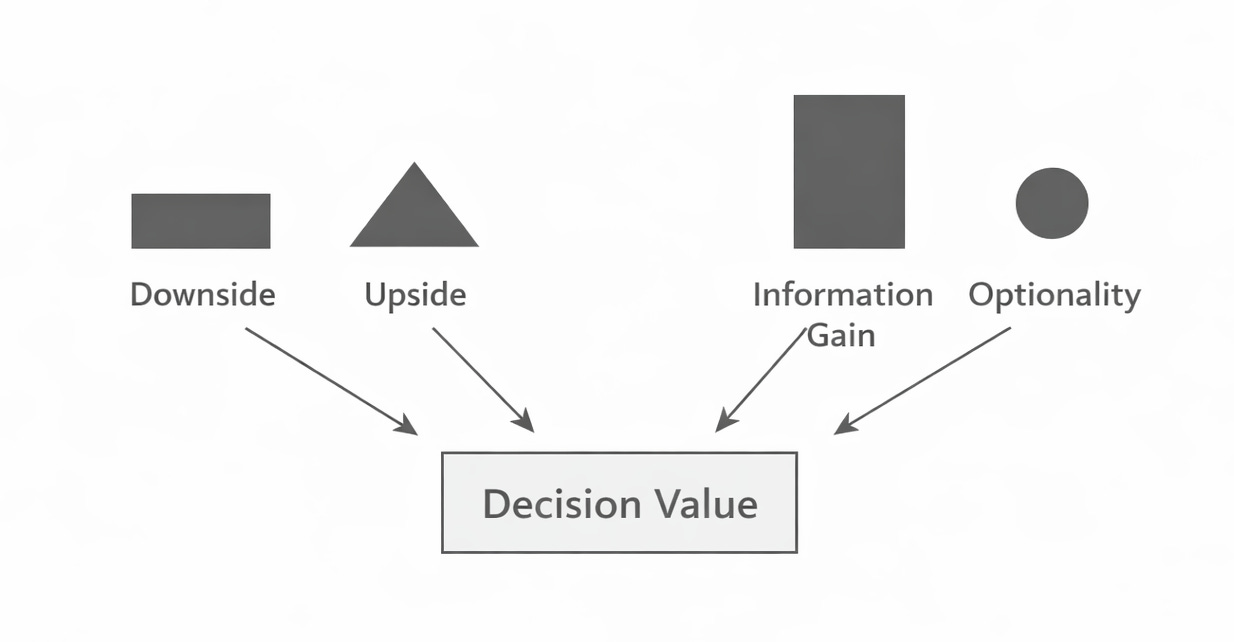
Every meaningful decision has a similar hidden structure, though the details might differ. It involves a balance between downside, upside, information gain, and optionality.
Most people never see this structure because they evaluate choices through habit, social pressure, or fear. A practical asymmetric lens removes the noise and reveals whether a decision is genuinely worth taking.
So if you want to take as many asymmetric bets as possible, ask yourself these questions.
What Is the Real Worst-Case Downside? Is It Survivable and Bounded?
Most imagined downsides collapse when examined honestly. What will you actually lose if this bet fails? Time? A small amount of capital? Temporary discomfort? A short-lived reputational sting?
If the worst-case scenario is tolerable and reversible, the bet already leans asymmetric. Many opportunities look risky only because the downside has never been articulated in concrete terms.
What Is the Best-Case Outcome, and Is It Meaningfully Nonlinear?
Upside becomes asymmetric the moment it stops being incremental. Will this bet transform a skill, open a new market, elevate your visibility, or compound for years? Does it have power-law characteristics, where one win outweighs dozens of quiet losses?
Listing the best-case outcome without shrinking it reveals whether you are evaluating a low-ceiling decision or a high-leverage one.
Does This Create Optionality Even if It Fails?
Optionality is the secret yield of asymmetric decisions. A project might fail but still create new relationships or insights. An investment might go nowhere but teach pattern recognition. A skill might not monetize immediately but open an unexpected door later.
When failure expands your strategic surface area, the decision becomes stronger and not weaker.
Is the Cost Mostly Time, Discomfort, or Ego?
High-quality asymmetric bets rarely demand large amounts of money. They demand curiosity, time, and the willingness to look foolish for a short period. Because time, discomfort, and ego are renewable resources, their cost does not diminish your long-term trajectory.
When the main cost is psychological rather than financial, expected value tends to skew upward.
Is This Opportunity Unpopular for Reasons That Aren’t Real Risks?
Many of the best opportunities are ignored because they are early, unconventional, boring, or socially unvalidated. Mispricing emerges when people avoid something not because the downside is dangerous, but because it feels unfamiliar.
If an idea is unpopular due to perception rather than actual risk, there is often hidden asymmetry beneath it.
Would I Take This Bet Instantly if No One Could See Me Fail?
Reputational fear distorts judgment more than any rational analysis. Strip it away. Imagine that failure is invisible and success is visible. Would your decision change? If yes, then the barrier is social, not strategic.
Evaluate the bet on expected value instead of imagined spectatorship.
Does This Increase My Surface Area for Luck?
Luck finds people who create exposure. Publishing, building, experimenting, reaching out, engaging with new domains; each of these actions opens pathways that cannot be predicted but can be accessed.
A decision that increases your surface area for serendipity has an embedded asymmetric signature. It increases the number of positive tail events that can find you.
Will I Learn Something That Improves My Next Bet?
Good bets compound. They produce information loops. They increase judgment. If a decision enhances your ability to evaluate future opportunities, its long-term payoff may be far larger than its immediate outcome.
Even a failed attempt that improves your heuristics creates nonlinear returns over time.
7. Closing: The Asymmetry Mindset
Once you start seeing the world through asymmetry, your decisions will change forever. You stop asking, “Is this safe?” and begin asking, “Is this worth it?”
That’s the move from linear thinking to nonlinear advantage, from protecting the present to designing for an unfair future.
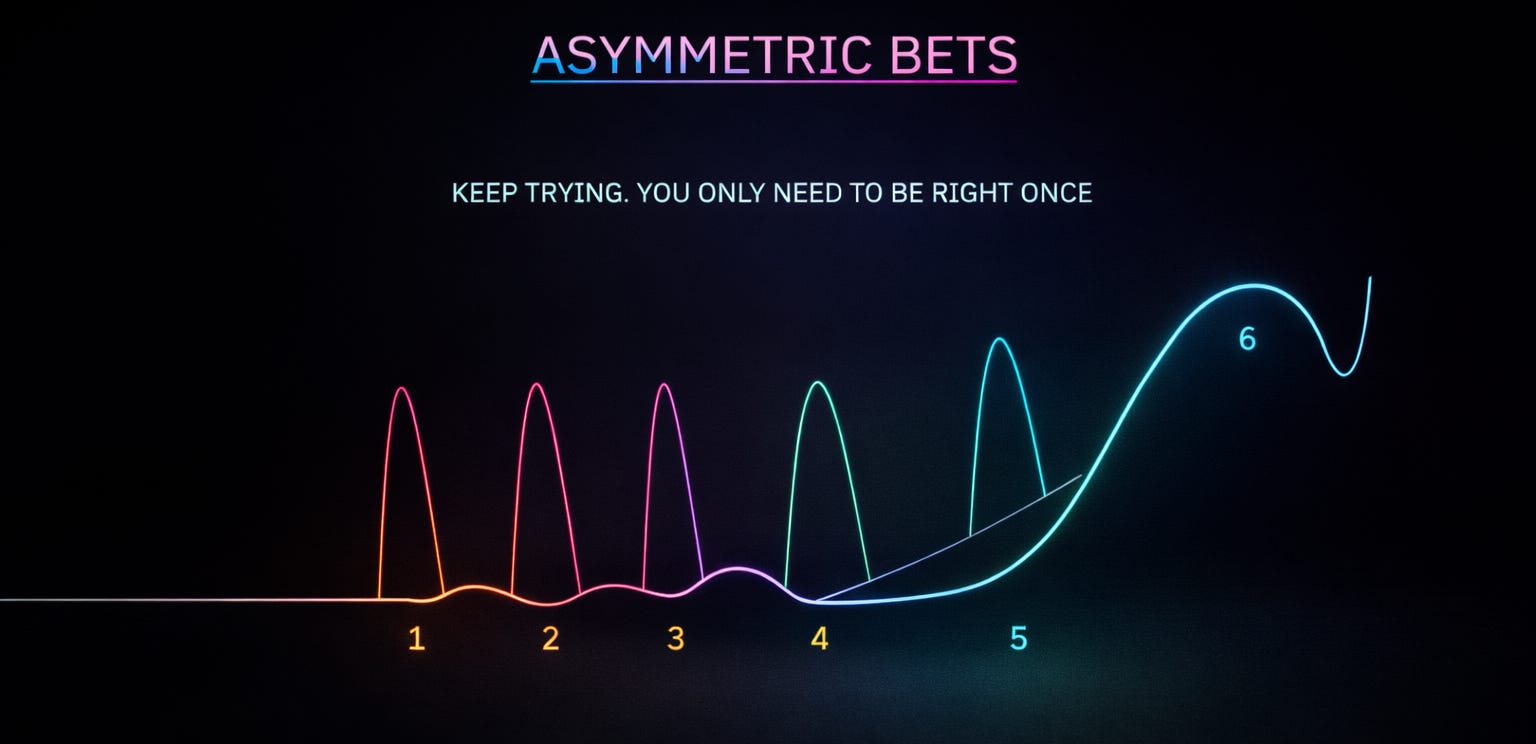
The point is not to take big risks, but to engineer your life so the downside of each bet is small and the upside is allowed to run. A portfolio of these small, smart decisions gradually tilts your trajectory. Most attempts will fade quietly, but a few will create unexpected momentum, and…one will change everything.
That is bounded downside, meaningful upside, and the patience to let asymmetric returns unfold.
Failure is not the opposite of progress. Sometimes it is the mechanism of progress.
Very well written Ruben and I learned some new insights. Thanks for writing the article.