

The Real Reason Founders Lose Their First Deal
Every founder who has run out of money remembers the exact moment the balance hit zero. That’s when you know the game’s over.

CB Insights tracked 431 venture-backed startups that closed since 2023 and found capital exhaustion cited in 70% of the shutdowns. That number describes the moment of death, not the disease. 43% point to poor product-market fit as the deeper cause, the slow failure to turn interest into revenue long before the money ran out.
Product-market fit rarely fails in a boardroom. It fails in the first twenty sales conversations with a stranger who owes you nothing, and the damage is done long before anyone calls it a crisis.
Ten mistakes show up again and again in those conversations. None are about sales skill. They’re about founders avoiding the one thing that tells them what’s real fastest: a stranger holding a checkbook.
Speaking of what it actually takes to close:
First Round Capital’s Liz Wessel is opening up the seed playbook live
She co-founded WayUp at 23, raised $40M, and spent 8 years as CEO before exiting. Now, as a Partner at First Round, she sits on the other side of the table, deciding which founders get the check.

This is the closest you’ll get to sitting in on one of her actual seed meetings:
▫️ The exact signals that make her say yes, before you even finish the pitch
▫️ What separates a “maybe” from a term sheet at this stage
▫️ Live Q&A, bring the question you’ve been sitting on
Seats are limited, and sessions like this with a working First Round Partner don’t stay open long :)
Hosted by Metal, the AI-native OS for founders raising.
Table of Contents
1. Two Kinds of Avoidance That Look Like Discipline
2. Reading the Room You’re Actually In
3. What a Price Actually Communicates
4. Building a Pipeline That Can Survive a No
5. The Process Nobody Should Hand Off Yet
1. Two Kinds of Avoidance That Look Like Discipline
Two of the most common founder mistakes aren’t sales errors at all. They’re the same underlying fear, wearing different clothes.
The Polish Stall
Founders wait to start selling until the product feels finished. It never does, because the founder is the only person positioned to see every flaw still sitting inside it.
Readiness behaves like a confidence problem far more than a product problem, and confidence comes from repetition, not another sprint of polish.
CB Insights‘ own dataset shows the median time from a startup’s last fundraise to its death is 22 months, which is not a lot of runway to spend waiting for a version of the product that feels safe enough to show a stranger.
The deeper mistake is believing the product is what’s being tested first. Get rid of this thought as early as you can. .
The founder’s hypothesis about the problem is, and every week spent refining in isolation is a week spent guessing instead of learning.
The fix isn’t shipping something broken and hoping for the best. It’s reframing what’s actually on offer.
It might not be a finished output, but a partnership in solving something painful, with the founder as an engaged, available collaborator.
Customers forgive a rough product. They rarely forgive a founder who was too afraid to show up with one.

The Reluctant No
The opposite fear shows up once conversations actually start. Founders stay in dead deals long after the signal has clearly turned, because ending a conversation can feel like admitting defeat.
Forrester’s research on B2B purchasing found that 86% of purchases stall at some point before closing, which means most of what looks like a stalled deal is already effectively over, whether or not the founder has accepted that yet.
Staying in it doesn’t revive it. It just delays the founder’s next real conversation.
The better instinct is to ask the disqualifying question early and directly: how high a priority is solving this problem right now?
If the honest answer is not very, believe it immediately.
A fast no is worth more than a slow maybe, because the one resource a founder can’t get back at this stage is the hours spent chasing a prospect who was never going to sign.
Once a founder actually gets a real conversation going, a different, and more expensive, set of mistakes takes over.
2. Reading the Room You’re Actually In
Getting the meeting is rarely the hard part. Knowing who’s actually in it, and what to do once you’re there, is.
The Champion Isn’t the Buyer
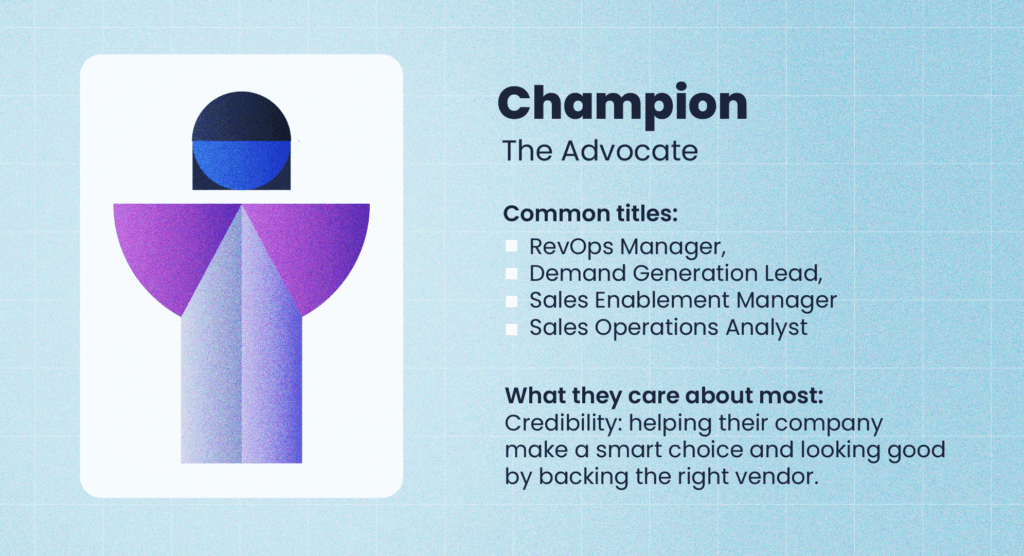
Every early sales cycle produces a hero inside the target company, someone who understands the product immediately and pushes for it internally. Founders routinely mistake that enthusiasm for progress.
Gartner’s research on B2B purchasing puts the average buying group at six to ten stakeholders, each carrying a different priority and a different kind of veto power.
A champion can open a door and translate the pitch internally, but rarely holds the budget authority to close what’s behind it.
Founders also tend to log polite interest as momentum. “This is really interesting” and “we’d love to stay in touch” usually mean a stranger being kind after thirty minutes of someone else’s life’s work.
The only reliable cue that cuts through the politeness is money changing hands, or a specific next step tied to a named decision-maker. One direct question fixes most of the confusion early: whose budget would this actually come from?
Sell Less, Listen More
Technical founders in particular tend to sell the same way they debug, by explaining everything, thoroughly, in order, until the logic feels airtight. But that instinct runs exactly backwards in a sales conversation.
Gartner and Forrester’s more recent research on B2B buying puts somewhere between 70% and 80% of a buyer’s journey as already complete before they ever speak to a seller.
That means the person on the call has largely formed their view already, and the conversation that follows is for extracting information, not delivering it.
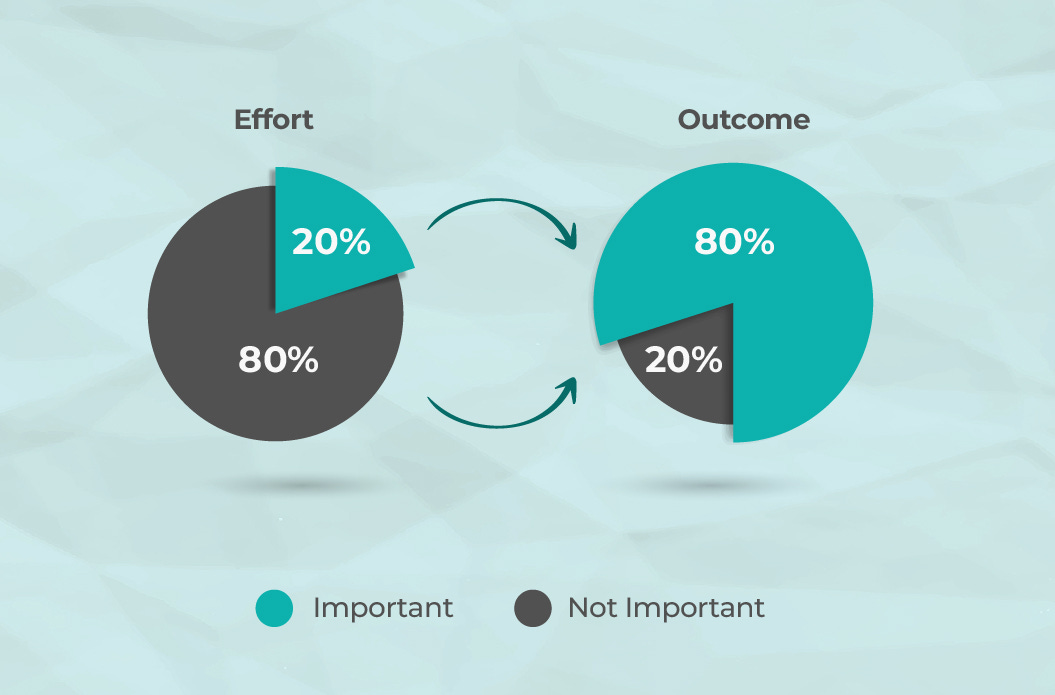
A useful rough guideline is an 80/20 split. 80% listening, 20% talking. The pareto principle.
Founders who leave a call with pages of a prospect’s own words about their pain, their internal politics, and their timeline build a sharper pitch than founders who leave a call having said the most articulate things.
Even once a founder is talking to the right person and listening well, most still get the next part wrong.
And that is, of course, the number.
3. What a Price Actually Communicates
A price is the first real piece of information a buyer receives about how seriously to take the person sending it.
Founders assume a low number removes friction from a sale. In practice it usually swaps one objection for a worse one: invisibility.
A price that doesn’t require a real internal conversation on the buyer’s side isn’t being evaluated so much as tolerated.
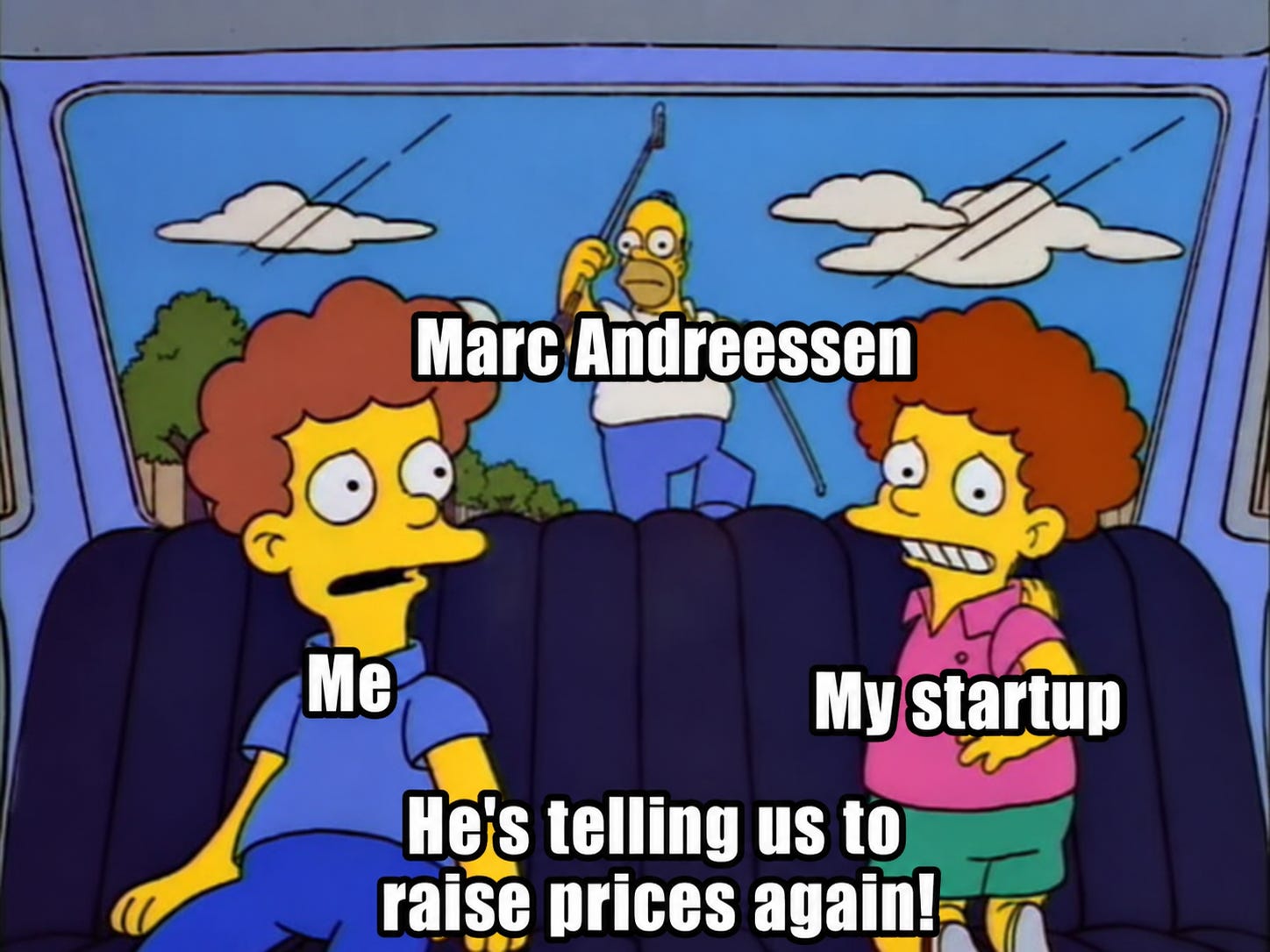
Marc Andreessen’s advice to the founders he backs is famously blunt. He’s said he’s considered hiring a skywriter to put two words above San Francisco: “Raise Prices.”
The logic isn’t about greed. Raising prices is a fast way to find out whether a company actually has a moat, since customers with no real alternative will still pay.
Companies that charge more can also fund the distribution and R&D that companies charging less simply can’t.
A core piece of that advice is pricing by value rather than by cost. That can be achieved by charging as a percentage of what the product is actually worth to the business buying it, not what it cost to build.
Founders who treat pricing psychology as a serious discipline in its own right, rather than an afterthought bolted on after launch, consistently end up with more durable margins.
If a number doesn’t make a founder wince slightly saying it out loud, it’s probably too low.
The hidden risk: Underpricing
Then coems another risk in pricing, which is underpricing.
This is a scary one because it can lock founders into contracts they can’t easily escape. Most founders tend to overthink this.
If a discount is genuinely unavoidable to land a first logo, keep the term short. A cheap monthly deal is recoverable, while a cheap three-year deal is a tax paid long after the mistake becomes obvious.
At the end of the day, solving pricing doesn’t fix a more structural problem sitting behind it, which is the shape of the pipeline itself.
4. Building a Pipeline That Can Survive a No
The healthiest early-stage sales motions are boring in a specific way. They’re wide, not deep, and they never rest their full weight on a single account.
One Great Logo Is a Story, Not a Business
A recognizable name shows real interest, and founders start spending the deal in their head long before a contract exists.
It shows up in your home page. It ends up in the board update. It starts steering the roadmap.
But anchoring a company’s story to a single deal distorts judgment well before that deal ever falls through, and most of them do fall through for reasons that have nothing to do with the founder.
It could be budget freezes, reorgs, a champion who changes jobs. Anything.
A pipeline with one deep relationship and no width is a single point of failure sitting quietly in someone else’s inbox.
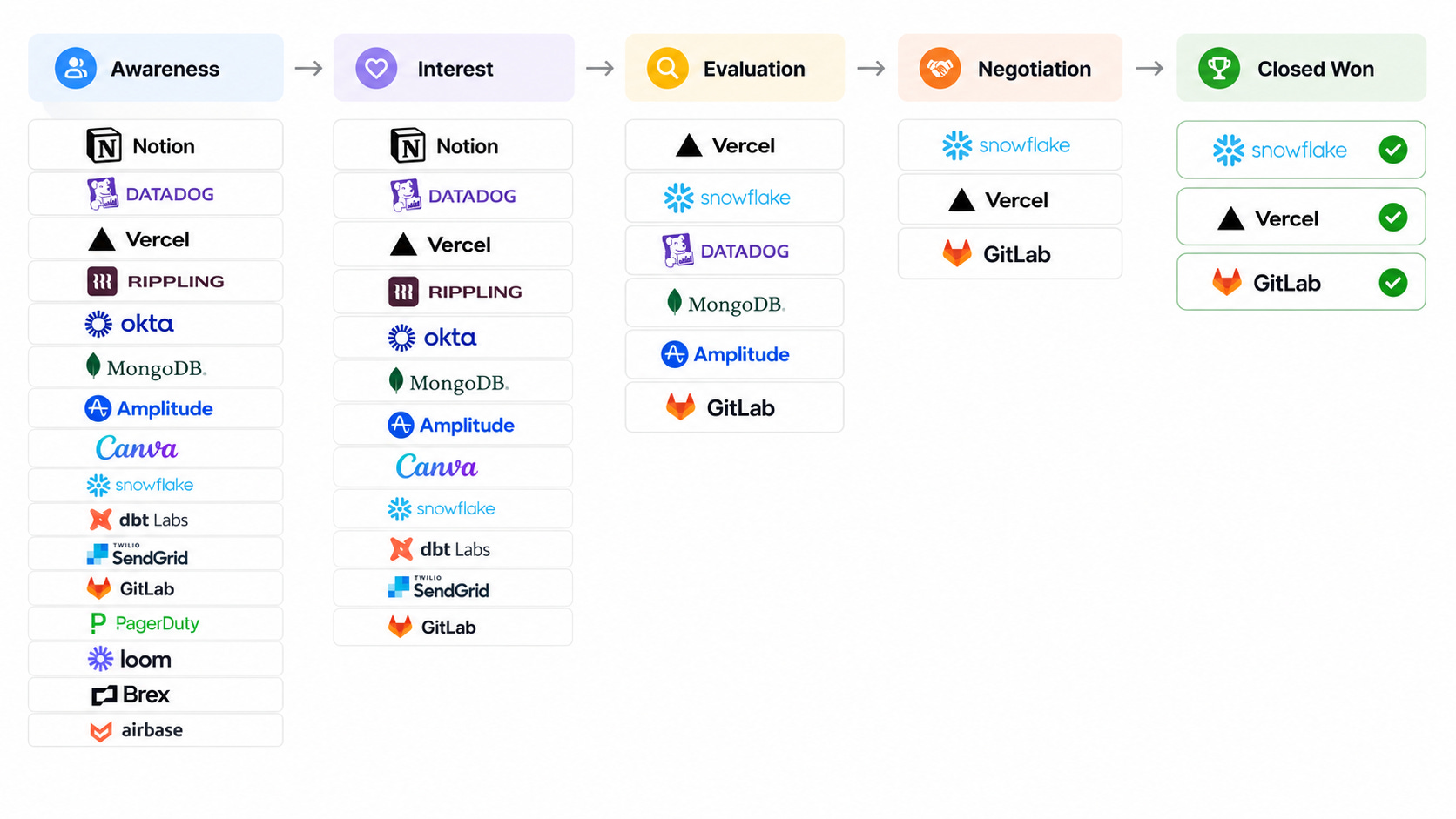
Founders who want real investor traction heading into their next raise keep five to ten live conversations running at once, on purpose, even after a promising one shows up.
It’s a healthier read on unit economics, too. One logo tells a founder almost nothing about whether the model works at scale; a dozen smaller ones, closed on comparable terms, tell them almost everything.
Bigger Isn’t Better When You’re This Small
The instinct to chase the biggest possible logo is understandable, and often wrong, because large organizations are built for stability, not speed.
Forrester’s benchmarks put the average enterprise deal above $100,000 in annual contract value at 11-17 months to close. That is an eternity relative to the feedback loop an early founder actually needs.
A smaller, more agile customer can go from first call to signed contract in the time it takes an enterprise prospect to schedule its second internal meeting.
That speed matters more than the logo’s name recognition at this stage, because velocity is the feedback loop.
Founders eyeing an upmarket or international push tend to do better when they hire slow into that motion and prove the faster, smaller version of the sales cycle first: win decisive customers, build the case studies, then move upmarket deliberately instead of prematurely.
Nevertheless, getting the pipeline shape right still doesn’t solve the last problem, which is who’s actually running the process, and how.
5. The Process Nobody Should Hand Off Yet
The final set of mistakes shows up after the conversation ends, in what founders do with what they learned and who they hand it to next.
A Pitch That Hasn’t Changed Is Already Stale
Founders often treat their pitch as a finished asset, polished once and then deployed unchanged across the next hundred conversations.
Let’s be real here. A pitch that’s stopped evolving is a pitch that’s stopped listening.
Watch for where a prospect leans in, where they get confused, where they interrupt with a question nobody anticipated. That’s the market editing the story, for free.#
Reception to feedback is what separates a great founder from the average.
60 seconds of notes after every call, repeated over a few dozen conversations, builds something no internal brainstorm ever could. It builds a pitch shaped by real buyer reactions instead of founder assumptions.
But the same instinct has to hold inside the room, not just after it. If a prospect suddenly lights up at one specific feature, the founder should follow that thread instead of returning to the script.
The Hire That Arrives Too Soon
Handing sales to a new hire before the founder has personally closed a meaningful number of deals doesn’t accelerate anything. Even the outbound sales system that helped scale Salesforce was built only after its architects proved the motion themselves.
It removes the founder from the only channel currently teaching them what’s actually true.
So, when should you hire?
OpenView’s 2023 Product Benchmarks report found that fewer than half of product-led SaaS companies, had a dedicated sales hire before crossing $1 million in ARR, a figure that only climbed to 73% once they’d passed that mark, well after the founders had personally proven the model worked.
Sterling Road, a pre-seed B2B investor, uses a rougher rule of thumb for the same idea. Roughly a 100 closed deals for consumer products, 30 for SMB, 15 for mid-market, and 5 for enterprise, before a hire makes sense.
Startup Genome’s research into high-growth failure found premature scaling, spending and hiring ahead of a validated model, implicated in 70% of the cases it studied.
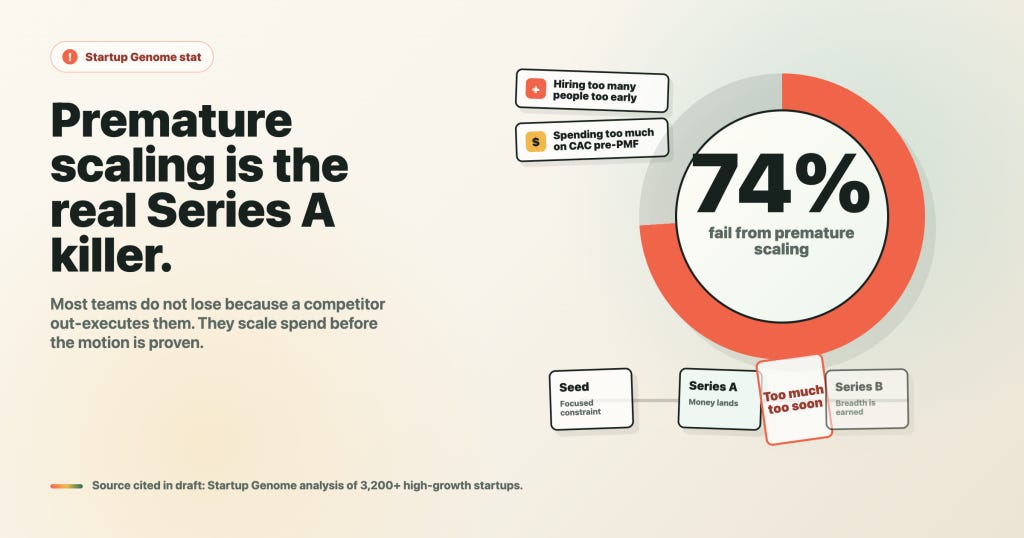
An early sales hire without a founder-tested go-to-market playbook to hand them is exactly that kind of premature scaling with a job title attached.
A hire can’t execute a playbook that doesn’t exist yet. Founders who delegate before they’ve built one are asking someone else to guess at a process the founder never wrote down.
Every one of these nine patterns is really one mistake wearing different clothes: treating the first sales cycle like a performance instead of a research project.
Founders who struggle are usually optimizing for looking competent: the polished deck, the comfortable price, the pitch that never changes, a hire who takes the awkward calls off their plate.
Founders who break through are optimizing for learning fast instead, even when that means an uncomfortable price, a call that ends in a clean no, or another month running the sales motion personally before anyone else touches it.
The first ten sales conversations a company ever has are the cheapest, highest-signal research it will ever run. Guard them accordingly.
I see the exact same patterns in personal finance with Indian salaried clients.
The 'polish stall' = delaying SIPs until the 'perfect' portfolio is built. The 'reluctant no' = holding losing investments hoping they'll recover. Pricing = insurance premiums so low they signal no real coverage.
Widening the pipeline (diversifying) is the only thing that survives a no from one asset class.