

In 2007, the first version of Dropbox ran on Windows only and could barely hold a handful of users at once. Scripts and stubbornness held it together.
Drew Houston recorded a three-minute screencast anyway, posted it to Hacker News, and watched the beta waitlist climb from 5,000 to 75,000 in a single day.
Behind that clip sat a demo, and the demo did the entire job.
That should unsettle every founder who spent a month perfecting a deck. DocSend studied thousands of them and found the average investor gives a seed deck about 3 minutes and 44 seconds. Only 58% get viewed to the final slide.
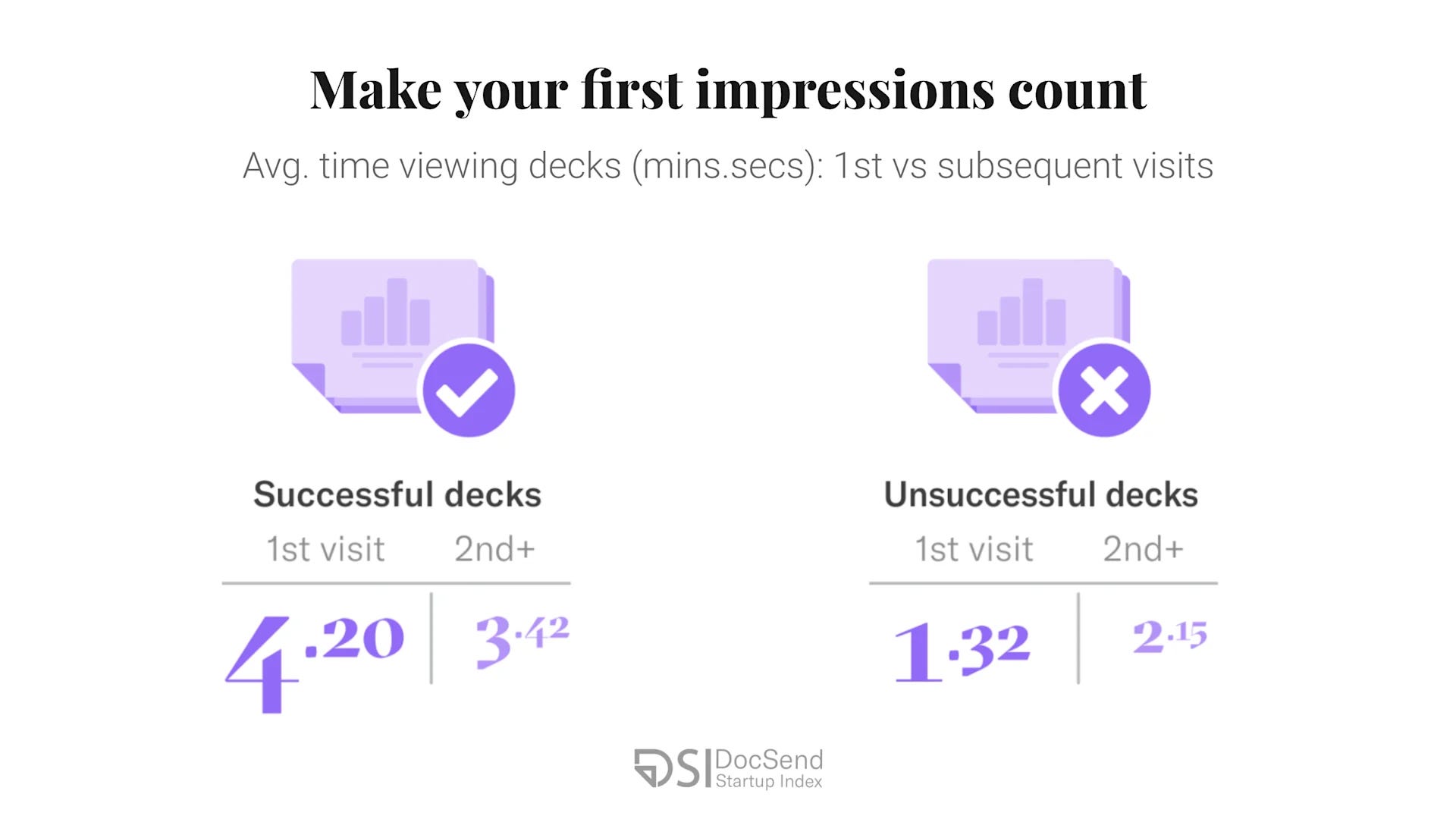
Weeks of work, skimmed and dropped before the ending.
together with Granola
A great demo ends with a dozen follow-ups. The deck, a reference, a specific number, a second call. Then you walk into the next meeting and the last one is already fading.
That is a meeting problem, not a memory problem.
Granola handles it in the background:

▫️ Skips the bots. It transcribes from your own audio on Zoom, Meet, or Teams
▫️ You stay present and pitch while it captures everything for you
▫️ After the call, it turns the conversation into summaries and next steps
▫️ Chat with your notes to write the follow-up while it stays fresh
Be the founder who walks into the next room remembering exactly what the last one asked for.
One month free with code THEVCCORNER:
That’s because even the best pitch deck can only tell an investor what a founder claims to have built. A live demo proves the thing was actually built, and proves the founder can run it in real time while someone watches.
One is a description. The other is evidence.
Most founders still treat the demo as the easy part, the piece to sort out the night before. That habit explains why so many demos land flat in rooms nobody could afford to lose.
A top-tier demo is not a feature tour. It works as a compressed argument for why someone should believe you, and any argument can be built on purpose instead of left to luck and nerves.
Here is how the best founders build it.
Table of Contents
Why the Demo Carries Weight the Deck Cannot
Decide the One Belief You Want to Install
Open on the Pain, Then Show the Old Way
Run It Live and Kill the Dead Air
End With the Ask, Never a Shrug
1. Why the Demo Carries Weight the Deck Cannot
Investors are not buying an idea. They are buying a private bet on whether this founder can build the thing the idea demands.
A live demo gives them the cleanest read on that bet they will ever get.
A slide promising real time sync across every device costs nothing to write. A working version of it, running in the room, costs the one thing a slide cannot fake: proof that it got built.
The Dropbox clip won over a crowd of skeptical engineers for exactly that reason.
By Houston’s own account, the early product ran only on Windows and strained under more than a few users. The screencast still showed the core magic clearly enough that Hacker News believed the rest would follow.
They were not reacting to a promise. Instead, they were reacting to proof of the single moment that made the product worth wanting.
The same logic rules a room with a partner across the table.
Jina Yoon wrote up what she saw after watching more than 50 hackathon demos back to back, and one pattern jumped out. Teams that had already shipped something, even to a thin slice of real users, carried a credibility that no amount of polish could fake for the teams who had only described their plans.
One team announced their project was already live for a quarter of PostHog’s users, with real data moving through it. That one fact reframed how the room heard everything else they said.
Shipping before the demo is the strongest version of this, and it points at the principle under every good demo. A founder stands in that room to be believed, and belief follows evidence.
With the demo established as the best evidence on offer, the work becomes deciding what it should prove.

2. Decide the One Belief You Want to Install
Before the laptop even opens, a founder should pick the single belief they want lodged in the audience’s head at the moment it closes.
Not three beliefs. One.
The whole demo then becomes evidence for that one claim, and anything failing to serve it gets cut, however clever it happens to be.
This discipline earns its place mechanically, not aesthetically, because of how decisions get made once the founder leaves the room.
The person watching a demo rarely holds the power to say yes alone.
A junior partner has to re-pitch the company at the Monday meeting. A champion inside a customer has to sell it upward to a VP who controls the budget.
They will carry one sentence out of that room, maybe two, and they will carry it imperfectly.
A demo with a single sharp point survives the retelling. A demo with 5 points dies in a secondhand summary the founder never gets to hear or correct.
The demos people actually remembered were built around one point that every other part served, usually the problem and the one move that solved it.
Get to that point fast. Context, if any is truly needed, belongs in a sentence or two, never in the founding story.
The violation test
A point that cannot be said in a single plain sentence before the screen turns on is not a demo yet. It is a walkthrough, and a walkthrough earns a polite pass.
But, knowing the one point is only half the job. The harder craft involves making an audience feel that point rather than simply hear it.
3. Open on the Pain, Then Show the Old Way
Audiences do not care about a solution until they feel the problem it answers, so the strongest demos open on pain rather than product.
The first seconds should drop the audience into a situation they recognize so completely that they are nodding before anything built has appeared on screen.
A founder earns the right to demo by proving they understand the problem first.
One small framing choice does most of the heavy lifting here, and a racing pulse makes it easy to forget.
Saying “we built a tool that manages support tickets” keeps the audience as spectators, watching a company from the outside.
Saying “imagine you are on call, and six incidents are firing at once” drops them inside the scenario, feeling the stakes from where they sit.
It’s true that demos using this second person framing are able to pull the room in far more reliably than the ones narrating what the team had made.
Then comes the move that separates a memorable demo from a forgettable one: showing the product directly against the thing it replaces.
A one step workflow means nothing in isolation, because the audience has no yardstick for whether one step is any good.
Show the painful current version first, the six clicks and the copy and paste and the spreadsheet rotting in someone’s downloads folder. Then fold all of it into the single new step, live, in front of them.
The comparison manufactures stakes the product alone never could, and it does the selling on its own, because the audience reaches the obvious conclusion instead of hearing anyone assert it.
Sequenced together, those two ideas form the spine of most great product demos.
Open on the pain everyone has lived. Make it personal with second person framing. Walk through the old slog, then resolve it.
By the time the product appears, the audience is no longer weighing a feature. They are watching relief arrive.
4. Run It Live and Kill the Dead Air
The word demo carries an obligation founders too often let themselves dodge
If the thing got built, then show it doing the thing.
Anyone can describe a product on a slide, and a slide about a product reads as a far weaker object than the product itself in motion.
A rough live demo beats a beautiful slide about a product that may not exist yet.
Running live raises the stakes, because live things break at the worst possible second. Retreating to slides fixes nothing. Invisible preparation does.
The best demos pre-load and cache everything that can stall, because dead air is where a room’s attention drains away.
The usual culprits are slow queries, agent responses, long builds, and a founder typing a URL by hand instead of bookmarking it.
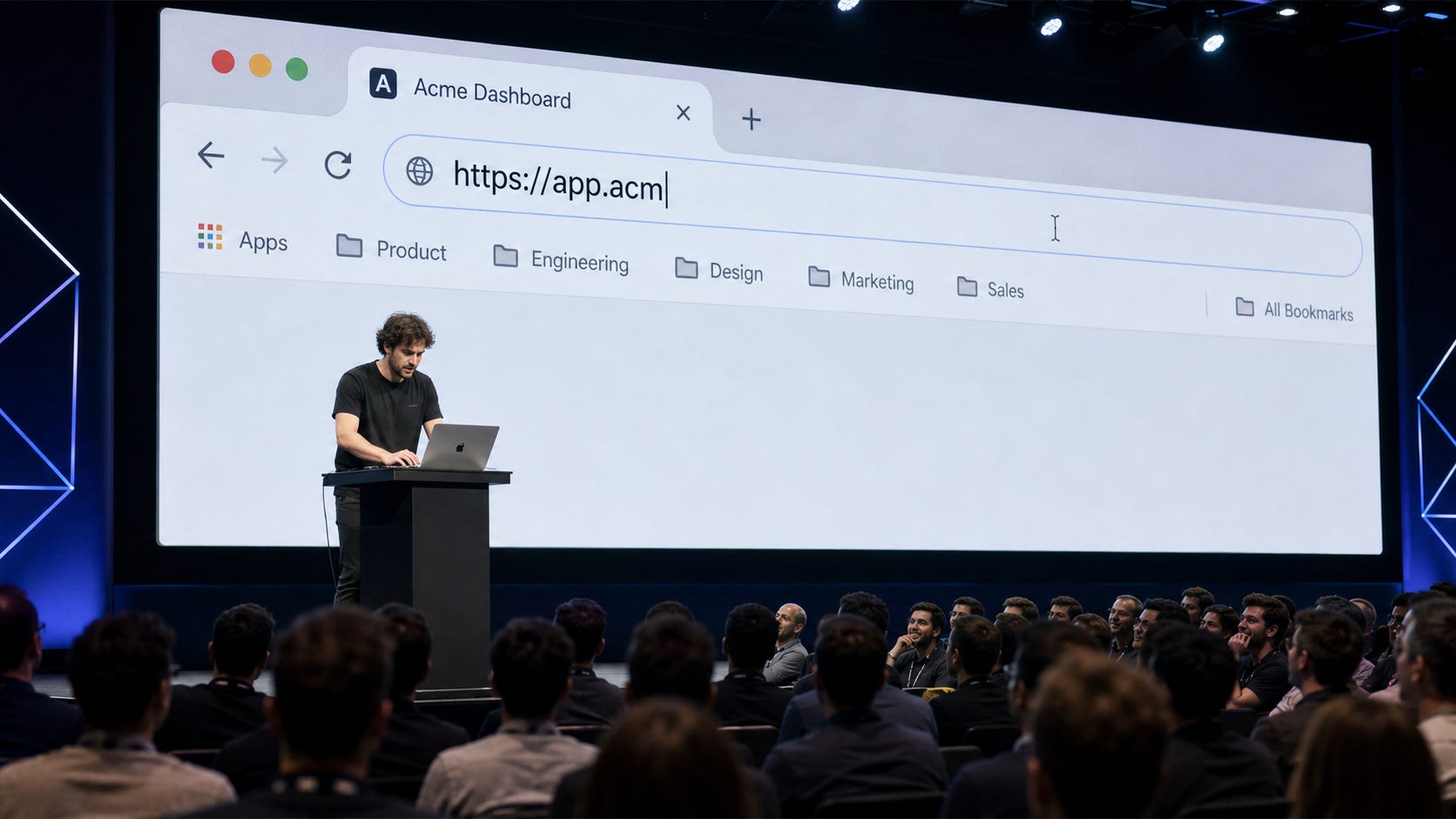
Yoon compares this to television chefs prepping their ingredients before the camera rolls, so every second on air stays interesting.
Keep a folder of screenshots ready for the moment the WiFi dies, because on a long enough timeline it will.
Two delivery habits cost nothing and change the result.
The first habit
Stop apologizing. “Sorry, this is still rough” trains a room to discount everything before they have even seen it.
Founders run a subtler version constantly, with throwaway lines like “ignore the design” or “this part is not really built yet.” Each hedge lowers the ceiling on how impressed anyone is allowed to be.
When something breaks, push forward to the next path rather than narrating the failure on the way down.
The second habit
This is all about the energy. A great demo is often just a good one delivered by someone with real conviction behind it.
An audience borrows its confidence from the founder’s. Flatness spreads in the wrong direction.
None of this means being loud. It means visibly believing the thing on screen, which, for a product the founder actually built, should not have to be an act.
A live run that lands cleanly leaves exactly one mistake still capable of wasting all of it.

5. End With the Ask, Never a Shrug
A demo without an ending leaks every drop of momentum at the precise second attention peaks.
The room is finally leaning in, and then far too many founders close with “so, yeah, that’s it,” and hand the energy straight back.
Those final five seconds carry more weight than any other moment in the demo. They should point at one specific next step.
What that step looks like depends entirely on who sits across the table, and this is the part most founders skip.
An investor needs the shape of the round, the check size, and a clear sense of what the next twelve months buy. A prospective customer needs the path to a pilot and a name to contact on Monday. A recruit needs to feel what they would own by joining.
The arc of the demo stays identical across all three. Only the closing ask changes, tuned to the single decision this particular person can make.
Houston closed his screencast with one form to join the waitlist and nothing else competing for the click.
The cleanest demos resolve into a single obvious action rather than a menu, because a menu invites people to pick the easiest item on it, usually “let me think about it.”
When a room knows exactly what to do next, a real share of them go and do it.
Stripped back, a top-tier demo follows one plain arc.
Open on a pain the audience feels, framed as their own. Raise the stakes with the costly old way. Resolve it into the single point, live and uninterrupted, delivered without hedging. Then say precisely what to do next.
The software was never the real point.
A demo is a five minute test of whether a founder understands the customer’s problem, can build, and can make another person believe. That happens to be the whole job, performed at speed in front of an audience.
Founders who treat the demo as an afterthought are throwing away the best audition they will ever get.
A classic demo was Elisha Otis's demo of his Safety Elevator at the 1853 World's Fair. He had himself hoisted up in the air...and then the hoist rope was cut.
Another classic was done by steam turbine inventor Charles Parsons...at the Spithead Naval Review in 1897, he ran his little ship the Turbinia through the assembled naval craft at 34 knots.
The best demos I’ve seen do one counterintuitive thing: they don’t show the product first. They make you feel the problem so sharply that by the time the product appears, you’re already leaning toward it. There’s a psychology reason it works. A solution only lands as valuable in proportion to how vividly the pain was just made present. Show the feature cold and the brain has nothing to weigh it against.