

We used to love the buffer that software gave us.
Build something complex and the effort bought you a year of breathing room. Nobody could catch up fast enough to matter.
That window is closed.
A feature that took six months now gets cloned in a weekend. AI erased the moat of working harder almost overnight.
But here is the thing that completely reframes how you should be building right now.
AI can fake effort. It cannot fake time.
You can write code faster. You cannot speed-run earning a customer’s trust. You cannot prompt-engineer a physical supply chain. You cannot generate a community of loyal users overnight.
The only advantages that survive are the ones forged in the messy, slow, real world.
Once you see that, everything about how you build changes.
Before we get into it, something worth knowing about:
I am giving away 30 spots to attend The Pitch by Deel Finale in Paris.
The Pitch by Deel is a global startup pitch competition with a 0.2% acceptance rate.

This is not a conference. It is one room with the world’s top founders and investors. Participating sponsors include J.P. Morgan, a16z, Google, Stripe, and more.
▫️ 30 spots available
▫️ High-signal people only
▫️ Real conversations, real networking
If you want to be in the room, apply below. We will review applications and let selected people know directly.
Table of Contents
1. The Data That Gets Better While You Sleep
2. The Cold Start Problem Just Got Harder
3. The Permission You Cannot Buy
4. The Bottleneck Nobody Is Talking About
5. Physics Sets the Floor
6. The Stacking Effect
1. The Data That Gets Better While You Sleep
Having the most data is not a real moat.
It can feel that way because it was expensive to collect, painful to clean and hard to structure.
But once it becomes static, it behaves like any other asset that can be worked around.
Models improve. Synthetic data fills gaps. What once looked like a defensible edge turns into a baseline that anyone can approximate given enough time and computing power.
The data that holds is different. It is generated continuously, as a byproduct of actually running the business.

Every transaction, every interaction, every cycle of use produces new information that feeds back into the system.
More usage leads to better data, which leads to better outcomes, which attracts more usage.
The important detail that usually gets missed. The moat is not the dataset. It is the operational process that keeps producing it.
This ultimately changes what a competitor actually has to do.
If the advantage were the data itself, they could try to buy it or simulate it.
When the advantage is operational, they have to replicate the entire system that generates it, matching volume, consistency and real-world exposure over years.
Why Tempus AI is the clearest example right now
Tempus does not just aggregate healthcare data.
They run genomic sequencing labs that generate new molecular data tied to actual patient outcomes every single day.
By 2025, they had accumulated 45 million patient records across more than 400 petabytes of data. Revenue was growing at roughly 85% year-over-year.

That growth and the data advantage are not separate things. They have the same engine.
Every additional test expands the dataset in ways that improve diagnostic models, making the platform more valuable to the next clinician and the next researcher.
The older version of the same moat
Mastercard processes billions of transactions daily, continuously training fraud detection systems on patterns that only emerge at that volume. Patterns no generalist model can replicate without equivalent transaction history.
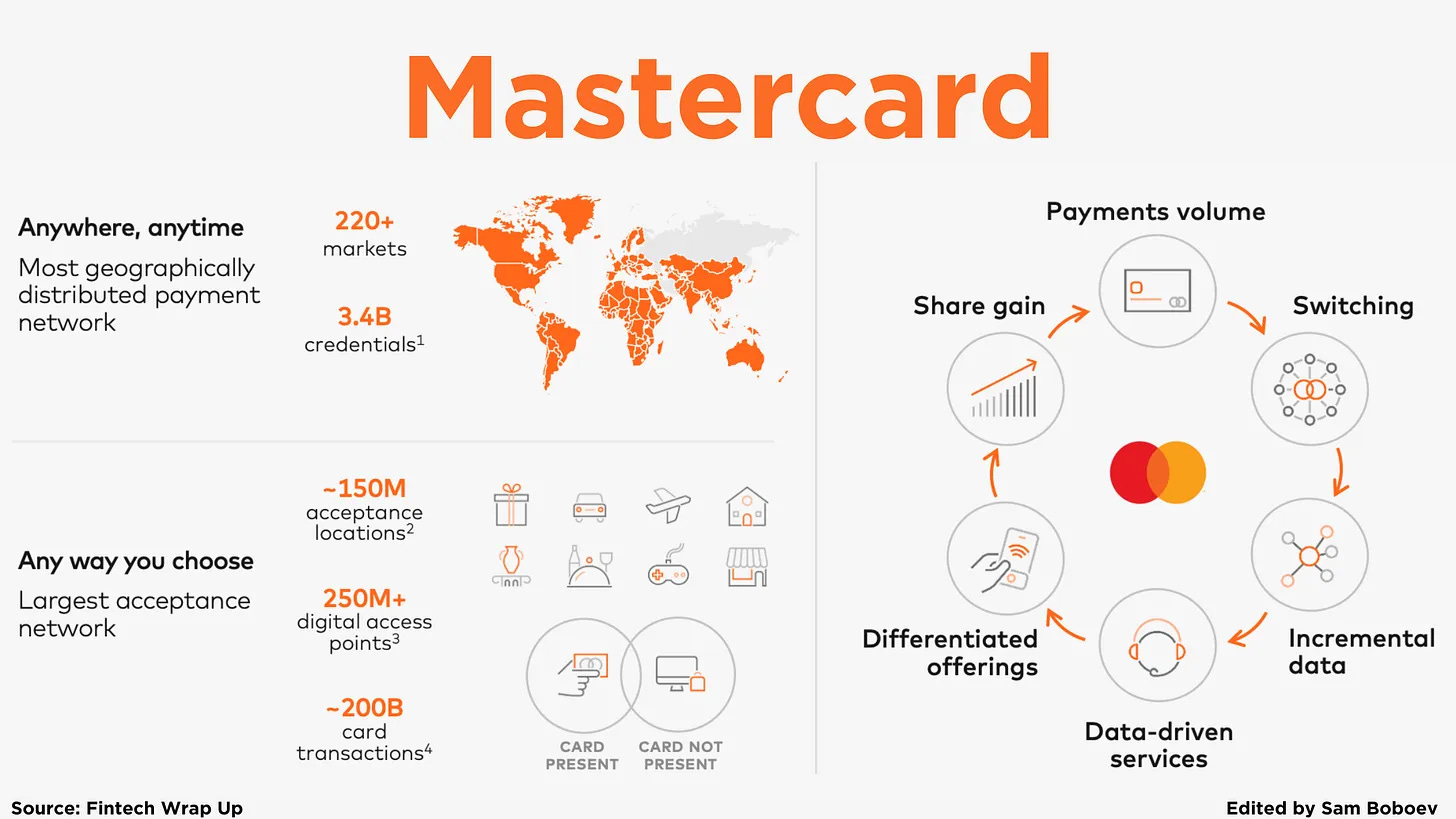
A new entrant can build a competent system. It cannot recreate years of flow overnight.
Without that, the model is structurally weaker, permanently.
Collecting data is something you can accelerate.
Accumulating proprietary data that improves with use is not. You cannot simulate two years of genomic sequencing, transactions, or growing seasons into existence on demand.
PS: Quick reminder before we continue.
I am giving away 30 spots to attend The Pitch by Deel Finale in Paris on May 18.

A 0.2% acceptance rate competition. One room with the world’s top founders and investors. J.P. Morgan, a16z, Google, and Stripe in the room.
2. The Cold Start Problem Just Got Harder
Network effects are not a new idea. What has changed is how much more powerful they are becoming as a moat now that building software is cheap.
When building a product costs almost nothing, markets flood with well-executed alternatives that reach feature parity quickly.
The challenge is no longer building something good enough. It is getting enough users, fast enough, for the system to sustain itself. Whoever already has density compounds.
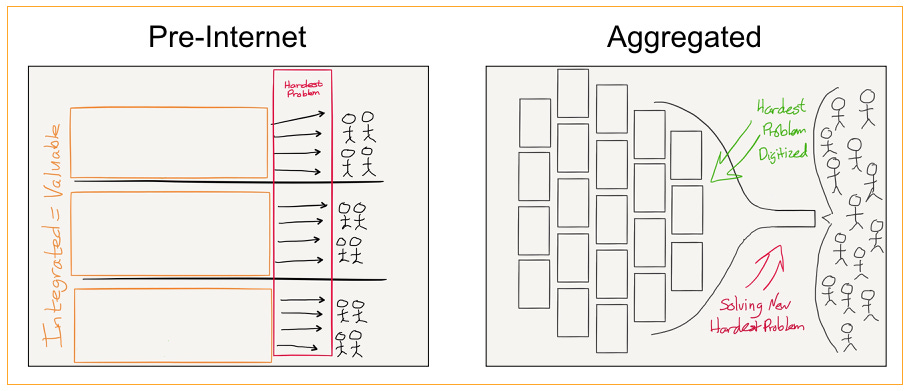
Everyone else burns capital trying to reach escape velocity.
There are two forms of network effects that genuinely hold up in this environment.
Marketplace density
The first is density.
More supply attracts more demand, which attracts more supply. Delivery networks, ride-sharing, payments ecosystems all follow this pattern.
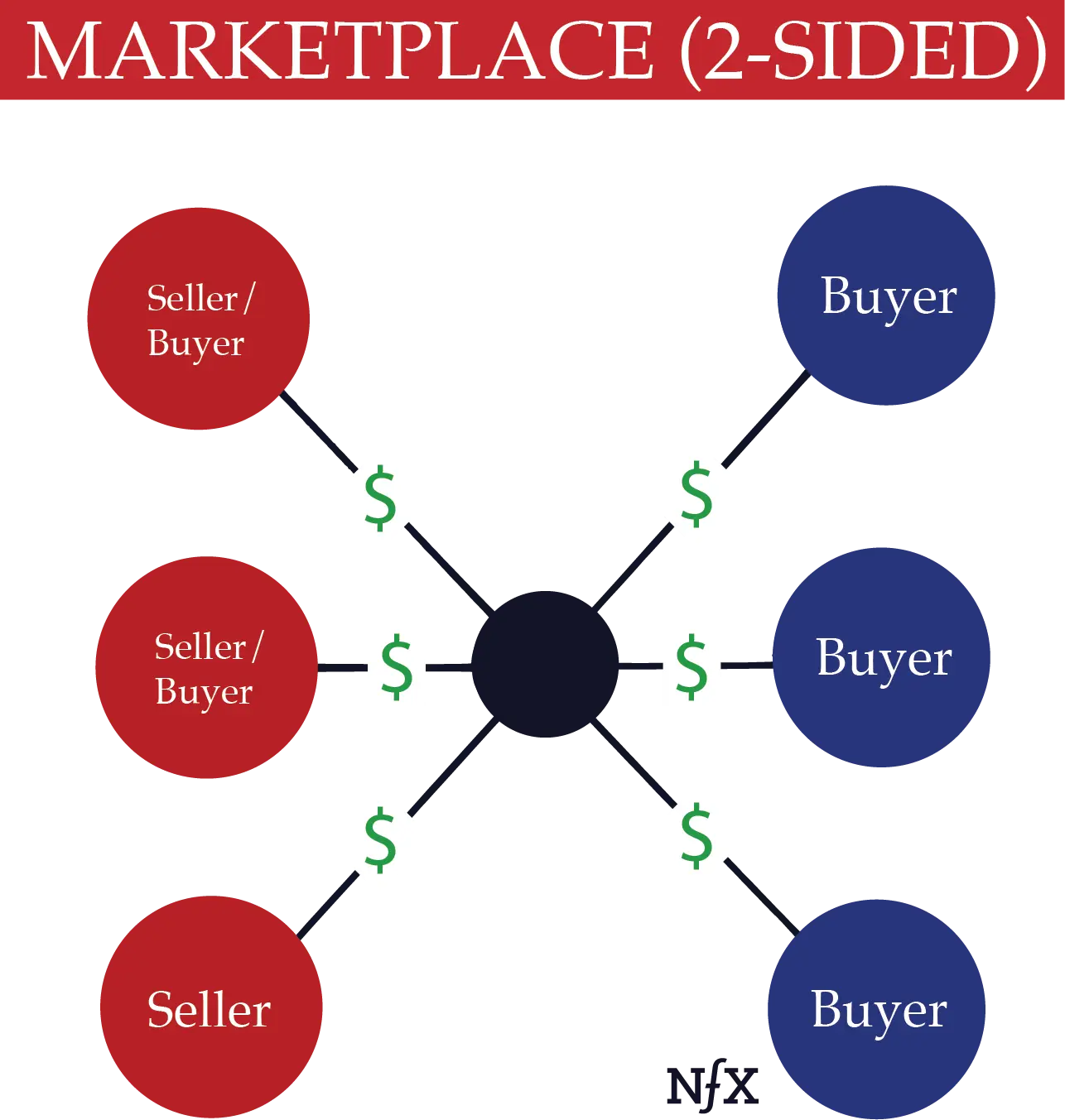
The key detail is that density is local and cumulative, built city by city, cohort by cohort.
A competitor can replicate the interface. It cannot recreate thousands of micro-markets where drivers, merchants and users are already interacting at scale.
When the product becomes infrastructure
The second form is subtler and more durable.
It shows up when a product becomes the place where work actually happens across multiple roles. Not a tool used by an individual, but a shared environment where teams coordinate.
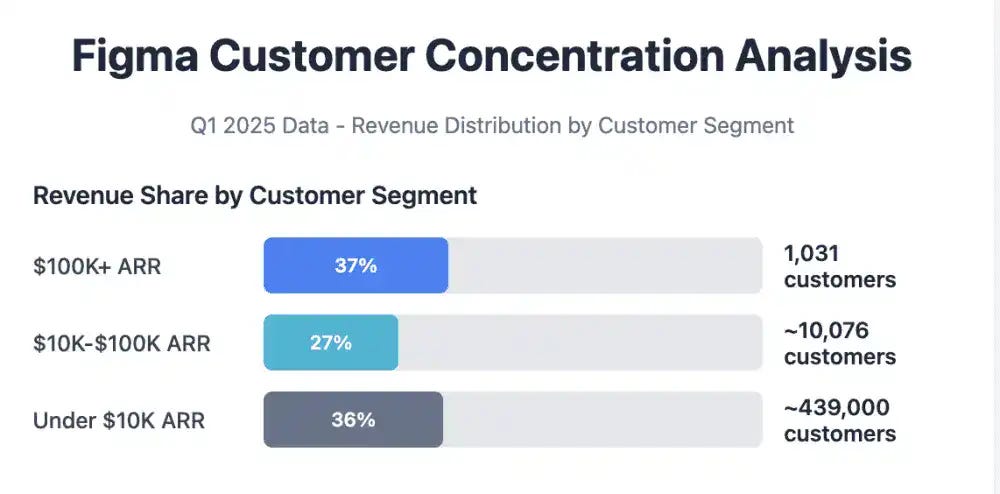
Figma is the clearest current example. In 2017 it held less than 10% of the UI/UX design market. By 2022 that had crossed 90%.
The climb was not driven by features alone. It came from how design, engineering, product and stakeholders meet in the same system.
Files are shared. Components are reused. Feedback loops sit inside the workflow.
Replacing Figma would not mean adopting a different design tool.
It would mean unwinding shared systems and rebuilding coordination patterns across the entire organization.
By mid-2025, it had 10,000+ community-built plugins and was embedded in 95% of Fortune 500 companies.
Palantir shows a version of this in institutional settings. Its position in government is built on relationships, integrations and trust accumulated contract by contract, over years.
Each deployment deepens the footprint and makes future contracts easier to win.
AI makes product quality matchable. What it cannot replicate is a network that took years to build and would take years to dismantle.
3. The Permission You Cannot Buy
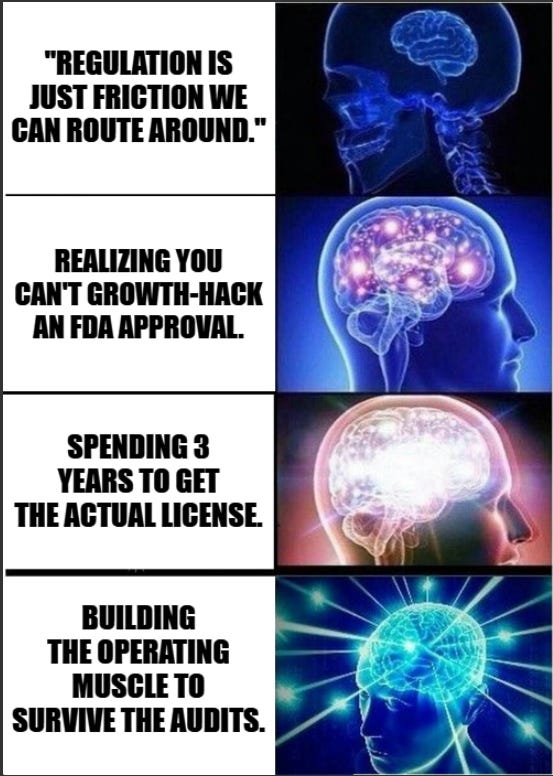
There is a persistent instinct in tech to treat regulation as friction. Something to route around, something that eventually gets simplified.
That instinct worked in domains where the downside of failure was limited. It holds much less in systems where getting it wrong is measured in lives, capital, or national security.
As AI capabilities expand, the surface area of what requires permission expands with it. The constraint is not bureaucracy. It is a consequence.
Two layers of this moat
The first is explicit. Licenses, approvals, clearances. A bank charter. An FDA pathway. A defense procurement status.
These take years to earn and they do not transfer.
You cannot buy your way in quickly or engineer your way around them. They define who is allowed to participate.
The second layer is subtler and often more durable. It is what gets built while earning that permission.
Teams that know how to operate under audit. Systems that produce verifiable outputs.
Relationships that have survived scrutiny. Organizations that understand procurement cycles and policy changes.
This is not documentation. It is an operating muscle that took years to develop.
What Anduril actually built
In early 2026, the US Army consolidated over 120 separate procurement actions into a single enterprise agreement with Anduril, a fixed-price, multi-year deal with a ceiling of roughly $20 billion.
The contract looks like a prize. It is closer to the outcome.

What made that unification possible was everything underneath it. Years of working inside the system, building integrations that hold up under real conditions, maintaining cleared teams and earning the kind of institutional trust that allows a government agency to stake its critical infrastructure on a single counterparty.
Shield AI turned down its first significant investment because accepting it would have required abandoning its defense focus.
That stubbornness paid off.
By 2025 it held contracts with Romania, Japan, Greece, Canada and the US Coast Guard, each one adding another layer of international trust that cannot be replicated by a startup that decides to enter defense next year.
Writing code is something you can accelerate. Earning permission to deploy that code in consequential systems is not.
The timeline is set by institutions. Those clocks do not move faster because the technology does.
4. The Bottleneck Nobody Is Talking About
Capital usually shows up in strategy discussions as fuel.
You raise it, deploy it and use it to build whatever the real advantage is supposed to be.
That framing assumes capital is widely available at the scale required.
It is not and in a world where the endgame is increasingly physical, capital at scale has started behaving like a moat in itself.
The numbers are hard to ignore.
In 2025 alone, Amazon committed roughly $100 billion in capex. Microsoft guided $80 billion. Google and Meta were not far behind.
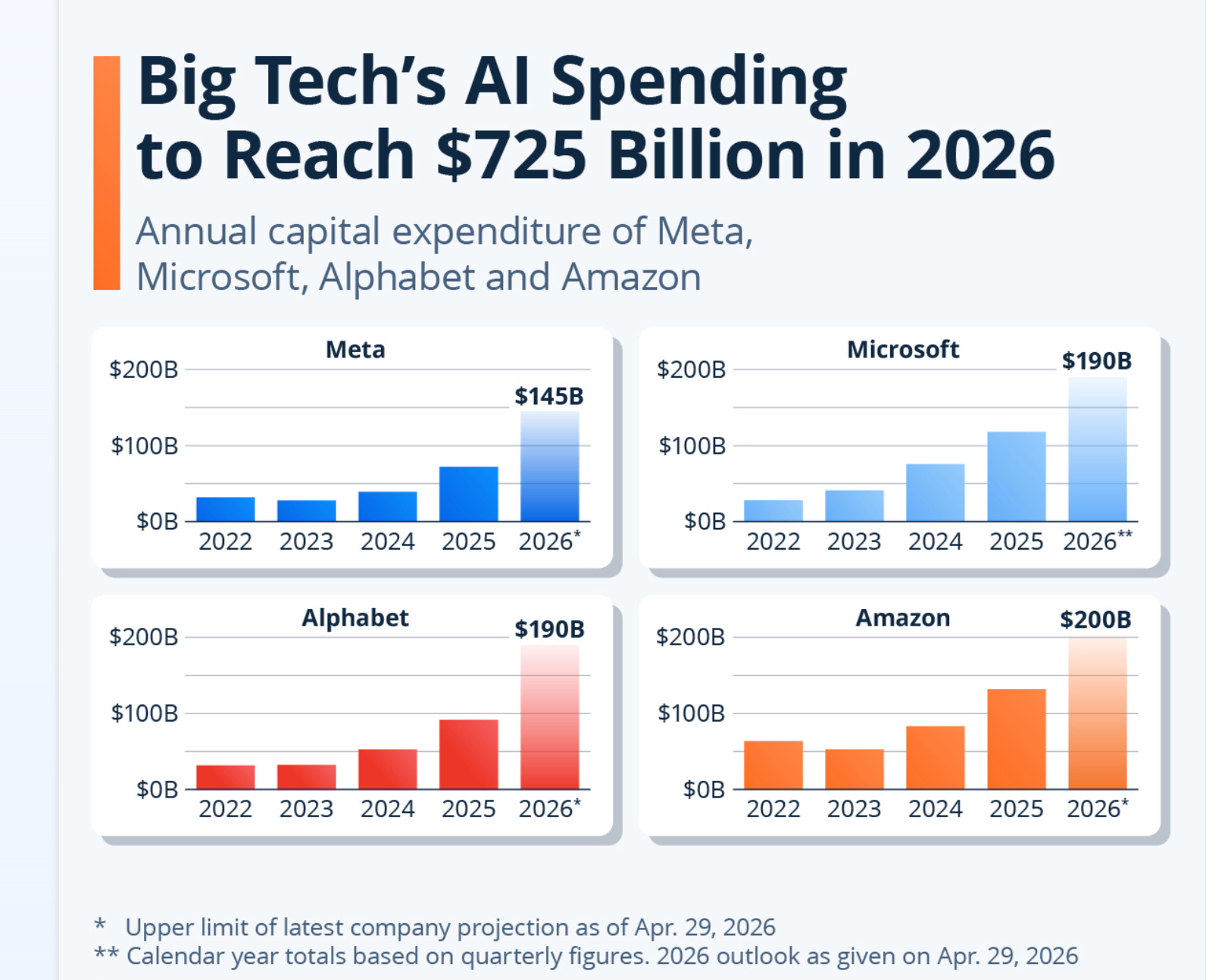
Nearly all of it was aimed at AI infrastructure, including data centers, custom silicon, long term power contracts, and land acquisitions that take years to secure and build.
Image Source: FactSet, Goldman Sachs Research
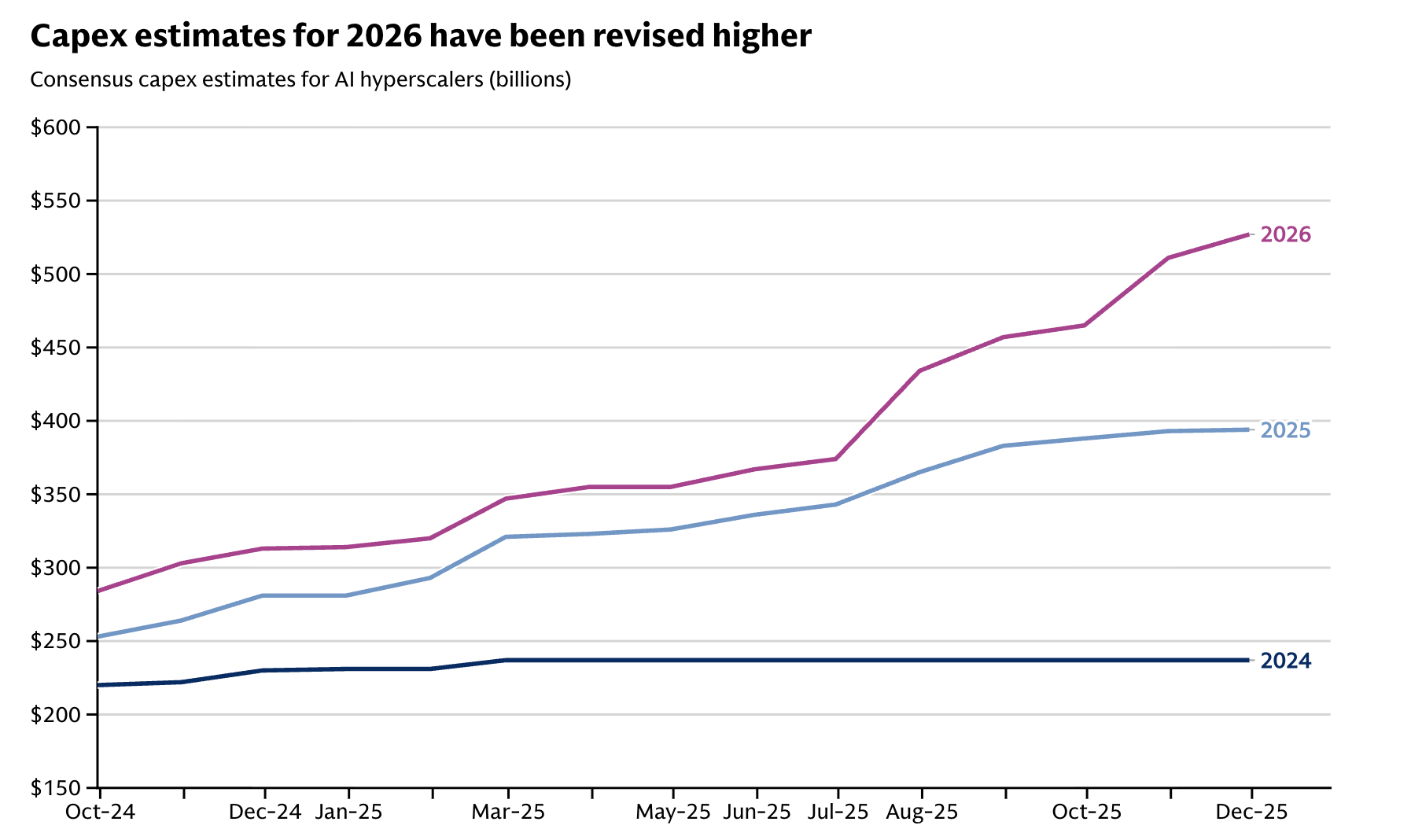
Once those assets exist, they define the playing field.
A smaller company can innovate at the edges, but it operates on top of a layer it does not own.
What makes SpaceX the more interesting case
Starlink generated an estimated $10.6 billion in revenue in 2025, giving SpaceX internal cash flow to fund everything else.

That financial engine funds Starship development, orbital infrastructure ambitions and a potential public offering that could unlock tens of billions more.
A new entrant can propose a similar vision. It will struggle to access capital on comparable terms without that history.
Why the gap compounds
The key is not the ambition.
It is the credibility behind it.
Investors fund projects at this scale when they believe the team can execute over long time horizons and that belief is earned through years of delivering on increasingly complex systems.
Teams that have proven they can deploy large sums effectively raise faster, at lower cost and with more flexibility.
That feeds back into execution, which strengthens the case for the next raise. Building that track record is not something you can accelerate by being smart.
It takes time and delivers results.
5. Physics Sets the Floor
This is the constraint that feels obvious once pointed out and easy to ignore while decisions are being made.
You can design almost anything faster now.
Production workflows, manufacturing layouts, complex systems can all be modeled in days.
But design is not deployment.
The moment something leaves software and enters the physical world, a different clock takes over.
Permits need approval.
Components need to be manufactured and shipped.
Land needs preparation.
Power needs to be connected.
None of that moves at the speed of code.
That gap between what you can design and what you can build is where the advantage lives.
Tesla Megapack and why head starts compound
Tesla has been deploying grid scale battery systems for years, accumulating manufacturing efficiency, installation expertise and utility relationships that do not show up in a spec sheet.
A 1 GWh Megapack project awarded in Scotland in late 2025 is not a standalone win.
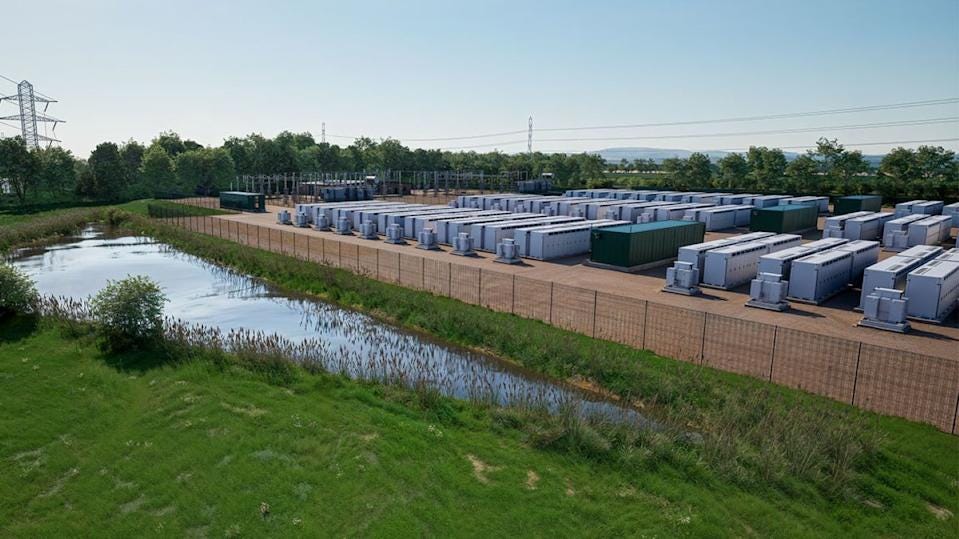
It is another data point on a learning curve that has been running for years, shaping cost structure, failure mode knowledge and supplier terms in ways a new entrant cannot replicate by writing a larger check.
The manufacturing version
CATL’s vertical integration, from cell chemistry to full system level integration, has made it the default supplier for a significant portion of global energy infrastructure.
Years of production runs have improved yields, reduced defects and built supply chain relationships that are embedded in their cost structure.
New entrants are not competing against where CATL is today.
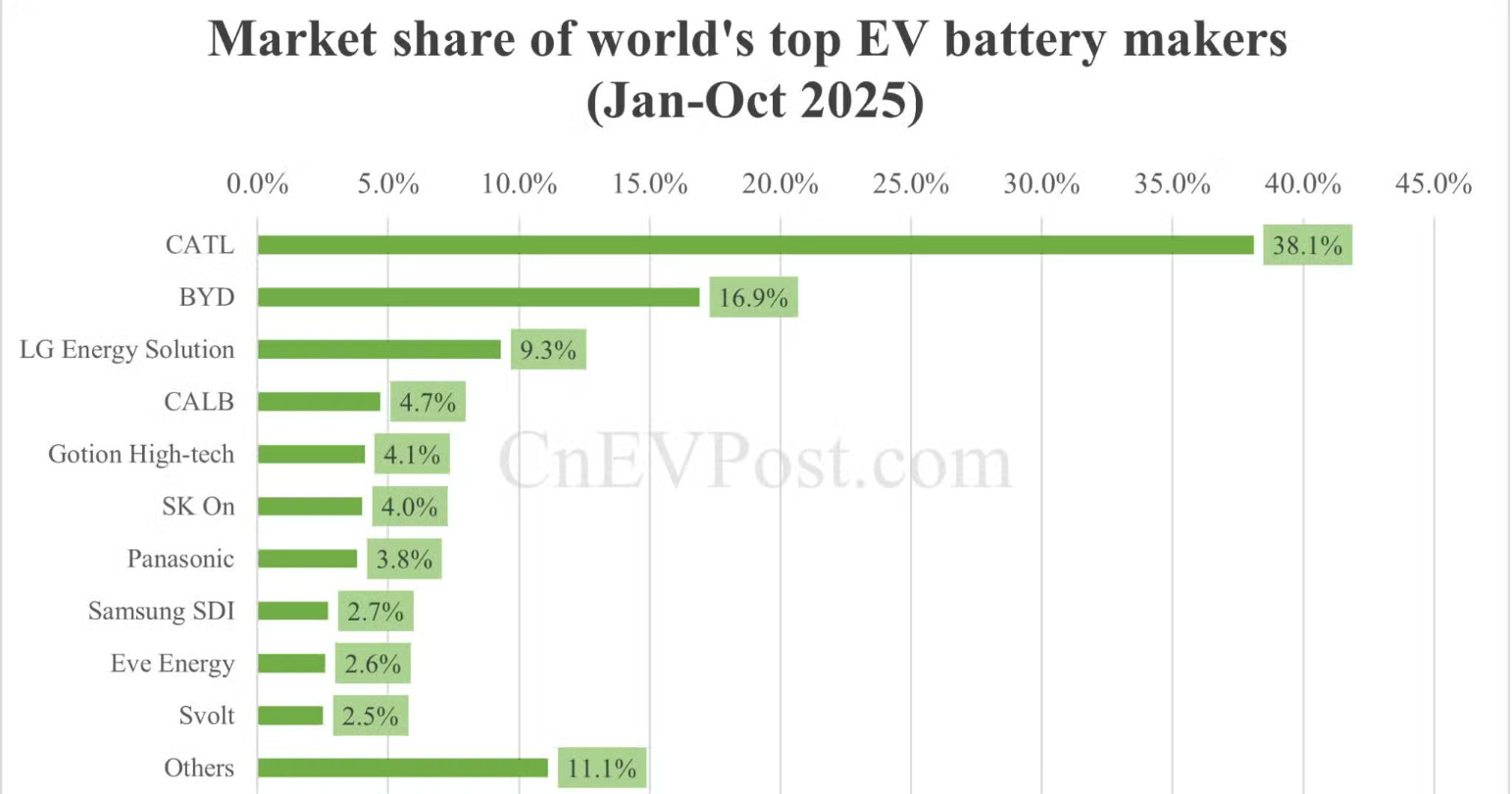
They are competing against where it will be by the time they catch up.
Why this gets underestimated
Software has trained us to expect rapid iteration and quick convergence.
When something looks replicable on a screen, it feels replicable in reality.
But the physical world does not adjust.
Concrete still takes time to cure.
High voltage equipment has lead times measured in months.
Grid connections depend on processes that have not changed.
The companies that accepted those constraints early and started building anyway carry a lead that increases every month others wait.
6. The Stacking Effect
What shows up across all five of these moats is not a collection of independent advantages.
It is a system.
The companies pulling furthest ahead are not relying on one dimension.
They are layering constraints that reinforce each other and replicating the position becomes hard not because any single element is unbeatable but because catching up requires time across several fronts simultaneously.

Look at Anduril.
The visible edge looks like regulatory access.
Underneath that sits something much broader.
Deployed hardware generates operational data in real environments.
That data improves performance and strengthens the case for future contracts.
Each contract deepens institutional relationships and builds credibility, which improves access to the capital needed to expand deployments further.
The pieces stop being independent. They start feeding each other.
Tempus follows the same logic.
The dataset is only one layer. It sits alongside relationships with clinical institutions, infrastructure that processes it at scale and capital raised on the strength of that compounding loop.
A competitor cannot isolate one element and expect to catch up on the rest later.
SpaceX adds a third example of how Elon Musk combined compute, capital and deployment into one system.
Physical infrastructure, capital at scale and a global data network from Starlink intersect and reinforce each other.
Starlink’s revenue funds the next layer of infrastructure. Each part makes the others stronger.
What this tells founders and investors
This does not happen by accident.
It comes from choosing, repeatedly, to build things that take time to accumulate rather than things that can be shipped quickly.
The easier path is optimizing for speed.
The harder path is committing to systems that only make sense over years.
Single moat companies are more exposed than they look.
Pressure on one dimension with no other layer to absorb it is a real vulnerability in a world where AI compresses timelines on individual advantages faster than before.
When you look at what protects a business, the right question is not whether it is defensible today. It is whether the things protecting it required years to accumulate.
If a well funded team with good tooling could close the gap in eighteen months, the advantage is real but temporary.
If catching up requires years of operating under real conditions, you are looking at something that actually holds.
This is a strong frame. AI makes the visible layer easier to copy, which means the invisible layer matters more: trust, permissions, workflows, density, and time spent in the real world. The unsexy parts are doing most of the heavy lifting here.