

The Real Reason Founders Don’t Pivot (Until It’s Too Late)
You stare at the dashboard again.
Retention dipped, but you tell yourself it’s just a clunky onboarding flow. Nobody is using the product unprompted, but yesterday, one customer said they “loved the vision.”
Suddenly, you have enough hope to survive another week.
Here’s the hard truth. The market rarely gives you a clean “no.”
Instead, it hands out polite “maybe laters” mixed with just enough encouragement to keep you hooked. We tie our identities to our ideas, making us blind to the weak traction we’d instantly call out in someone else’s startup.
One signal most founders are completely missing right now:
Your buyers stopped Googling. They started asking AI. And the answer usually comes from Reddit, not your website.
HubSpot for Startups built a FREE playbook on exactly this:

▫️ How AEO works alongside SEO as a new discovery layer
▫️ Why AI pulls answers from community trust
▫️ How Reddit participation shapes what AI says about you
Up to 90% off HubSpot for Startups included🎁
This is about the uncomfortable psychology of why we hold on too long. Because the same pattern applies everywhere: the market sends signals, and we choose to read them as encouragement.
On Reddit, in AI answers, in your retention data.
The question is whether you are actually reading them.
Table of Contents
1. The Idea and the Self Get Entangled Early
2. The Politeness Problem Is Worse Than You Think
3. What the Market Tells You That You’re Not Listening To
4. The AI Era Has Changed the Calculation
5. Specificity Is Not a Constraint. It’s the Point
6. The Questions That Tell the Truth
1. The Idea and the Self Get Entangled Early
When the Pitch Becomes Your Identity
A founder rarely notices the exact moment the company stops being a project and becomes an identity.
It happens gradually.
The pitch hardens into self-description. Investors and the team buy into a specific version of the future. Soon, the startup no longer feels like something the founder is testing.
It feels like something they are defending.
This change alters judgment.
The stakes are no longer purely commercial. A failed experiment is one thing, but a failed self-concept is another.
That is why a founder can instantly diagnose weak product-market fit in another startup, yet spend two years explaining away the exact same flat retention internally. Distance restores clarity, attachment distorts it.
The internal excuses are usually convincing. Onboarding needs refinement, the ICP is too broad, growth just isn’t efficient yet. Because startup building contains so much ambiguity, hope easily survives longer than evidence deserves.
Every struggling product has moments that mimic traction. One thoughtful customer email can suddenly make three months of stagnation feel reversible.
The Trap of the Public Persona
Pivoting becomes emotionally difficult because it threatens more than the roadmap. It threatens the founder’s judgment and the persona that convinced people to join in the first place.
Walking away feels like admitting you were publicly wrong. Rational frameworks fail because they assume the founder is evaluating the company from the outside.
In reality, they are trapped inside a web of commitments.
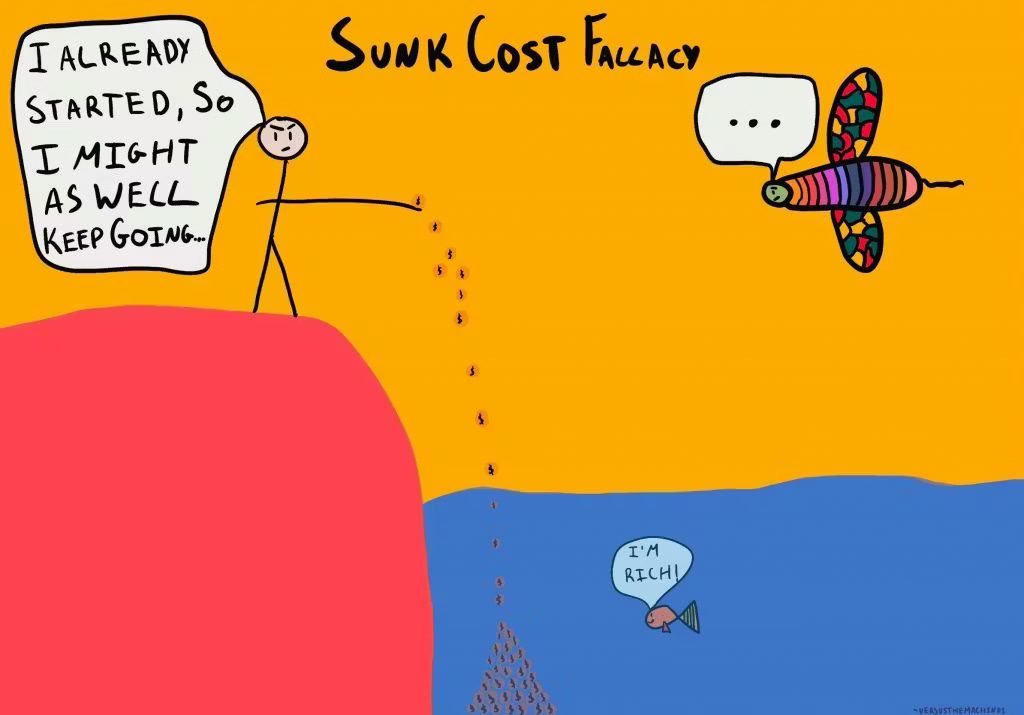
Investors backed the story, employees left jobs for it and the founder’s own competence depends on continuing to believe it.
Founders who handle this well share one uncommon trait. They never completely fuse their identity with the original idea. They see themselves as builders searching for a real problem, not guardians of a single thesis.
When the market resists, that distinction becomes the difference between adaptation and self-preservation.
2. The Politeness Problem Is Worse Than You Think
Drowning in Optimistic Noise
Most founders already know that positive feedback is not the same thing as traction.
The problem is that modern startup culture now produces encouragement at industrial scale.
Waitlists fill up, Product Hunt comments sound enthusiastic, investors ask for follow-ups, people repost the launch thread and users say they “would absolutely use this.”
A founder can accumulate thousands of signals that resemble idea validation without building something anybody actually depends on.
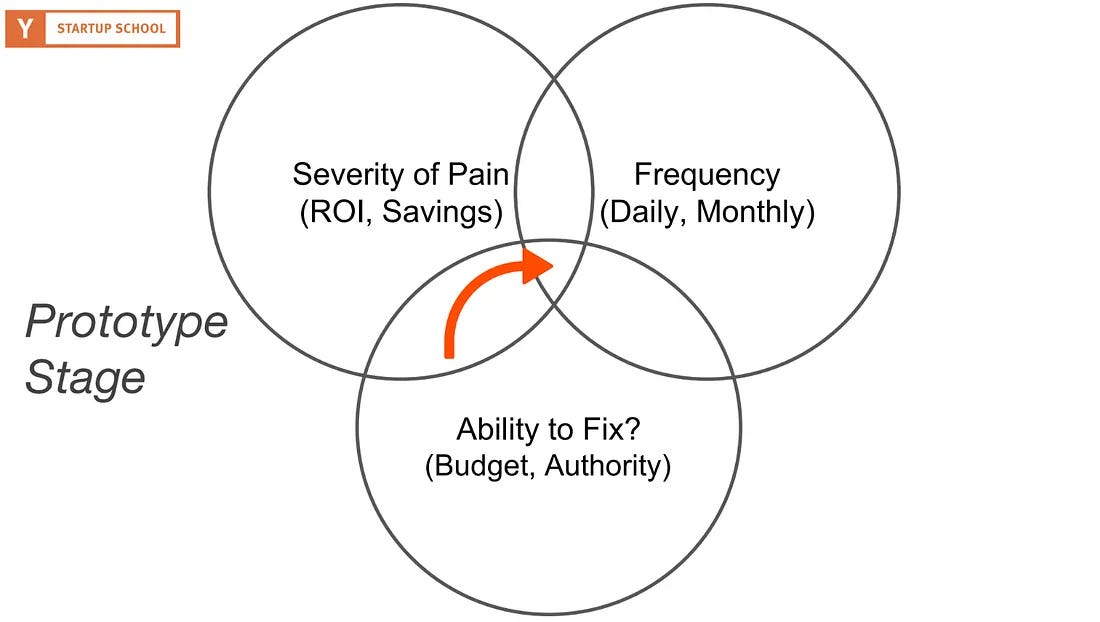
Part of this is social.
People genuinely want founders to succeed. The cost of sounding supportive is low while the cost of blunt honesty is high.
So the ecosystem naturally generates a layer of optimistic noise around almost every new startup.
That noise becomes especially dangerous when the founder already wants to believe the product is close.
A hundred mildly interested people can feel more convincing than ten genuinely committed ones.
Surviving the Disappearance of Novelty
The useful question is brutally simple. Will they be back next Tuesday without you prompting them? Not because you emailed, booked another demo, or followed up personally.
Will they return because the product solved something painful enough to enter their routine on its own?
People are almost always interested in new things.
Real traction begins when interest survives the disappearance of novelty.

Before we get into what the market is actually telling you:
The same pattern plays out in how customers find you in the first place. You are pushing. The market is pulling from somewhere else entirely.
Right now, when your ICP has a problem, they ask Reddit. AI pulls the best threads. Your prospect searches your brand on Google. They find your content. They come back ready to buy:

That loop is already running for your competitors. The question is whether it is running for you.
HubSpot for Startups broke down exactly how to build this flywheel in a free playbook. If you skipped it earlier, this is the moment to grab it.
Up to 90% off HubSpot for Startups included.
3. What the Market Tells You That You’re Not Listening To
The Exhaustion of Manual Momentum
There is a version of startup building where progress feels entirely manually powered. Every sales conversation starts from zero. Users call the product “promising,” but their behavior never actually changes.
They don’t build habits. They only return when pulled.
The exhausting part is that this struggle still produces intermittent signs of life, a great customer call or a temporary feature spike resets morale.
The founder interprets this as being “close“ ignoring that the underlying friction isn’t actually decreasing.
Demos persuade in the room but fail in the wild. The company moves forward, but only when pushed.
What Real Pull Actually Feels Like
Then there is the other experience.
Users adapt the product in unplanned ways. They complain aggressively when it breaks because it’s now part of their real work. Referrals happen organically. Prospects arrive already understanding the problem, shortening sales conversations drastically.
This doesn’t always look dramatic at first. The numbers may be small and the product rough, because early product-market fit appears as intensity, not scale.
Many founders accidentally optimize for broad acknowledgment instead of concentrated dependency. A thousand mildly interested people create the illusion of momentum, but ten users who would be furious if the product disappeared are far more valuable.
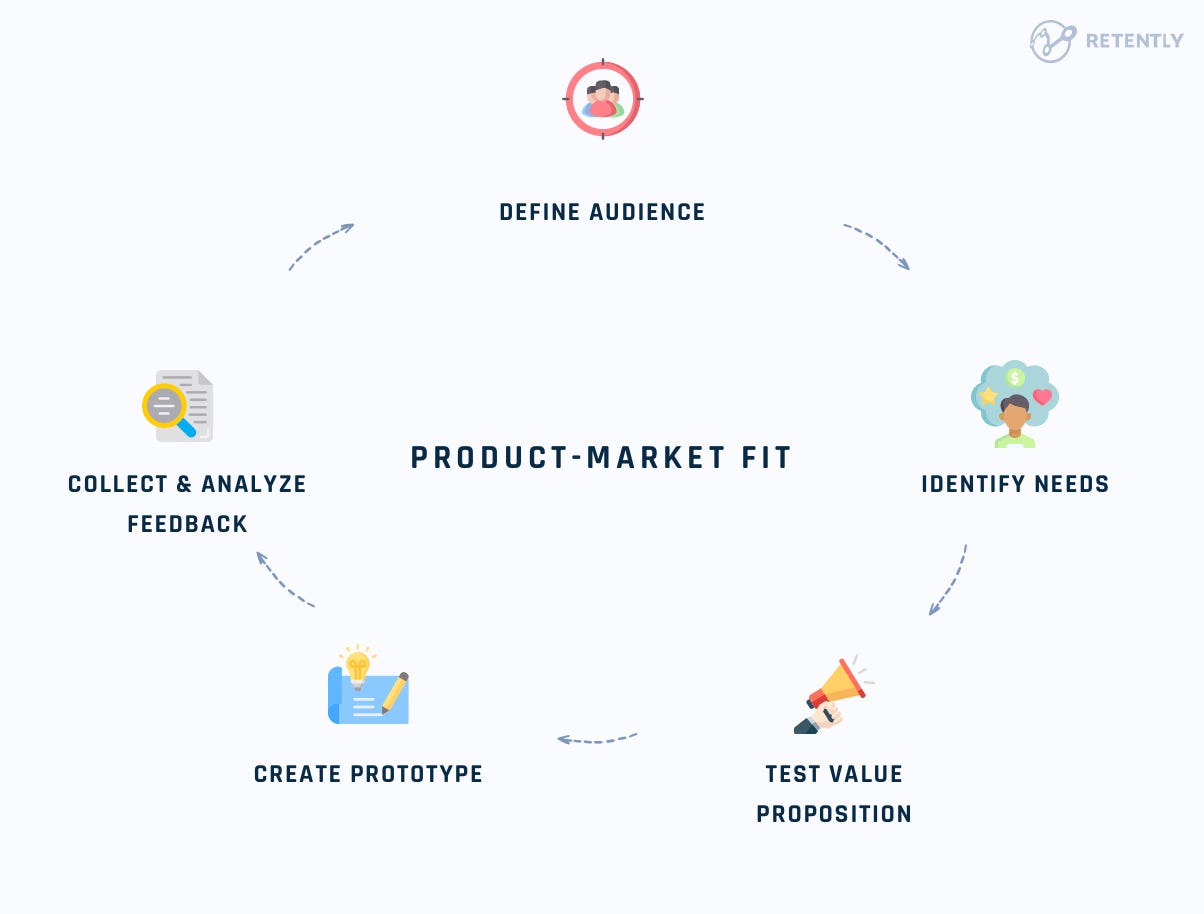
Before Lattice found massive traction in performance management, they built around OKRs.
Customers recognized the pain but didn’t build habits.
Once they changed to performance workflows, customers committed earlier with far less persuasion.
The market rarely hides the difference for long.
One path becomes lighter as users begin carrying the momentum themselves. The other remains endlessly effortful, regardless of product improvements.
That is when a pivot becomes necessary. Startups are supposed to feel hard, but the ultimate warning sign is when the business still depends on the founder supplying the energy that the market should already be providing on its own.
4. The AI Era Has Changed the Calculation
Why the Old Playbook is Broken
Older startup advice around the pivot was built for a world where technological inflection points emerged unevenly.
A small number of founders saw something early, built around it before the market fully understood it and spent years searching for the right commercial wedge.
In that environment, persistence around the underlying technology often made sense because the insight itself was scarce.
That is not the environment founders are operating in anymore.
The AI inflection point is visible to everyone at the same time.
Founders, venture firms and enterprise buyers all see it.
Every large company now has some version of an internal AI initiative, whether it produces anything useful or not.
The underlying capability is no longer hidden. Access to powerful models, tooling and infrastructure is increasingly widespread.
The hard part is not noticing that AI matters but in knowing where durable value actually accumulates.
That usually means identifying a narrow workflow, a painful operational bottleneck, a layer of context, or a distribution position where the technology becomes difficult to replace once embedded.
Enduring AI companies will be the ones that own a specific behavior so completely that users build genuine routines around it, not simply the ones with access to the most advanced models.

Chasing Gravity Instead of Traction
The classic mistake was staying attached to a weak startup long after the market stopped responding.
The newer mistake is abandoning a potentially strong one too early because the surrounding funding environment makes another category appear more important.
A founder builds something narrow, useful and gradually gaining traction, then starts questioning it because AI infrastructure companies are raising faster, AI wrappers are everywhere and investors suddenly want every deck to sound like the future arrived yesterday.

The danger is subtle because the pressure feels rational from the inside. Capital is flowing somewhere real. The technological change is real.
The distribution implications are real too, especially in a world increasingly shaped by AI mediated discovery and recommendation systems, something we explored earlier in “The Distribution Singularity.” But real market change can still produce distorted founder behaviour.
Some founders are now leaving ideas too early for the same emotional reason other founders stay too long.
They are responding to external narrative pressure instead of actual market behavior.
A startup pivot driven by genuine pull usually feels specific.
Users are dragging the company toward a clearer workflow, a stronger use case, or a more urgent problem.
A pivot driven mostly by funding gravity feels broader and more abstract.
The language expands, the positioning grows vaguer and the product starts sounding more impressive and less necessary at the same time.
Am I moving because users are revealing a stronger market than the one I started with, or because investors appear more excited about a different category right now?
Those are not the same signal.
They produce very different companies a few years later.
5. Specificity Is Not a Constraint. It’s the Point
Broadening the Story as Camouflage
One of the less obvious warning signs inside an early stage startup is the way the product description changes over time.
In the beginning, the company usually exists to solve something painfully specific.
A particular workflow for a particular type of user.
The language is concrete because the founder is still close to the actual problem. Then the description starts widening.
The product that began as software for independent recruiters becomes “a hiring intelligence platform.“
The internal tool for compliance heavy healthcare workflows becomes the AI infrastructure for operational efficiency. Every few months the category stretches outward a little more.
The founder explains this as expansion, flexibility, larger TAM potential, broader applicability.
Sometimes that is true.
Often, it is camouflage.
Broadening the story can become a way to avoid confronting the possibility that the original wedge never developed enough density.
The market did not reject the product dramatically enough to force a founder pivot, so the company responds by becoming more conceptually expansive instead.
The hope is that a bigger story will somehow attract the users the original idea never could. But that’s not how it works. Product market fit almost never starts from the wide end.
The Power of Being Unreasonably Narrow
The strongest early companies often look almost unreasonably narrow from the outside. The user group is tiny.
The use case sounds constrained.
The market appears too small to outsiders who are evaluating the business through scale before depth.
Meanwhile, inside that narrow segment, something much more important is happening. Users are integrating the product so thoroughly that behavior starts changing around it.
That kind of engagement is easy to underestimate because it usually arrives before impressive growth curves do.
A product that becomes embedded in somebody’s weekly workflow contains the early structure of a real business, even if the market initially appears smaller than investors prefer.
Founders sometimes assume specificity is a temporary limitation they need to escape from quickly. In reality, specificity is usually where the strongest traction forms first.
Narrowness is rarely the liability it appears to be.
The real weakness is absent urgency inside the user base.
When a pivot strategy becomes necessary, the instinct is often to ask whether there is a bigger market adjacent to the current one.
A more useful question is usually smaller and more uncomfortable.
Where is this product genuinely indispensable already, even if the answer feels too narrow to sound impressive in a pitch deck?
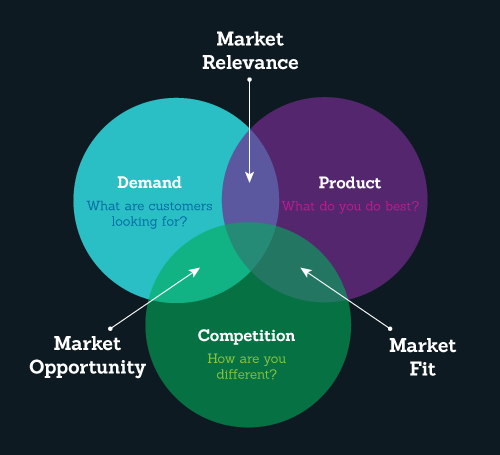
6. The Questions That Tell the Truth
Watch What They Do, Not What They Say
Start with behavior. What are users doing when you are not in the room? Not what they say on calls or promise after demos.
What patterns continue without your intervention? Founders consistently overvalue expressed enthusiasm and undervalue unprompted repetition.
Real product market fit begins when usage survives the disappearance of founder energy.
That surfaces a structural question.
What would have to become true for this company to work at scale, and is there actual evidence that those conditions are emerging?
Many startups survive longer than they should because the founder keeps constructing a future version of the market where the current friction disappears.
Distribution becomes cheaper, retention improves naturally, buyers become more educated.

The important distinction is whether those assumptions are being pulled into reality by observable behavior or simply projected forward because the current version of the business is difficult to accept.
The Ultimate Prestige Test
Then there is the question most founders would rather skip.
If this company never became prestigious, would you still want to solve this problem? Remove the status layer entirely.
The investor excitement, the category momentum, the possibility of being seen as early or visionary. What remains underneath that? Some ideas survive that exercise. Many do not.
If no new investor ever funded this company again and no external validation arrived from this point forward, would the existing user behavior alone still convince you to keep building it?
The honest answer to that question is often the first moment the founder stops negotiating with the data and starts listening to it.
Here's the hard truth, poor execution is often the variable that most determines success or not. So if you couldn’t execute well on the first idea, it could be doubtful you’ll execute well on the pivot idea.
It’s not always a question of to pivot or not, in could simply be a question of to-be-a-founder, or not. 🤓🙏🏼
The Tuesday test is the keeper here.
But something's bugging me. You say distance restores clarity and attachment distorts it — then every question at the end gets graded by the founder. The least reliable witness in the room, running the audit. So who tells the founder the truth before the market does?