

Investors give the median pitch deck 77 seconds. Papermark tracked 1.37 million investor views across 24,541 decks for its 2026 fundraising report, and 18 points of the audience were gone before slide two.
The 222 decks in this database made it past that first minute. They belong to Airbnb, Uber, Coinbase, Revolut, Intercom and 217 other companies, from Facebook's 2004 deck to MURAL's 2020 Series A, and the companies behind them have raised a combined $117 billion according to the database's funding column.
I sorted all 222 by stage, business model and customer before writing this, and the middle of the list surprised me more than the famous names at the top. The median company here raised $23.5 million in total, a number much closer to your next round than Uber's $25.2 billion.
What you get for every deck
The company name and a one-line description
The original pitch deck
The website, the year of the deck and the total raised
The industry, the stage, the business model and the customer group
Every field works as a filter, so a seed-stage B2B SaaS founder gets from 222 decks to the 43 closest peers in three clicks.
Most of these decks raised a first check
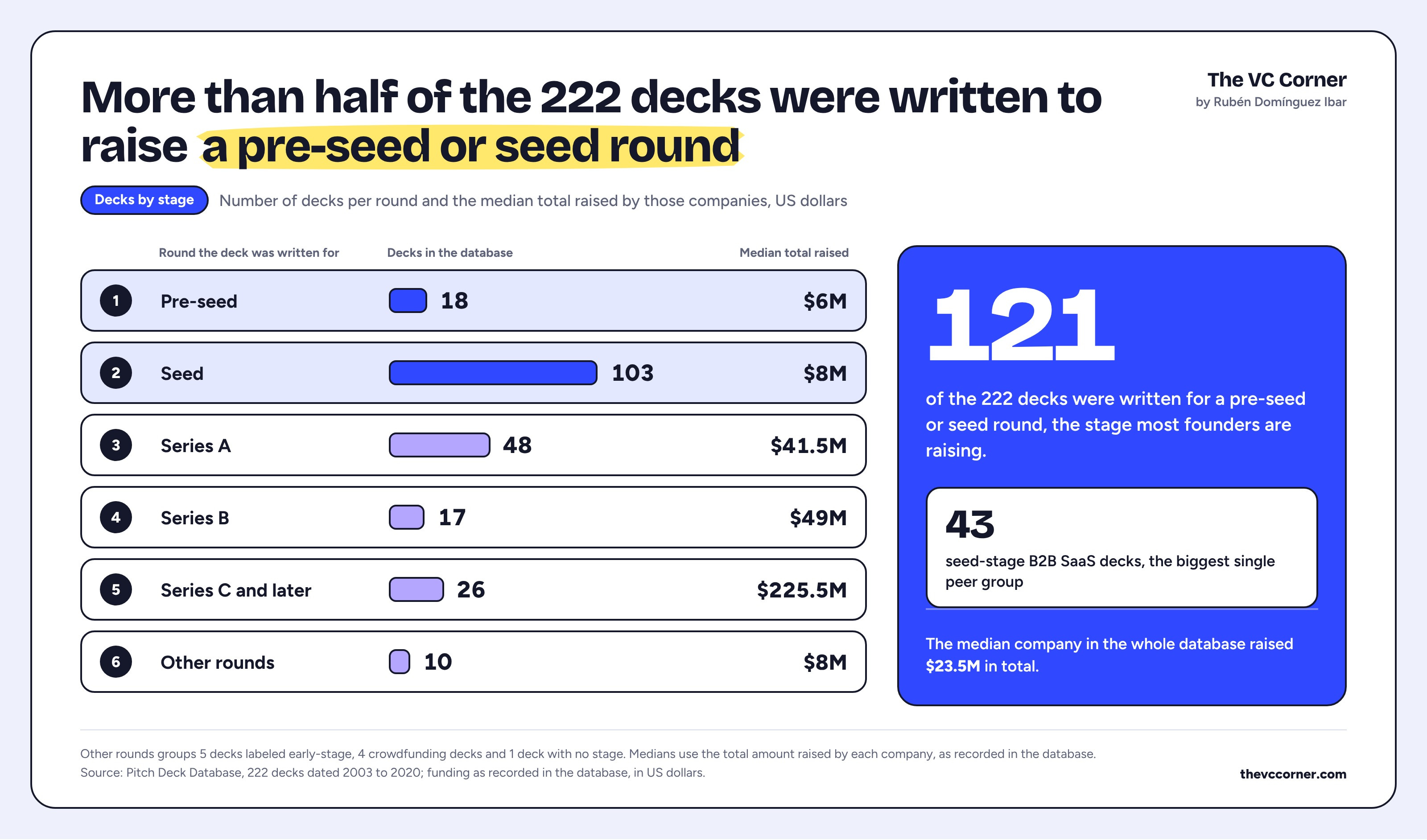
Seed decks are the biggest group at 103, and pre-seed adds 18 more. Series A brings 48 and Series B 17, while 26 decks come from Series C or later.
The medians tell you which decks to study for your round. The typical company with a seed deck in here raised $8 million in total, while the typical Series A company raised $41.5 million.
Consumer companies took most of the money
SaaS is the largest business model in the database, with 107 decks and a median of $14.5 million raised. Apps raised more per company, at a $57 million median across 38 decks, and the 36 marketplaces sit at $35 million.
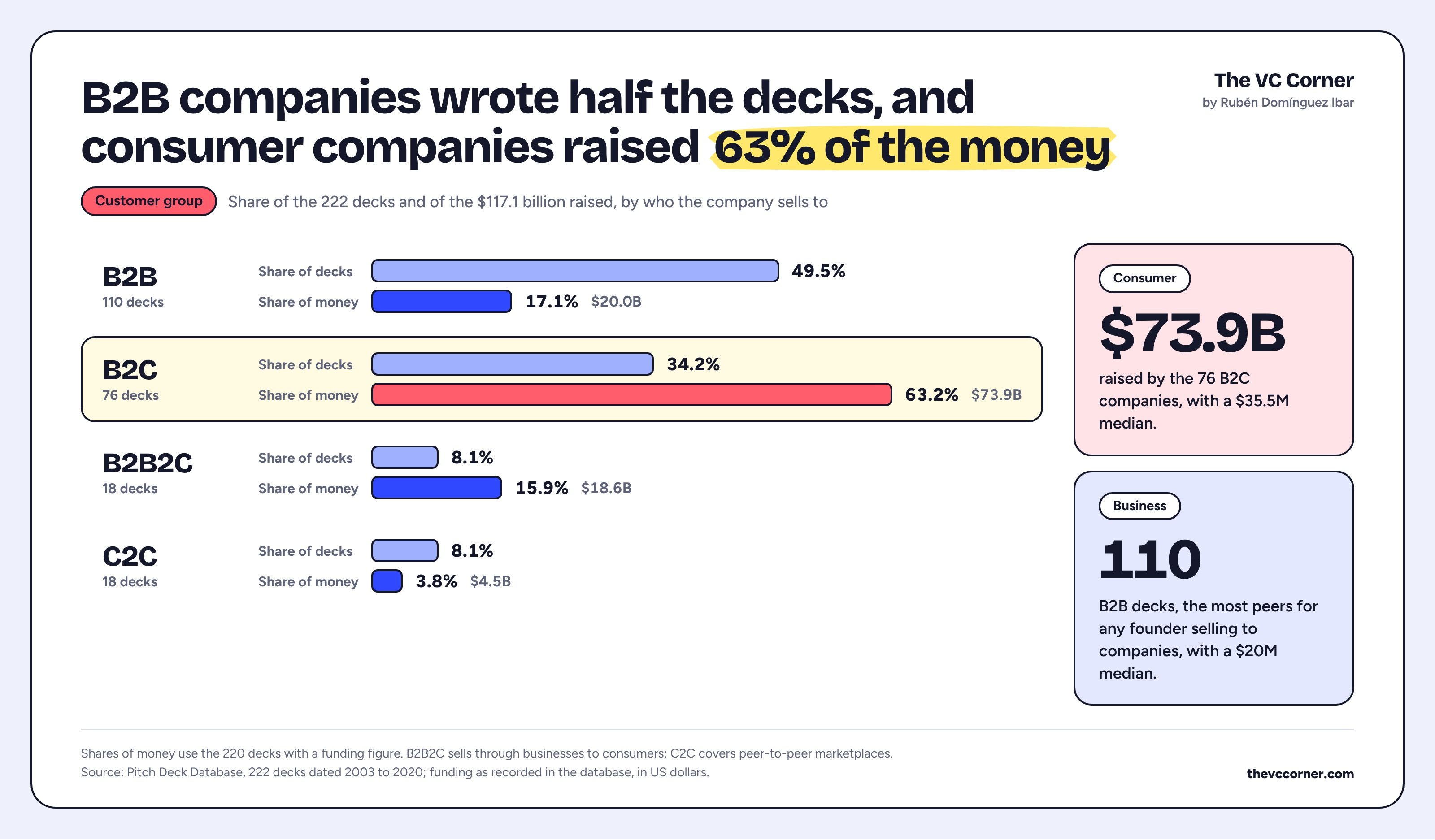
If you sell to businesses, you get more peers here than in any other group: 110 B2B decks, 43 of them seed-stage SaaS.
Twenty companies, $98 billion
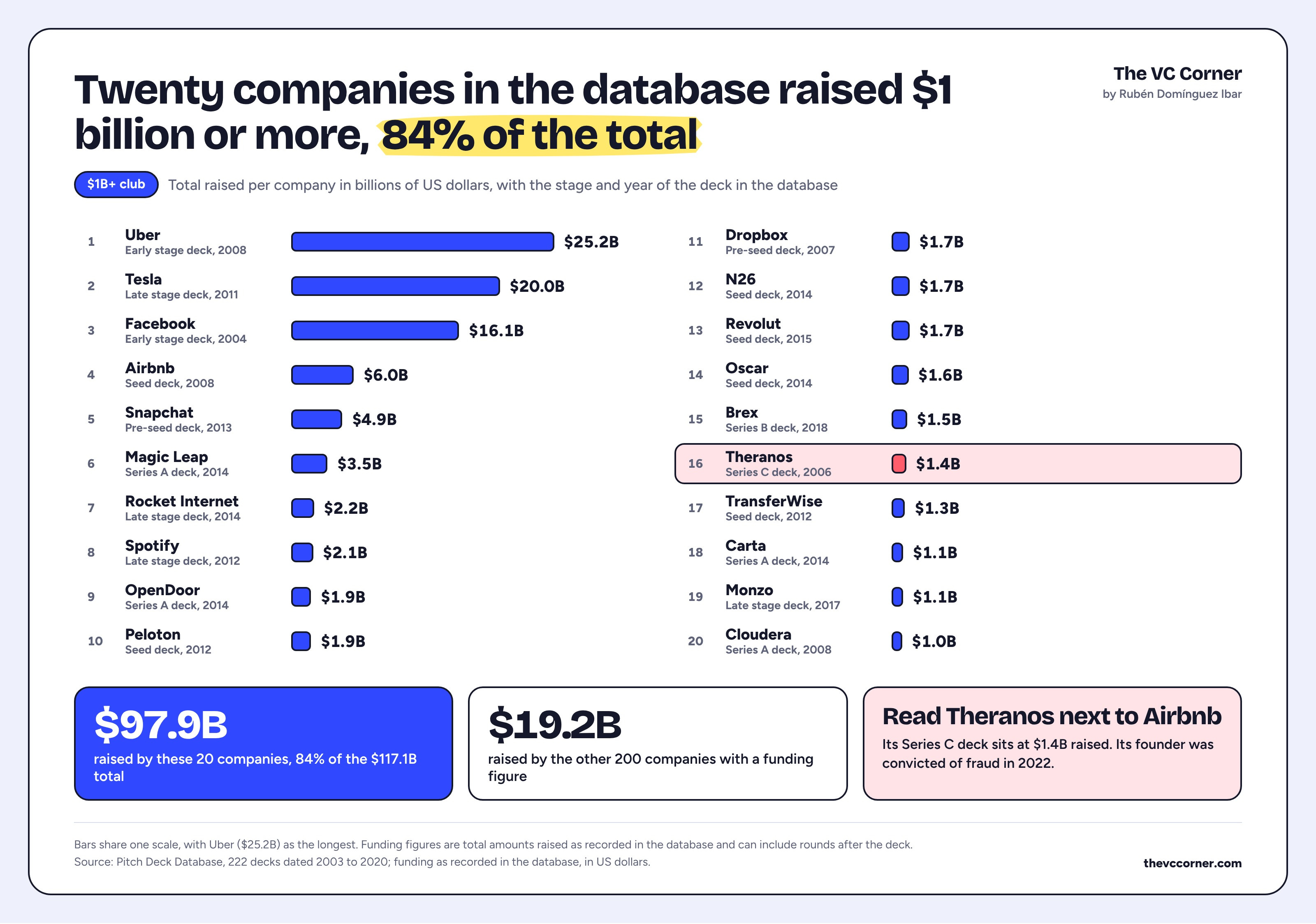
Uber, Tesla and Facebook alone account for $61.3 billion. The rest of the twenty include Airbnb's 2008 seed deck, Dropbox's 2007 pre-seed deck and the seed decks of Revolut, N26 and TransferWise, three fintechs that each went on to raise $1.3 billion or more.
Theranos is on the list too, with the Series C deck behind $1.4 billion. I'd read it right after Airbnb's, because the slides look every bit as confident and its founder was convicted of fraud in 2022. A deck shows you how a company told its story, and diligence decides whether the story holds.
How investors read a deck in 2026
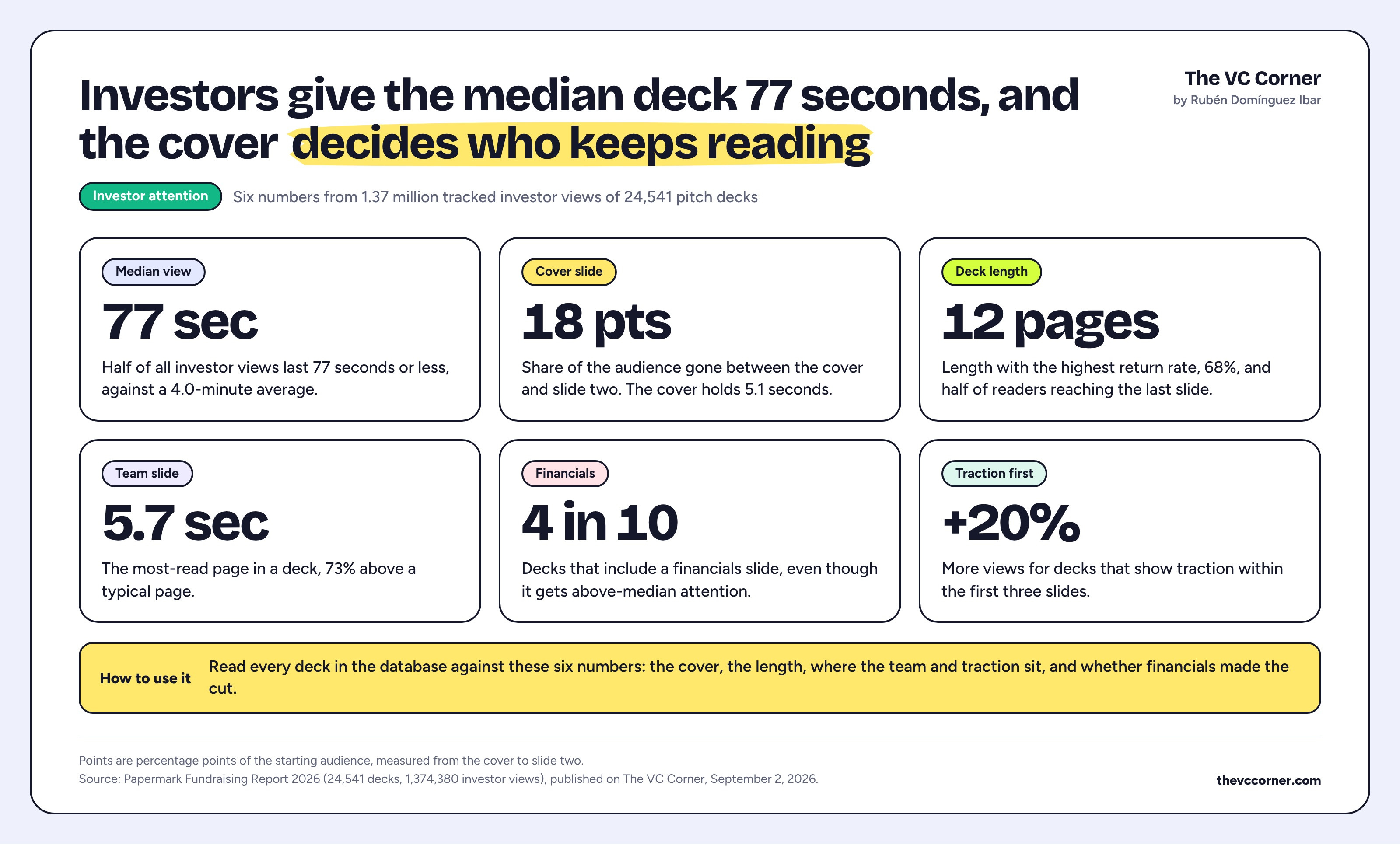
These decks run from 2003 to 2020, and investors read decks differently now. Papermark's data on 24,541 decks gives you four tests to read them with:
→ The cover decides. It holds 5.1 seconds at the median, and 18 points of the audience leave before slide two.
→ Twelve pages wins. Twelve-page decks get the highest return rate of any length, 68%, and half their readers reach the last slide.
→ The team slide gets read most. It holds 5.7 seconds, 73% above a typical page. Financials get above-median attention and show up in only four decks in ten.
→ Traction goes up front. Decks with traction in the first three slides get 20% more views.
The cover is the most important slide you will write for your raise. Open ten covers in the database and count how many tell you what the company does and why it's working before you click.
Below the paywall: the full database of 222 decks, the decks to read first for your round and business model, and a 12-slide order built from the 2026 attention data.
Your subscription also opens every other deck library on The VC Corner:
Slide-by-slide teardowns of Kalshi's Series A deck, Anthropic's 2022 deck and Lightsprint's $6.1M seed deck
Plus everything you need after the deck: 10,000+ investors in the investor lists, the financial models library for the slide six in ten founders leave out, and the Investor Outreach System to book the meetings.

Cancel anytime. First subscribers get 50% off forever.