


At the end of last year, Satya Nadella appeared on the Dwarkesh Podcast saying that AI will fundamentally alter software pricing.
Satya was considering a “per agent” and “per user” pricing model at the time, since more and more work is being automated by AI agents.
Almost a year later, we can safely say that his prediction was spot on, even if we still cannot predict where this transition will end up.

Henry Schuck, the CEO of ZoomInfo, recently said that after speaking to hundreds of consultants and customers, nobody really knows where B2B pricing will end up, and the answer changes on a weekly basis at this point.
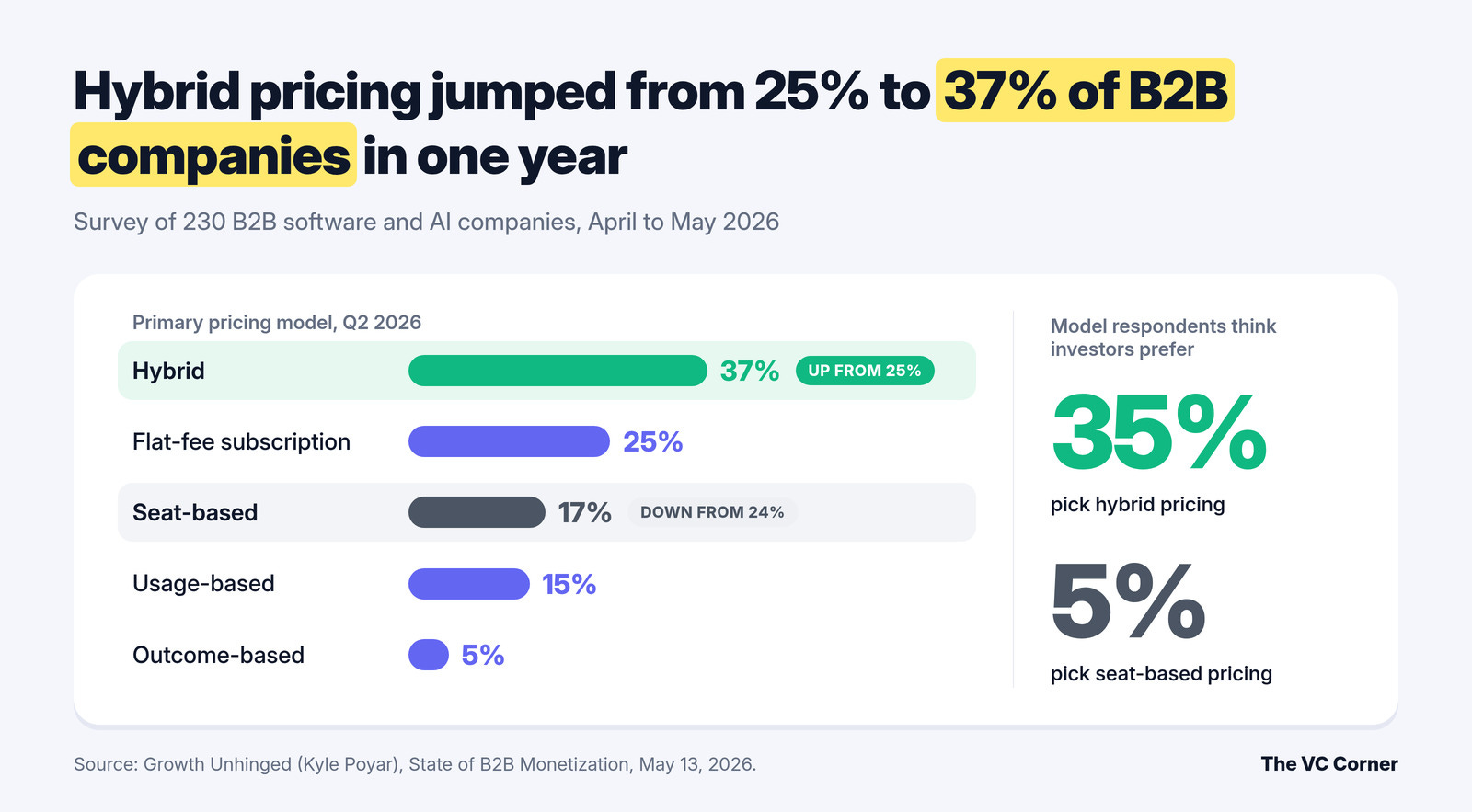
What we can observe, however, is that seat-based pricing, the traditional B2B pricing model, is slowly fading away. The new B2B pricing models charge for the work the software does, through usage, resolution or outcome pricing, and most companies blend them into a hybrid. Hybrid is already the most popular B2B pricing model at 37%, up from 25% twelve months earlier, according to Kyle Poyar’s Growth Unhinged 2026 survey on B2B monetization. So if you are building a B2B company today, here are the 3 pricing models that look like the emerging winners, at least for now.
Every pricing change moves your runway, and your board will want that math before you ship it. (Sponsor)
Graphite keeps the back office of VC-backed startups ahead of their next raise.

One team: accounting, FP&A, tax, payroll and HR under one engagement
Monthly outlook: what changed and what it means for your cash
Proven: 1,000+ venture-backed companies supported over ten years
Table of Contents
1. What B2B Pricing Used to Look Like
2. Why B2B Pricing Is Changing
3. The 3 B2B Pricing Models of the Future
4. Why the Incumbents Are Struggling
5. What To Do If You Are a B2B Startup Today
1. What B2B Pricing Used to Look Like
Back in the day, software was bought using a very large cheque. Businesses would pay for a licence upfront and a maintenance fee on top as a percentage of the original price.
Eventually, cloud turned all software into subscription (SaaS), and vendors started charging per seat, which means each person within the company has their own login.
The rationale was that headcount has always been a reliable stand-in for how much work the software does, allowing buyers to budget against it and sellers to forecast around it.

Seat-based pricing was simple to explain and easy to forecast, and that’s why it used to be the default.
2. Why B2B Pricing Is Changing
A seat essentially measures how many people can open the product in a given month. But this metric is becoming more and more irrelevant as AI agents start becoming the norm within enterprises.
When a finance team closes its books in 2 days instead of 10, or a support team resolves most tickets without a human, the work requires fewer logins. So a vendor charging per seat earns less precisely because its own product becomes more efficient.
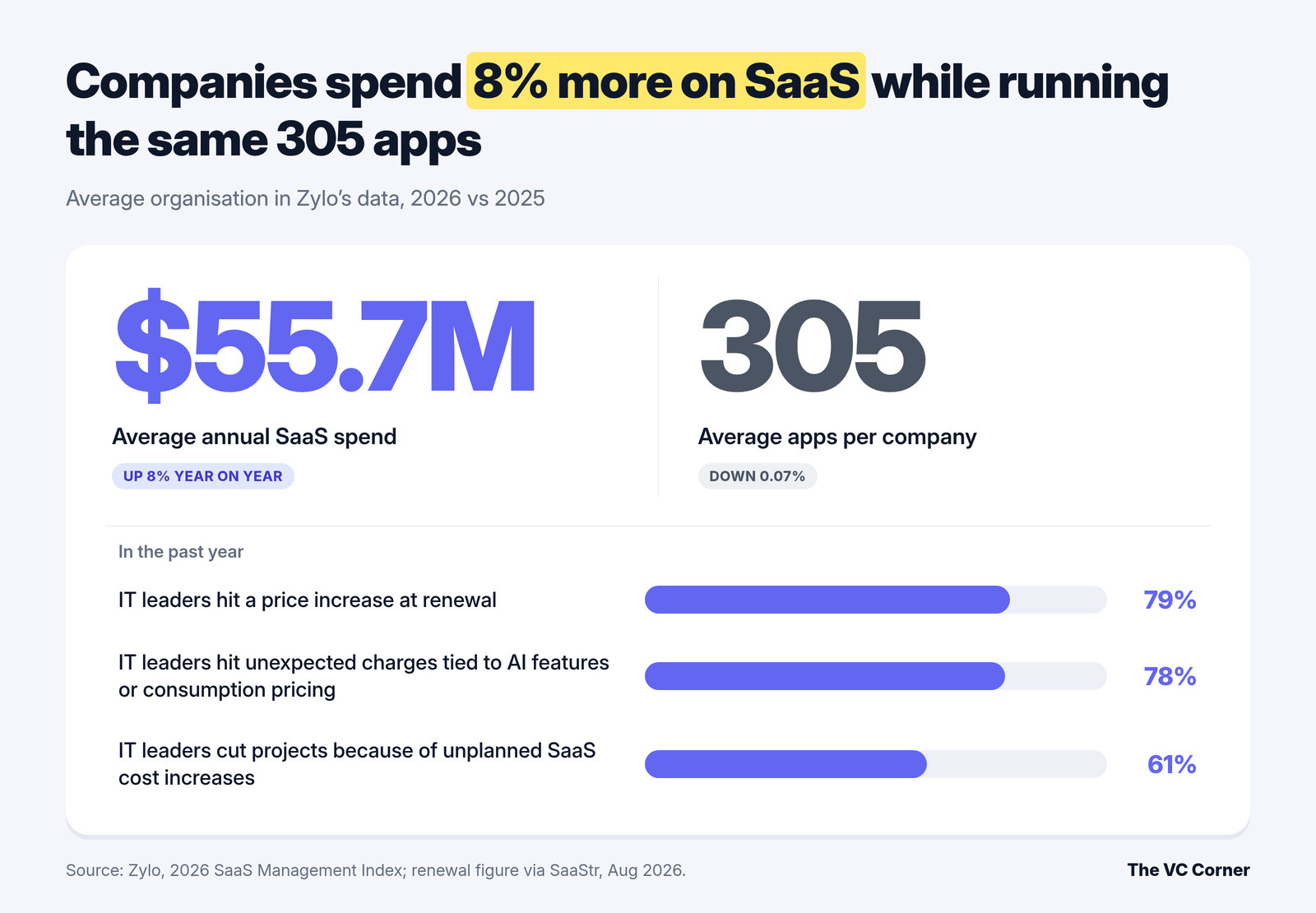
At the same time, SaaS buyers are feeling the squeeze and feel like they’re overpaying. Zylo’s 2026 SaaS Management Index shows average SaaS spend per organisation up 8% to $55.7 million, while the number of applications barely moved at 305, so companies are paying more for the same tools.
AI is also adding an additional cost layer to the SaaS vendors, and the giants are already saying that when the cost goes beyond what they themselves can afford, they need to have some kind of meter themselves.
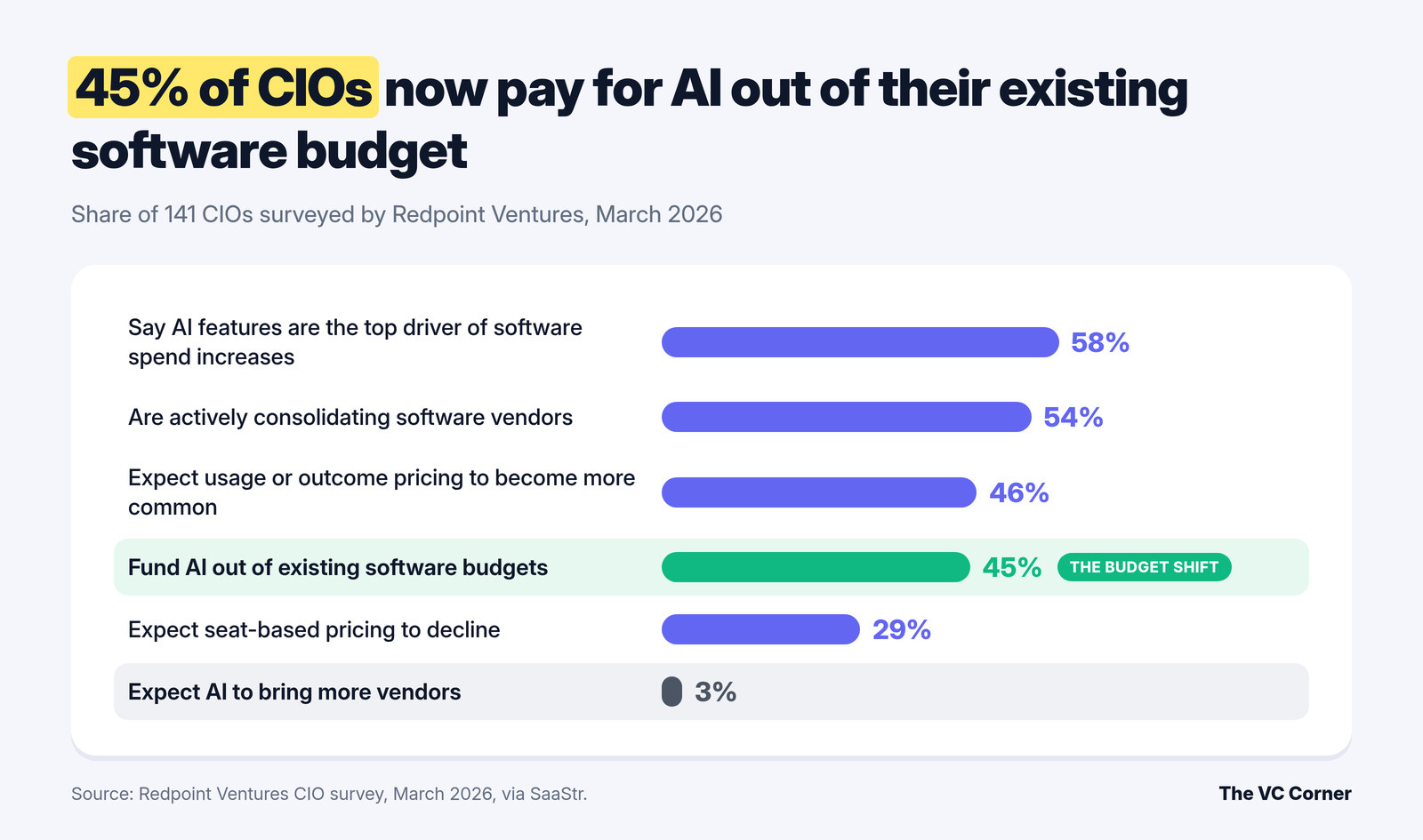
A Redpoint survey of 141 CIOs, as reported by SaaStr, found that 45% are funding AI directly out of existing software line items, and 54% are actively consolidating vendors.
3. The 3 B2B Pricing Models of the Future
So if we assume that seats are not a reliable measure of work done, then we can try and predict 3 models that will become more reliable in the coming years.
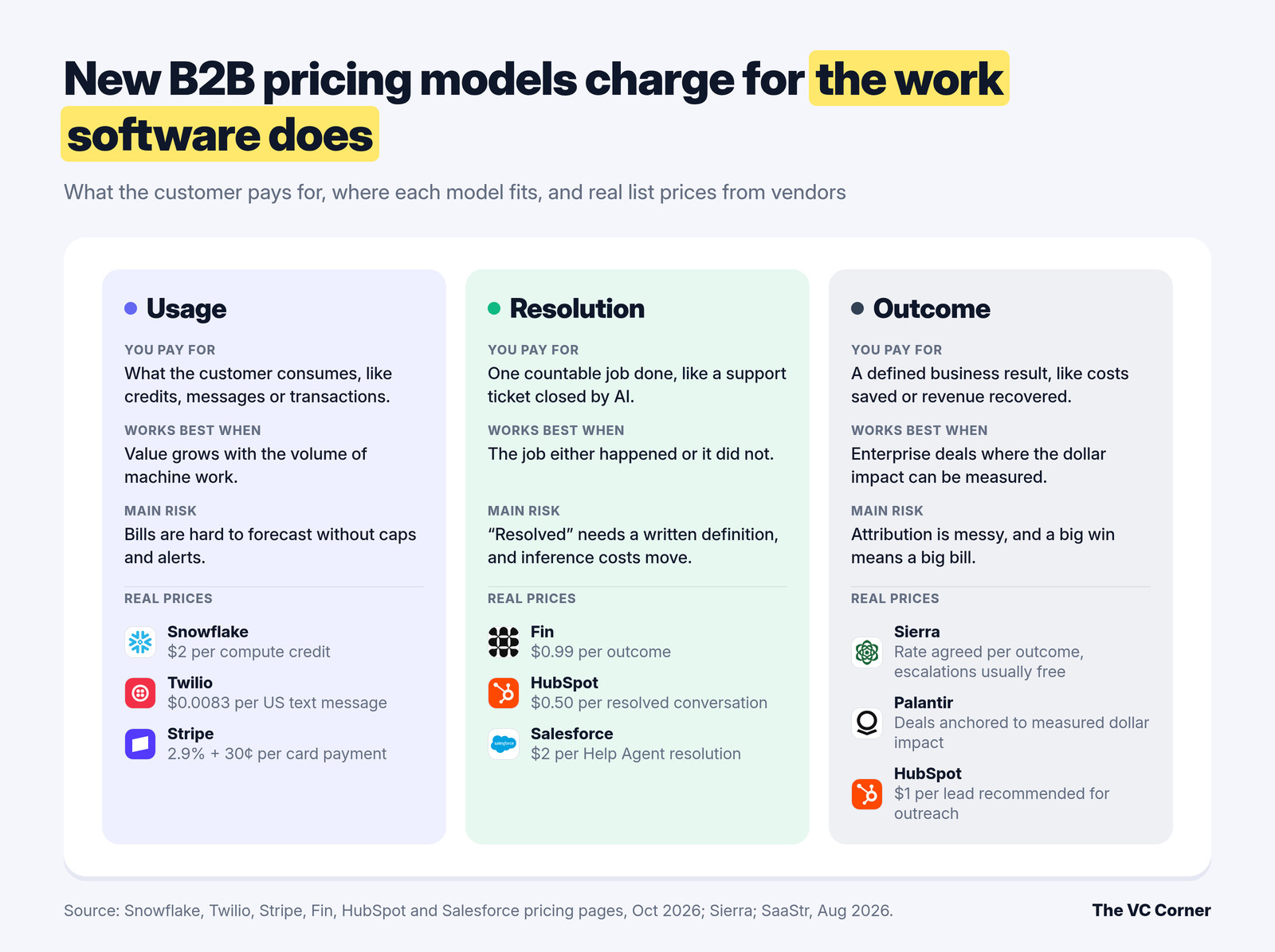
1. Usage-Based Pricing
Usage-based pricing charges customers for what they consume, the way electricity does. When value grows with volume, the price grows with it.
This is the model that companies like Stripe, Twilio, Snowflake, Databricks, MongoDB and others have been using for a while.
The biggest issue with usage-based pricing is that it is hard to forecast, unless there is a pre-agreed spending cap, alerts, or other mechanisms that let customers control usage and spend.
2. Resolution-Based Pricing
This essentially means result-based pricing. Say an invoice has been processed, or a support ticket has been closed by AI agents.
Both sides of the equation see the same number, so there is no pricing argument to be made here, and the customer pays only when the job is done.
Also, nothing downstream has to be attributed, which makes this the easiest of the pay-for-work models to adopt.
The only thing that needs to be resolved beforehand is what “resolved” means. And for vendors, it’s advisable to know their own cost per resolution, because while the price may be fixed, the inference cost is not.
3. Outcome-Based Pricing
Outcome pricing may look like resolution pricing, but the two work differently. Outcome pricing means paying when a defined business result occurs.
This is a bit more complicated than resolution pricing, which is based on countable events, that happen frequently. In this case, outcomes could be “costs saved” or “revenue recovered.”
From the buyer’s perspective, a software license turns into a business case and you only pay when it works. Some might call this model an “underwriting business” because the whole risk rests on the vendor.
At the same time, proving that a certain product caused the result can be messy and ambiguous. And a spectacular result could mean a spectacular bill.
Why Most Companies Will Land on Hybrid Pricing
The truth is that most companies will probably land on a hybrid approach. A hybrid usually implies a base fee with a metered layer on top.
Kyle Poyar’s Growth Unhinged 2026 survey on B2B monetization shows that hybrid is now the most popular model at 37%, and when respondents were asked what they used twelve months ago, only 25% said hybrid. Respondents also say investors prefer hybrid (35%) far more than seat-based pricing (5%).
4. Why the Incumbents Are Struggling
Most people would say that big SaaS companies are slow or their models are faulty, but in reality, all of them are wired around seat pricing.

The model is pretty hard to change once you reach a size of Salesforce’s magnitude.
The way a B2B SaaS company that is already worth billions works is the following:
Billing counts seats, salespeople are paid on contract value booked upfront, forecasts assume smooth recurring revenue, and customer success is judged on renewals.
It’s practically impossible to move to resolution-based or outcome-based pricing and change everything at once without turning the business upside down.
At the same time, a seat-priced company is responsible for giving its customer access. It’s not responsible for whether the product worked as intended, so internal metrics look different when it comes to outcomes and performance.
And that’s exactly why so many announced pricing changes end up as an AI add-on sold on top of the same seat contract.
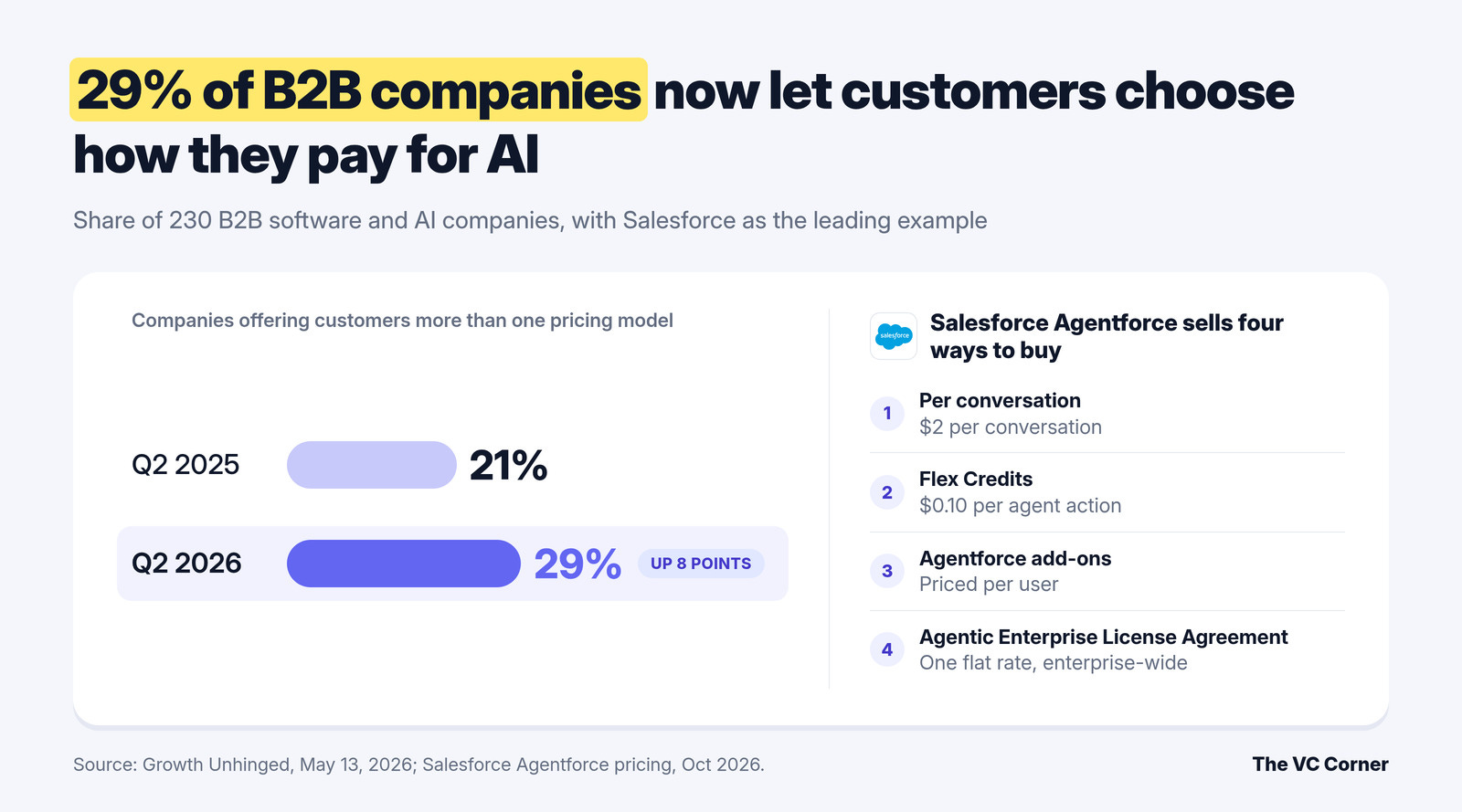
Although Poyar’s survey has shown that 29% of B2B companies above $150M ARR still rely on seat-pricing, the majority of overall respondents are actively rethinking pricing for AI.
The advantage is that a startup doesn’t have to rethink.
5. What To Do If You Are a B2B Startup Today
A startup doesn’t have anybody to convert, so the first contract can be priced however the founder wants.
So if you are a B2B founder today, start by naming the one main countable thing your product does. A thing that your customer would pay for on its own. This is a huge test. If you can name one, that is your unit.
If you can’t name this one thing, then you should think about usage-based pricing.
You should also write the definition down before you sign your first customer, and track what one unit costs you to deliver from day one.
Without that, a per-resolution price can win you deals that may lose money.
Test with a small group first and expect smaller first contracts, and decide early who owns revenue recognition, since variable revenue gets uncomfortable in an audit.
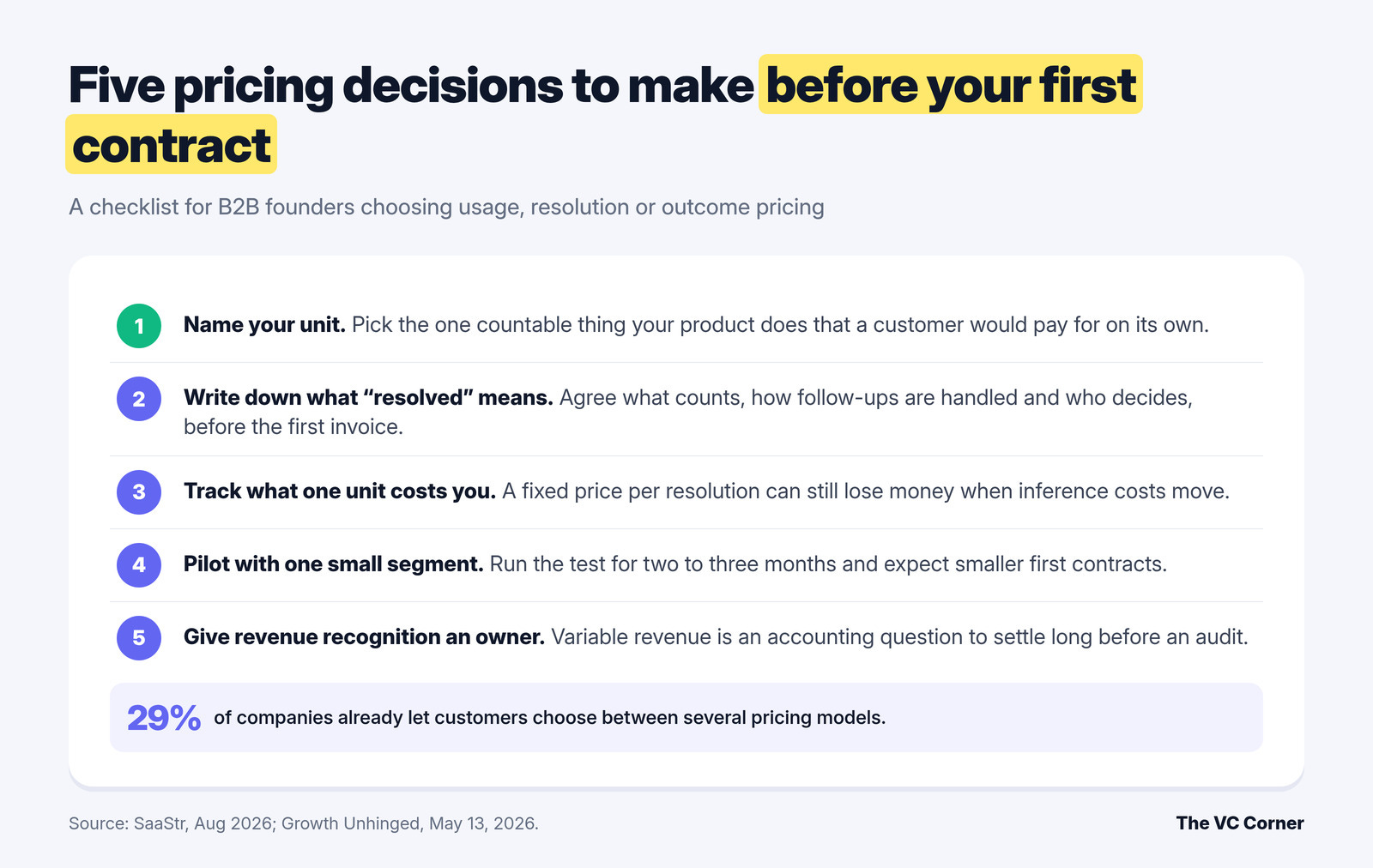
You also don’t have to pick one model forever, as 29% of companies in Poyar’s survey already let customers choose between several.
Remember, pricing is part of the product. So work out what you are really selling, and build the metering and trust around it. That’s the advantage an incumbent may never have.
FAQs
What is replacing per-seat pricing in B2B software?
Usage, resolution and outcome pricing are replacing per-seat pricing, usually blended into a hybrid, which Kyle Poyar’s Growth Unhinged 2026 survey on B2B monetization found is now the most popular B2B pricing model at 37%. Seats lose ground because AI agents do more of the work with fewer logins.
What is the difference between usage, resolution and outcome pricing?
Usage pricing charges for what a customer consumes, the model Stripe, Twilio, Snowflake, Databricks and MongoDB have used for years, while resolution pricing charges per finished job and outcome pricing charges when a defined business result occurs. A resolution is a countable event, such as a processed invoice or a support ticket closed by an AI agent. An outcome is a business result, such as costs saved or revenue recovered, which is harder to prove and puts more of the risk on the vendor.
What is hybrid pricing, and how popular is it?
Hybrid pricing combines a base fee with a metered layer on top, and it is now the most popular B2B pricing model at 37%, up from 25% twelve months earlier, according to Kyle Poyar’s Growth Unhinged 2026 survey. Respondents also said investors prefer hybrid pricing (35%) far more than seat-based pricing (5%).
Why do AI agents break per-seat pricing?
AI agents break per-seat pricing because a seat counts the people who log in, and agents get the work done with fewer logins, so a vendor charging per seat earns less as its own product becomes more efficient. Buyers already feel they overpay: Zylo’s 2026 SaaS Management Index shows average SaaS spend per organisation up 8% to $55.7 million, while the number of applications barely moved at 305.
Are companies moving software budgets to AI?
Yes, a Redpoint survey of 141 CIOs, reported by SaaStr, found that 45% fund AI directly out of existing software line items and 54% are actively consolidating vendors. That puts AI tools in direct competition with the seat-priced software already in the budget.
Why are large SaaS companies slow to leave seat pricing?
Large SaaS companies are wired around seats, from billing and sales compensation to forecasts and renewals, and Kyle Poyar’s Growth Unhinged survey found that 29% of B2B companies above $150M ARR still rely on seat pricing. That is why many announced pricing changes end up as an AI add-on sold on top of the same seat contract.
How should a B2B startup pick a pricing model?
A B2B startup should price on the one countable thing its product does that a customer would pay for on its own, and fall back to usage-based pricing if it cannot name one, knowing that 29% of companies in Kyle Poyar’s Growth Unhinged survey already let customers choose between several models. Write the definition of that unit down before the first customer signs, and track what one unit costs to deliver from day one.
Ruben, excellent analysis of how background autonomous AI agents are dismantling standard seat licensing workflows. It’s a compelling look at where traditional enterprise software is moving.
However, when you apply this thesis to high-compliance, real-time clinical medical fields—like aesthetic medicine—the paradigm flips completely.
In our industry, an "AI agent" can never sit across from a human patient, analyze dynamic three-dimensional facial architecture, evaluate emotional hesitation, or shoulder clinical medical liability. The software is an active, synchronous utility that must be operated by a licensed human provider right at the point of care.
Furthermore, the alternative models you noted—like usage, outcome, or micro-metered "hybrid" pricing—actually introduce massive structural flaws into a clinical setting. Practice managers and providers look at software as fixed Operational Overhead (OpEx). If you switch them to a per-consultation or outcome-metered model, it feels identically to the highly hated "consumable click-fees" of the laser device industry. It taxes their patient volume and penalizes clinic efficiency.
If a provider converts a single high-ticket treatment plan using software, the infrastructure cost for the entire year is paid for. In high-stakes human environments, a flat, unrestricted premium subscription that eliminates "click-hesitation" and guarantees budgeting predictability will always beat out a micro-metered tax.
Curious to hear your thoughts on how you see these compliance-heavy, 1:1 human workflows resisting the background automation shift!
Interesting seeing this play out outside software too, Tutor Intelligence just raised $75m to rent warehouse robots by the hour or by the pick which is basically outcome pricing for physical work. The catch is the vendor carries all the hardware cost so it only works if the robot earns more per hour than it costs to build, feels like the same question every usage model ends up at