

What “Growth Hacking” Really Means in 2025
Back in the day, Dropbox offered 500 MB for every invited friend. It became the simplest blueprint for compounding distribution by baking growth directly into the product.
Fifteen years later, the term growth hacking is still debated. Some founders roll their eyes at it. Others hire for it before hiring a marketer.
If you ask ten operators to define it, you’ll hear ten different explanations…
Brought to you by Sintra - Your employees, on AI
If you could hire employees who never sleep and get better every week, what would you build?

That is what Sintra’s AI Helpers do. They automate your operations, content, outreach, and workflows so your business grows on autopilot.
Use code VCCORNER for 70% off:
The truth is that growth hacking was never meant to be a bag of gimmicks. It has always been about urgency, creativity, and using the product itself as a distribution engine.
The reality is that growth hacking was never about gimmicks. It always promised urgency, creativity, and using the product as a distribution engine. What started as a survival instinct in lean startups through funnels and growth loops, viral CTAs, clever integrations, has matured into a core operating system for modern SaaS companies.

This article traces the evolution that ultimately defined the term. We’ll unpack the frameworks, metrics, and systems that turned a scrappy idea into the backbone of modern go-to-market strategies, and how you can use it to build sustainable, compounding, product-driven growth, with discipline.
Table of Contents
1. Origins: The Birth of Growth Hacking (2010–2015)
2. From Hacks to Systems: The Rise of Growth Teams
3. The Method: How Growth Hacking Actually Works
4. Metrics That Matter: Measuring Real Growth
5. Evolution: From Growth Hacking to Product-Led Growth (2016–2025)
6. How to Do Growth Hacking Properly in 2025
7. The Future of Growth Hacking
1. Origins: The Birth of Growth Hacking (2010–2015)
In 2010, startup advisor Sean Ellis coined a new (at the time) term called growth hacking. During that period, startups weren’t hiring traditional marketers, they needed someone who could generate rapid, scalable growth without the playbook of big-budget advertising. “A growth hacker,” Ellis wrote, “is a person whose true north is growth.”
Around the same period, Andrew Chen published his now-iconic essay, “Growth Hacker is the New VP of Marketing,” stating that in digital products, the line between marketing and engineering was blurring.
Distribution was no longer about paid media but about shipping features that spread the product. From this mindset, growth hacking strategies were born.
At the center of this new discipline was Dave McClure’s AARRR framework, also known as Pirate Metrics. For the first time, founders had a language and structure to treat growth like a system.

Early growth hacking examples weren’t polished campaigns, they were scrappy, technical, and precise. Here are the most prominent ones, which you may or may not have heard of before:
Example 1: Dropbox embedded a referral loop directly into onboarding. Invite a friend and both of you get 500MB of free space. That single loop helped Dropbox grow users by 3900% in 15 months.
Example 2: Airbnb reverse-engineered Craigslist’s posting system, without an API, to auto-publish Airbnb listings to Craigslist, reaching millions of renters who otherwise wouldn’t have seen them.
Example 3: Hotmail simply added a line at the end of every user’s email: “P.S. I love you. Get your free email at Hotmail.” That one sentence helped Hotmail reach 12 million users in 18 months.
Example 4: PayPal, in its early days, offered users $10 to sign up and $10 more to refer friends. It cost real money, but bootstrapped a network that ultimately helped them scale.
Each of these tactics was rooted in the same formula:
Growth = Product + Marketing + Data
The best growth hackers worked with engineers, ran SQL, and built referral systems into the product itself.
But don’t be mistaken. Growth hacking isn’t synonymous with manipulation. Think of it like ingenuity under pressure.
Startups didn’t have Super Bowl ads or sales teams. They had to think like engineers, distribute like creators, and measure like analysts. Growth hacking was survival through smart, embedded design.

2. From Hacks to Systems: The Rise of Growth Teams
By the mid-2010s, growth hacking was no longer the domain of rogue engineers running experiments after hours. Facebook, LinkedIn, and Uber had begun institutionalizing it, transforming a necessity mindset into a core business function.
And growth was no longer a hack. It became an integral part of the team.
The Blueprint: How Big Tech Made Growth a Discipline
Between 2013 and 2017, companies like Facebook pioneered the modern growth team structure. What began as a few engineers optimizing notifications and sign-up flows became a cross-functional machine.
Facebook’s growth team eventually scaled to hundreds of people, all focused on a single question: how do we get more people to use the product, more often, with less friction?
LinkedIn followed suit, using experimentation to drive new user acquisition and engagement in specific markets.
Uber’s growth team famously localized everything from app language to payment methods, in order to fuel international adoption.
In each case, the growth hacking strategies evolved beyond clever tactics. They became institutionalized as systems. And systems mean something repeatable, measurable, and team-owned.
Anatomy of a Growth Team
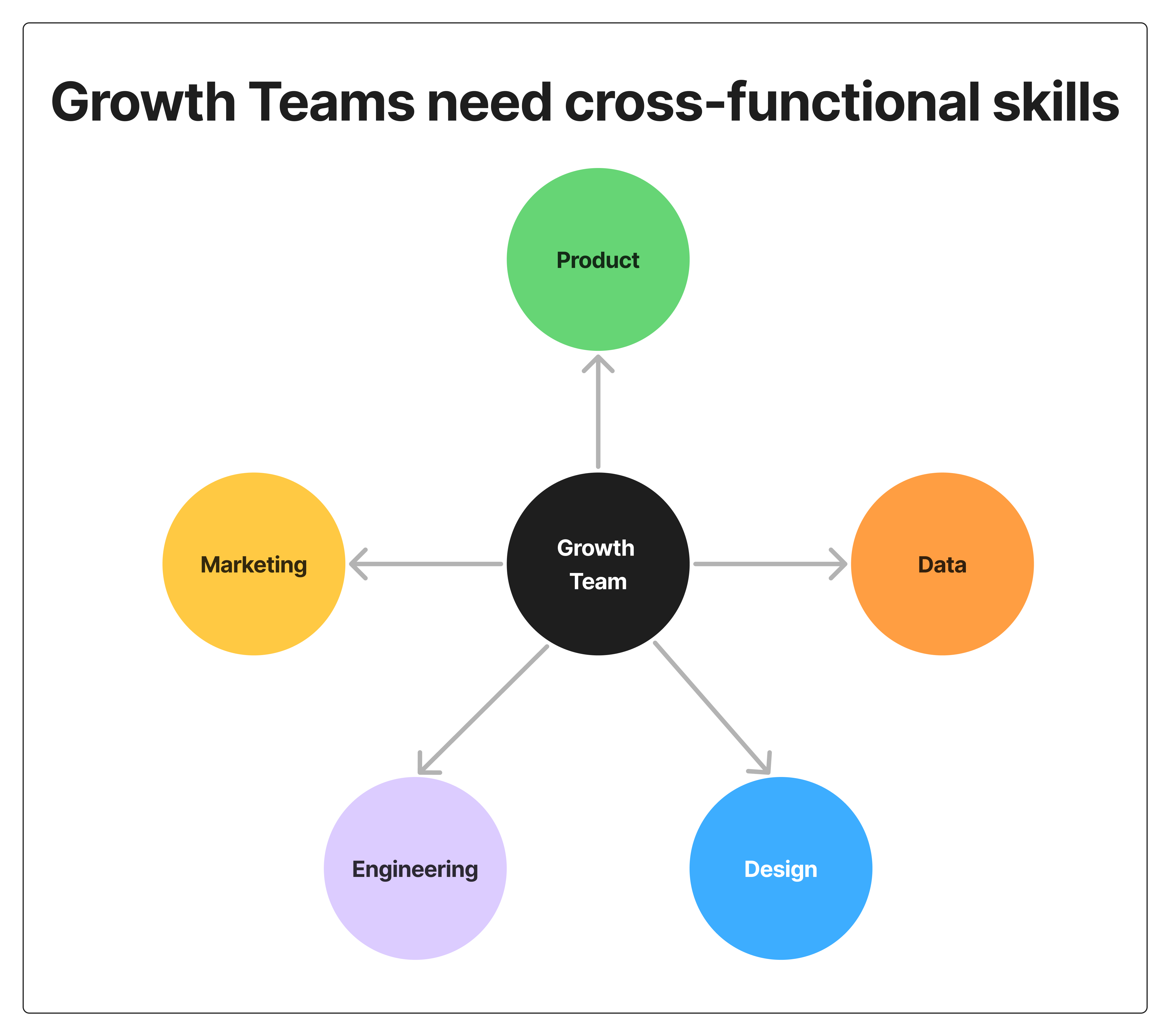
The modern growth team sits at the intersection of product, data, engineering, and design. A typical setup includes:
A Product Manager who owns the funnel/loop and prioritizes experiments
Engineers to build features, tools, or A/B tests
A Data Analyst or Scientist to surface insights and track impact
A Designer to optimize UX and flows
A Marketer to align messaging and retention tactics
This cross-functional squad works like a mini-startup inside the company, focused entirely on moving startup growth metrics like activation, retention, or virality.
From Funnels to Loops: The Rise of Frameworks
With teams in place, the next evolution was process. And that’s where frameworks come in.
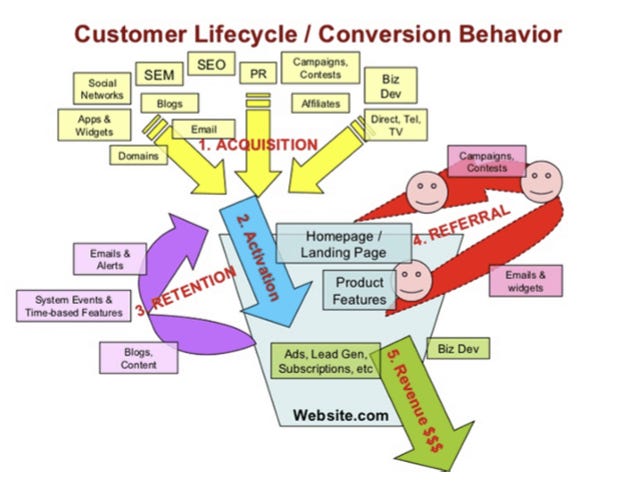
The first foundational tool was Dave McClure’s AARRR (Pirate Metrics). It broke the funnel into five stages: Acquisition, Activation, Retention, Referral, Revenue.
This framework helped teams isolate drop-offs and focus their work.
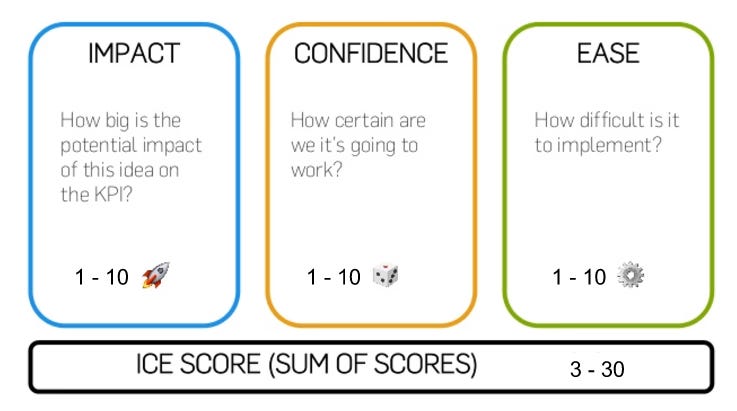
But structure wasn’t enough. Teams needed to prioritize fast. That led to the widespread adoption of the ICE Scoring model:
Impact – How big is the potential upside?
Confidence – How likely is it to work?
Ease – How quickly can we test it?
ICE allowed teams to sort ideas quickly and launch growth hacking experiments weekly, not quarterly.
Both AARRR and ICE together helped growth teams transition from intuition to iteration. Ideas were scored, tested, measured, and either scaled or scrapped.
This was the beginning of what Brian Balfour would later call the “growth process as scientific method.”
The Shift to Product-Led Experimentation
This was also the era when companies began leaning into product-led growth. Rather than pouring budget into ads or outbound sales, the product itself became the main engine of user acquisition and expansion.
Sign-up flows were optimized. Onboarding was broken into measurable stages. Free-to-paid conversions were treated like micro funnels. Virality, referral incentives, and shareability were designed in from day one.
Facebook’s “People You May Know,” LinkedIn’s “Who Viewed Your Profile,” and Uber’s one-click invite links were all part of carefully engineered growth loops; systems where one user action seeded the next user’s acquisition or activation.
The paradigm shift was clear at this point. Teams didn’t just market the product, they engineered its distribution.
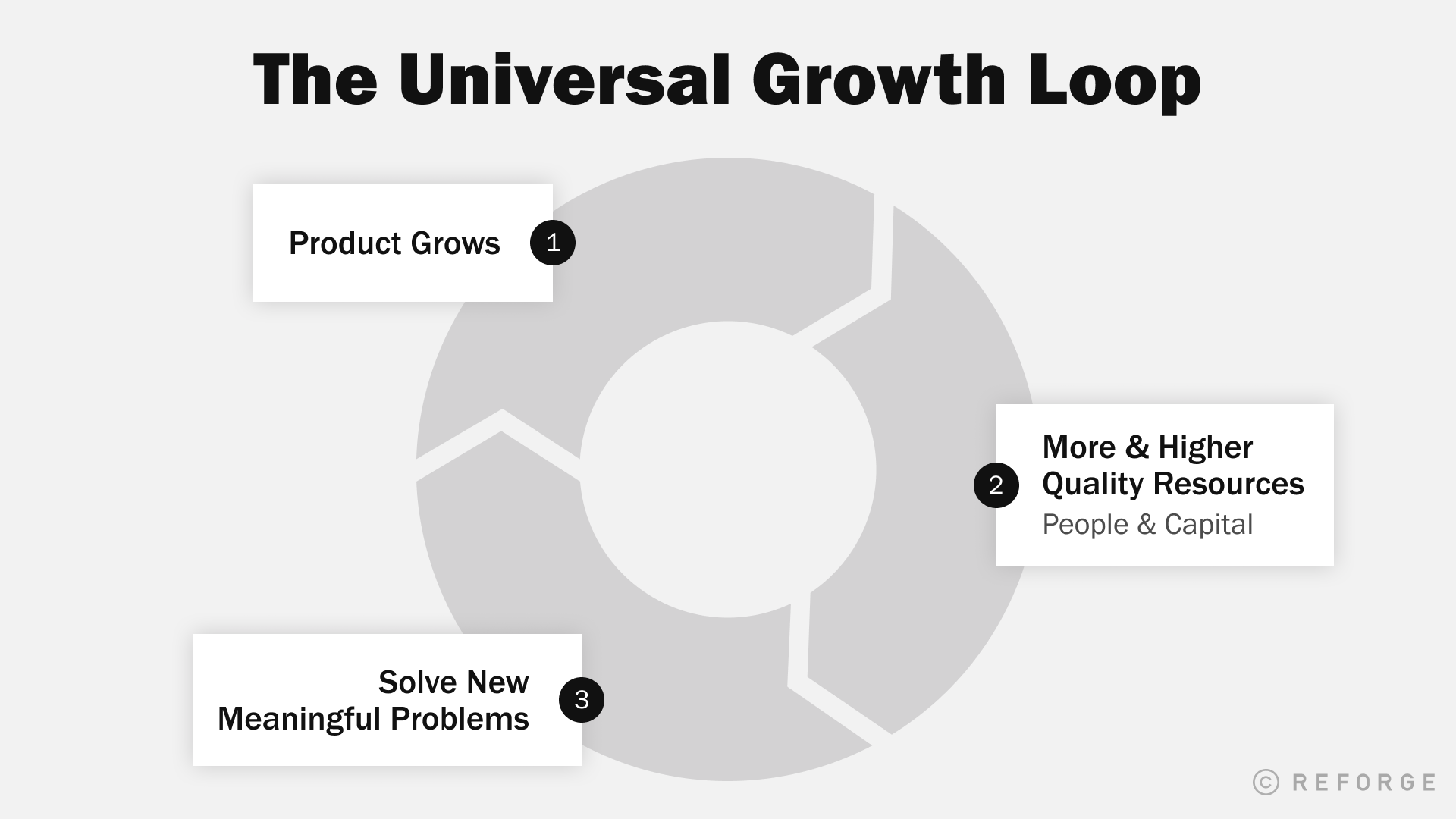
What made this era so pivotal wasn’t just that growth became a team, it also became a discipline. It had structure, scoring models, benchmarks, experiment logs, dedicated dashboards, and velocity targets.
And this shift set the stage for the next evolution where growth hacking would become the go-to-market model itself.
3. The Method: How Growth Hacking Actually Works
By the time growth teams became formalized, the hustle gave way to repeatable systems. Today, those systems run like mini scientific labs; fast, structured, and relentlessly focused on the right metrics.
The Experimentation Cycle: From Gut Feel to Precision Loops
Every modern growth team runs on a structured experimentation cycle. It’s deceptively simple but very effective:
Analyze funnel data – Use tools like Mixpanel, Amplitude, or internal dashboards to spot drop-offs in the user journey. Where are users bouncing? What’s stalling activation or retention?
Form a hypothesis – “If we reduce form fields by 50%, more users will complete onboarding.” The best hypotheses are tied to specific AARRR metrics (e.g., activation rate, referral conversion).
Prioritize with ICE – Score ideas on Impact, Confidence, and Ease. High ICE = test fast. Low ICE = backlog.
Run experiments – Launch A/B tests, use feature flags, or push live variants in limited geos or cohorts.
Measure → Scale or Ditch – Watch the metrics. If it moves your North Star Metric, scale it. If not, cut ruthlessly and move on.
This cycle is often run weekly, or even daily in high-velocity teams. What matters is iteration speed; how fast you can move from insight to shipped test to learning.
Your North Star Metric: Guiding the Whole Machine
Every growth team has noise. The North Star Metric (NSM) keeps them focused.
A good North Star Metric reflects the core value users get from the product and correlates tightly with long-term revenue. Think:
Slack: “Weekly Active Teams”
Airbnb: “Nights Booked”
Spotify: “Time Spent Listening”
You get to pick it. This is the one metric that aligns product, marketing, and operations around a common definition of success. Every experiment, every campaign, every push; if it doesn’t move the North Star, it’s deprioritized.
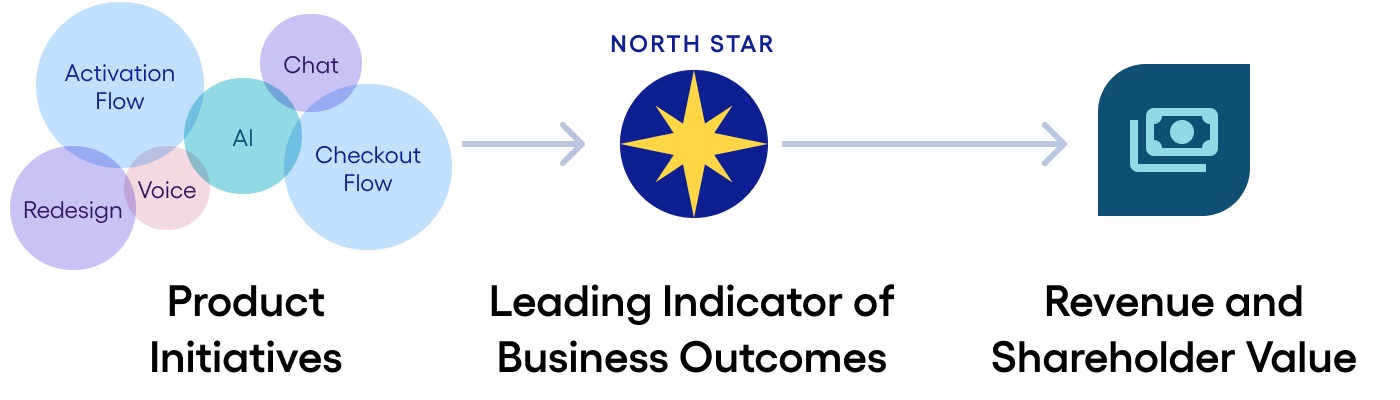
Picking the wrong NSM is costly. Optimizing for sign-ups when you should be optimizing for retained weekly usage can create a wide funnel with zero revenue.
Smart teams start by defining what true value looks like for the user, and measure activation, retention, and expansion through that lens.
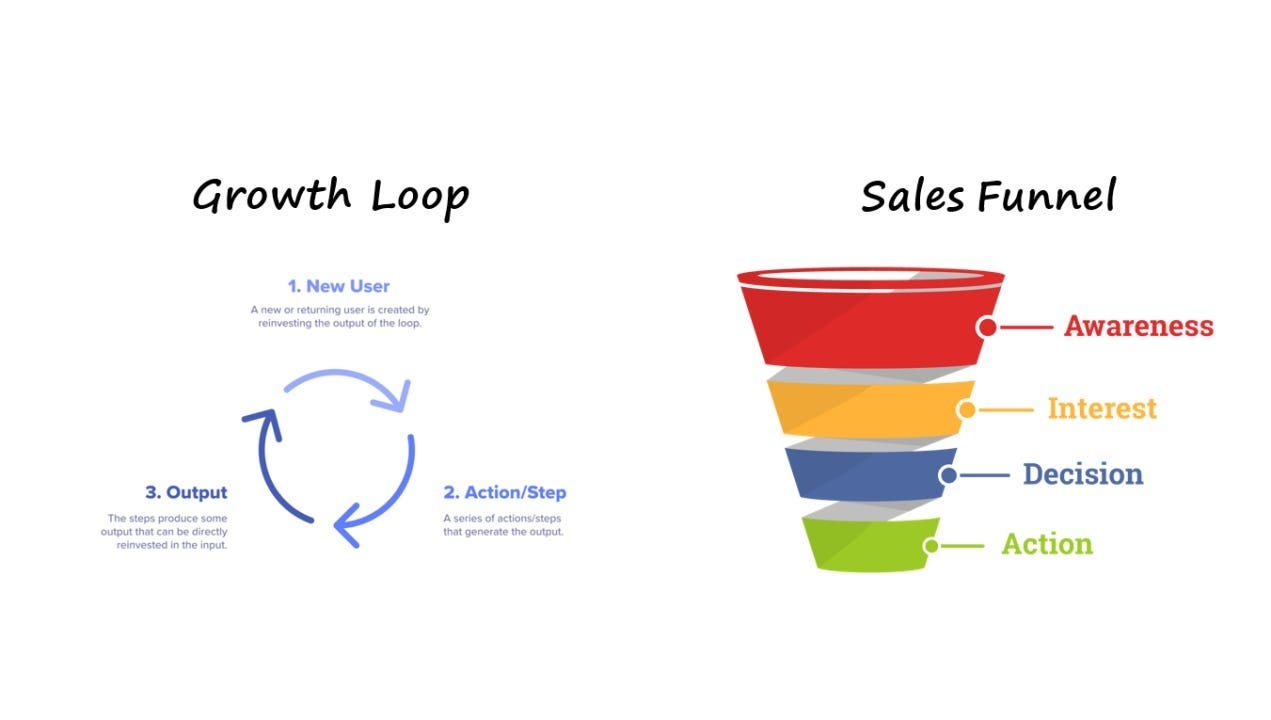
From Funnels to Loops: Compounding Instead of Leaking
Old-school growth playbooks ran on funnels: acquire → activate → retain → monetize. That works, until your channels saturate or CAC spikes.
Today, elite teams design growth loops, systems where the output of one user action becomes the input for the next.
There are many types of growth loops:
Referral Loops – Dropbox’s “get space when you invite” model.
Content Loops – TikTok or YouTube: users create content that attracts more users who create more content.
Usage Loops – Notion templates: one user’s setup inspires another’s, who shares theirs, feeding the loop.
Loops beat funnels because they compound. Instead of relying on top-of-funnel spend, the product fuels its own growth. That’s what makes growth hacking strategies sustainable.
Here’s a simplified version of a growth loop:
New User → Uses Product → Triggers Output (Invite, Share, Content) → New User → ...
Each cycle increases product value and acquisition velocity.
Why Instrumentation Matters More Than Ideas
None of this works without instrumentation. The best growth hacking examples are measured. If your onboarding flow doesn’t have event tracking, you’re simply guessing. If you can’t segment retention by acquisition channel, you’re blindfolded.
Modern growth orgs invest heavily in:
Real-time analytics (e.g. Amplitude, Mixpanel, Segment)
User segmentation and cohort analysis
Experiment tracking
NSM dashboards visible company-wide
Growth is all about testing fast and learning faster. Without clean data and sharp instrumentation, velocity is wasted.
The truth is, growth hacking today looks more like ops than art. It’s about setting up the machine, tightening every bolt, and spinning the wheel faster with each loop. The tactics may evolve, but the system underneath is what scales.
4. Metrics That Matter: Measuring Real Growth
Growth without measurement is just noise. And in startups, bad metrics are misleading and cause misallocation. The difference between a company that scales and one that stalls often comes down to what it chooses to track.
Start with the Pirate Map: AARRR
Acquisition – How do users find you? (e.g. SEO, ads, word of mouth)
Activation – Do they experience value on Day 1?
Retention – Do they come back again and again?
Referral – Do they tell others?
Revenue – Do they convert into paying users?
Together, these stages form the spine of most growth hacking strategies. AARRR helps identify where growth is leaking, and which experiments actually move the needle.
But these metrics are only a start. Smart operators and investors go deeper.
Efficiency: CAC, LTV, and CAC Payback
You’re not just trying to grow. You’re trying to grow efficiently.
CAC (Customer Acquisition Cost): How much you spend to acquire a customer.
LTV (Lifetime Value): How much that customer pays you over time.
CAC Payback Period: How long it takes for that CAC to be “paid back” in gross profit.
If your CAC payback is 24+ months, your growth might be burning too much capital. Elite SaaS companies keep it under 12 months. Anything sub-9 is best-in-class.
It’s also not just about spending less. Raising LTV through upsells, retention, and pricing is often the better lever.

Sustainability: Retention and Net Revenue Retention (NRR)
The most important metric in SaaS is retention.
If users don’t come back, you don’t have a business; you have churn disguised as growth. That’s why retention is the truest proxy for product-market fit. Founders often feel PMF as an intuition, and retention metrics prove it.
GRR (Gross Revenue Retention): How much of your revenue you keep without expansion.
NRR (Net Revenue Retention): GRR + upsells and expansions. 100% NRR = flat. 120%+ = compounding.
Investors love high NRR because it shows users aren’t just sticking around, they’re deepening. It’s a sign the product has hooks, utility, and ROI.
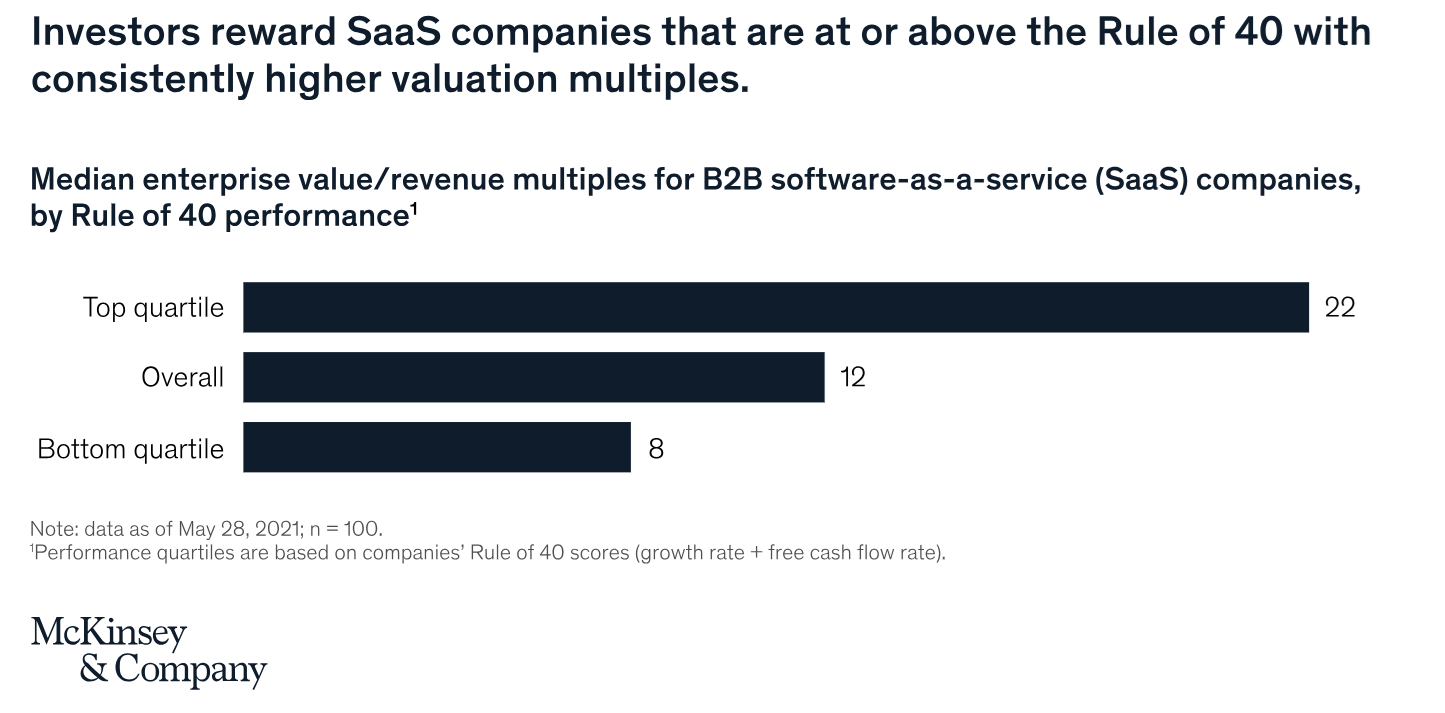
Balance: The Rule of 40 (and Its Variants)
For mid-to-late stage SaaS, VCs look at balance, not just growth. Remember the Rule of 40:
Growth Rate (%) + Profit Margin (%) ≥ 40%
If you’re burning cash, you better be growing fast. If you’re growing slowly, you better be profitable. The Rule of 40 filters out unsustainable models that can’t balance the two.
In early-stage, the rule is looser. Many use a “Rule of X” logic; e.g., LTV:CAC > 3:1, CAC payback < 12 months, 90-day retention > 40%.
These are all signals that growth is not just healthy, but above all: not inflated.
Vanity Metrics vs. Real Signals
Downloads, likes, and total users may look good on a pitch deck, but they rarely map to value.
A product with 1 million downloads and 5% activation is doomed to fail. But one with 10,000 signups and 80% retention is a compounder.
How VCs Evaluate “Healthy” Growth
Most investors look past surface metrics quickly. Here’s what experienced VCs actually ask:
What’s your CAC payback, by channel?
What does your usage decay curve look like?
Where does your North Star metric stall?
Do your top 10% of users expand?
What’s the retention slope past 30/60/90 days?
Healthy growth has a narrative. It tells investors that users land, activate, stick, and grow. And that narrative is what gets investors to write the check.
5. Evolution: From Growth Hacking to Product-Led Growth (2016–2025)
By 2016, growth hacking had outgrown its name. What started as a scrappy playbook for referrals and viral loops began morphing into a broader discipline; one that placed the product at the center of the growth engine.
From Hacks to Habits
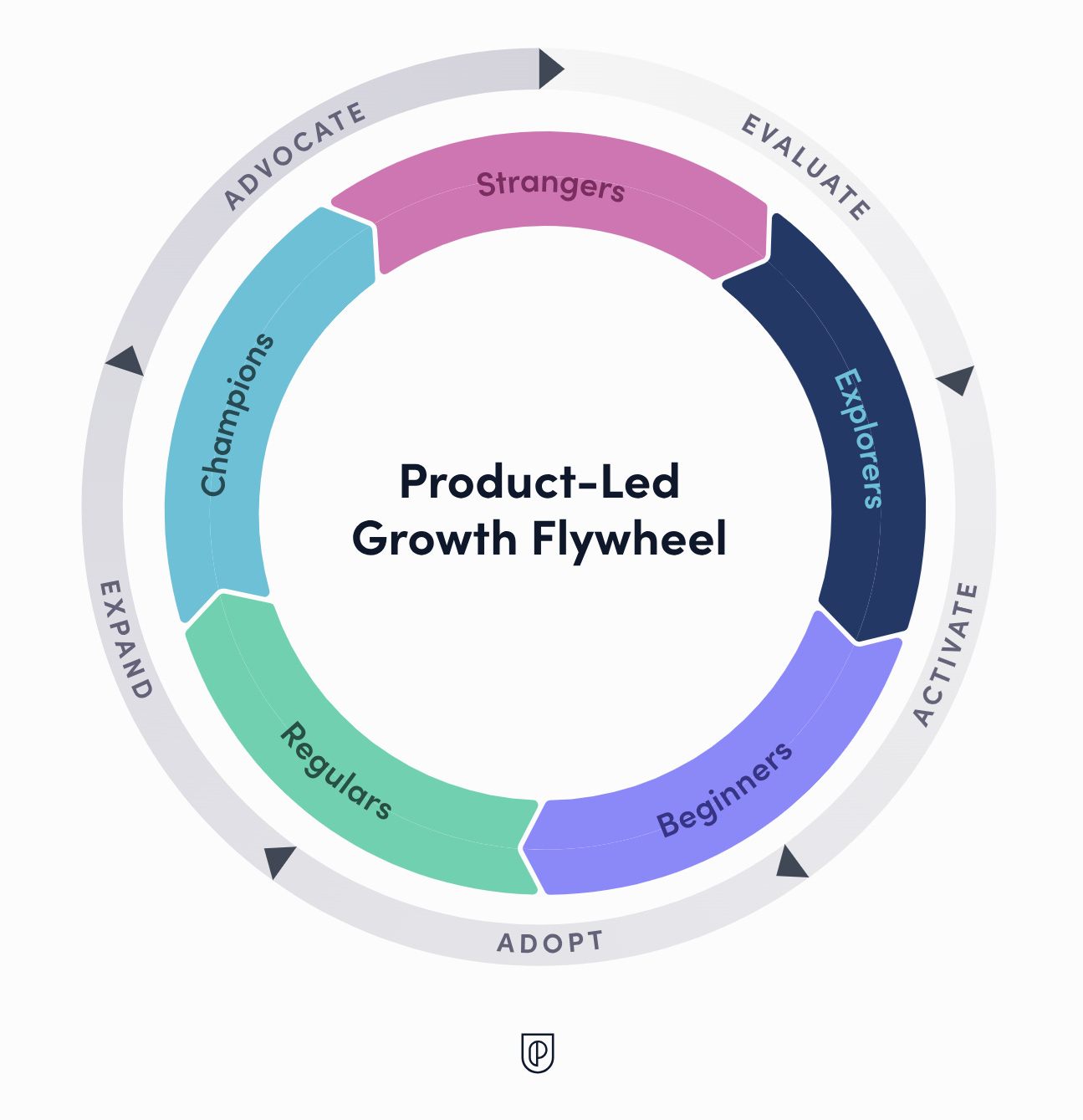
Early success stories like Dropbox and Airbnb taught startups how to “hack” attention. But the next wave, which was set by Slack, Figma, Notion, did something different. They built products so inherently valuable, so self-serve and intuitive, that growth emerged from usage, not ads.
This shift became known as product-led growth (PLG). Rather than chasing users, these companies created systems where users invited themselves in.
Slack didn’t require sales calls to scale. Figma replaced onboarding with collaboration. Notion turned documentation into a loop of discovery and expansion.
Credit for formalizing this new model goes in part to OpenView, which helped popularize the PLG thesis and published early benchmarks. Reforge, YC, and other institutions followed, codifying growth into something teachable, no longer relying on intuition.
The Privacy Reset and the Decline of Paid Arbitrage
Starting in 2018, the old playbook took a hit. GDPR in Europe, CCPA in California, and then Apple’s App Tracking Transparency (ATT) framework in 2021 stripped marketers of easy targeting.
ATT alone slashed CAC efficiency across paid channels. Meta reported a $10B hit to ad revenue in 2022 due to signal loss.
This was an earthquake for early-stage startups. Suddenly, renting attention got expensive.
Cookie deprecation finished the job. Without third-party tracking, startups could no longer rely on lookalike audiences or attribution hacks. Growth had to come from first-party data, real engagement, and better onboarding.
AI and the Rise of Intelligent Experimentation
By 2023, growth teams had a new tool: AI. Not just for copywriting or ad testing, but for forecasting, segmenting, and personalizing entire funnels.
AI-driven analytics platforms began surfacing micro-patterns in user behavior, enabling hyper-targeted experiments. Teams used LLMs to dynamically generate onboarding paths, refine cold emails, and even prioritize experiments using historical success data.
In combination with more sophisticated analytics tools, growth stopped being a guessing game. It became instrumentation, machine learning, and user psychology, all wired together.
A Discipline, Not a Tactic
Today, growth hacking has matured. It’s less about loopholes, more about loops. Less about tricks, more about teams.
Reforge courses are filled with PMs, marketers, and engineers learning the mechanics of sustainable growth. YC startups are coached on growth loops, retention curves, and North Star metrics from Day 1.
The word “hacking” might still show up in pitch decks, but the practice now sits at the intersection of product strategy, behavioral design, and data systems. In 2025, knowing what is growth hacking means understanding how it evolved into a method for building enduring, compounding companies, not just viral ones.
6. How to Do Growth Hacking Properly in 2025
Most teams still get growth hacking wrong. They chase flashy tactics before nailing the fundamentals. But here’s the thing. In 2025, the path to compounding growth is clearer, and more disciplined, than ever.
Start With a System & Track What Matters
Before building any funnel, start by defining your North Star Metric. This is the one number that will give you the long-term user value.
For Slack, it was messages sent. For Airbnb, nights booked. For your startup, it should tie directly to the core action users take when they succeed with your product.
Next step, map your growth loops, the systems that turn usage into more usage.
Is it a referral loop? A content loop? A usage loop where new features drive deeper engagement?
These loops replace the linear funnel mindset and ensure that each new user brings value back into the system.
Then comes the engine room. That’s your experiment backlog. Prioritize with ICE (Impact, Confidence, Effort), and run small, fast tests weekly.
But be careful to not fall into the trap of optimizing for noise. Align every test with value delivery, not just clicks or opens.
And above all, measure retention before acquisition. Growth without stickiness is just churn with lipstick.
Avoid the Traps
Shortcuts kill compounding. Growth is no longer about popups, spam, or gamified addiction. Watch out for:
Dark patterns that boost short-term metrics but destroy trust
Overreliance on channels like paid ads without owning a durable loop
Chasing virality instead of building value-aligned experiences
A Checklist for Ethical Growth
To grow the right way:
Does your NSM reflect real user value?
Are your growth loops sustainable and user-driven?
Do you measure retention before pouring money into ads?
Are you testing with integrity; no bait, no tricks?
Is your system built to compound, not just acquire?
In 2025, the best growth hacking strategies are the ones that scale trust, not just traffic.

7. The Future of Growth Hacking
People still use the term “growth hacking”, but what it means has radically changed.
In the next decade, growth won’t be led by channel arbitrage or virality plays. Instead, it’ll be driven by systems that learn, adapt, and compound in real time.
Teams are already integrating AI-driven optimization to personalize activation flows, adjust pricing dynamically, and predict churn before it happens. When coupled with first-party data and privacy-safe architectures, these models don’t just scale outreach, they elevate relevance.
The next evolution is product-centric, privacy-first, and built on trust. Growth loops are becoming more embedded in the product itself, like Notion’s template galleries or Linear’s workspace invites, where the user journey drives distribution without ever needing a landing page.
Growth teams are also reshaping. It’s no longer marketing vs product vs data. In 2025, the best teams blend product sense, UX craft, and analytical depth into a single, interdisciplinary function. The role of the “growth PM” is closer to a systems architect than a channel operator.
Repeatable, testable, instrumented systems. A good growth hacking strategy today builds the infrastructure to compound usage and deliver value at scale.
In the end, the best growth hacking examples aren’t just shortcuts. They’re system upgrades; layered, disciplined, and deeply aligned with how people experience your product.
This is one of the clearest overviews of modern growth I’ve read. You’ve taken a lot of very current, specialist insight and turned it into a coherent map of how growth actually works in leading companies today.
I’d already come across some of the frameworks and ideas you mention, but having them all connected in one narrative—and discovering a some related concepts I had missed—makes this piece especially valuable. It’s the kind of article I can keep coming back to as a guide for what to go deeper on next. Thank you for putting this together.