

Was Brex’s Acquisition Really a Failure?
Imagine building a company that ends up being worth more than $5 billion. For the 99% of people in business, that’s a world-class victory. A victory that involves years of work, thousands of customers, and a product that holds its own in a tough market.
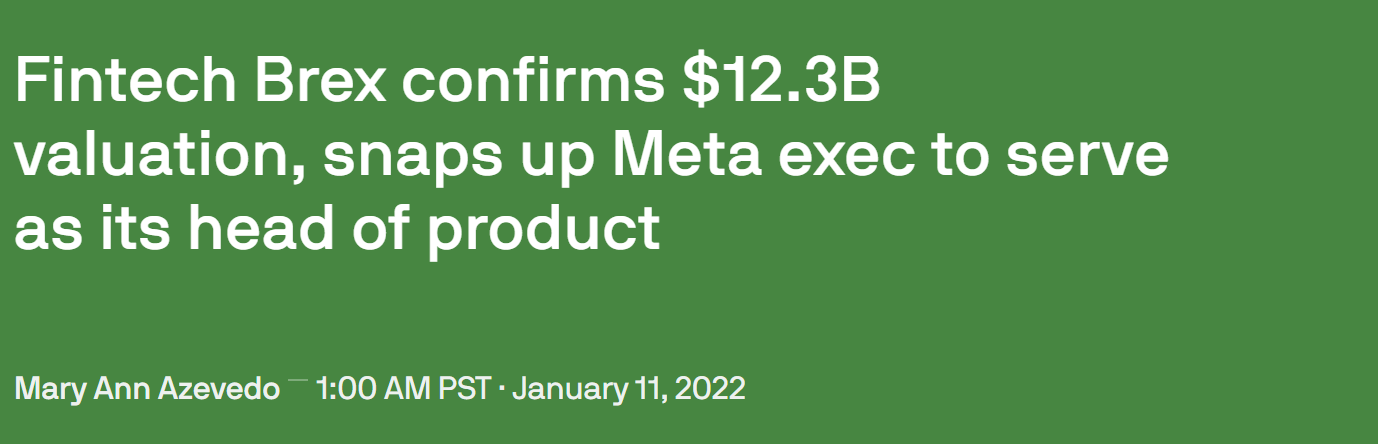
But in the high-stakes world of venture capital, that $5 billion is barely a surprise these days. Because Brex was once valued at $12 billion, many are looking at this exit as a fall from grace. This tension shows us that our ideas of winning and losing have become tied to a story that does not always match the facts.
And it’s true that high valuations are viewed as a badge of honor for investors. Legacies of successful funds like Creandum or Sequoia are built by such stories. But for a founder, a high valuation is more like a debt that must be paid back.
When the price tag on a company moves too far away from the truth of the business, it limits every choice the leadership can make.
So in order to understand the Brex deal, we have to look past the loud opinions and focus on the math. This story is about how the same outcome can look like a miracle to one person and a mistake to another. By looking at who really walked away with the money, we can see the real lessons for anyone trying to build a company that lasts, especially in such cutthroat environments like today’s.
Table of Contents
1. The Hard Facts Of The Brex Exit
3. Brex Versus Ramp And The Myth Of Category Kings
4. The Moment The Market Made Its Decision
5. Why Capital One Was The Real Winner On Price
6. Who Really Got Paid And Who Didn’t
7. So, Was Brex A Failure?
8. What Founders And Investors Should Actually Learn
One thing Brex got right from the start: building trust with enterprise customers through strong security and compliance
For fast-growing companies, security isn't just a checkbox—it's how you win deals and keep them.

Vanta has helped over 10,000 companies build and scale security programs that turn compliance into a competitive advantage.
If you're scaling and need to prove trust fast, you should definitely take a look 👇
1. The Hard Facts Of The Brex Exit
To understand why people are so divided over the Brex acquisition, we have to look at the actual money involved. Over its 8-year lifetime, Brex raised about $1.2 billion from investors through 8 rounds. This cash fueled their fast growth and their move into the world of big corporate clients.
💳 How Brex Raised $57M and Rebuilt Startup Banking

Imagine having millions in your startup bank account and still getting rejected for a credit card.
But equity was only one part of the puzzle. They also took on a lot of debt, which was estimated at more than half a billion dollars. And unlike venture capital, debt is a strict promise. It must be paid back even if the market turns sour. Managing those payments became just as important as growing the business when the world turned in 2022.
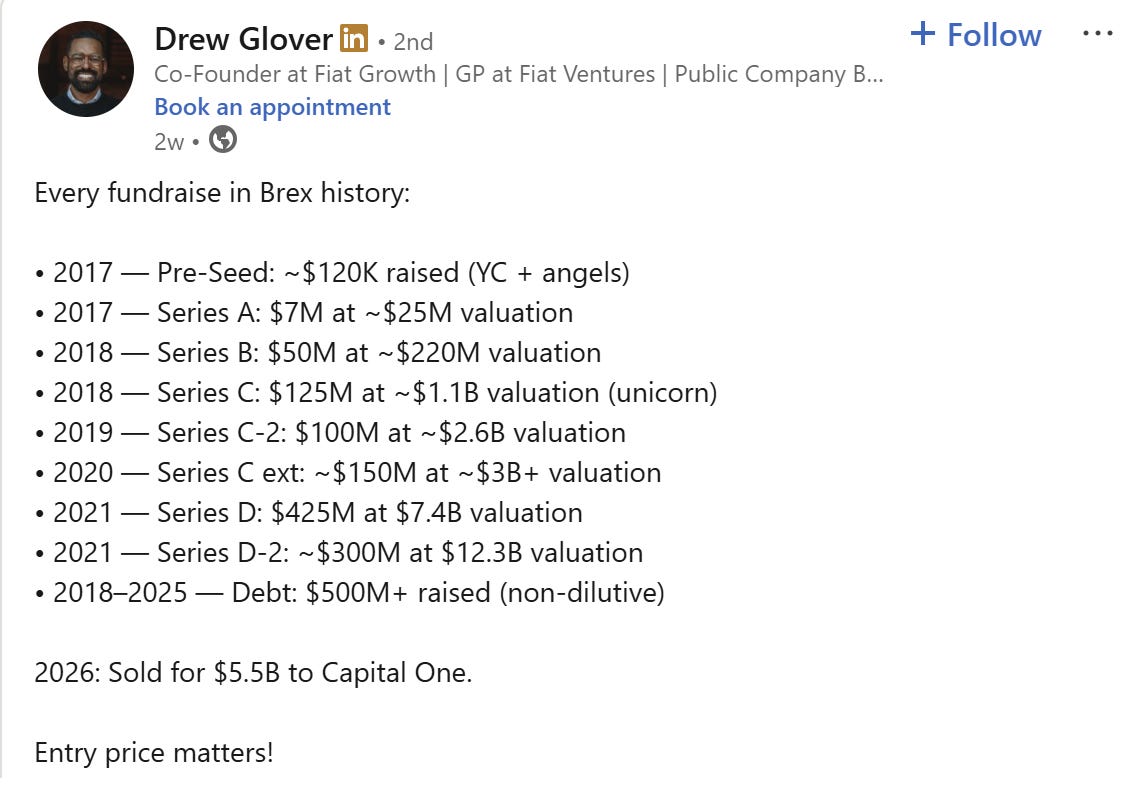
At its high point in 2021, the company was valued at $12.3 billion. So selling for just $5.15 billion a few years later is a clear drop from that peak.
What is most interesting, though, is that Brex never raised more money after that 2021 round. They did not go back to the market to ask for more cash at a lower price. Instead, they trimmed costs and focused their strategy to stay alive on their own terms.
These numbers set the stage. They show us a company that had to live up to massive expectations while carrying the weight of real financial obligations.
2. Brex Versus Ramp And The Myth Of Category Kings
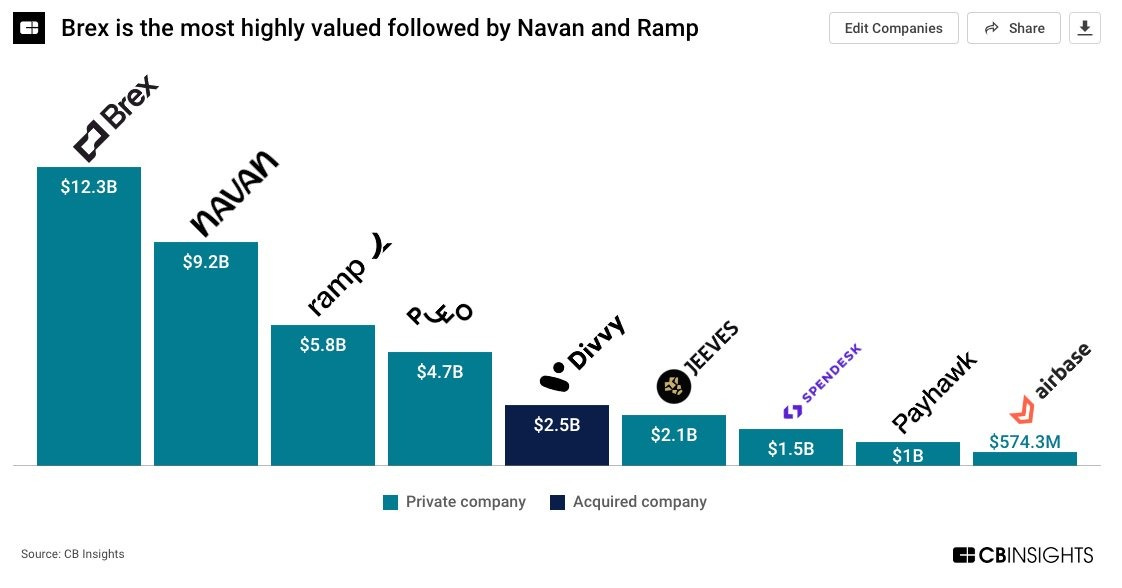
For much of its early life, Brex appeared unassailable. They were the biggest name in the market and they moved faster than anyone else. And because they were so far ahead, many people ignored competitors like Ramp.
The common wisdom in business is that once you are the leader, you stay the leader.
But this idea ignores what happens when the market stops being easy. When the world changed and money became expensive, the massive lead Brex had at the start became a heavy weight to carry.
The entire operation was built for a time when growth was the only thing that counted, which made it hard to slow down when they had to.
The real difference between these two companies was how they handled pressure. Brex entered the downturn with a strategy made for a world where cash was cheap. They had to spend a lot to keep their spot at the top.
On the other hand, Ramp was used to working with less. They were forced to be careful and focused from the very beginning. This gave them a level of toughness that Brex did not have.
This whole approach shows that being the biggest company on day one does not guarantee you will be the biggest on day one thousand. True strength comes from being able to function when the easy money disappears.

The Myth of the Unbeatable Leader
This comparison is important because it breaks the idea that being first is everything. Indeed, early dominance can help you grow, but it can also make you stay stuck in your ways.
While Brex was busy trying to live up to its old reputation, Ramp was able to be more nimble. In the end, the company that can handle being told “no” is often the one that ends up with more ways to win.
The lesson here is that it’s not just about having the best product, but about having the best plan for when things go wrong.
3. The Moment The Market Made Its Decision
The real change happened well before any sale was announced. In 2022, the world realized that money was no longer going to be free.
The markets started crashing and suddenly, investors did not care about what a company might do in ten years. They only cared about how much cash it was bringing in today.
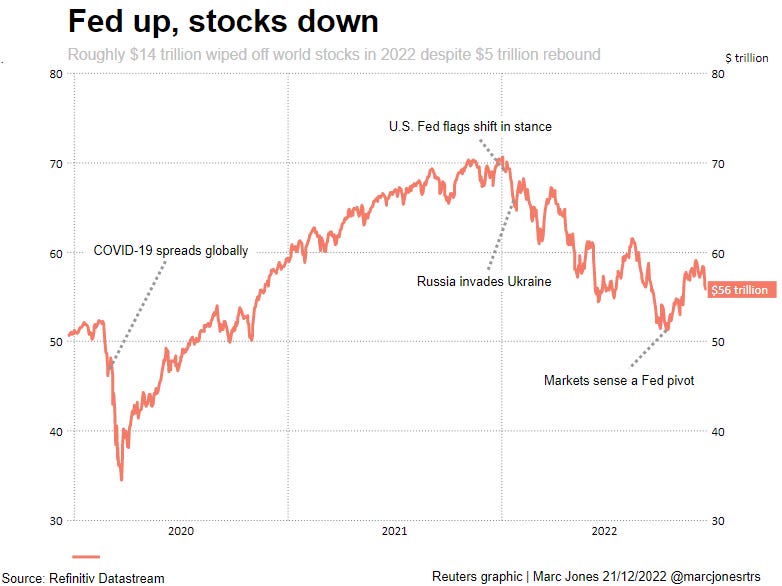
This put every high-flying startup in a tough spot. They had to decide whether to admit their old valuation was too high or try to wait out the storm. This single choice changed the future for both companies.
Ramp chose to face the reality of the new market right away. They lowered their price tag and reset their expectations. This might have looked like a step back, but it actually gave them a fresh start. Because they matched their price to the new world, they could still raise money and move quickly.
Brex took the other path. They decided to keep their old valuation and fix things from the inside. They cut costs and focused their team, but they were still carrying the weight of that old price tag. This choice made it much harder for them to find new paths forward because every move had to justify a number that no longer matched the real world.
4. Why Capital One Was The Real Winner On Price
When a giant like Capital One buys a company, they aren’t looking at it through the eyes of a venture capitalist. They don’t care about “moonshots” or hitting a 10x return in three years. They look at what a business is actually doing today.
For them, Brex wasn’t a story about a $12 billion valuation that didn’t hold up. It was a functioning machine with a massive list of corporate clients and a profitable product that worked.
Capital One basically bought a shortcut. Building a platform that can handle corporate spending and credit at this scale takes years of work and billions of dollars in mistakes.
So by buying Brex, they skipped all of that. They got the technology, the customers, and the team in one go. Even better, they bought it at a price that made sense for a bank and not a tech startup.
While VCs were arguing over whether the price was a failure, Capital One was looking at a bargain that would help them dominate the market for years to come.
5. Who Really Got Paid And Who Didn’t
Once the final price is set, the talk about “success” or “failure” stops being an opinion and becomes a simple VC math problem.
The result of this deal looks completely different depending on when you joined the company. It is a story of two different groups of people. One group walked away with a win, while the other learned a very expensive lesson about how venture capital works.
The Math of Winning and Losing
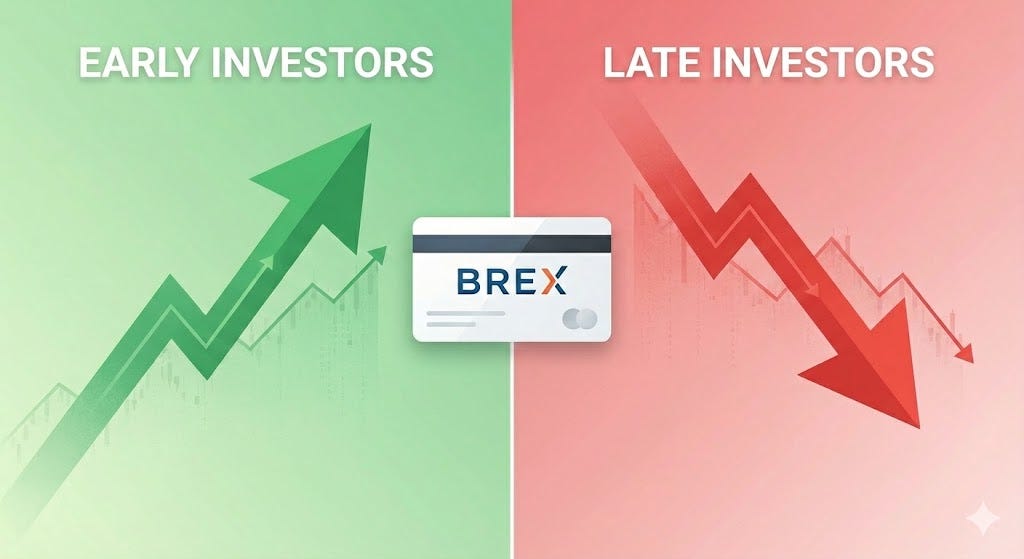
For the earliest investors and the first few employees, this exit was a great result. They bought into the company when it was worth very little. Even with the lower final price, their small initial stakes grew into significant wealth. They were ultimately protected by the distance between their entry price and the exit price.
But for those who arrived later, things felt different. Investors who put money in at the $12 billion peak were essentially buying at the top of a mountain. For them to make money, the company had to keep growing forever. So when the price dropped, they were the ones who felt the most pain.

Employees who joined late faced the same problem. They were often given stock options based on that massive $12 billion valuation. When the company sold for less than half of that, many of those options became worthless.
This is a common pattern in the startup world. The people who take the earliest risks often get the biggest rewards, while those who arrive during the hype end up ca rrying the most risk. It is a reminder that in business, your entry price is just as important as your hard work.
One Price - Two Realities
A $5.15 billion exit can still translate into capital loss for late entrants because the entry price left no room for outcomes that were merely… very good.
The result would have needed to be not just large, but exceptional, and exceptional on a timeline that preserved internal rates of return. But such conditions rarely align.
This is why reactions diverge so sharply. Early investors celebrate, mid-stage investors explain context, while late-stage investors manage expectations.
This teaches founders a vital lesson. The valuation you accept today sets the bar for what success must look like later. If the price moves faster than the actual business, you might find yourself in a position where a $5 billion exit is not enough to make everyone happy.
6. So, Was Brex A Failure?
At the end of the day, Brex did not fail as a company, but it did fail to deliver a uniformly successful outcome for everyone who priced the business as though the 2021 market would persist indefinitely.
From the company’s perspective, the result is defensible. Brex built a real operating business, survived a severe market reset, corrected its cost structure, returned to growth, and exited to a strategic buyer at a multi-billion-dollar price.
Those are not the signals of collapse, but of durability under pressure, achieved in an environment that punished excess and rewarded survival.
For the acquirer, the transaction stands as a win on its own terms. The buyer acquired a scaled, functioning platform at a price grounded in current fundamentals rather than past exuberance, solving a strategic problem without relying on multiple expansion or a favorable public-market re-rating.
The disagreement around Brex exists because all of these perspectives are simultaneously true, and because venture outcomes rarely resolve cleanly into a single verdict once price, timing, and position on the cap table are taken seriously.
💳 How Brex Raised $57M and Rebuilt Startup Banking
Imagine having millions in your startup bank account and still getting rejected for a credit card.
7. What Founders And Investors Should Actually Learn
Most of the time, a high valuation is a debt, not a prize. It forces you to hit massive goals just to stay alive. If your price grows faster than your business, you lose the power to make your own choices. You become a prisoner of the expectations you accepted.
For investors, the cost at the start determines the win at the end. A great business is a bad deal if you pay too much for it.
True success comes when the price of the company stays close to the truth of the work. When those stay in line, everyone wins. When they don’t, the math will eventually settle the score.
People are very vocal about this deal in both directions but I think in 2026 people are thinking less about the VC's and their returns or the founders and more about the employees and their outcome. Unclear on if employees had options or RSUs but if they were options then any employee who joined after the April 2021 round made $0. 5 Years of hard work, and you walk away with nothing. There is a large group of employees in tech that are losing belief in any kind of equity compensation and I worry this plays right into that narrative...
This was an excellent recap Reuben of what went down. Great summary and so interesting to see the side by side paths that Ramp and Brex took. Bravo!