

Last week, Creandum announced three portfolio milestones that, taken together, tell a much bigger story about how elite VC firms are actually built.
Trade Republic reached a €12.5B valuation.
Lovable raised at $6.6B.
Fuse Energy closed at $5B.
Many firms would explain this away as timing or luck.
Staffan Helgesson, Creandum’s founder, explains it as pattern recognition.
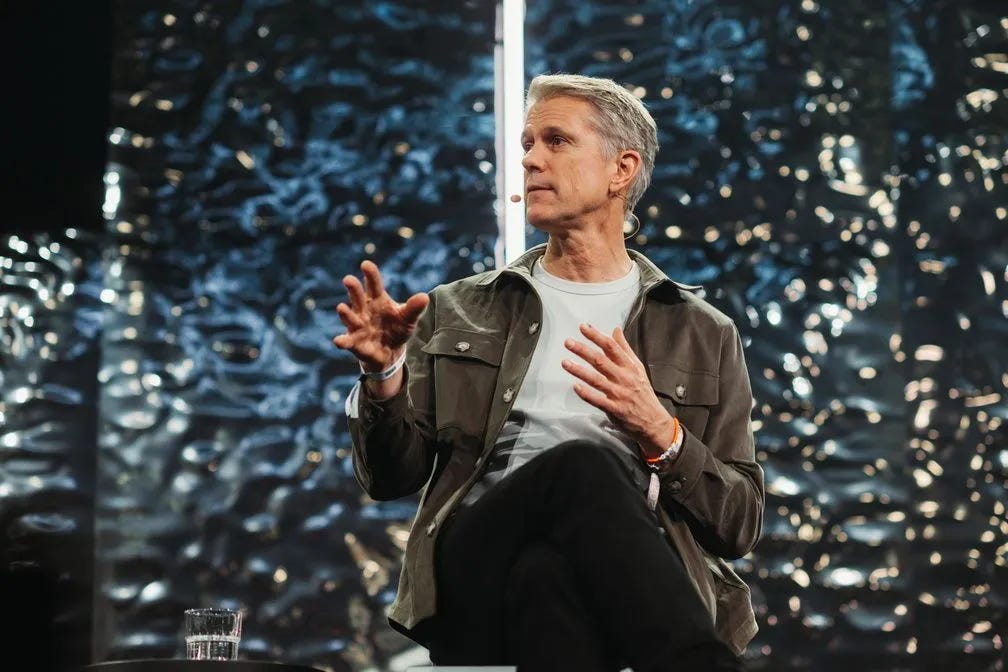
For more than two decades, Creandum has backed European founders at moments when conviction mattered more than comfort. Spotify when streaming felt unrealistic. Trade Republic when the cap table scared investors away. Entire categories before they looked inevitable.
Today, Creandum manages roughly $2B across more than 150 companies. About one in six became a unicorn.
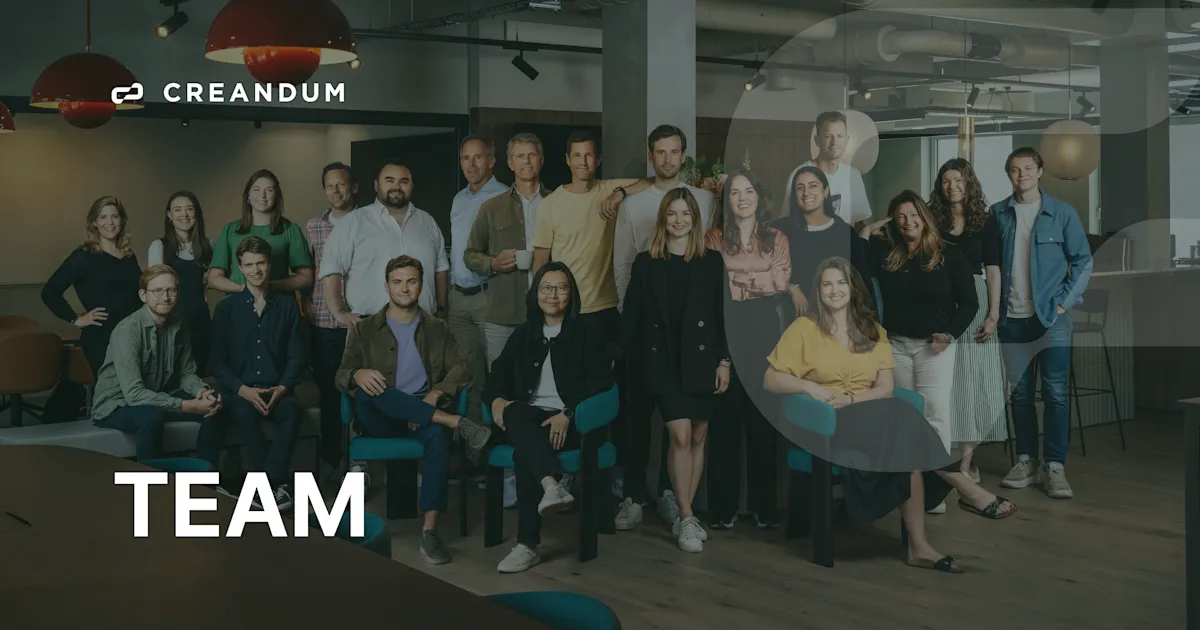
Creandum has become one of Europe’s most consistently successful venture capital firms by applying a long-term, founder-first investment strategy focused on conviction, timing, and structural problem-solving.
Guillermo Flor and I sat down at Slush with Staffan, who started Creandum in 2003 with no track record and a single €40M fund.
We broke down the systems Creandum uses to identify outliers early and compound returns over decades:
1. Raising Fund I From Zero
In 2003, Staffan had conviction and almost nothing else.
He secured two Swedish pension funds as anchor LPs and closed Creandum’s first fund at €40M. Then he spent the next year trying to raise additional capital.
The result surprised even him.
“I raised absolutely nothing. Zero. Not a single dollar.”
Fund I struggled. One company eventually IPO’d and effectively saved the fund.
Many firms would have stopped there.
Creandum kept going.
2. From nobodies to names
Fund II changed everything.
Creandum invested in Spotify in 2008 and iZettle in 2011. At the time, neither looked obvious. Both looked hard.
Spotify went public at $29.5B. PayPal acquired iZettle for $2.2B. Fund II returned roughly 13x, one of the strongest VC fund performances in Europe.
Success brought a new risk.
“After a while, you think you are something,” Staffan says. “That’s truly dangerous.”
Most firms plateau after their first great fund. Creandum responded by doubling down on paranoia.
3. Self-deception: Don’t Fool Yourself
Staffan keeps returning to a quote by Richard Feynman:
“The easiest person to fool is yourself.”
Ask a room of VCs whether they are top quartile and most hands go up.
“That’s how you know people are fooling themselves,” Staffan says. “You need to be a brutal truth-sayer.”
This mindset shows up before every investment decision. Why do we want this deal. What assumptions are we protecting. Are we seeing reality, or what we want to see.
Self-deception kills returns quietly.
Creandum tries to surface it early.
4. Investing: Would You Work For Them?
This is Creandum’s most revealing investment filter.
Staffan is 55. He regularly asks himself whether he would work for a founder in their early twenties.
Often, the answer is yes.
“I meet founders all the time where I think I wouldn’t want to hire me,” he says. “But I would absolutely love to work for them.”
Venture capital is a service business. You commit to supporting founders for ten to fifteen years. The question exposes whether conviction is real or cosmetic.
When evaluating founders, Creandum comes back to three tests:
Are they genuinely ambitious enough for how hard this is
Can they explain how and why an industry will change
Would I work for this person for a decade
If the answer to the last question is no, they pass.
5. Spotify: Contrarian timing
In 2007, the music industry was collapsing.
Most investors told Spotify the same thing. Great team. Great product. Come back once the label deals are signed.
Creandum’s Fredrik Cassel thought differently.
“This is how everyone else is thinking,” he said. “Let’s think slightly different.”
Creandum invested when Spotify was about 80 percent done with licensing.
“That’s the perfect moment,” Staffan explains. “Our job is to help founders go from 80 to 100.”
The best venture deals live between 80% certainty and everyone else waiting.
6. Trade Republic: Fixing what breaks deals
In 2019, Trade Republic had a serious problem.
The seed investor owned most of the company.
Many VCs passed immediately. Hairy cap table. Too complicated.
Johan Brenner at Creandum loved the founders and the vision, but the structure made the company uninvestable.
So he did the work.
He convinced the seed investor that owning 25 percent of a massive outcome beat owning a majority of something small.
At Creandum’s AGM years later, an LP asked Trade Republic’s CEO why he chose Creandum.
“It was the only term sheet we had.”
Real value-add is doing the work that makes a company investable when everyone else walks away.
7. Expanding: From the outskirts to the center
Building a top-tier VC from Stockholm created a positioning problem.
By Fund III, Creandum needed to reach Europe’s big markets. But showing up in London or Berlin as a Nordic VC meant being seen as “a cousin from the countryside.”
So their second office wasn’t London or Berlin. It was San Francisco.
“Having that connection to the US made us pretty sexy to go into Germany,” Staffan explains. “Because we were international.”
They built authority by bridging Europe and Silicon Valley first. For European founders, this mattered. Creandum could speak both languages: local execution and global ambition. Then they moved into Germany with an international brand. Seven years later, they entered London from a position of strength.
“We had done what they in the military would call a pincer movement.”
8. Why venture isn’t broken. It’s just very hard
Every cycle, the same complaints resurface.
Too much capital. Valuations too high. Too few exits.
Staffan has heard this since the late 1990s.
“The model is not broken,” he says. “It’s just very hard. Only a few win.”
Venture capital only rewards the top decile. Everyone else is running a recycling business.
That difficulty creates opportunity for managers who move faster, stay sharper, and operate with real conviction.
9. Lovable: AI Speed Or You’re Toast
Last year (2024), Creandum invested in Lovable after Fredrik saw the product explode immediately.
They showed up to lunch with a term sheet in pocket. Fredrik had done 5,000 prompts overnight. Simon built internal projects using Lovable.
One year later, Lovable raised at $6.6B.
“Look at what they have done in a year,” Staffan says. “We call it AI speed. It’s really shifted the whole ecosystem into a completely new gear.”
Speed beats brand right now. A hustling emerging manager can win deals that slow incumbents miss.
10. Creandum: True Partnership, No Bosses
Most VC firms run on hierarchy.
Creandum doesn’t.
Inspired by Benchmark, all partners have equal carry, equal votes, and equal responsibility. They also operate with an up-or-out philosophy.
“If the partnership doesn’t think I’m good enough,” Staffan says, “they can vote me out tomorrow.”
Six of nine current partners joined as analysts or associates. Power stays flat. Ego stays contained.
The structure reinforces long-term trust.
The Creandum System for Emerging Managers
If you’re raising your first fund in 2025, here’s what Creandum’s 23 years teaches:
Invest at 80%, not 100%. Everyone waits for certainty. That’s when you’re too late. Spotify wasn’t “done” when Creandum invested. Trade Republic’s cap table wasn’t “clean.” Move when others hesitate.
Fix what breaks deals. Most VCs pass on hard problems. Creandum restructures cap tables, negotiates with label executives, does the work that creates investability. That’s real value-add.
Build authority sideways. Don’t attack London directly from Stockholm. Go to San Francisco first. Come back international. Geography is positioning.
Back founders you’d work for. Strip away credentials and ask: Would I take orders from this person for 10 years? If no, pass. If yes, move fast.
Stay paranoid after wins. Fund II returned 13x. That’s when most firms get complacent. Creandum doubled down on the underdog mentality. “The moment you think you are something, that’s truly dangerous.”
Staffan describes himself as “more a founder than an investor.” Founders start from scratch and fight for every inch. Investors inherit brand and infrastructure.
Creandum combined both. A founder’s mentality applied to venture capital.
Twenty-three years later, they’re still fighting for deals. Still showing up early and staying late. Still thinking like the underdog from Stockholm.
Last week’s €24B in portfolio value creation proves the system still works.
If they can do it from Stockholm in 2003, you can do it from anywhere in 2025.
You just have to do the work nobody else will.
RESOURCES 🛠️
✅ The 100 Most Important Pension Funds in the World
✅ 350+ verified platforms where you can post your startup
✅ Synthesia’s deck (got them $180M)
access ALL for the next year with a 25% limited discount
✅ FREE AI Fundraising Kit for founders
✅ 153 Startups Fundraising Right Now (And Their DECKS)
✅ RIP SEO: the GEO Playbook for 2025
✅ The Venture Capital Method: How Investors Really Value Startups
✅ IRR vs Return Multiple Explained + Template
✅ The Headcount Planning Module
✅ CLTV vs CAC Ratio Excel Model
✅ 100+ Pitch Decks That Raised Over $2B
✅ VCs Due Diligence Excel Template
✅ SaaS Financial Model
✅ 10k Investors List
✅ Cap Table at Series A & B
✅ The Startup MIS Template: A Excel Dashboard to Track Your Key Metrics
✅ The Go-To Pricing Guide for Early-Stage Founders + Toolkit
✅ DCF Valuation Method Template: A Practical Guide for Founders
✅ How Much Are Your Startup Stock Options Really Worth?
✅ How VCs Value Startups: The VC Method + Excel Template
✅ 2,500+ Angel Investors Backing AI & SaaS Startups
✅ Cap Table Mastery: How to Manage Startup Equity from Seed to Series C
✅ 300+ VCs That Accept Cold Pitches — No Warm Intro Needed
✅ 50 Game-Changing AI Agent Startup Ideas for 2025
✅ 144 Family Offices That Cut Pre-Seed Checks
✅ 89 Best Startup Essays by Top VCs and Founders (Paul Graham, Naval, Altman…)
✅ The Ultimate Startup Data Room Template (VC-Ready & Founder-Proven)
✅ The Startup Founder’s Guide to Financial Modeling (7 templates included)
✅ SAFE Note Dilution: How to Calculate & Protect Your Equity (+ Cap Table Template)
✅ 400+ Seed VCs Backing Startups in the US & Europe
✅ The Best 23 Accelerators Worldwide for Rapid Growth
✅ AI Co-Pilots Every Startup & VC Needs in Their Toolbox


