

Reverse Imposter Syndrome: When Founders Know They’re Good, But the World Hasn’t Caught Up Yet
Does feeling invisible make you feel like a fraud? Well, some founders do.
They might have built hard things, shipped without making a fuss about it, solved real problems, and still, the recognition doesn’t come. Neither from investors nor from the press. Sometimes not even from their own teams.
When external validation lags behind internal progress, it creates a cognitive dissonance, one that wears on confidence, strategy, and leadership.

This is what we call “reverse imposter syndrome.” And it happens when substance outpaces signal. For founders who move fast and think long-term, the real challenge is closing the gap between what they’ve built and what others can see.
brought to you by Vanta: automate compliance, manage risk, and accelerate trust with AI
Compliance is another one of those things. You do it right, nobody notices. You skip it, everything blows up. The definition of invisible, high-stakes founder work.

With NIS2, DORA, and the EU AI Act reshaping the regulatory landscape, Vanta is hosting a session on March 31 on how to map existing frameworks to new EU requirements, reuse controls across audits, and use automation to scale without burning out your team.
Table of Contents
1. The Constant Frustration of Being Underestimated
2. What Reverse Imposter Syndrome Really Is (and Isn’t)
3. Why Founders Are Especially Prone to It
4. The Cost of Staying Invisible
5. Bridging the Gap: How to Make Your Outsides Match Your Insides
6. Reverse Imposter Syndrome as a Sign of Growth
7. Redefining Visibility as Leadership

1. The Constant Frustration of Being Underestimated
Some founders don’t need more belief in themselves. What they need is some room to catch up.
They’ve solved thorny, unsexy problems no one else bothered to touch. They’ve stayed heads-down while peers went loud with press hits and fundraising tweets. They’ve built real things that actually work, but behind the scenes, without spectacle.
And that’s where the tension creeps in. Because when the outside world only sees what’s easily legible, your best work starts to feel invisible.
Investors will skim dashboards and ask about user growth curves, never noticing the architecture that really made the product stable. Customers will praise the UI, unaware of the six-month rebuild that cut churn in half. Even friends and former colleagues seem more impressed by articles on TechCrunch and Sifted, than who’s still shipping, consistently month after month.
A gap is created between what’s visible and what matters. And that’s where the frustration lives.
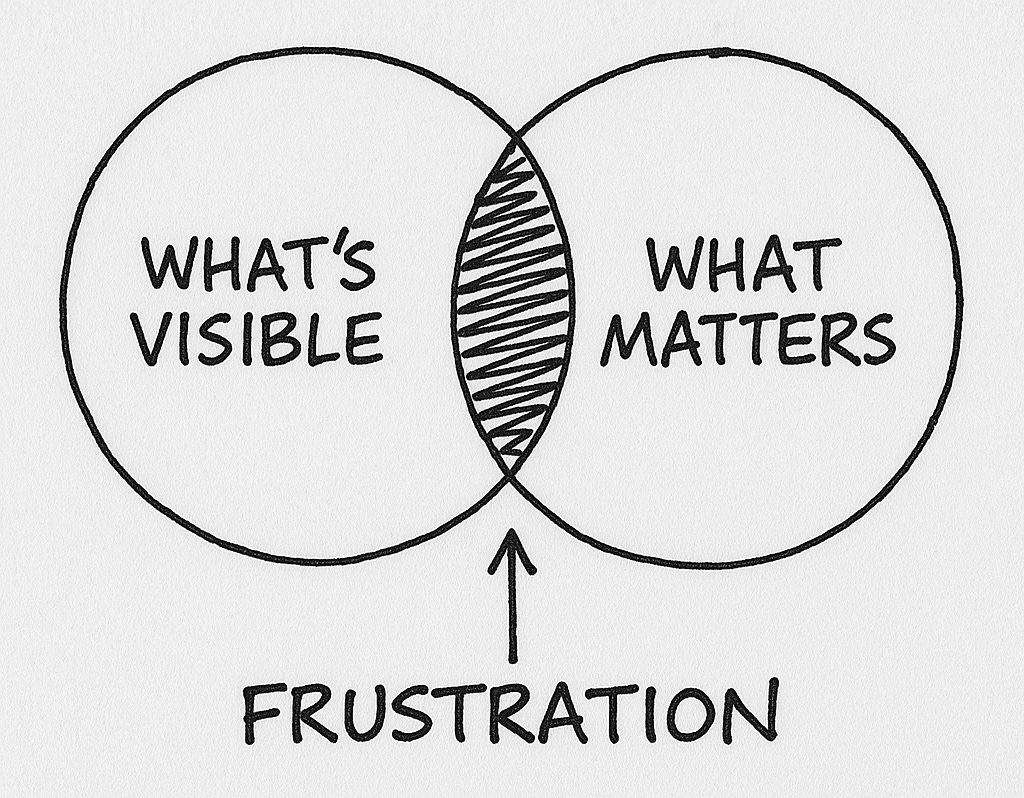
It’s not arrogance, rather the slow erosion of feeling misread. Of watching others catch a tailwind while you’re still explaining why your wind tunnel matters.
And it makes sense psychologically, because we tend to judge others by what we can see. But we judge ourselves by what we survived to build. That’s the friction point in founder psychology, when external perception undercuts hard-earned internal certainty.
And over time, that asymmetry wears on even the most grounded founders. Not because they doubt their ability, but because being underestimated, again and again, starts to feel like a tax on patience, and on startup founder confidence.
2. What Reverse Imposter Syndrome Really Is (and Isn’t)
Most people know imposter syndrome as self-doubt in disguise. You’ve earned the role, the round, the recognition, but still feel like a fraud.
Reverse imposter syndrome flips that experience. There’s no doubt about your capability. The dissonance comes from the world not catching on.
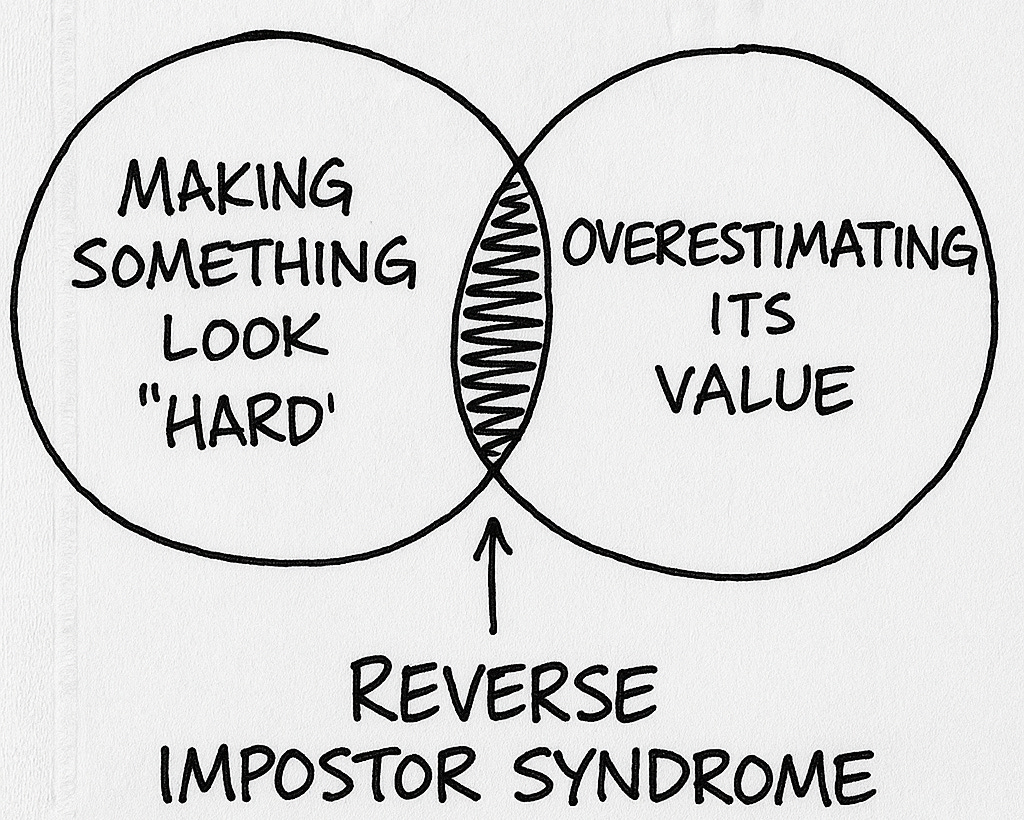
The Psychology Behind It: A Perception Gap, Not a Confidence Glitch
Reverse imposter syndrome isn’t arrogance. It’s not a bluff, and it’s not delusion either. It’s the discomfort that arises when your internal sense of competence outpaces external recognition. You know the work is strong. The results are real. But the feedback loop is muted, or worse, misaligned.
At its core, RIS is a kind of perception gap bias. The founder sees what others don’t. Not because they’re overconfident, but because they’re closer to the data, the execution, the risk, the progress.
What looks like “quiet progress” from the outside is actually traction without translation. That’s where the disconnect forms.
Psychologists would call this a soft form of cognitive dissonance, the tension between self-perception and social reflection.
You’re competent. You’ve done the work. And yet, your environment treats you like you’re still proving yourself from scratch. That mismatch not only stings, it compounds as well.
Not Dunning-Kruger. Not Classic Imposter Syndrome.
It’s worth drawing a clean boundary here. RIS is not the Dunning-Kruger effect, where incompetence breeds overconfidence. And it’s not the classic imposter loop of high achievers downplaying their own success.
In fact, reverse imposter syndrome often emerges in the most conscientious founders, those who’ve built, iterated, and internalized every lesson along the way. The clarity they have isn’t imagined; but earned. What they’re lacking is an audience that’s paying attention.

RIS isn’t the fear of being exposed as a fraud. It’s the friction of not being recognized as the real thing. And in founder psychology, that kind of persistent misalignment chips away at energy and confidence over time.
The Time Lag Between Reality and Recognition
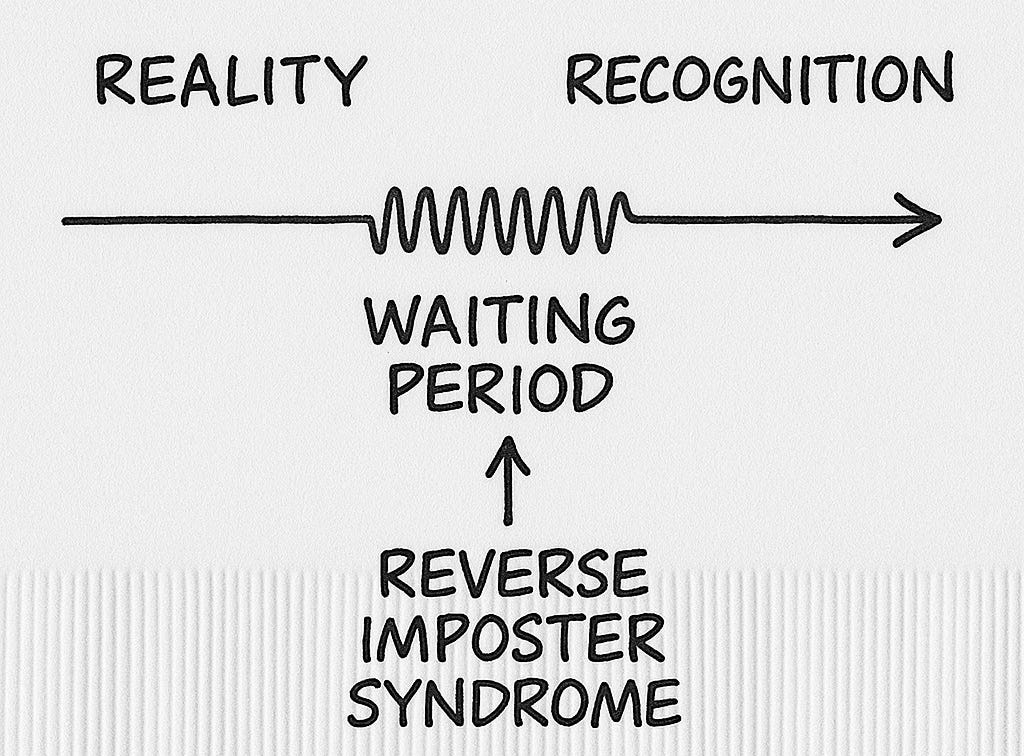
This is the ultimate metaphor. RIS is often not a question of if others will see it, but when. There’s a time lag between reality (what’s actually being built, solved, moved forward) and recognition (what investors, peers, or even customers perceive).
For founders building in deep tech, infrastructure, or non-consensus markets, this lag can stretch for months or years. That’s because signal takes time to travel. And until it does, what you’ve built sits in a strange in-between state. That means functional, but not yet validated by the outside world.
And that waiting period is exactly where RIS grows.
The longer the recognition lags behind the reality, the louder the internal dissonance becomes. You know what’s under the hood. But from the outside, it still looks like nothing’s moving. And when momentum isn’t legible, people assume it doesn’t exist.
Why It Hits Founders So Often
Startups aren’t built in the open. Sometimes they are built in stealth.
Product-market fit doesn’t ring a bell when you hit it. And most of the foundational work, like hiring the right team, stabilizing infrastructure, learning from failed experiments, generates no visible traction at all.
Founders live in complex, iterative environments where success signals tend to lag reality by design. You might fix the core thing that unlocks growth, but no one sees the causal link. They see the vanity metric six weeks later and attribute it to something else.
Entrepreneur self-awareness often sharpens the pain. You know what’s working, what’s real, though you also know no one’s seeing it yet.
RIS lives in that misalignment. And the more you care about the work, the more that gap hurts.
3. Why Founders Are Especially Prone to It
Reverse imposter syndrome shows up more often in founders for one reason; their reality is built on delayed proof.
Most of what makes a startup viable, like early hires, hard pivots, product rewrites, relocation strategies, cultural guardrails, happens long before the world sees traction.
Founders operate in uncertainty, inside a system where outcomes take time to compound. And in that gap, perception drifts.
Quiet Builders in a Loud Ecosystem
Some founders are excellent at building but stay invisible. They prioritize depth over demos, product over pitch. That instinct often protects the work, but it obscures the signal.
In a world optimized for optics, quiet execution inevitably gets filtered out. They don’t post fundraising announcements or drop metrics that nobody cares about. They’re solving hard problems while others are curating surface momentum. And when no one notices, the silence creates its own narrative.
That’s where reverse imposter syndrome takes hold, inside the space where substance exists but visibility doesn’t.
The Self-Presentation Bias Trap
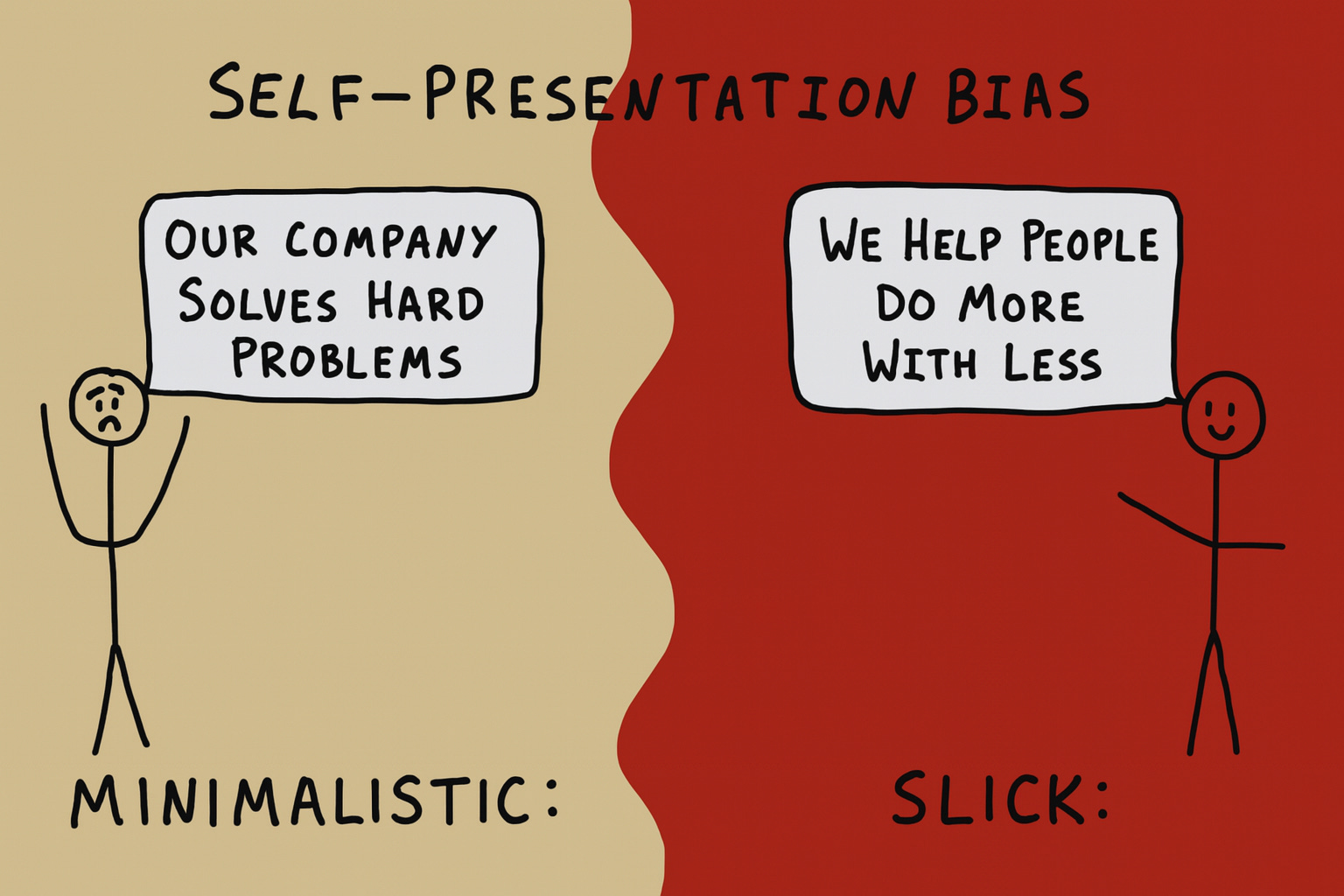
There’s a psychological layer at work here, and it’s called self-presentation bias. We tend to overvalue how something is packaged, even when the core is strong.
So when a founder under-communicates, they don’t just fade into the background, but they tend to get misread. Investors interpret brevity as lack of strategy. Teams mistake low hype for low ambition. Peers miss the signal altogether.
Plenty of strong operators carry deep vision. But if their interface is minimalist, the market may never see it. And in a startup world where leadership perception shapes leverage, that misalignment carries weight.
When Underestimation Becomes a Leadership Problem
There is a big trap here. If you stay underestimated long enough, not only will it drain you, it will also start warping the environment around you.
Teams take cues from founder energy. If confidence isn’t mirrored externally, doubt creeps in internally.
Why aren’t we getting investor interest? Are we behind? Is this product as strong as we think?
The founder may still believe in the mission. But if their credibility doesn’t travel, it slows everything else down. Momentum stalls. You waste time re-explaining your value. Press misses the thread, hiring gets harder, board trust wavers. And slowly, founder confidence erodes, not from failure, but from persistent misrecognition.
RIS isn’t just internal static. It becomes an external drag on influence, trust, and velocity.
4. The Cost of Staying Invisible
For founders with reverse imposter syndrome, invisibility is actually a bottleneck.
When your competence goes unrecognized, decisions start skewing against you. You get passed over for funding because the story isn’t obvious. Strategic partners hesitate because they can’t place your momentum. Even hiring slows, because talent is drawn to a story, not just a cap table.
This is the tax of underexposure. The unseen cost of staying out of the spotlight.
The Compounding Penalty of Low Visibility
Startups live on momentum, but the market rewards more than actual results. It rewards perception. And if your work doesn’t register as visible progress, the system moves on.
Investors tend to pattern-match. Operators skim headlines. Ecosystems reward leadership perception, not just leadership itself.
So when another founder with half your traction raises twice the round, it’s not necessarily because they’re ahead, it’s because their signal made it through.
After enough of these cycles, even grounded founders begin to feel the disconnect. Not just irritation, but erosion.
The Identity Cost: When Perception Fails to Catch Up
Humans need the world to reflect what they know about themselves. Psychologists call this self-perception alignment. When it’s missing, cognitive friction builds.
You start to question your path. Resentment creeps in. You overwork, not because it’s required, but because some part of you is still trying to be seen.
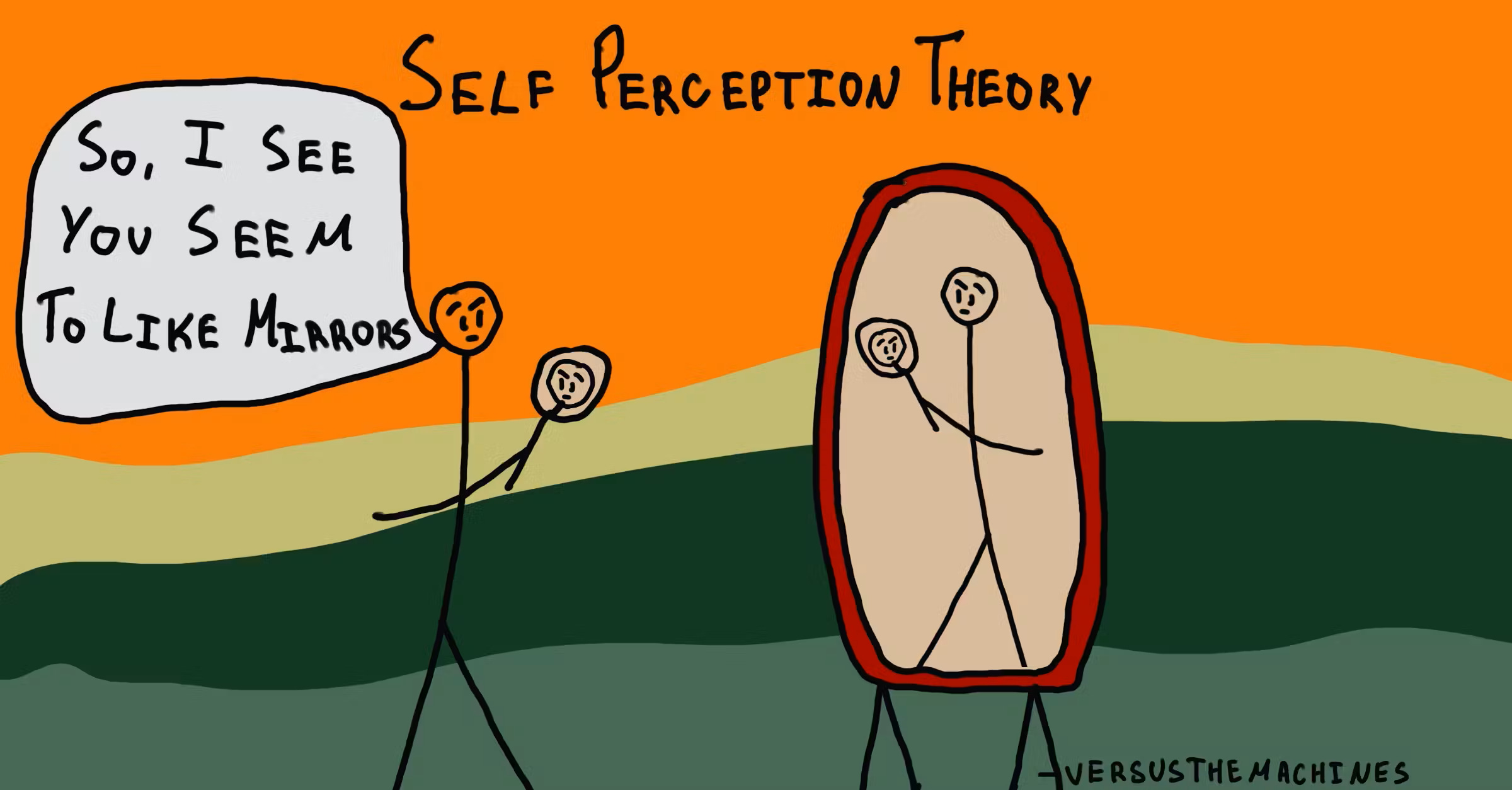
That’s where founder psychology takes a hit. Burnout isn’t just about physical exhaustion, severe forms will cause an existential mismatch. You’re doing the right things, but you’re getting the wrong response.
And the data backs it up. Studies on visibility bias and the halo effect show that perceived competence often outranks actual performance. When you’re seen as credible, you’re given space. When you’re not, every win demands double the explanation.
And history is full of lessons where charismatic founders were able to raise billions from investors, only to fail miserably.
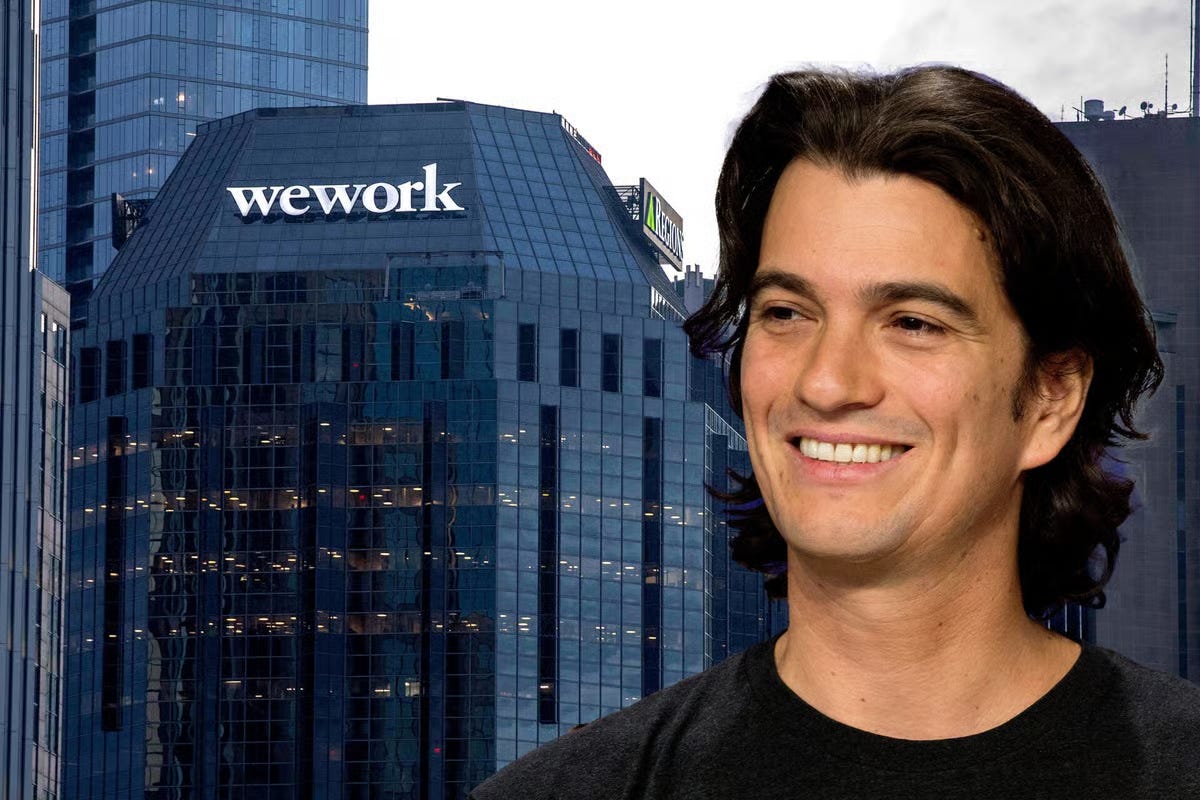
That’s the cost of invisibility. It doesn’t just slow your startup, it chips away at your entrepreneur mindset.
5. Bridging the Gap: How to Make Your Outsides Match Your Insides
Reverse imposter syndrome thrives in the space between who you are and what the world sees. The solution isn’t to perform louder. In fact, it is to design authentic visibility. One that mirrors your real competence without slipping into empty self-promotion.
Here’s how founders can begin to close that credibility gap.
1. Strategic Transparency
Founders often default to secrecy, especially if they’ve been burned by premature exposure. But staying silent too long creates opacity. And in opaque systems, the world assumes nothing’s happening.
You don’t need to overshare. Just select a few meaningful signals and show them with intention. These can be:
Product updates with short backstories
Roadmap decisions with the reasoning behind them
Wins with context: why they mattered, what changed
This kind of entrepreneur self-awareness builds slow credibility. You’re not just making progress, you’re helping people see the decisions behind the traction. That’s what investors and peers remember.
2. Narrative Ownership
If you don’t write your story, someone else will, and they’ll likely get it wrong.
Build a founder narrative that links your expertise to your company’s trajectory. Not a brag, but a thread others can follow:
Why you’re uniquely qualified for this market
What you saw before others did
How your experience shapes the way you lead
The goal isn’t to showcase brilliance, it’s simply to offer proof of earned intuition. This kind of narrative strengthens your founder identity and helps others connect to your mission with clarity.
3. Signal Design
Most founders obsess over product UX, but neglect how they themselves show up. Your investor deck, data room, linkedin profile, homepage, emails; all of these are proxies for your thinking.
If they’re underpowered, so is your perceived credibility.
Does your deck reflect your private clarity?
Does your homepage convert, or just exist?
Do your updates sound like momentum, or anxiety?
Does your linkedin profile demonstrate leadership?
This isn’t a “fake it till you make it” method, rather than revealing what’s already true. A founder with strong internal conviction should look the part externally. That’s part of visibility as a leader.
4. Reputation Loops
Too many founders sit inside a signal vacuum. Build loops that reflect your actual strengths.
Start with:
Trusted operators who see your day-to-day work
Mentors who can articulate your strengths
Investors or partners who speak publicly on your behalf
Don’t aim to inflate your ego. Focus on reinforcing your strengths. In high-ambiguity environments, people look to social proof. A startup founder’s confidence often rests on what others echo back.
5. Teach Publicly
Clarity loves daylight. Teaching exposes depth. You don’t have to be performative. Just share what you’re learning:
What you’ve tested
What caught you off guard
What others consistently miss in your market
This turns lived experience into public insight. And the more often people see your thinking, the more they trust your trajectory. It’s the entrepreneur mindset in action; distilling what’s earned into something others can recognize.
You don’t need to create a brand. Just stop hiding the one you’ve already built. These are not reinventions. They’re invitations. Let people see the signal you’ve spent years refining.
6. Reverse Imposter Syndrome as a Sign of Growth
There’s a reason reverse imposter syndrome feels so destabilizing. That’s because it often shows up just before others catch up.
But that’s part of the process. It suggests that you’ve crossed an inflection point, where your skills, traction, or insight have most probably outpaced how the world sees you.
So it’s all about your own perspective. Don’t treat asymmetry as failure; treat it as forward motion.
Being Ahead of the Signal Curve
Founders often reach this stage when internal truth outruns external validation. The product is clicking, customers stay, and decisions land sharper. But the market hasn’t noticed yet. You’re ahead of your own narrative arc.
That gap - between what is and what’s understood - creates friction. But it also creates leverage. You still control the story. You still shape how the world catches up. That’s a powerful moment in a founder’s journey; where silence outside doesn’t mean misalignment, just lag.
Like Early Product-Market Fit
Reverse imposter syndrome mirrors the early signs of startup product-market fit. There’s traction, but it’s quiet. Users rave, but are not reflecting it, yet. Growth is real, but still lives in spreadsheets.
That same pattern applies to founder credibility. You may not have headlines or signal boosters yet, but if the core is working, everything else is just translation and time.
That means you’re going through a transitional phase. And one that usually precedes momentum.
Confidence Without Arrogance
This moment isn’t a cue to coast. But it’s not a crisis either. It’s a test on whether you can hold your ground while staying honest about your value.
Entrepreneur self-awareness matters here. You don’t need to overcompensate or shrink. Just close the gap between truth and visibility, slowly, intentionally, using the systems we just outlined.
That’s the move: become visible without selling out your signal. And if you need a gut-check, here’s a reminder worth carrying:
If you feel unseen, it might mean you’ve evolved faster than your environment has noticed.
Give it time. Let them catch up.

7. Redefining Visibility as Leadership
Reverse imposter syndrome doesn’t come from ego. It comes from the disconnect between what you’ve built and what the world reflects back.
Most founders don’t need praise. What they want is for the outside to reflect what’s true on the inside. When you’ve built something real and the world hasn’t caught on yet, that mismatch is hard to carry. Not because you are in need of attention, but because you’re accountable to the thing you’ve built. You’re trying to lead clearly, and that’s difficult when no one sees the full picture.
But in today’s startup investing environment, vision and execution aren’t enough. Founder visibility is part of the job now. It’s what helps your team, your investors, your market see what’s already in motion. And yes, that’s leadership.
If your best work is still invisible, don’t confuse that with failure. Step into the story. Own your arc. Make your competence legible; not to posture, but because the mission requires it.
Startup leadership means more than just building, it means shaping perception with intention. Helping others recognize what good actually looks like.
That’s what turns clarity into conviction.
I needed this, thank you!!!
Thoughtful, and real. But beneath this problem is still desire for external validation which - while certainly common among entrepreneurs - is something to be controlled rather than encouraged. Just do your thing. The world may catch up, and it may not, but you can win either way.