

Building in Public Was Always 2 Things
For years, building in public felt safe because executing was hard.
We posted monthly revenue, debated tech stacks on X, and admitted our worst mistakes on podcasts. The people watching could not easily do anything with what they saw.
That calculation changed.

Founders are watching AI write entire codebases in minutes and wondering if their public updates are just free market research for the next clone. A copycat can replicate your features over a weekend. The paranoia makes sense.
Except it rests on a premise almost nobody is stress-testing.
The assumption that the expensive part of competition was always building the thing.
Speaking of what building looks like in 2026:
The “expensive part of building” just got cheaper for everyone, including the founders who previously had no technical background.
Lovable just published the data on who is actually building right now:

Lovable is the tool I use to build. If you have an idea and want to ship it fast, this is where I would start. And readers of this newsletter get an exclusive 10% discount to get going.
The people watching your public updates are already building. The only question is whether you are moving faster than them.
Table of Contents
1. Everyone Agrees the Copy Got Cheap But That Was Never the Expensive Part
2. Your Transparency Educates the People Who Won’t Act and Barely Touches the People Who Would
3. Defense Got Cheaper at Exactly the Same Rate as Offense
4. The Two Activities Hiding Under One Word
5. Posting Your Numbers Is Becoming a Signal You Don’t Mean to Send
6. Where This Breaks and What to Actually Do
1. Everyone Agrees the Copy Got Cheap But That Was Never the Expensive Part
The conventional argument responds to a very real change in the cost curve.
Arvid Kahl, one of the clearest advocates of building in public, argues that the old comfort zone, where sharing felt safe until a business reached twenty to thirty thousand dollars in monthly revenue, has collapsed to zero.

The Bootstrapped Founder Episode 439: The Increasing Risk of Building in Public
Today, a feature requiring a five-person team in 2023 can ship in just a couple of days.
Fast shipping is losing its value as a software moat because AI coding is erasing the execution gap between serious teams and everyone else.
The Illusion of the Execution Barrier
If features are easier to build and founders keep posting their numbers and roadmaps, transparency begins to look less like audience building and more like operational leakage.
But this worry is based on a weak premise.
The barrier was rarely the competitor’s ability to build the product.
A bootstrapped SaaS startup doing twenty thousand in monthly revenue was already cloneable before AI arrived.
A small offshore team could rebuild the visible product for a few thousand dollars and a couple of weeks of work. It might miss the deeper logic, but it could look close enough to unsettle you. AI simply lowered the price of an input that was already cheap.
The hard part was always getting strangers to trust the clone, try it, switch to it and keep paying.
What “the threshold collapsed to zero” was actually measuring
The capability threshold for starting a clone has collapsed. More people can open a repository, describe a feature set and produce something uncomfortably familiar.
That creates more noise and anxiety.
But the conversion from starting a clone to becoming a competitor who takes your customers follows different economics.

Distribution does not appear because a prompt compiled.
Persistence does not come bundled with a code assistant.
Customer trust, sales patience and repeated iteration still have to be earned. AI increased the number of people willing to begin a clone far more than those able to endure turning one into a business.
The pool of competitors with the distribution and patience to matter has barely moved.

2. Your Transparency Educates the People Who Won’t Act and Barely Touches the People Who Would
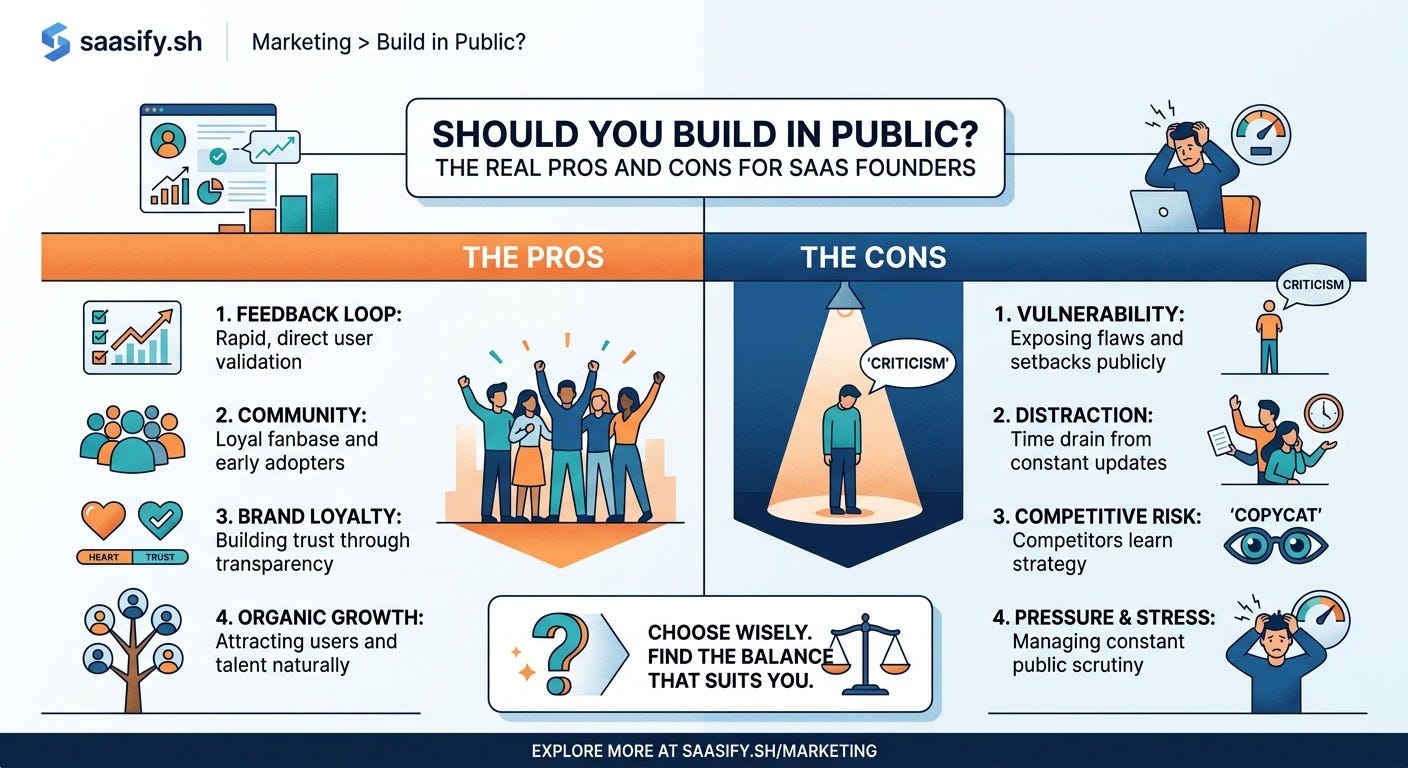
The copycat fear becomes less clean once you look at who is actually reading build-in-public content.
Founders imagine the most dangerous possible reader. A competent operator in the same market, with the taste, capital and distribution to put a clone in front of buyers before the original can react.
That person exists, but they are rarely the median person saving your MRR post.
Why Real Competitors Aren’t Reading Your Roadmap
The operators who can genuinely hurt you usually already know the market. If they have distribution in your category, they know the buyer, the budget, the pain, the procurement cycle and the weak spots in existing tools.
Their sales calls, customer questions, churn conversations and channel data already tell them where demand is moving.
Your revenue screenshot may confirm that a niche is alive, but it rarely teaches them anything decisive. Their advantage came from being close to demand before you posted.
The Gap Between Audience and Execution
The audience consuming founder transparency most intensely is different.
It includes other founders, indie hackers, solo builders, early SaaS operators, curious investors and people collecting conviction from the sidelines. They like the stack breakdown, the monthly revenue thread and the channel update.
Some will start, but most will not persist long enough to matter.
The content reaches a large audience, but only a small fraction combines the ability, access and patience required to become a meaningful competitor.
That is the gap the panic keeps missing.
The leak mostly informs the people least likely to act and barely touches those most capable of acting.
The founder posting their stack and MRR imagines a sharp operator studying it like a battle plan. More often, the reader is someone looking for validation, three months from quitting, or still deciding whether they are a founder at all.
The risk remains real, but it is far more specific than the discourse allows.

3. Defense Got Cheaper at Exactly the Same Rate as Offense
The build-in-public panic is almost always told as an offense story.
Cloners move faster, features are replicated sooner and roadmap leaks are acted on immediately.
All true, but the sentence is left half-finished. The same tools that help a copycat close the product gap also help the original founder widen the operating gap.
The Asymmetry of Live Context
A clone is just a snapshot of what you have already made visible. In a slower software market, that snapshot could remain useful for years.
A copy could undercut price, mimic features and bleed attention while your own iteration cycle remained expensive. That slower world was actually far more dangerous for the original.
In a faster iteration world, the clone is stale on arrival.
The original has the customer conversations, support tickets and roadmap debates that never became public. You know which feature failed, why a buyer said yes and which use case is gaining traction.
Agentic AI coding gives both sides speed, but only one side has live context.
Raw data rarely defends a company unless it sits inside a learning loop that turns customer feedback into better decisions faster.
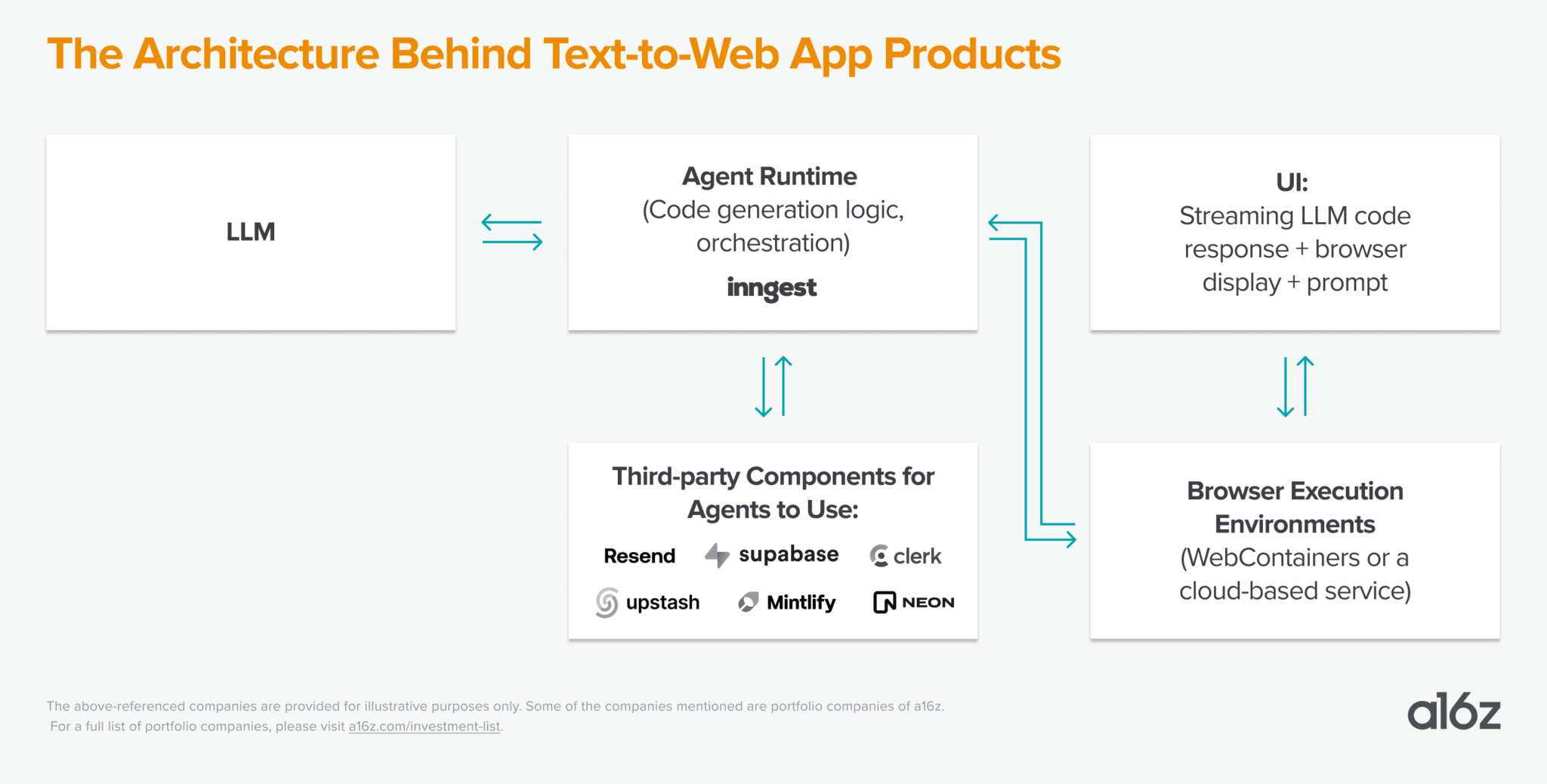
A founder with active customers and a working feedback loop can use cheaper software creation better than any cloner. The copy replicates the exposed product without inheriting the learning accumulated around it.
The one configuration where the fear is correct
The fear becomes serious when the cloner already has better distribution.
If another company can reach your buyers faster, sell harder and win with a good-enough product, building in public becomes a bad trade. You are handing useful context to someone who can already out-walk you.
In that setup, the cloner does not need to match your customer understanding.
They only need a credible substitute and enough go-to-market power to make switching easy.
A stale copy with superior distribution beats a better original with weak reach.
For founders with symmetric distribution, faster cloning favors the original. For those exposing their manual to a player with stronger distribution, the risk is real.
4. The Two Activities Hiding Under One Word
The build-in-public debate keeps looping because everyone is arguing over a bundle.
For years, building in public meant sharing revenue, roadmap decisions, product tradeoffs, mistakes, tools, channels, virality and the founder’s reasoning. We called all of it founder transparency, then argued over how much was wise.
That bundle made sense when copying felt slow enough to remain an abstract risk.
The same post could contain taste and telemetry, judgment and machinery, belief and blueprint.
The two activities travelled together, but AI has made the question of which one actually created the audience much harder to avoid.
Separating Judgment from Blueprint

The judgment layer shows how a founder reads the market, what they believe buyers are missing, which tradeoffs they refuse to make and what failure taught them.
That trust accumulates across decisions. Each sharp call and honest correction gives the next one more weight.
The blueprint layer is everything else. SaaS metrics, MRR screenshots, stack breakdowns, vendor dependencies, exact numbers.
It gave posts texture but rarely built the relationship. What kept people coming back was the founder’s clarity. The database choice was just background noise.
Operational detail felt valuable because it was concrete. But concreteness was getting confused with usefulness.
The blueprint made content easier to consume while contributing almost nothing to trust. It was always the lower value half.
It rode alongside the real asset, borrowed its credibility and got mistaken for courage. Now it is also the leaky half.
The judgment layer is worth more than ever. In a market full of commoditized AI-built products, demonstrated taste is a moat because it cannot be cloned from screenshots.
An opinion can be copied in seconds. The accumulated record that made an audience trust it still belongs to the founder.
Reasoning in public, making sharp calls, building a relationship with a specific audience. That is something far more defensible than a visible feature set.
Why Kahl is right in the particulars and wrong in the framing
Kahl’s filter, “interesting, not easy to clone,” is good advice. Founders should reveal judgment without giving away the operating manual.
But he treats the interesting layer as safe material left over after the valuable secrets are locked away.
A better reading puts the interesting layer at the center because it was the main event all along.
Numbers, architecture and dependencies felt impressive because they were specific, but they did little to build trust. In the AI cloning era, that specificity leaks useful context and returns less than founders think.
The founder’s reasoning, taste and industry read create the relationship that can later become distribution.
Cutting the blueprint separates the asset from the liability. If taste is the new moat, the founder’s job is to make their judgment legible while keeping the operating manual private.

5. Posting Your Numbers Is Becoming a Signal You Don’t Mean to Send
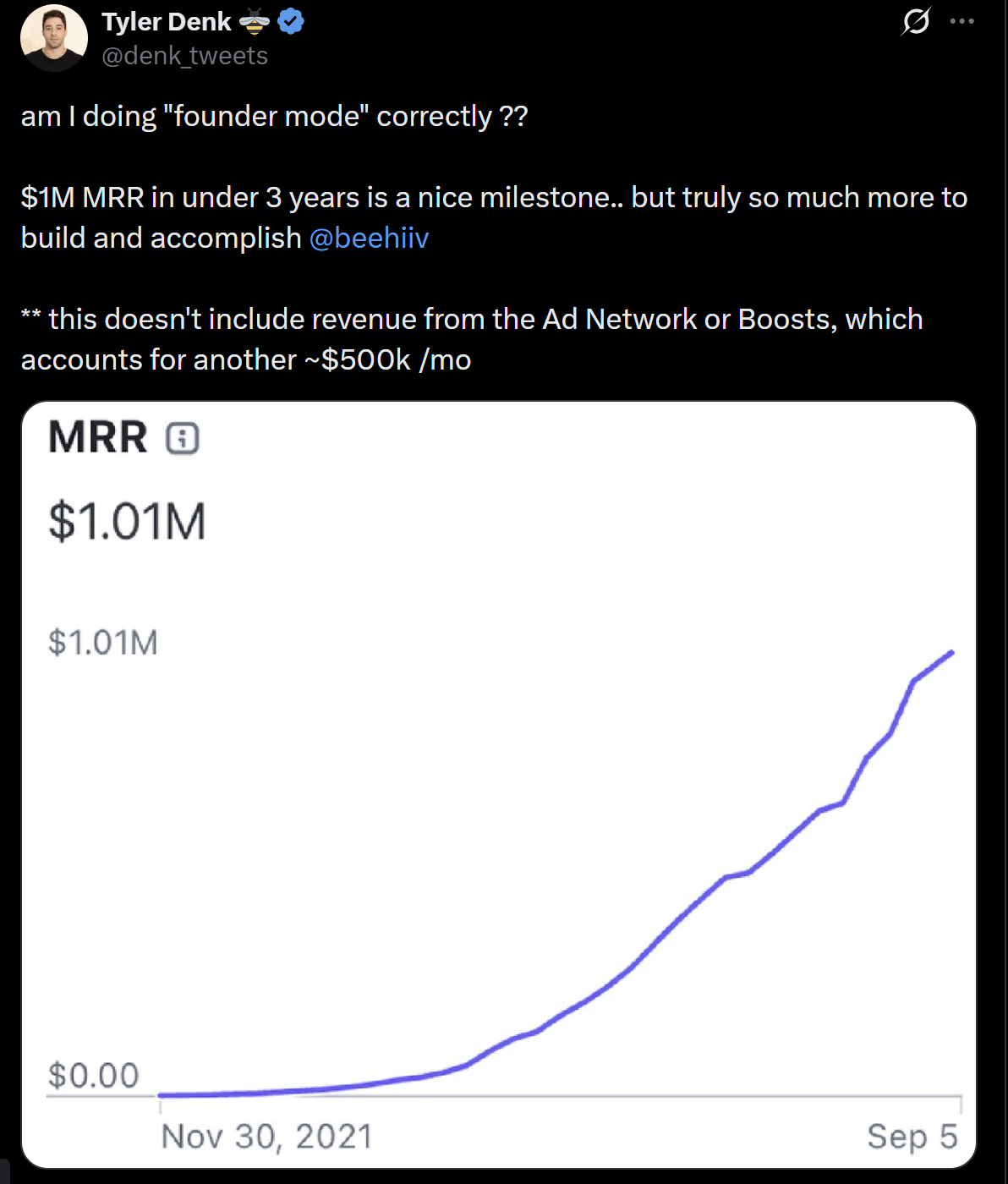
The social meaning of MRR transparency is changing. Posting numbers once read as confidence. It told the build-in-public community that momentum was real and the company was secure enough to let others watch the machine work.
The Change from Confidence to Liability
That signal weakens once operational detail becomes easier to weaponize.
A founder with a real startup moat has a rational reason to stop sharing the machinery.
If a specific acquisition channel, pricing insight, workflow, or customer segment is working, there is little upside in publishing the map.
The founder can still share judgment, tradeoffs and market read. The full revenue-and-stack breakdown offers less in return.
The Adverse Selection of the Public Feed
As founders with real defensibility pull back from specifics, the public feed becomes skewed toward people with less to protect.
The loudest operational transparency increasingly comes from founders early enough that the downside is small, or from businesses whose advantage was never in the machinery being shared.
The founders holding the most valuable information become less likely to publish it, which lowers the average strategic value of what remains visible.
That is how a market for build-in-public attention begins to resemble a market for lemons. Readers cannot immediately tell whether radical transparency reflects confidence or simply the absence of anything sensitive.
Over time, they start using the transparency itself as evidence and loudness becomes part of the signal.
A practice that once suggested strength can therefore begin to suggest earliness.
The founder posting every channel, number, tool and tactic may be honest and useful to follow. But the post also raises an unintended question, why does none of this seem worth protecting?

Building in stealth need not become the default. The old public-default posture becomes harder to defend once a business has repeatable acquisition, differentiated customer insight and product decisions worth protecting.
At that point, selective silence starts looking less paranoid and more mature.
6. Where This Breaks and What to Actually Do
The judgment argument has limits. It works best when buyers care about the founder’s taste, the product’s point of view, the community around it, or the trust built through public reasoning.
It is weaker where no relationship layer exists.

The Limits of the Relationship Moat
SEO arbitrage, thin-wrapper tools, shallow utilities and winner-take-most distribution games give the founder little judgment layer to bank.
If the product is a clever interface over a generic capability and the buyer has no attachment to the founder, Kahl is close to fully right.
Operational transparency becomes mostly downside because there is no trust asset being built, only a recipe being published.
AI exposed how little defensibility those businesses had.
If someone can threaten the product by reading an MRR post, copying the stack and recreating the visible workflow, the business had less of a startup moat than the founder hoped.
For everyone else, the practical filter is simple: share the judgment, withhold the blueprint.
Share the Judgment, Withhold the Blueprint
Share the reasoning behind the bet, the tradeoffs, taste, mistakes, customer insight, tripwires and hard-won industry read.
Those build trust while giving competitors little they can use.
Hold back the exact numbers, architecture, vendor dependencies, channel mechanics and repeatable machinery.
They leak far more than they earn.
The most damaging mistake is to keep performing the cloneable half of openness because you still believe it was the half that made people care.
"Share the judgment, withhold the blueprint" holds outside software too. Anyone can copy a joint or a finish once they see the photo. What they can't copy is the string of misreads that taught you which material and technique actually survives outdoors. The recipe is cheap. The scar tissue behind it isn't, and that's the part worth showing.
Could artificial intelligence also process and replicate your entire strategic reasoning and "judgement" process as data?