

How To Make Fundraising Easier

A VC gets paid to invest. The partners raise a fund from their own investors, and their whole job is to put that money into companies like yours.
Most first-time founders still walk into the meeting as if it were an audition. They rehearse answers to questions investors rarely ask, and they pitch as though they’re asking for a favour.
Flip it. You already know how to think like your customer. An investor is a customer too, buying a piece of your company, so sit in their chair and ask the only question that matters: would you invest in you?
together with HubSpot for Startups
Before a VC grades your go-to-market, grade it yourself
It takes 10 minutes, and it’s free:

HubSpot for Startups packed everything it learned helping 35,000+ startups grow into one free GTM Diagnostic. Answer a few questions about your setup and you get back:
▫️ A score across four key areas of your go-to-market
▫️ The gaps an investor would spot first, before your next pitch
▫️ A prioritized 90-day roadmap built for your stage and stack
I’d run it the week before any investor meeting. It’s the easiest win in your whole fundraising prep, and it’s completely free.
Table of Contents
1. Investors Want to Write Cheques to The Best Companies
2. VCs Is a Game of Half-Baked Decisions
3. Fundraising Is a Myth
4. How To Make Time Work In Your Favour
5. Both Parties are Making the Same Bet
1. Investors Want to Write Cheques to The Best Companies
The first thing you need to change is your emotional framing. For funds that ARE deploying capital, it means they want it just as much as you do to write the cheque.
However, you still need to understand the Power Law, that explains how a fund’s returns will end up coming from a handful of outsized winners. This means that the eagerness of the investor is narrow, but they still have a real fear of missing the next big thing.

The upside counts for more than the misses
Ilya Strebulaev is an economist and professor at the Stanford Graduate School of Business. He’s also the co-author of The Venture Mindset, where he describes an industry trained to care far more about the size of a possible success than about how often the bets fail.
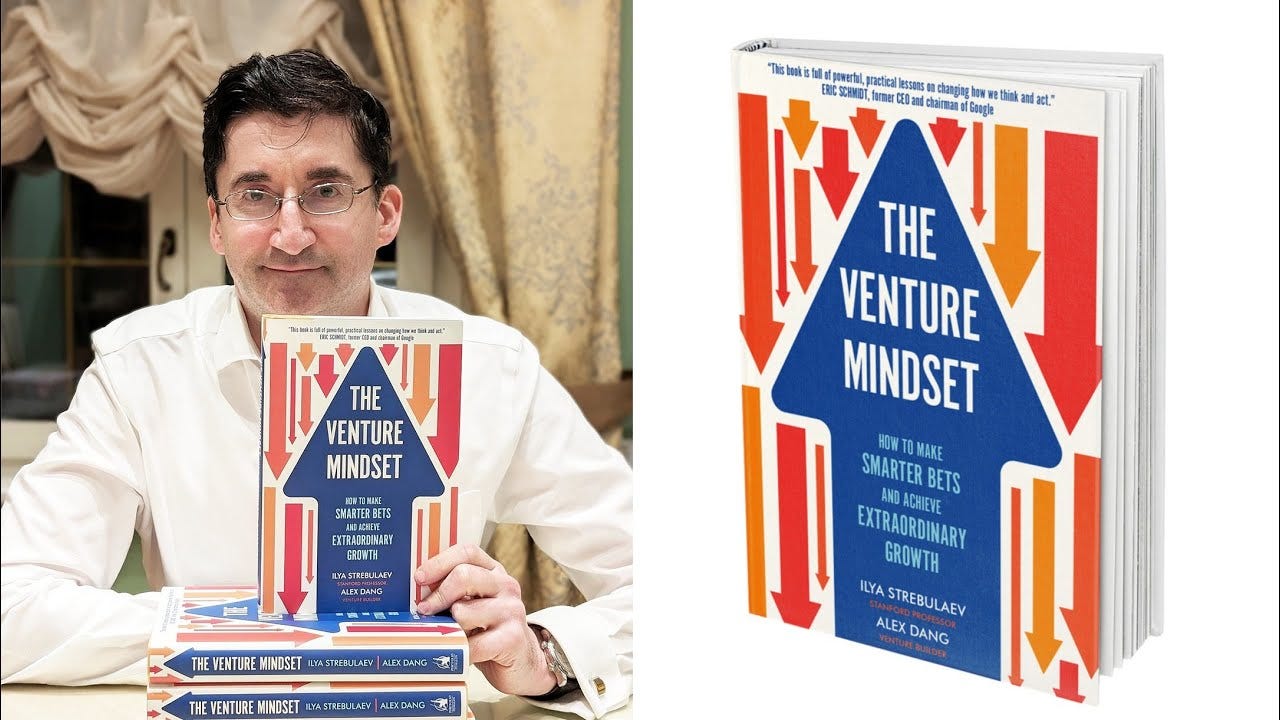
This is the exact logic a founder has to adopt.
What that means is you shouldn’t pitch as if you are begging for cash, but as if you are presenting an opportunity the investor would regret passing on.
But be careful. Do not sound arrogant or stubborn, founders tend to fall in love with their idea, and this is what ends up being the demise of it.
VCs want a confident founder, who’s presenting them with an opportunity of a lifetime, but they are also receptive to feedback and coachable.

2. VCs Is a Game of Half-Baked Decisions
At the pre-seed and seed stages, investors will end up building conviction in companies that may have little more than a minimum viable product (MVP) and a handful of users at best. And they usually have to do it quickly while dozens of other compete for the same pool of capital.

What VCs care about most
In the survey Strebulaev ran with Paul Gompers, Will Gornall and Steven Kaplan, covering 885 venture capitalists at 681 firms, the founding team came out as the factor investors rated most important, ahead of the product and the market.
That’s because at the earliest stage, the team is the only part of the company with a past that can be examined. They are also the only part of the company that will be able to fix whatever ends up breaking.

The proxies investors rely on
Investors therefore rely on whatever shortens the distance between a stranger and a judgement, such as an accelerator that has already selected the founder, a stint at a company known for a hard interview process, a referral from someone they trust, or a public record of shipping work.
A founder whose pitch is entirely about the technology leaves those questions unanswered. An investor with no way to answer them will usually pass, even on a good product, because the risk of being wrong about the people is too hard to price.

3. Fundraising Is a Myth
Okay this may sound controversial, but the truth is that most VC funds will receive thousands of decks throughout the year, will meet an equal amount of founders, and they will only end up investing in the ones they found themselves.
Ilya’s survey referenced above found that only about 10% of the deals investors closed came as inbound from founders, with most of the rest arriving through professional networks and/or referrals from other investors.
Make yourself visible before you ask
If you want to raise money without chasing investors, then plan ahead. Make yourself visible, encounter them before you send a deck.
Before you reach out, make sure you build a steady record of progress updates and customer stories that will get passed along and eventually reach the right ears.
Investors are more likely to invest in a founder that they have watched improve over a period of 6-12 months.
[newsletter sample]
Also, go to the events and do PR for yourself, build a personal brand and a distribution machine.

At the end of the day, this is a long game. You can’t expect to reach out to 5 investors and that money will appear in your bank account a week later.
Consistency is rewarded by investors because consistency and longevity is evidence that the founder is still building and shipping.
4. How To Make Time Work In Your Favour
Perhaps you don’t need to go to all VC dinners and events.
When a VC is interested, they don’t mind waiting. A GP loses nothing by waiting, but the founder will keep burning. So an early conversation is valuable for both.
The founder earns early feedback, the investor learns about a company for free, and gives them a potential chance to buy into it before anyone else.
The first offer is the hardest
Sam Altman wrote a seminal essay 13 years ago titled “Fundraising Mistakes Founders Make”, where he describes competition as the one part of the process that you should pay attention it.
He also says that the first offer is by far the hardest to obtain, and then the others arrive at a surprising speed.
So what you should be doing is setting up meetings in parallel within 1 or 2 weeks, so that each investor knows others are looking at the same time, and to reward whoever moves first.
You can’t fake urgency
Sam says that urgency has to be genuine, since investors talk constantly and a founder who claims a round is closing when no offer exists will definitely be caught out.
So a compressed process is effective because it turns an investor’s fear of missing out on a winner into a deadline. Therefore, a good founder building a solid product has no need to invent anything beyond a theoretical deadline.

5. Both Parties are Making the Same Bet
Both the founder and the investor who understand each other are placing the same bet on the same company, just from opposite sides of the table. That’s why acting like a beggar was never the right approach in the first place.

Startups have always existed, even before VCs, so keep this in mind before you choose to fundraise.
Lastly, the larger benefit of thinking like an investor appears after the money arrives, when the founder who understood why a fund said yes also understands what it will need to see before writing the next check.
Followed honestly, an investor’s logic will sometimes lead a founder to conclude that the company would be better served by customers’ money than by a fund’s, and the founders willing to reach that conclusion are, by the same reasoning, the ones investors most want to back.

The stat that only about 10 percent of closed deals come inbound is the one founders should tape to their monitor. Most people read it as "fundraising is rigged" when it really means visibility is the job. The 6 to 12 month watching window also changes how you write updates. You're not reporting, you're building a track record someone can check. Curious if you think this holds for bootstrapped founders who sell to customers instead of investors.