

Every founder goes through the same phase early on. You know you want to build something. You’re motivated, maybe a little obsessed.
So you start reading; Substack essays, X posts, reddit threads, YouTube videos, newsletter after newsletter. You save tabs you never reopen, you bookmark resources you forget exist, and somewhere between the tenth podcast episode and the third “ultimate startup guide,” you realize you’re consuming everything and doing nothing.
The internet has made startup advice infinitely available and almost completely unfiltered.
There’s genuinely great stuff out there, the kind that changes how you see a problem or saves you from a mistake that would have cost you months. But it’s buried under layers of recycled takes, engagement-bait frameworks, and tools that sound revolutionary until you actually try to use them.
This article is an attempt to cut through that. Not a directory. Not a ranked list of 200 tools. A working system.
Seven layers that mirror how startups actually get built, from the way you think about problems all the way to the communities where the best founders find each other.
Save it, revisit it, and share it with your co-founder. The best founders build systems around how they learn and execute. This is one you can come back to.

Table of Contents
1. Startup Thinking
2. Idea & Validation
3. MVP & Product Building
4. Getting Your First Users
5. Fundraising & Capital
6. Startup Infrastructure
7. Founder Network
8. Moving Fast
1. Startup Thinking
Before tools, before tactics, before growth hacks, it’s all about the mindset.
Most early mistakes trace back to flawed assumptions about users, markets, or timing. Founders often move too quickly into building, carrying untested beliefs that later become expensive to unwind.
The right mental models don’t guarantee success, but they prevent avoidable errors. These resources have stayed relevant because they focus on first principles, not trends.
What founders get wrong here
They fall into the “productivity trap”. You spend three hours reading about growth loops, save a thread on pricing strategy, watch a YC talk on hiring, and end the day feeling like you made progress.
But what you did was just consume. Progress and consumption can feel identical in the moment, which is exactly what makes it dangerous. Reading widely without a filter creates fragmented thinking, a brain full of half-applied frameworks that contradict each other depending on which article you read last.
Another common pattern is copying surface-level tactics from successful companies without understanding the underlying conditions that made them work. The following resources will help ground your thinking before execution begins.

Curated Resources
Paul Graham’s Essays
You need to read these if you haven’t already. These essays shape how many founders think about startups at a fundamental level. Read them slowly, not as content but as perspective shifts. “Do Things That Don’t Scale” and “Startup = Growth” will change how you approach early traction and what progress actually looks like.
YC Startup School
Use this when you want structure and not just scattered advice. YC Startup School walks through the core mechanics of building a company, from idea to fundraising, in a way that’s practical and grounded. It’s especially useful if you’re early and need a clear path without overcomplicating things.
Sam Altman — How to Start a Startup (Stanford CS183B)
This is dense, and it should be. The lectures cover everything from product to growth to fundraising, with operators who have built at scale. Don’t binge it. Watch it alongside what you’re building so the ideas have context.
NFX Founder Essays
These are worth your time if you’re thinking about markets, distribution, and network effects. The essays from the NFX venture capital team go deeper than most content on why some products scale and others stall. Particularly useful once you start thinking beyond MVP and into defensibility.
Lenny’s Newsletter
This is where product thinking meets execution. Lenny Rachitsky breaks down growth, retention, and product strategy using real examples and data. Useful when you move from “what should we build” to “why aren’t users sticking.”
VC/Startup Books
If you want to go deeper than essays and newsletters, we put together a list of the 10 best venture capital and startup books recommended by top VCs. Everything from understanding term sheets to what fundraising actually feels like from the trenches. Worth bookmarking for when you’re ready to go long.
Why these made the cut
These resources have shaped how serious founders think over the last decade. They don’t chase trends. They help you see the game more clearly, which matters more than any single tactic you’ll apply later.
2. Idea & Validation
Most founders don’t spend enough time here because it feels slow, uncertain, and less rewarding than building. So they skip it, convince themselves the idea is obvious, and move straight to product. Weeks later, they’re still searching for users who care.
But validation is where you decide whether the next six months of your life are worth investing.
What founders get wrong here
They pitch when they should be listening.
Someone nods along, says “that’s interesting,” and the founder walks away thinking they’ve validated something, but they haven’t. Polite responses are not demand signals.
The other mistake is trusting gut feeling over real behavior. What people say they’ll do and what they actually do are almost never the same thing.
Talk to people. Watch what they do. Build after that.

Curated Resources
The Mom Test — Rob Fitzpatrick
Use this before you speak to a single potential user. It teaches you how to ask questions that reveal truth instead of polite encouragement; questions that even your mom can’t answer dishonestly. Most founders think they’re doing customer discovery; this shows how often they’re just seeking validation. Short, practical, and worth revisiting.
YC — How to Get Startup Ideas
This is useful when you’re still forming the idea, not after you’ve committed to it. YC breaks down what separates ideas that feel interesting from those rooted in real problems. Read this alongside your own thinking and be willing to discard ideas that don’t hold up.
Strategyzer (Business Model Canvas & Value Proposition Canvas)
Use this when your idea starts to take shape. These canvases force you to map assumptions clearly: who the customer is, what problem you’re solving, and how value flows. Most founders keep these ideas in their head; putting them down exposes gaps quickly.
Indie Hackers — Idea Validation Threads
This is where you see how validation actually plays out. Search for validation case studies and trace how founders moved from idea to first revenue. It helps calibrate your expectations and shows what real demand signals look like.
Google Trends
Use this early, before you convince yourself the market exists. It gives a quick read on whether interest in your problem is growing, flat, or declining. It won’t validate your idea on its own, but it adds an important layer of signal before you invest further time.
Why these made the cut
Validation is about reducing self-deception. These resources work because they push you toward real signals, not opinions. They help you test ideas in the open, where feedback is harder to ignore and easier to trust.
3. MVP & Product Building
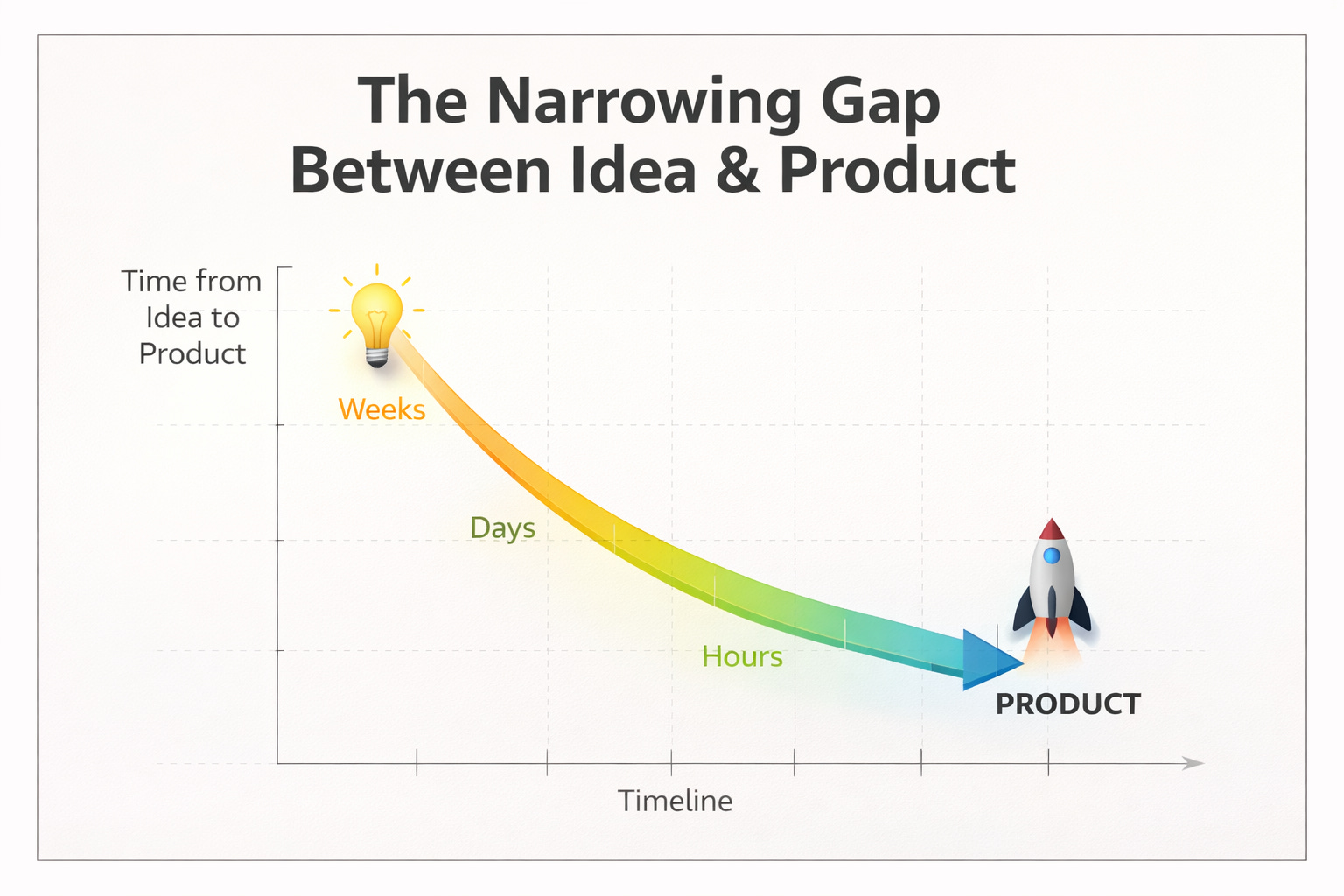
The gap between idea and product is almost nonexistent.
What used to take weeks now takes days, sometimes hours. That changes how you should approach building.
This means that you don’t have to over-plan or wait for perfect clarity. You need something real, in front of users, as quickly as possible. The goal at this stage is to create something functional enough to learn from.
What founders get wrong here
Many founders still treat the first version like a final product. They overbuild, spend time on edge cases, and delay shipping.
They also might choose the wrong tool for their skill level. The reality is that non-technical founders get stuck trying to learn too much, while technical founders sometimes over-engineer early versions that don’t need that level of depth.
Although speed is important, it’s only useful if it leads to feedback. These resources will help you pick the right path to get there.
Curated Resources
Lovable.dev
Use this when you want something live fast without writing code. You describe your product, and it generates a working full-stack app with deployment handled. This is useful at the very early stage, when your priority is to test an idea with real users, not to build a perfect system.
Bolt.new
This sits between no-code and full development. You describe features and see them built in real time, with visibility into how things work. Useful if you have some technical intuition and want more control without slowing yourself down.
Cursor
This is for technical founders who want to move faster without giving up control of their codebase. It acts as a pair programmer, helping you write, refactor, and extend code. Best used when you’re building something that needs to hold up beyond the MVP stage.
Bubble
A more mature no-code platform with deeper capabilities. There’s a learning curve, but it allows you to build more complex applications with real workflows and logic. Useful if your product requires more structure and you’re not planning to rewrite immediately.
Figma
Use this before you start building, even if you’re moving fast. Mapping flows and interfaces forces clarity. It also helps when you’re showing early versions to users or investors. Skipping this step often leads to confusion during development.
Supabase
Use this when your MVP needs real users, data, and authentication without spending time on backend setup. It gives you a production-ready database and auth layer quickly, which matters once you move beyond static prototypes. Works well with most AI-first build tools.
Why these made the cut
Again, the goal is speed without losing direction. These tools are widely used by early-stage founders because they reduce the time between idea and feedback.
They also allow you to choose a path that matches your skill level, instead of forcing you into one way of building.
4. Getting Your First Users
Building the product feels like the hard part but it isn’t. Getting people to actually use it is where most founders hit a wall they didn’t see coming. There is no launch moment that changes everything.
Early traction is unglamorous. It involves a lot of direct messages, Reddit threads, cold emails, and showing up in the same communities over and over until people start to recognize you.
But that effort doesn’t scale, and it’s not supposed to. It’s supposed to teach you what actually resonates before you try to scale anything.
What founders get wrong here
Some stay in stealth for too long, and then expect a launch to do the work they avoided. When the spike fades after one Product Hunt post or one newsletter mention, they conclude the idea isn’t working.
It might not be, but most of the time the idea never got a real chance because the founder stopped at broadcasting and never started talking to people.
Early users don’t come from campaigns. They come from founders who showed up where their users already were and genuinely engaged, not once, but repeatedly over time.

Curated Resources
Product Hunt
Use this when you’re ready to show something real to a broader audience. A strong launch can bring early users and visibility, but it doesn’t happen by accident. Preparation matters. Build interest before launch day, line up support, and make your positioning clear.
BetaList
A simpler way to start collecting early users. Listing your product here helps you build a waitlist and test how people respond to your messaging. It won’t drive massive volume, but the users tend to be more intentional.
Reddit (r/startups, r/entrepreneur, r/SaaS + niche subreddits)
This works if you approach it the right way. Don’t lead with your product. Spend time where your users already are, understand their problems, and contribute meaningfully. The right niche subreddit can bring highly relevant users, even at small scale.
YC — How to Launch
This reframes how you think about launches. Instead of a single event, treat it as a series of small, targeted pushes. Different audiences, different angles, repeated exposure. Useful when you’re planning how to get consistent early traction.
Hacker News — Show HN
If your product is technical, this is worth doing. A well-written Show HN post can drive meaningful traffic and honest feedback. The audience is direct, and often critical, which makes it valuable early on.
Why these made the cut
Early traction comes from showing up where your users already are. These platforms work because they compress feedback cycles and force you to engage directly. They don’t scale, and that’s exactly why they matter at this stage.
5. Fundraising & Capital
Most founders think fundraising starts when they begin working on their deck. It doesn’t. By the time you’re tweaking slide layouts, the founders who raise quickly have already spent weeks mapping investors, warming up introductions, and sharpening their narrative through real conversations.
Fundraising looks like storytelling on the surface. Underneath it is a process, and like any process, the outcome is largely determined by how well you prepared before it started. Walk in without that preparation and you will feel it in every meeting.
What founders get wrong here
The most common mistake is treating fundraising as a one-off event instead of a process. Founders will start conversations before they’re ready, take feedback at face value, and lose momentum between meetings.
Additionally, founders tend to focus too much on slides and not enough on the underlying story. At the end of the day, investors are not evaluating design, but judgment.
Many founders also underestimate how much research matters. Walking into a meeting without understanding the investor’s thesis or portfolio is an easy way to lose credibility.
Curated Resources
YC — Startup Fundraising Guide
This is the closest thing to a baseline manual for early-stage fundraising. It covers instruments, dilution, valuations, and how to run a process. Use it before you speak to investors so you understand the mechanics, not just the narrative.
Sequoia — Pitch Deck Framework
A widely used structure that helps you organize your story. It forces clarity on the fundamentals: problem, market, product, traction, and team. Don’t treat it as a template to copy, but as a way to check whether your narrative holds together.
DocSend — Pitch Deck Teardowns
This adds a layer most founders miss: how investors actually engage with your deck. It shows where attention goes, what gets skipped, and what drives follow-ups. Useful when you want to move beyond assumptions and understand real behavior.
AngelList
Your distribution layer for fundraising. It helps you get discovered by angels and early-stage funds, and manage parts of the fundraising process. If you’re raising at pre-seed or seed, this becomes part of your public presence.
Crunchbase
Use this to build your investor list with intent. Look at what funds have invested in, at what stage, and in which sectors. A targeted list is more effective than broad outreach. This also helps you find warm introductions through shared connections.
Our directory includes a ton of resources on fundraising, including guides, pitch decks, investor lists and pretty much everything a founder will ever need for a successful raise.
Why these made the cut
Fundraising is easier to navigate when you understand both sides of the table. These resources cover the mechanics, the narrative, and the investor perspective. Together, they help you run a tighter process and avoid mistakes that are hard to recover from mid-raise.
6. Startup Infrastructure
Once users start showing up, everything changes. Things break, payments fail, and you lose track of what users are doing and where they’re dropping off.
This is where infrastructure becomes essential. You can’t run everything on spreadsheets and random google docs. On the other hand, you don’t need a perfect stack either. But you do need something reliable enough to support growth without constant firefighting.
What founders get wrong here
Many founders delay this layer until something breaks. Others overanalyze things by setting up complex systems before they have enough usage to justify it.
Another common mistake is stitching together too many tools without thinking about how they work together. At this stage, you’re not optimizing for completeness, but setting up a simple, dependable backbone that you won’t need to rethink every few weeks.
Curated Resources
Stripe
Use this for payments, subscriptions, and billing from day one. It’s the default for a reason. Setup is straightforward, and you don’t need to commit to anything upfront. They charge per transaction, which works well when you’re early and revenue is still unpredictable.
Stripe Atlas
Use this if you’re planning to raise venture capital and need a US entity. It handles incorporation, banking, and compliance in one flow. Especially useful for non-US founders who want a clean setup without navigating multiple providers.
PostHog
Use this when you stop guessing and want to see how users actually behave. It shows where users drop off, what they click, and how they move through your product. The free tier is strong enough early on, and you can grow into it without switching tools.
Notion
Use this as your internal system of record. Docs, roadmaps, hiring pipelines, investor updates, all in one place. It works well early because you don’t need separate tools for everything. Many startups continue using it even as they scale.
Intercom
This is how you stay close to your users as you grow. Live chat, in-app messaging, and support workflows in one tool. It’s more expensive than simpler alternatives, but it gives you deeper visibility into user conversations.
Linear
Use this when your product work starts getting messy and you need a clean way to manage it. It keeps issues and sprints organized without the overhead of heavier tools like Jira. Simple to adopt early, and strong enough to keep using as the team grows.
Why these made the cut
At this stage, reliability matters more than experimentation. These tools are widely used because they solve core operational problems without adding unnecessary complexity. They give you a stable base so you can focus on growth instead of fixing your setup.
7. Founder Network
At some point, you realize most problems you’re facing are not unique. Someone else has already dealt with them, made mistakes, and figured out what works.
The difference is whether you’re close enough to those people to learn from them. Founders who move faster are rarely operating in isolation. They are part of networks where information flows quickly and help shows up when it matters.
What founders get wrong here
Many founders treat networking as something optional or transactional. They reach out only when they need introductions or capital. But that’s not how this works.
The real value comes from being part of ongoing conversations, where you see patterns early and learn from others in real time.
Founders who stay in passive mode rarely succeed. Consuming content without engaging is a losing tactic. Communities only work if you show up consistently.
Curated Resources
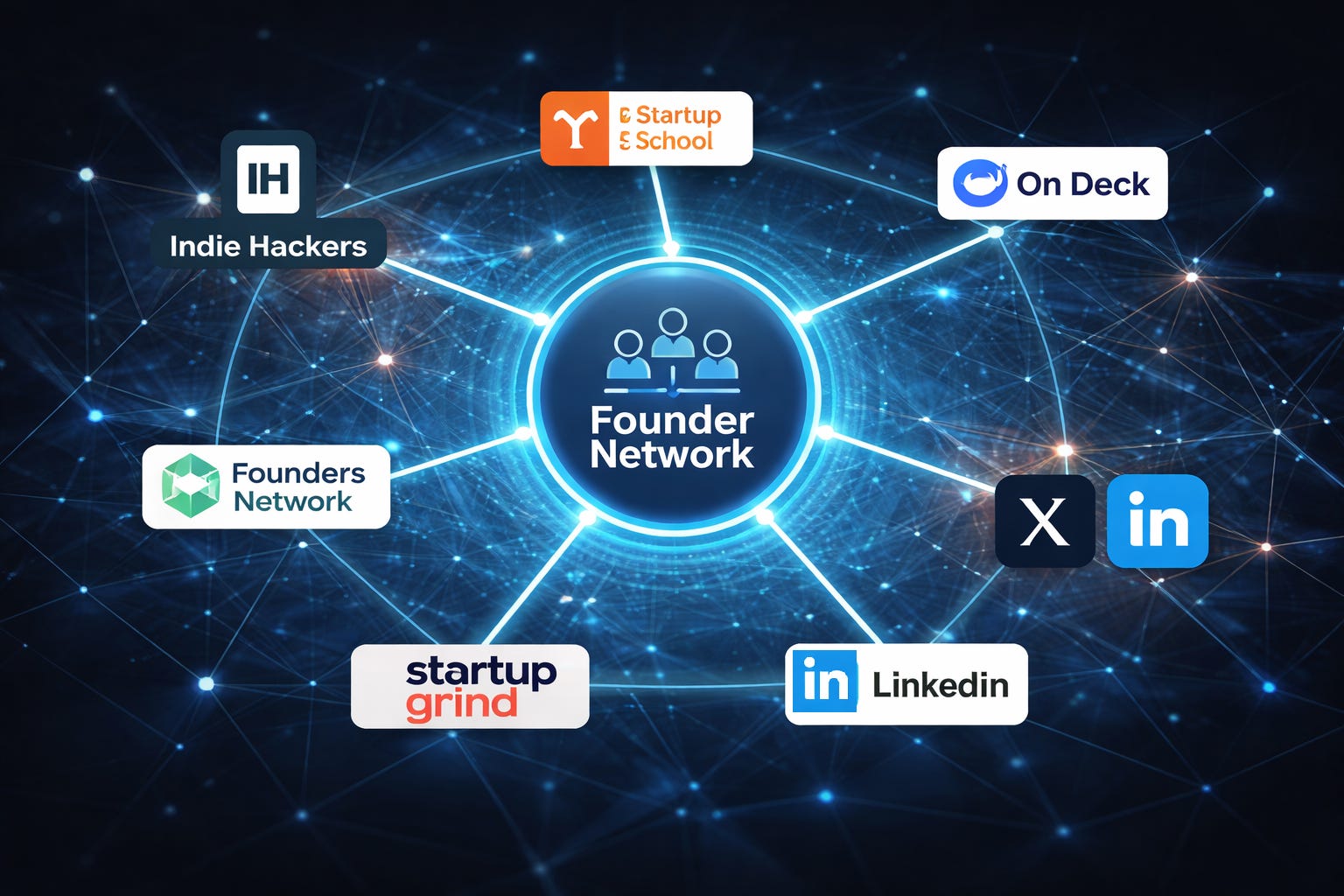
Indie Hackers
A strong starting point if you’re building independently or at an early stage. The value comes from transparency. Founders share real numbers, experiments, and lessons without much filtering. Useful when you want to understand how progress actually happens.
YC Startup School (Community)
Beyond the curriculum, the community layer connects you with founders at a similar stage. Group sessions and shared timelines create accountability. This is useful early, especially if you’re building without a formal support system.
On Deck
More selective and structured. You get access to a curated group of founders and operators, along with introductions that would otherwise take time to build. This works best when you’re ready to move quickly and can make use of a higher-signal network.
Founders Network
Designed for founders who are further along and dealing with scaling challenges. The conversations here are less about starting and more about navigating growth. Useful once you’ve moved past the early uncertainty.
Startup Grind
A practical way to build local connections. Events bring together founders, investors, and operators in your region. Useful if you want to expand your network beyond online interactions and build relationships over time.
X (Twitter) / LinkedIn — Founder Communities
This is where real-time thinking happens. Founders share what they’re learning, what’s working, and what’s breaking. The value comes from following the right people and engaging when it makes sense. Over time, this becomes a steady stream of insight.
Why these made the cut
The fastest way to learn is through proximity. These communities work because they expose you to real experiences, not polished narratives. They shorten the distance between problem and solution.
8. Moving Fast
No resource on this list will build your company for you. The founders who move fastest are not the ones who read the most. They are the ones who read the right things, apply them immediately, and course correct based on what they learn. That is the whole game.
Pick one thing from this list that you have been putting off. Not the most interesting one. The most uncomfortable one. That is probably where the work is.
The framing of "Save This if You Want to Build a Startup in 2026" really stood out because it suggests the real value is in having a reference, not just chasing the latest trend. The founders who seem to last are usually the ones who build a habit of revisiting strong ideas over time instead of constantly looking for the next new framework.
solid take on this. curious how it plays out long term