

Mark Cuban says AI just predicts the next word. Then he points agents at the lawsuits and contract bids of the healthcare conglomerates he calls the problem.
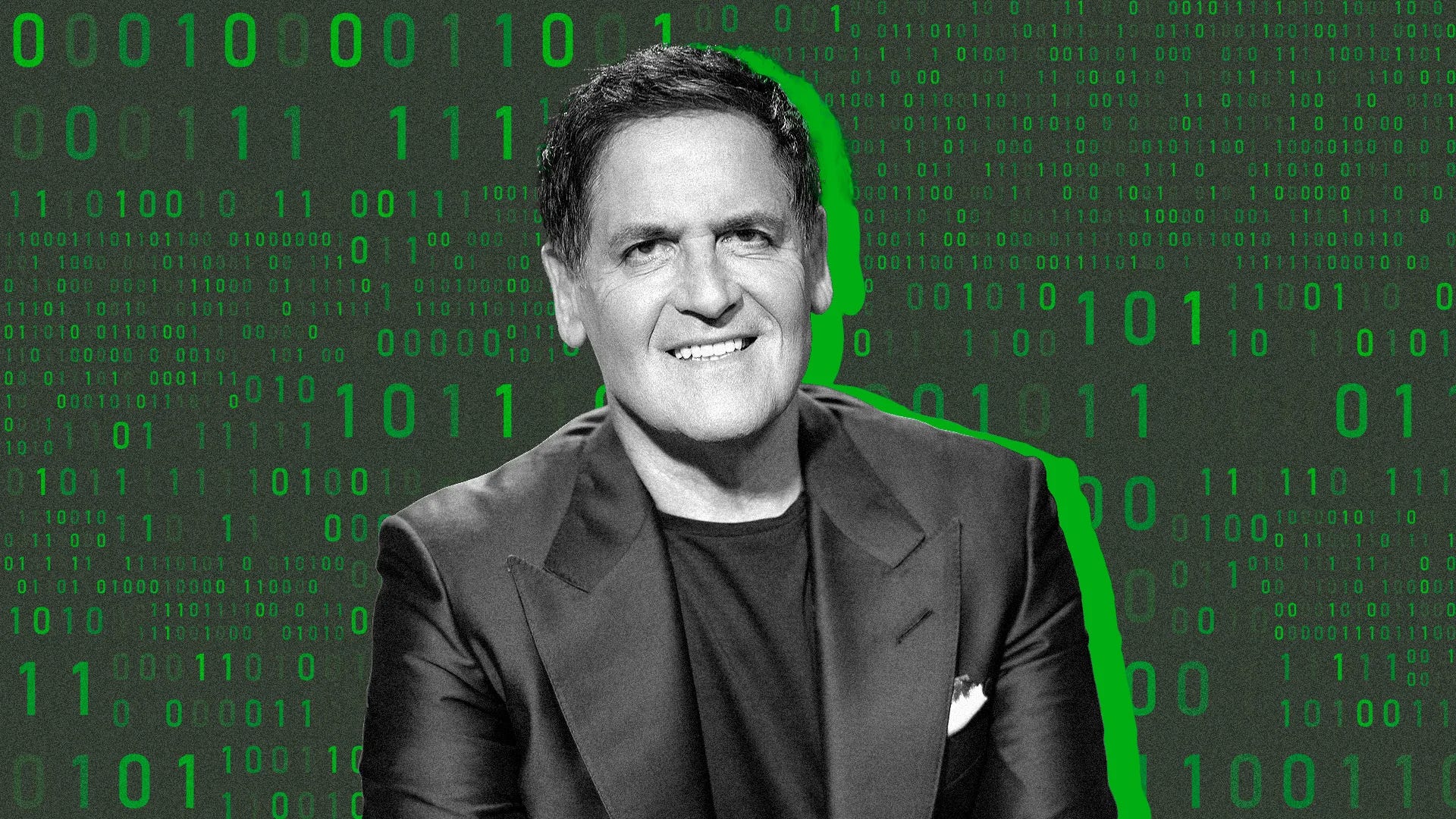
He also calls himself “the biggest proponent of AI that there is,” and he still spends much of his long sit-down with Steven Bartlett on The Diary of a CEO explaining where AI falls short and where the money behind it looks thin.
I watched the full interview so you don’t have to. Cuban’s first agent does one narrow job that keeps coming back, and that’s where any company should start. Here are the 10 lessons that matter.
This issue is brought to you by Limestone Digital:
You’ve got AI tools. Your operations still run the old way.
Buying more licenses won’t fix it. You’ll get further with one workflow tested on real cases than with a multi-year roadmap.

Their team wrote a free guide on where to start, and they’ll email you the PDF:
1. Ask 4 Models the Same Question and Watch the Answers Split (Why Cuban Calls AI Predictive)
Cuban says 4 models give you 4 answers, and the skill is in comparing them.
“It’s predictive. It’s not deterministic. Meaning, if you asked 4 different AIs the same question, you’re going to get 4 different answers.”
That variance makes any single answer a draft.
Cuban says a model from Anthropic or Google is out of date the moment it ships, and that rewording the question to the same model changes the output too. He pictures a 4-way intersection with the best models on his phone and a seeing-eye dog beside him, and he picks the dog.
I’d run his reworded-question test on every key prompt, and I’d rerun it after any model swap. If you pay for several models to do this, our price check of 32 AI plans shows which ones earn their seat.
Compare answers before you trust one.
2. Smart Means Spotting the Problem, and Cuban Says AI Misses That Part
A doctor can hold every research report and still needs to look at the patient.
“I have to use my senses, look, take my experience and be smart enough to ask the right question.”
Cuban’s definition of smart is worth borrowing.
His doctor holds every research report, then the patient throws up on him, and that’s where the reports stop and the senses start.
He defines smart as gathering and combining inputs, and he says identifying the problem is the piece AI misses. The interview itself shows the gap: Bartlett’s next question kept surprising him.
I read this as a staffing rule for agent teams. It explains why companies hire for judgment and why the work is moving from execution to judgment. The Agent Workforce Kit turns that split into a role radar you can run on your own team.
Let models gather. You name the problem.
3. Cuban’s Agents Do the Work He Never Had Time to Hire For (The Open Records Trick)
Records requests used to wait on a hire. Now an agent drafts them.
“I can use the agent to create an email to send to the Open Records Act to get me copies of all those contracts.”
That’s a textbook first agent, because the job is narrow and it repeats.
For Cost Plus Drugs, an agent tells him whenever a healthcare conglomerate he calls the problem gets sued or bids on a contract. Then it drafts the Open Records Act request.
Before agents, he says, that work meant hiring and managing someone, so it stayed undone. Now he hires for higher-level work and spends less of his own time.
The cost he describes is attention, so the smallest repeatable task is the right first target. If your version of that task is legal paperwork, Build Your Own AI Legal Team in Claude walks through the setup. The AI Corner’s one-person business guide shows where the same logic leads at company scale, and No, You Don’t Need an AI Agent helps you check whether a plain workflow will do.
Give agents the tasks you used to skip.
Ready to put agents on your own backlog? These 5 playbooks get you moving:
The Harness Is the Product: 6 Decisions That Turn an AI Agent Into a Worker You Can Leave Alone
3 Founders Shipped Claude Managed Agents to Production in 2 Weeks. Here’s the Playbook
4. A New Model Makes the Creator First and Everyone Else Tied for Second (Cuban’s Overnight Manual Method)
Cuban stayed overnight with the manuals to earn second place behind the author.
“New AI comes out, new model comes out, new software comes out, there’s the creator and everybody else is tied for second.”
Second place is a finish line anyone can train for.
In the early PC days, Cuban learned packages like Lotus 1-2-3 by reading the manuals over and over, sometimes overnight in the software store where he worked. He wanted a huge edge for Micro Solutions.
His logic: only the author understands a program better than he does, so studying hard makes him tied for second, and that beats everyone else. He runs the same play on each new AI release.
Release notes are the manual of 2026, so read them the week a model lands. Start with the AI Corner’s guides to Claude’s Fable 5, Claude Opus 5 and agents that keep learning between releases, plus Andrej Karpathy‘s workflow shift.
Read the manual before the market does.
5. Cuban Sees Opportunity in AI While Others Look Away
Cuban sorts people into those who look away from AI and those who lean in.
“Like for me with AI, I see it as an opportunity. Wherever there’s change, there’s opportunity.”
His split is simple, and it sorts people fast.
Cuban sees 2 reactions to a shift this big. Some people bury their heads and hope it skips them, while others pick it up and say let’s go. He puts himself in the second group, and he says the first group is the larger one.
I see the dividing line as hours of hands-on use. The AI Corner’s profile of the people winning with Claude is a useful benchmark, and Claude Cuts Task Time by About 80%. Make It Run Your Week gives you the setup for a founder’s week.
Join the group that does the work.
“Most people aren’t going to do the work.”
6. Cuban Says AI Brings Creative Destruction, and the Path Hurts
Cuban answers the end-of-work forecasts with a disc factory town in Indiana.
“It will transform how we work, but I think there’ll be creative destruction.”
It’s a measured answer in a debate full of extremes.
Cuban points to Terre Haute, Indiana, where disc production moved from CDs to DVDs. He adds that people still make money on music, that new technology creates different kinds of jobs and that the path hurts.
If I were planning headcount, I’d name the painful middle first, starting with the AI Corner’s tracking of the roles that shifted and the layoff trap. The 5-Person Team That Runs on Claude Code shows what a small team looks like on the other side, and the piece on career zigzaggers covers the non-linear paths people take.
Plan the painful middle first.
7. Attackers Use Brute Force, So Point the Same Agents at Your Own Holes
Cuban says AI attacks reuse the standard list at scale, and defenders can run it too.
“What we don’t talk about is using that same brute force on the defense side, that you can go out there and find all the holes in yourself.”
The same tools work on defense.
He asks security people whether AI invented anything in the attacks making headlines. The answer he reports: it’s the same list every security person has, tried in every combination by an unlimited number of agents.
His larger worry is human. He says he fears what people do out of concern and misunderstanding more than what AI will do.
Before shipping anything, I’d point the same agents at my own stack and read what they find. Your AI App Has a Hole in It Right Now is the checklist to run first, and AI Made Bug Bounties a Six-Figure Skill Overnight shows how attackers use the same agents. The VC Corner’s essay on AI risk covers the larger question.
Find the holes before the swarm does.
8. Publishing Feeds Every Model, So Keep Your Edge Private (How AI Models Splinter)
Published work reaches every model, and Cuban says trade secrets are the response.
“It’s immediately available to every model and you lose control of your intellectual property.”
Open publishing now carries a price.
Cuban gives this warning to hospitals and researchers working with Cost Plus Drugs, and he sees more of them choosing trade secrets over patents and a private model over a paper.
The result is a split. Gemini and ChatGPT train on different data, so they give different answers, which he says defeats much of the purpose.
The moat question comes before the publishing question. Marc Andreessen places the AI moat outside the model, and the AI Corner covers the type of moat that matters now.
Decide what stays private before you publish.
Weighing what to protect? These 4 VC Corner pieces take on moats:
Taste Is the New Moat and Design Decides Which Startups Survive
Granola’s Growth Playbook: Wedge, Moat, Pricing, Context Layer
9. Cuban Sees a Possible AI Debt Bubble in Hyperscaler Borrowing (His Pickleball Warning)
He backs AI at full volume and still reads the debt column.
“We literally could get into a debt bubble in the United States of America because there’s so much debt being taken out by all these hyperscalers.”
He backs the technology and questions the financing.
Cuban says a lot of data centers will turn into pickleball courts, as a metaphor, because AI peaks with less power doing more.
Public data fits his worry. Fortune reported in September 2026 that the 5 biggest hyperscalers issued $121 billion in US corporate bonds in 2025, against an average of $28 billion a year from 2020 to 2024, citing BofA Securities. Their capital spending now runs close to 100% of operating cash flow, it adds.
The same logic reaches your own AI bill. The AI Corner reports that Anthropic deleted 80% of Claude Code’s prompt and the product got smarter, and Scott Galloway presses the return question on AI spend.
Build for less power doing more.
Planning around rising AI costs? These 5 pieces cover the bill:
NVIDIA Cut AI Agent Costs in Half Without Touching the Model. Your Margins Live in the Harness
Your AI Agent Might Be Paying $11,000 a Month to Answer Yes or No
10. Cuban Says Stocks Now Trade on Perceived Value (What an 18% Drop on a 1-Penny Miss Says)
Bitcoin, Micron, Google and Apple move like meme stocks on small news, Cuban says.
“A company might miss earnings by a penny or only beat by a penny and their stock will be down 18%.”
An 18% swing on a penny measures mood.
Cuban says the company’s intrinsic value changed by far less than that, because buyers and sellers trade on anticipated information instead of the net present value of future cash flows.
He thinks the market is in a bubble, though a different one from 2000 and 2001, and says he has no idea what makes it burst. A drop like that tells me more about the crowd than the company.
For private companies, The VC Method 2026 shows how investors actually price a round, with the Excel model. The AI trade just lost $1 trillion tracks where the public value went, and the AI Corner covers the wider AI thesis risks.
Judge the product, then judge the price.
“We’re trading them like baseball cards.”
The AI Operator Playbook
Let agents do the grinding and keep the judgment and the sale for yourself.
Founders: Cuban’s agents handle work he never had time to hire for, and it now takes less of his time. List 3 tasks you skip because staffing them costs too much attention, then put 1 agent on the first. Check the hiring kit and Build vs Buy in the AI Era before you add headcount or tools.
Investors: Cuban says stocks trade on perceived value and that hyperscaler borrowing could produce a debt bubble. He also says to stay patient and keep some cash for the turn. Read Martin Casado on the venture rule he says AI broke, then compare each AI company’s price with its cash flows.
Operators: Run each key prompt on 2 models and keep a fallback, since Cuban says 4 models give 4 answers. Review each agent on a schedule, because agents age, track the results in the AI CEO Dashboard Kit, and check who controls compute before you depend on 1 provider.
Everyone else: Cuban sorts people into those who avoid AI and those who lean in, and he says the first group is larger. Learn 1 tool the way power users do, and practice asking better questions.
The 4 Principles to Steal
Treat Every Answer as a Draft. Compare models and reword the question before you trust a result.
Aim Agents at Skipped Work. Start with the tasks that cost too much attention to staff.
Learn Each Release First. The creator ships first, so earn second place by studying the week it lands.
Keep Your Edge Private. Public work reaches every model.
Use the tools at full speed and check what comes back.
FAQ
What does Mark Cuban use AI agents for?
At Cost Plus Drugs, an agent alerts him when a healthcare conglomerate he’s tracking gets sued or bids on a contract, then drafts an Open Records Act request for the contracts. He says that work used to need a hire, so it went undone.
Why does Mark Cuban say AI is predictive, not deterministic?
He says 4 different AI models give 4 different answers to the same question, and rewording the question changes the answer from the same model. He treats every output as a draft to compare.
Does Mark Cuban think there’s an AI bubble?
He says hyperscaler borrowing could create a debt bubble in the US and that stocks now trade on perceived value. He also calls himself the biggest proponent of AI there is.
What is the best first AI agent for a company?
Following Cuban’s example, pick one narrow task that repeats and that nobody has time to staff, then measure what the agent saves before you add a second one.
Where did Mark Cuban say this?
In a long interview with Steven Bartlett on The Diary of a CEO. The full video is below.
Watch the full interview with Steven Bartlett to hear about the garbage-bag hustle at age 12 that Cuban says catapulted him more than anything.
If this breakdown saved you an evening of watching, send it to one founder or investor who needs it.
Agents and Operations
Inside OpenAI: The Operating Model That Makes 2 Engineers Beat 200
Claude Just Launched for Small Business. Here Is Everything You Need to Set It Up Today
Forget Loop Engineering. It’s all about Graph Engineering Now
Models, Costs and Moats
Jensen Huang handed you the AI roadmap. Here are the 10 moves that matter.
Demis Hassabis Says AGI Arrives in 2 to 5 Years. Here Is the Full Picture