

A System That Is Starting to Question Itself
There is a paradox in the venture capital industry today. Capital is still flowing, but the people writing the checks are suddenly questioning their own methods.
Venture capital used to be a cottage industry of outsiders and eccentrics. A small circle of people betting on things that sounded like science fiction, in half-empty offices.

Today, VC funds are managing tens of billions of dollars across multiple vehicles. Startup ecosystems exist on every continent. The companies this capital backed have reshaped entire sectors of the global economy, from cloud computing to AI.
1 thing I lean on for every diligence call:
As an angel investor, I live in back-to-back calls with founders and LPs. Most of that time used to disappear into note-taking instead of actually listening to the person across from me.
Granola fixed that. It is the AI notepad that sits quietly through every call and turns my rough notes into a polished, structured summary the moment the meeting ends:

▫️ No bots joining the call, ever. It transcribes natively from your computer’s audio
▫️ Jot a few rough words during the conversation, get a full summary automatically
▫️ Works across Zoom, Meet, Slack, and in-person, all in one place
▫️ Progress over process. It makes you sharper, not replaceable
code THEVCCORNER for 1 month off
However, the same industry that helped finance the modern technology economy has begun asking itself difficult questions. Returns have become harder to predict and exit timelines are stretching. Startups are staying private longer, requiring far larger pools of capital than the venture model was originally built to handle.
We are seeing a system designed for speed and agility try to navigate a world of massive scale and slowing exits. The real question is not just where the next big winner is coming from. It is whether the model that gave us the modern world can survive its own growth.
To answer that, we need to look at how the most powerful financial force on the planet was built, and what the future holds.
Table of contents
1. Where Venture Capital Actually Came From
2. How Venture Became the Engine of the Tech Economy
3. The Fever Dream and the Morning After
4. The Civil War Inside the Asset Class
5. The Value-Add Arms Race
6. What the Future Holds for Venture Capital
7. Why Venture Capital Still Matters
1. Where Venture Capital Actually Came From
What is essential to this story is to understand that the venture capital industry did not begin as a polished financial sector. Back in the day, there was no appetite for risk.
If you were an engineer in the late 1940s with a breakthrough in radar or semiconductors you were essentially an island. You couldn’t just walk into a bank and ask for a loan, because banks were, and still are, in the business of certainty.
The problem was that some ideas with enormous potential were far too risky for traditional finance. Banks favored predictable borrowers with collateral and steady cash flows. The kinds of companies that eventually built the modern technology economy offered none of that.
What they offered instead was uncertainty and the possibility of extraordinary success.
And that gap in the market created a need for the venture capitalist. For the people who understood that the future is built on a mountain of failed experiments.
This is what we know now as the “venture model.” Most investments would fail or produce modest outcomes, while a small number would succeed on a scale large enough to repay the entire portfolio.
This dynamic created what investors later described as a power-law business, where a few companies generate the overwhelming share of returns.
Before legendary firms like Kleiner Perkins and Sequoia Capital existed, there was just “The Group.” This was a literal circle of wealthy friends in San Francisco who met for lunch to look at deals. If they liked a founder, they each chipped in about $25,000 on a handshake.

Silicon Valley became the natural center of this system. The region already combined universities, engineers, and defense-funded research. Venture capital added another ingredient: risk capital willing to back founders long before their companies generated revenue.
Over time the industry adopted the limited partnership (LP) structure, pairing institutional investors who supply the capital with venture firms that manage and deploy it across portfolios of startups.
Their participation transformed venture capital from a niche experiment into a recognized investment category.
So even as the industry scaled, its core logic remained unchanged. Venture capital was designed for patience, uncertainty, and the rare companies capable of reshaping entire industries.
2. How Venture Became the Engine of the Tech Economy
For decades the venture model remained relatively small. What eventually turned it into a central force in the global economy was not simply the growth of venture firms, but successive technology waves that required exactly the kind of capital venture was designed to provide: patient, risk-tolerant funding for ideas whose markets were still uncertain.
The Genesis: Semiconductors
The first major expansion came during the semiconductor era. Companies building integrated circuits and computing hardware required large upfront investment long before they produced revenue.
Venture capital filled that gap, funding firms that became the foundation of Silicon Valley’s early technology ecosystem.
Around the 1950s, eight brilliant scientists were working for William Shockley, the co-inventor of the transistor. Shockley was a genius but a notoriously difficult, paranoid manager, so they decided to walk out.
History calls them the Traitorous Eight. They had no plan until they met Arthur Rock, a young banker who convinced them to start their own company instead of just finding new jobs. He found a backer to put up $1.38 million, and that single act of rebellion created Fairchild Semiconductor. This was the “mother ship” that eventually gave us Intel and birthed the DNA of Silicon Valley.

The Boom: The Era of the Internet
The internet boom of the 1990s expanded the VC model even further. Software companies could suddenly reach global markets far faster than traditional businesses, dramatically increasing the potential scale of successful startups.
Even after the dot-com crash reset expectations, the infrastructure of the internet economy remained in place.
In the following decade, venture investors backed the next wave of companies built around mobile computing, cloud infrastructure, and software delivered over the internet. The SaaS model introduced recurring revenue and global distribution, making software companies especially attractive to growth-oriented investors.
By the 2010s the industry entered what became known as the unicorn era, as startups began reaching billion-dollar valuations while still private, supported by larger funding rounds and an expanding global investor base.

Today: Startups Go Global
At the same time, the economics of building startups were changing due to three main factors:
Cloud infrastructure reduced the cost of launching software products
Open-source tools lowered engineering barriers
Online distribution allowed young companies to reach customers without massive physical infrastructure
These factors together triggered an explosion of entrepreneurial activity beyond Silicon Valley. Venture capital followed that opportunity, and over time startup networks now exist on every continent emerged across Europe, Asia, and Latin America.
And thus, what began as a niche financing model gradually became the primary mechanism through which new technology companies were created, scaled, and brought to market.
3. The Fever Dream and the Morning After
For most of its history, venture capital expanded gradually alongside technology cycles. However, the most recent acceleration happened during the period between 2020 and 2021.
In less than two years, the industry experienced an extraordinary surge of capital that reshaped how startups were funded and how venture firms operated.
When Capital Became Abundant
The immediate trigger was the global monetary environment. Interest rates had already been low for years, but the pandemic response pushed them even lower. Central banks flooded financial markets with liquidity, sending investors in search of assets that offered growth.
Technology was the obvious winner. With the world locked down, cloud software and digital commerce became our entire reality. Suddenly, every fund on the planet wanted a piece of the next big thing.
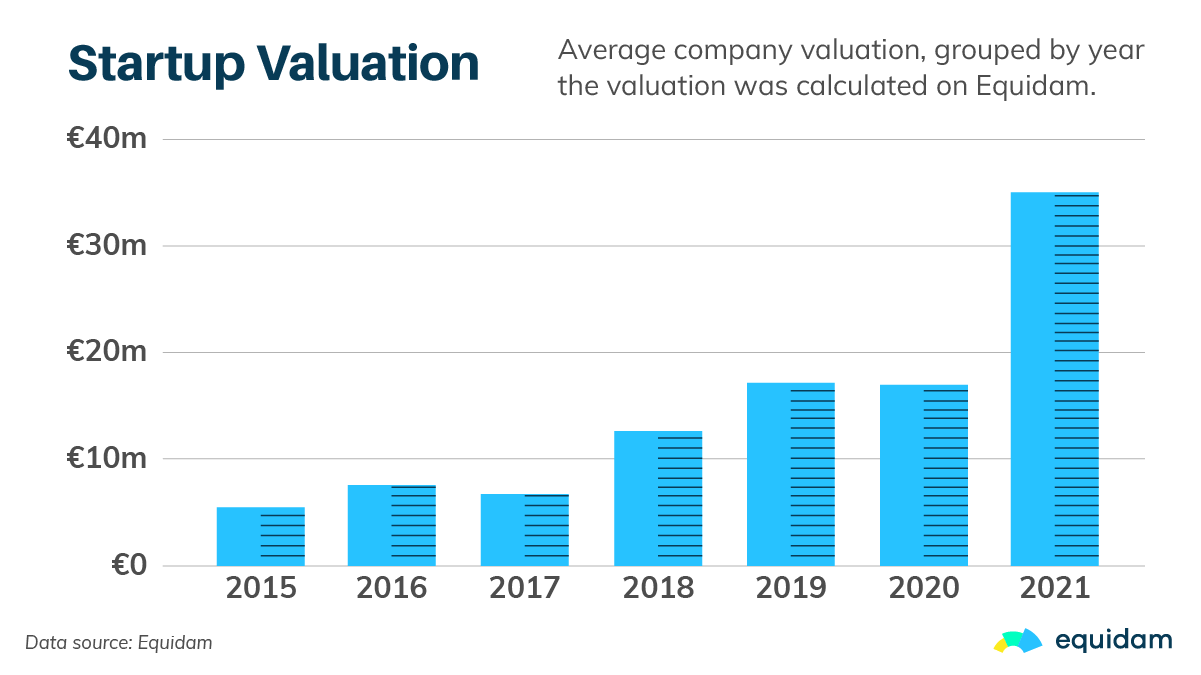
Venture funding surged. Investment levels reached record highs, startups raised capital at unprecedented speeds, and valuations climbed rapidly.

The Arrival of Crossover Capital
One defining feature of the boom was the entry of hedge funds, private equity firms, and large asset managers into late-stage venture deals.
They brought checks so large they made traditional VCs look like they were playing with pocket change. Valuations skyrocketed. The “Unicorn” became a common sight rather than a rare beast, and companies stayed private for years, fueled by an endless supply of cheap cash.
The Correction That Followed
The music stopped in 2022. Inflation arrived, interest rates climbed, and the public markets took a sledgehammer to tech stocks. The “easy” money disappeared overnight.
Today, the industry is in a period of intense soul searching. Investors have now moved beyond “correction” talks. They are now wondering if the hyper-inflated model of the last few years was a glimpse of the future or just a giant, expensive mistake.
4. The Civil War Inside the Asset Class
There is indeed a debate going on among VCs today.
Some believe the model has drifted away from its original strengths. Others argue the industry is simply evolving to match the scale of modern technology.
Ultimately, the question that needs to be asked is this:
Can venture capital scale without losing its soul?
Perspective 1: Venture Capital Has Become Too Institutionalized
On one side are the purists. They argue that venture has become “Institutionalized.” When a fund like a16z grows to $15 billion, it stops being about high-conviction bets on weird ideas and starts looking like a financial factory.
To return that much capital, you need massive, predictable winners. This creates a subtle form of risk aversion where investors favor founders who “look the part” and business models that follow a known playbook.
It is pattern matching disguised as insight. They worry we have traded raw intuition for process-driven safety.

Perspective 2: Venture Capital Must Scale
On the other side are the pragmatists who say the venture capital industry simply had to grow up.
The problems we are solving today are just bigger. You cannot build a foundational AI model or a climate tech breakthrough with a small check and some advice over lunch.
Many emerging fields now require far more capital than earlier generations of startups. Artificial intelligence infrastructure, advanced semiconductor design, climate technology, and biotechnology involve longer development cycles and significant upfront investment.
The structure of technology companies has also changed. Successful startups increasingly remain private for longer periods, raising multiple rounds before considering public markets.
Venture firms have responded by expanding their role from early investors to long-term capital partners that support companies throughout their growth and are becoming “platforms” that provide recruiting, policy experts, and global networks.
In this view, the venture platform is a necessary tool for a more complex world.
The tension lies in the middle. We are all trying to figure out if you can run a billion-dollar financial machine while still maintaining the gut-level risk tolerance that built this industry in the first place.
5. The Value-Add Arms Race
For much of the industry’s history, venture firms operated as small partnerships focused primarily on selecting investments and advising founders. It was a “pick and advise” model.
But as capital became a commodity, the top firms realized that money alone wasn’t enough to win the best deals. If five different firms are offering the same valuation, why should a founder pick you?
The answer was the Service Layer. Venture firms began transforming from small partnerships into massive operating platforms. They stopped being just investors and started being company builders. They built dedicated teams for:
Talent: Recruiting the first ten engineers or a seasoned COO.
Go-To-Market: Helping a technical founder figure out how to actually sell to enterprises.
Networking: Facilitating warm introductions to other investors or potential partners.
Policy: Navigating the regulatory minefields of fintech, healthcare, and AI.
Winning the Term Sheet War
Most VCs aren’t doing all this because they are altruistic. This is about survival. It’s about competing.
Today, the most sought-after founders often have ten term sheets on their desk at any time. To win, a firm has to prove they can de-risk the company’s future.
We are seeing a power-law dynamic play out among the firms themselves. The “Alpha” firms, which are the ones with the biggest platforms and the best networks, are able to attract the strongest founders.
Those successes reinforce their reputation, making it even easier to win the next big deal. What started as a few guys in a room has become a global network of operators, lobbyists, and recruiters, all working to ensure their portfolio companies don’t just exist, but dominate.

6. What the Future Holds for Venture Capital
Venture capital has never evolved in a straight line. We’ve had periods of explosive growth followed by long winters of reflection.
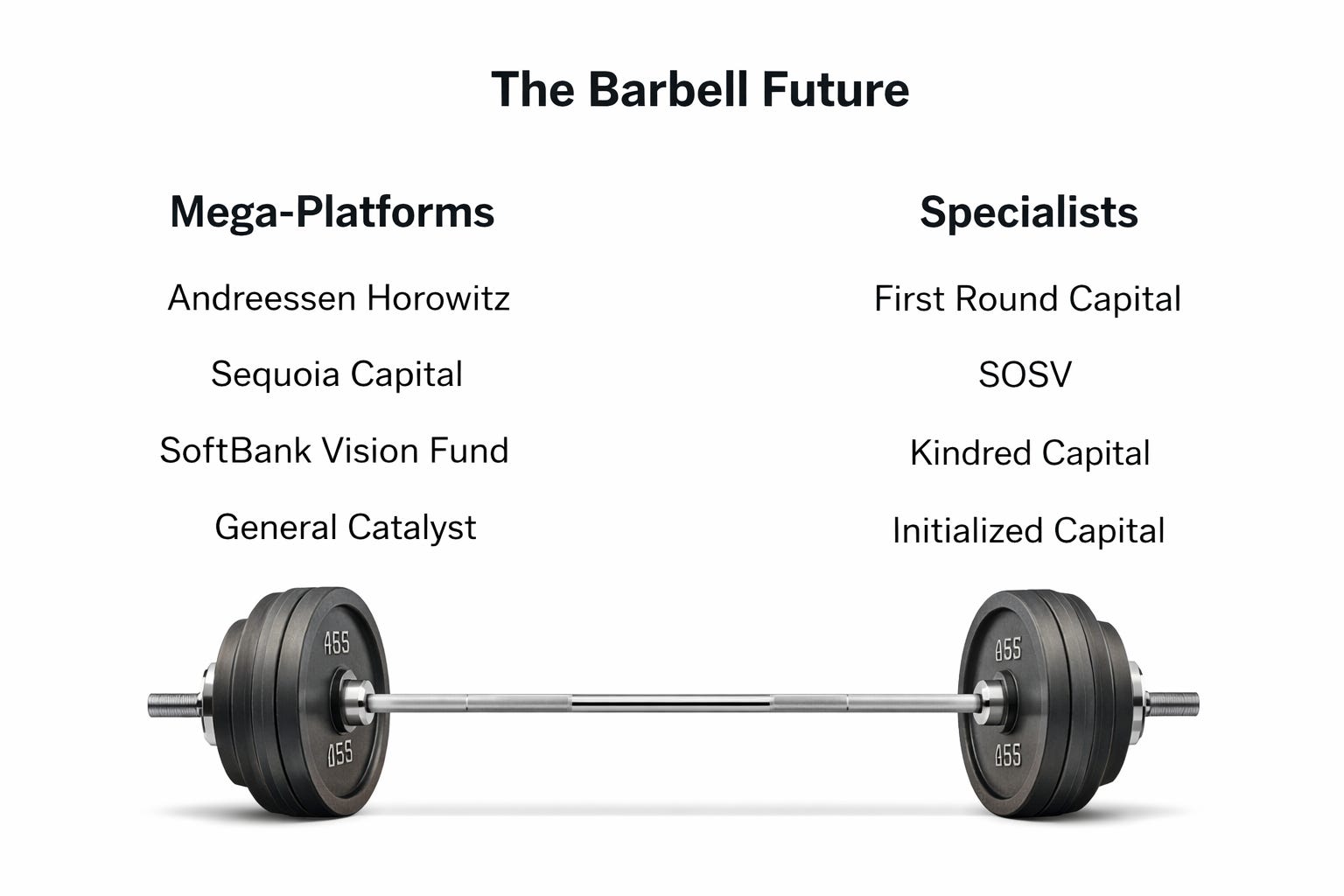
Right now, it feels like the industry is splitting into two very different worlds, a “barbell” effect that will likely define the next decade.
A Barbell Industry
At one end of the barbell, you have the Mega-Platforms. These are the global institutions that operate across every stage of a company’s life. They have the billions to fund massive AI infrastructure and the massive operating teams we just discussed.
They are the “safest” bet for a founder who needs a global machine behind them.
At the other end, we are seeing the return of the Specialists. These are smaller, leaner funds that look more like the “cottage industry” of the 1960s.
They don’t try to be everything to everyone. Instead, they focus on a single niche. Maybe it’s bio-manufacturing, or seed-stage startups in Latin America, or a specific flavor of open-source software.
They win because they know their world better than any generalist ever could.
Liquidity and the AI Acceleration
Besides the structure of the industry, its mechanics are changing too.
As companies stay private longer, the “IPO or bust” mentality is starting to fade. We are seeing the rise of secondary markets, where employees and early investors can sell their shares without waiting ten years for an exit. This keeps the ecosystem fluid even when the public markets remain frozen.
Finally, we have to talk about AI. If artificial intelligence can automate 80% of what an engineering team does, the cost to start a company drops toward zero.
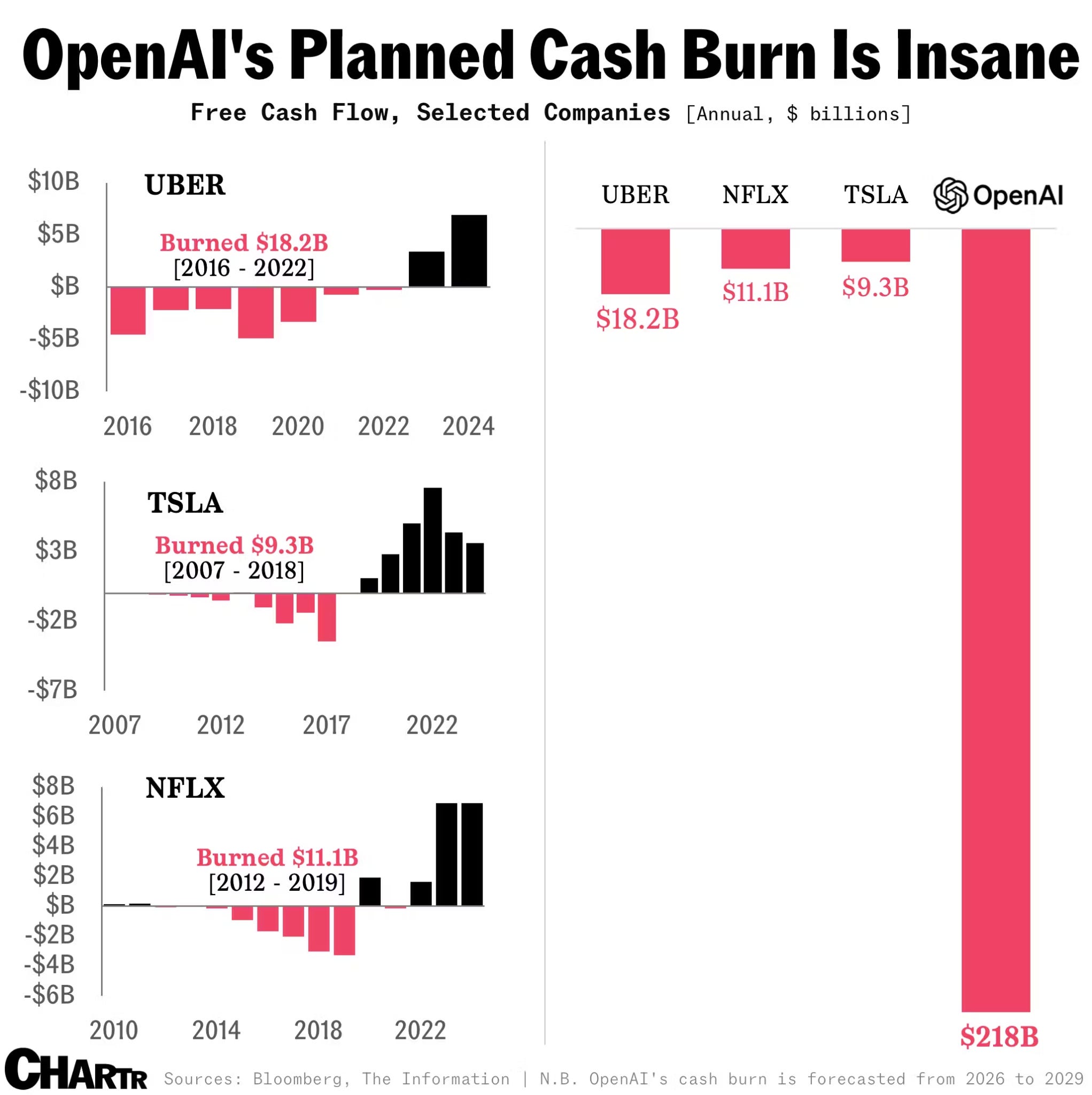
We might see an explosion of “micro-startups” that need very little capital to reach millions in revenue. Conversely, the companies building the models themselves will need more capital than anything we’ve seen before.
At the end of the day, venture capital isn’t going away, but it is shedding its old skin. The core purpose remains the same. The firms that win are the ones who are able to fund the uncertain future before the rest of the world catches on.
7. Why Venture Capital Still Matters
For all the noise about bloated funds and broken models, the fundamental reason venture capital exists hasn’t changed. Banks and public markets are built to reward the past. They crave spreadsheets, collateral, and the safety of what we already know.
But innovation is inherently fragile and often looks like a mistake until the moment it becomes inevitable. This industry is the only mechanism we have designed to absorb the risk that traditional finance will not touch.
We will probably see funds fail and cycles turn, but the core engine is permanent. As long as there is a founder with a wild idea and zero collateral, there will be a need for conviction capital.
Venture is the bridge between a fragile “maybe” and a global reality. It is how we fund the future before the rest of the world even knows it is coming.
The VC model is definitely changing, per your point.
VCs are also taking on riskier bets than before on defensetech, deep tech etc. boosted in confidence by both the recent AI returns and the widened infrastructure with media arms, hiring support and political 'ins' in some case which pushes their portfolio companies....almost like the National Labs which used to be and still are the OG VCs for the highest risk, long term foundational tech.
Check out my latest post! I share monthly insights on emerging life sciences venture trends, investment themes, and industry shifts that I’m seeing firsthand through my role working at the intersection of biotech, capital, and innovation.
https://adamorogers.substack.com/p/the-new-biotech-founder-why-the-future?r=86j1yb&utm_campaign=post-expanded-share&utm_medium=web