

Venture Capital’s Repeating Mistakes

When John Doerr first sat across from Larry Page, he asked how large Google might one day become. Page told him $10 billion.
Doerr, already among the most accomplished investors of his generation, assumed Page meant market capitalization and pushed back that a billion dollars sounded more realistic.
Page had actually meant $10 billion in annual revenue, and even that turned out to understate things.
Doerr wrote the check anyway and earned a fortune, and yet in the room he underpriced the winner by an order of magnitude while looking straight at it.
If the man funding Google could misjudge Google that badly and still prosper, then the useful subject is not the calls great investors got right but the ones they got wrong, and whether the same instinct keeps resurfacing across decades in the venture capital industry.
Well, it does resurface constantly. These are timeless lessons.
This list contains some of them that do most of the damage, and each comes down to the same reflex of pricing whatever sits in front of you rather than the capability that decides what it eventually becomes.
together with Alumni Ventures:
Doerr was in the room for Google, and even he underpriced it. Most investors never get in the room at all.
Invest in High-Potential Startups Like These

Alumni Ventures is giving readers early access to high-potential startup opportunities across today’s most active sectors, co-invested alongside name-brand VC firms like Andreessen Horowitz (a16z), Bessemer, & Y Combinator.
You get:
▫️ Curated deal flow of high-potential startups
▫️ Invest alongside well known lead venture firms in these deals
▫️ No cost to see deals
▫️ No obligation to invest
Table of Contents
1. Mistaking a Crowded Market for a Finished One
2. Labeling a Founder Instead of Fixing What Is Broken
3. Reading Negative Margins as a Verdict
4. Underestimating How Fast a Winner Compounds
5. Missing the Second Business Forming Inside the First
6. Harry Stebbings and the $750 Million He Talked Himself Out Of
7. Winning the Entry and Losing the Compounding
1. Mistaking a Crowded Market for a Finished One
A crowded market and a closed one can look almost identical from the outside, and confusing the two has cost investors far more than any single bad check ever could.
In early 1999, Bessemer’s David Cowan had a chance to meet two Stanford students building a search engine, and his recorded reaction was that he wanted out of the house without going anywhere near their garage. He never took the meeting, and the students were Larry Page and Sergey Brin.
His instinct was not careless. At that point Yahoo and MSN together controlled the large majority of search traffic, so another search engine looked like a settled contest, and settled contests are usually where capital goes to die.

The split came down to method rather than information. Cowan pattern-matched, reasoning that because a search engine already existed the market was taken.
Doerr at Kleiner Perkins and Michael Moritz at Sequoia worked backward from the binding constraint and asked what the real battleground actually was.
If search quality rather than distribution decided the winner, and the incumbents were structurally unable to compete on quality, then the size of the existing crowd was beside the point.
They reached exactly that conclusion and co-invested twenty five million dollars in June 1999, with Moritz stating plainly that Google should become the gold standard for search. Cowan settled his verdict about the market before ever testing what the fight was really about.
Takeaway: The reflex to pass because someone already does this is precisely the moment to stop describing the room and start naming the constraint, and that same discipline gets tested again the instant a founder walks in.

2. Labeling a Founder Instead of Fixing What Is Broken
Most passes on great founders come down to a label that felt like analysis and was really just a place to stop looking.
Cowan also turned down PayPal’s Series A, summarizing the team as rookies facing a regulatory nightmare.
Actually, both halves were accurate, since Peter Thiel and Max Levchin had never worked in financial services and the company spent years fighting money transmitter battles serious enough to have ended it.
The trouble is that a true description of a founder is not the same as a verdict on them, and the investors who got these calls right treated the flaws as work to be done rather than reasons to leave.
Real obsession and first principles thinking are the rare ingredients, because you cannot install them in someone who lacks them, whereas missing experience can usually be hired around.
Don Valentine understood this when he funded Apple in 1977. His own memo openly recorded doubts about the management team, and he later admitted that plenty of investors would not even talk to Apple because Steve Jobs struck them as odd. Rather than walking away, Valentine made Mike Markkula’s involvement as a seasoned operator a condition of the money going in.
This is the same playbook Doerr and Moritz ran at Google, insisting on an experienced chief executive as part of the deal, which took 2 years and real founder resistance before Eric Schmidt arrived in 2001. Brin later conceded, without much enthusiasm, that they had needed adult supervision.

Cowan never got that far with PayPal because he stopped at the word rookie, and a label is where lazy diligence ends and the real work should begin.
Takeaway: Once an investor does believe in the people, the harder errors migrate to the number attached to them.

3. Reading Negative Margins as a Verdict
Negative margins are the most respectable looking reason to pass, and also the one that separates a real discipline from a lazy one, because the same red ink can mean two opposite things.
In 2006, another Bessemer partner, this time Byron Deeter, test drove a Tesla Roadster, put down his own deposit, and then passed on the Series C on the grounds that Tesla was a negative margin company.
And that was objectively true, given a loss of roughly $30 million that year against almost no revenue.
What his arithmetic could not capture was that the shortfall would eventually be closed by businesses that were not even on the table in 2006, including energy storage and, in the view of many analysts today, self driving software.
His math on the car in front of him was correct and told him nothing about businesses nobody had proposed yet.

Sometimes the red ink is the whole story and never washes out. WeWork grew like a software company and was priced like one while its balance sheet carried tens of billions in long dated lease obligations against a fraction as much committed revenue, a leasing business wearing a technology multiple.
Masayoshi Son, who had backed it near a $47 billion valuation, later admitted he had been foolish.
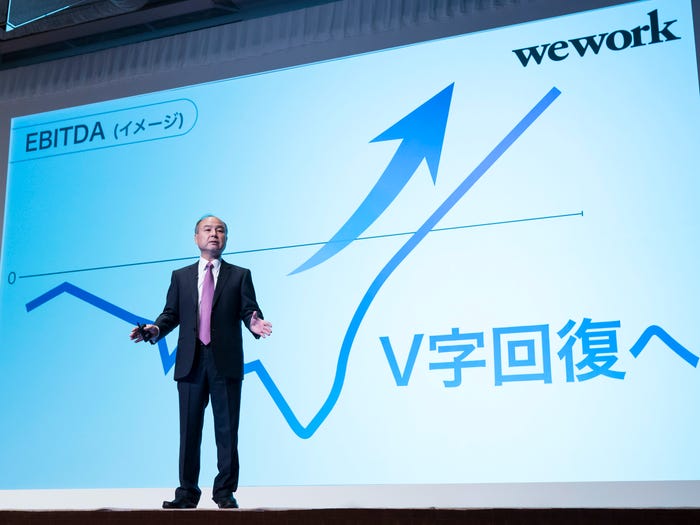
The uncomfortable part is that a stage and a structure look identical on the spreadsheet, since the losses read the same either way.
Takeaway: Telling a Tesla apart from a WeWork is a judgment about what the losses are buying rather than a calculation, and the math never settles it. That same difficulty of reading the capability underneath a number returns in a more expensive form once the business is clearly working.
4. Underestimating How Fast a Winner Compounds
Human intuition is calibrated for a slower world than the one venture actually operates in, and every technology cycle resets the speed limit before anyone updates their estimate.
Bessemer’s Jeremy Levine met Brian Chesky in January 2010, during Airbnb’s first $100k revenue month, and the roughly 33x multiple Chesky wanted earned the verdict crazy.
February revenue reached $200k, March reached $300k, and by April the company raised again above the price Levine had refused, except on a lower effective multiple, because revenue had tripled faster than the valuation moved.
The number that looked insane was actually conservative, and the market corrected him before he could correct himself.
Growth accelerates with each cycle which is one reason how investors price rounds only gets harder.
ChatGPT reaching 1 million users in 5 days, which Reuters reported as the fastest consumer ramp yet, made a mockery of every earlier benchmark. Then Threads broke it with 1 hour.
Most of these are also network businesses, where value tracks the connections between users rather than the headcount, so doubling the users can roughly quadruple the value.
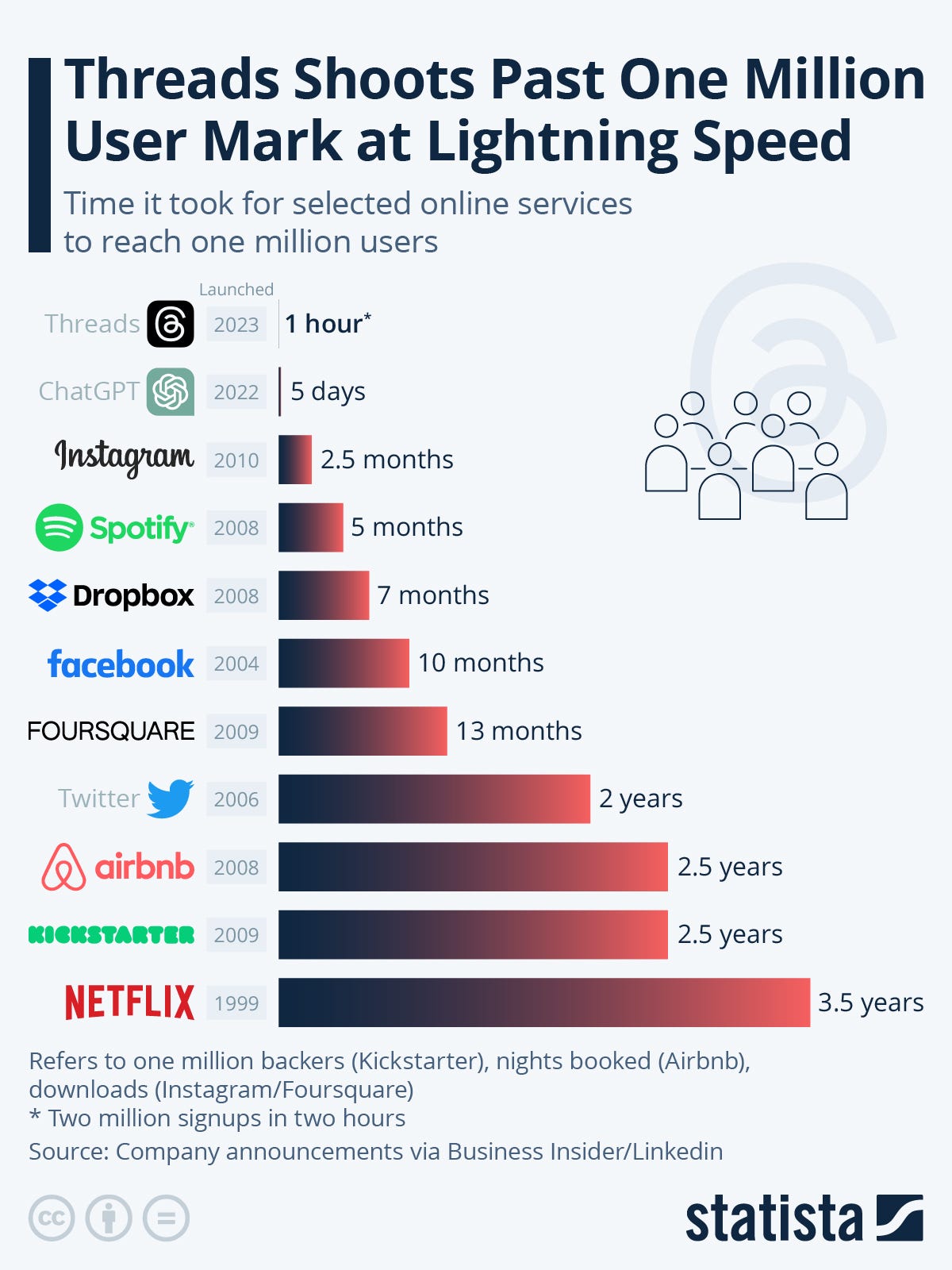
Takeaway: The investors who missed these companies were not bad at arithmetic. Their instincts were tuned for a linear world, and the blindness only deepens when the growth that justifies the price comes from a business that does not exist on the day of the deal.
5. Missing the Second Business Forming Inside the First
The deepest pricing error is not misjudging the business you can see but failing to imagine the one that has not surfaced yet, or that is already growing invisibly inside the consolidated numbers.
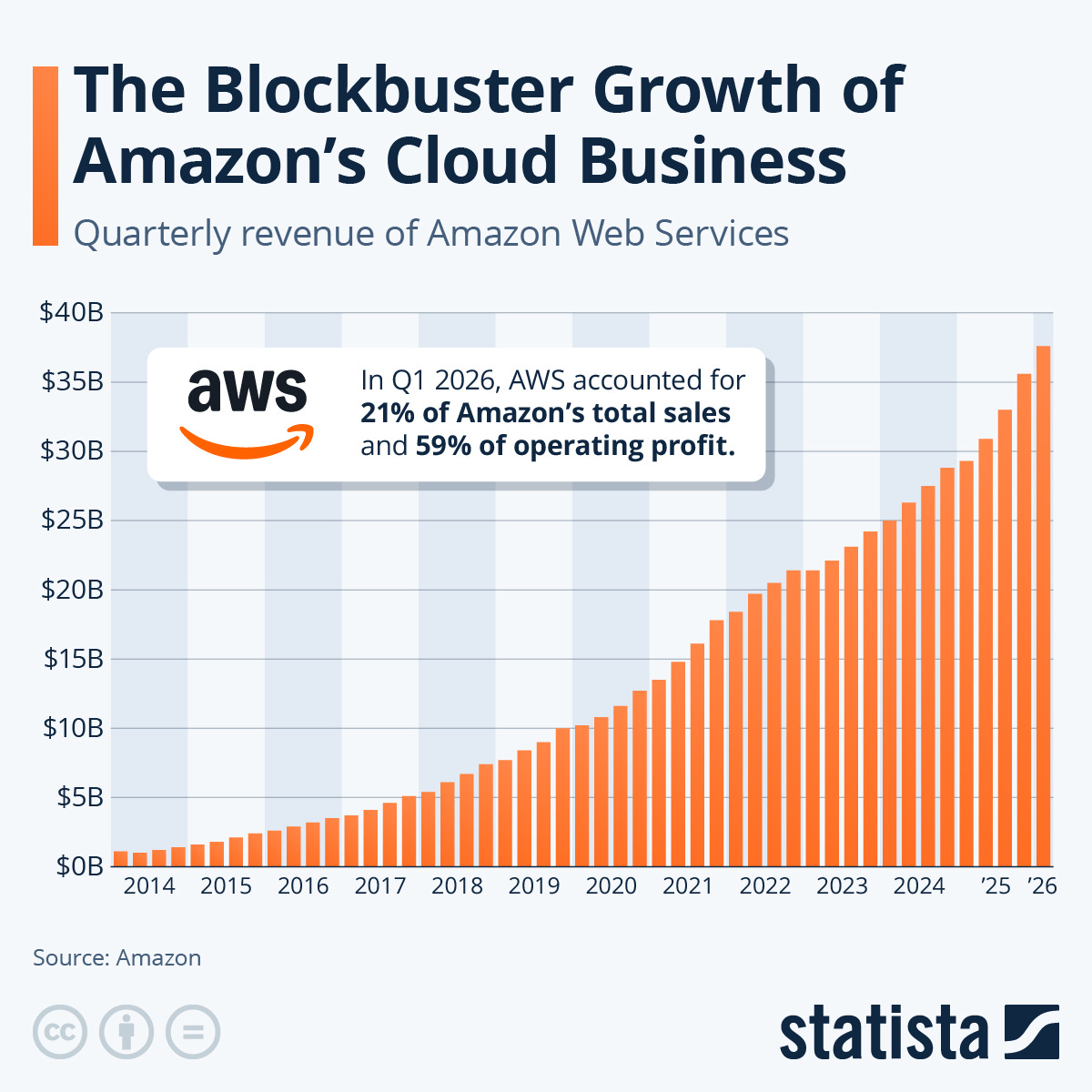
Amazon Web Services launched in 2006 with about $21 million in revenue, buried inside a company already doing more than $10 billion, and Amazon did not break it out as its own segment until 2015.
By then, AWS was generating billions, growing around 70% a year, and would soon produce most of Amazon’s operating profit, while the retail business everyone actually argued about stayed thin margined throughout.
Nvidia ran the same play in slow motion and in plain view. Its 2006 decision to let gaming chips run general purpose computing was treated by Wall Street as an expensive distraction for most of a decade, until generative AI turned that distraction into the most valuable franchise in semiconductors, with data center revenue passing gaming and the market capitalization crossing a trillion dollars in 2023.
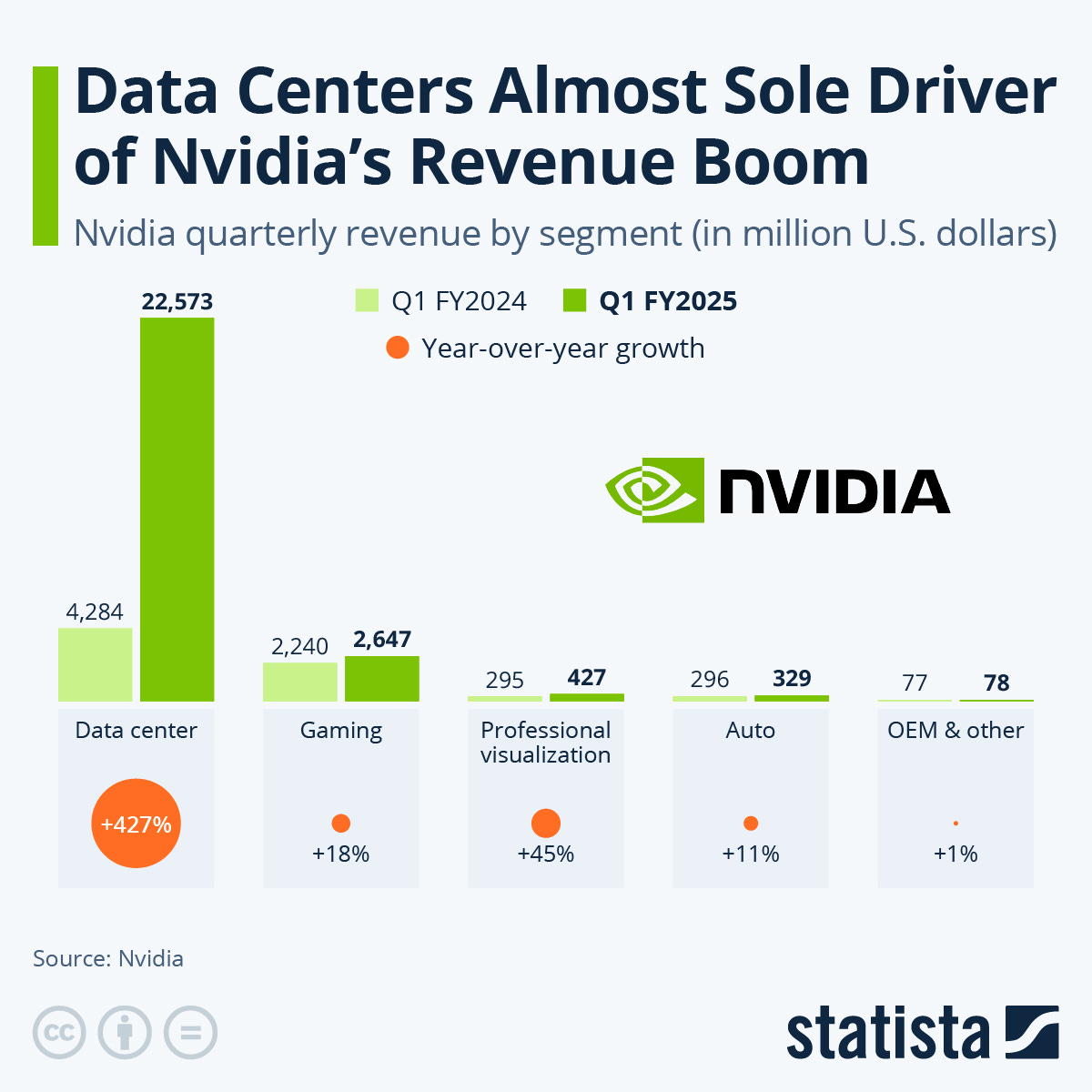
The instrument never changed, only what the market was eventually asked to compute on it.
The honest admission underneath all of this is that naming the specific second business ahead of time is usually a losing game, since almost nobody could have pointed at AWS inside a 2003 bookstore or at Nvidia’s future inside its 2007 gaming numbers.
Innovation of this kind often looks like a mistake until the moment it becomes inevitable.
What an investor can assess without predicting the exact unlock is asymmetric upside, meaning whether the underlying capability points at more than one surface, and whether the team has already shown it can find a second act.
Bezos had expanded past books long before AWS existed, and Jensen Huang funded a decade long, unpriced bet on general computing while still running the gaming business well enough to pay for it.
Takeaway: Track record is a real, observable signal, visible well before any specific unlock lands in a filing. The strange part is that even investors who see all of this still find a way to lose the winner, after they are already right.
6. Harry Stebbings and the $750 Million He Talked Himself Out Of
Every case above comes from investors who never volunteered a play by play of their own reasoning, which is what makes this one rare.
The $500 Million Lesson About Price
In October 2025, Harry Stebbings, the founder of 20VC, was already decade into investing and running one of the more widely followed funds and shows in the business, posted what he called his single biggest lesson from 10 years of the work, which is the following:
Never let deal mechanics like round size or price stop you from doing an early stage deal you believe in.
The story behind that rule is that 2 close friends introduced him to Hjalmar Nilsonne and the company that became Neko Health. He even sat through a fundraising session before there was much to fund, and then he passed on price.
By his own account the call cost him around $500 million in gains, as Neko went on to raise roughly $700 million and, in his words, become the category leader.
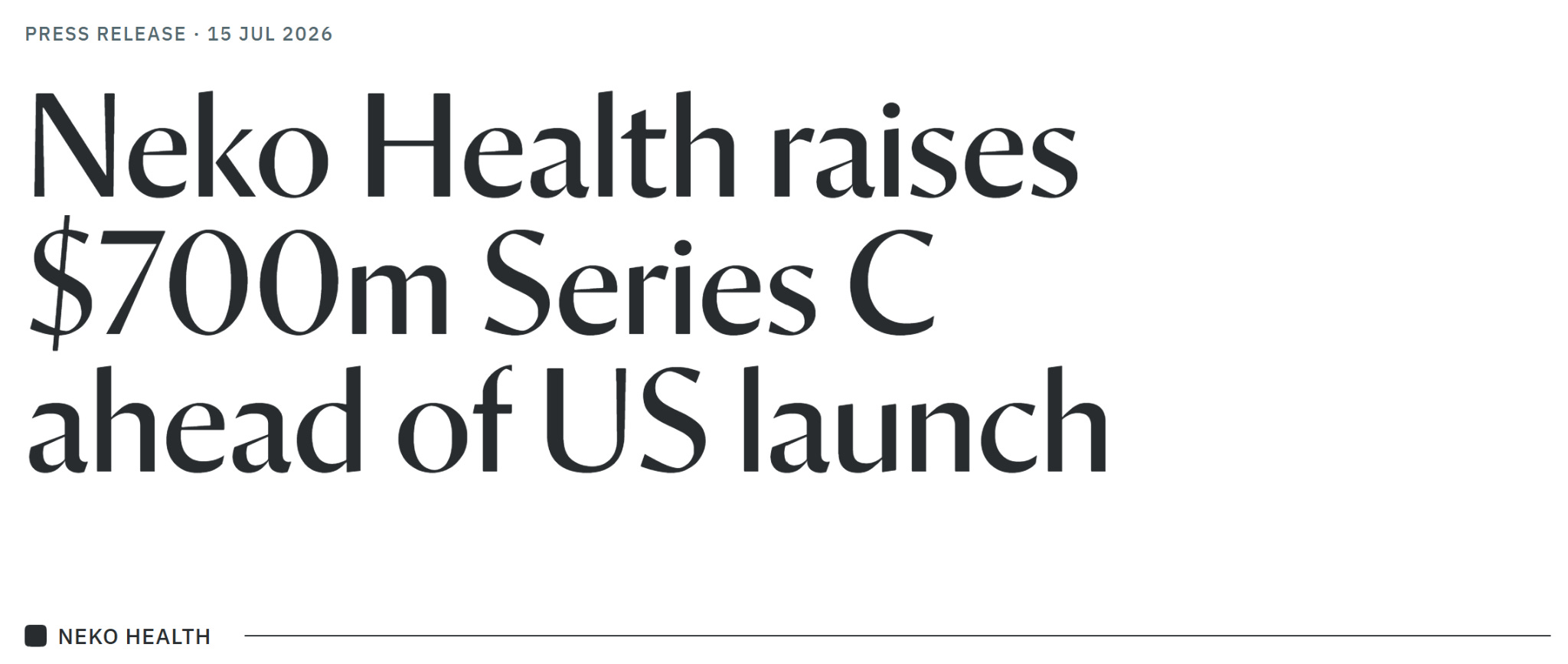
What lifts this above a simple war story is where he placed the error. He did not doubt the founders, and he did not doubt the market, since he believed Neko could reshape healthcare and even help people like his own mother manage MS.
He talked himself out of the best deal in front of him purely over the entry price, which is the exact failure the pricing sections above describe, narrated for once by the person who lived it.
The price that felt too high in the moment became the most expensive round he never joined.
The $250 Million Lesson About Markets and Founders
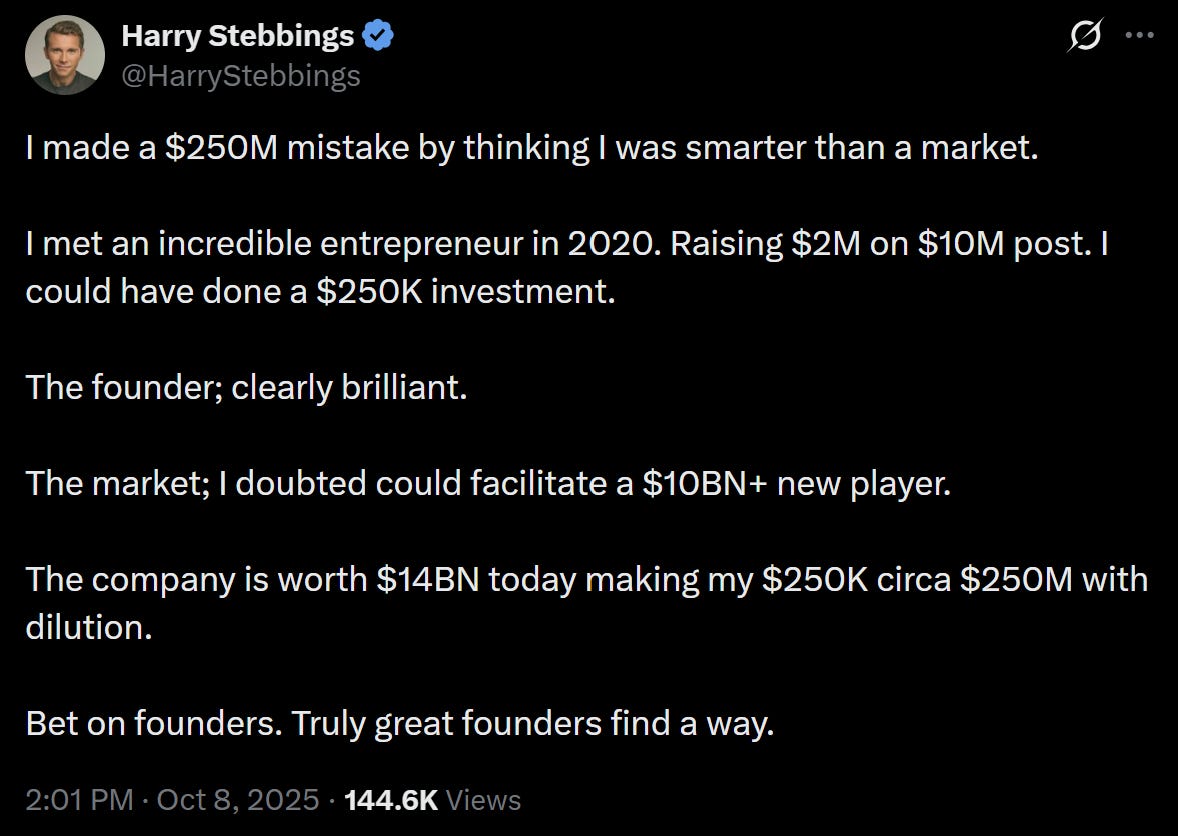
A second miss, which he valued at about $250 million, started the same way and broke differently.
He met a founder he called clearly brilliant, raising $2 million at a $10 million post-money valuation, with room for a small check. He passed again, and this time the reason was his read on the market rather than the price, since he doubted the category could support a new $10 billion player.
That company is now worth roughly $14 billion today, which by his own math would have turned a $250 million check into something close to a $250 billion after dilution.
His own summary is worth borrowing, since he described the error as thinking he was smarter than a market. The founder was never the doubt, the ceiling he had imagined for the category was, and the category declined to respect it.
Takeaway: Bet on founders on the theory that great ones find a way, which is the same conclusion Don Valentine and John Doerr reached decades earlier from the winning side of a check. When a market and a founder both disagree with your model, the model is usually the part that is wrong.
7. Winning the Entry and Losing the Compounding
Almost every famous venture mistake is a story about entry, about the meeting someone skipped or the price they would not pay, and the most common error among otherwise excellent investors is not there at all.
Venture returns come far less from which companies an investor gets into than from how much of the winners an investor keeps, which is why in Sebastian Mallaby’s history of the industry the whole business hangs on a handful of positions carrying entire funds.
The distance between a good fund and a legendary one is often a company the investor owned and under owned, rather than one they missed at the door.
This error is easy to miss because it never feels like a loss. Skipping your pro rata in the one company that is finally working, usually because it now looks expensive, reads as prudence in the moment.
Selling into secondary the instant liquidity appears, trading a position that might return the fund many times over for a clean and unremarkable multiple, books as a win on that year’s statement.
Some of the largest late stage fortunes in this industry were built by buying exactly what earlier and supposedly smarter investors were eager to sell.
When Yuri Milner’s DST invested in Facebook in 2009 near a $10 billion valuation, much of what it bought was stock that earlier holders were glad to hand over, and that willingness to let the compounding run is a large part of why DST won.
For decades the standard 10 year fund clock made this embedded in the model, forcing firms to distribute their winners at the public offering and cap their best outcomes by design.
That problem is real enough that in 2021 Sequoia restructured into an open ended, evergreen fund so it would never again be forced to sell the next Google the year it went public.
When one of the most disciplined firms alive rebuilds its entire structure to stop making a mistake, the mistake deserves to be taken seriously.
The discipline mirrors the pricing sections above, since the instinct that a compounder is too expensive to buy more of is the same faulty exponent that made Airbnb look crazy at a hundred thousand dollars a month.
Getting in buys a seat, while owning enough of the winner and holding long enough to let the power law reveal itself is where the returns live.