

James Wise met Alex Kendall in his room at Cambridge, while Kendall was still a PhD student working on computer vision. Balderton backed the company that came out of that meeting, Wayve, at its Series A in 2019. In February 2026 the firm co-led Wayve’s $1.5bn Series D at an $8.6bn valuation, and since September Uber riders in London have been able to book a car driven by Wayve’s AI.

James has been a partner at Balderton Capital for ten years. The firm led Revolut’s 2015 seed round with a £1M check at a £6.7M valuation, and Dealroom now puts that stake at about $8.3bn. He also chairs the UK government’s £500M Sovereign AI Unit, which started investing in British AI companies this year.
Guillermo Flor and I sat down with him at Slush in Helsinki this week. His filter for founders fits in one word, obsession, and he explained it with a Japanese technique from Toyota’s factories.
The answer that surprised me most was about money. James thinks European founders still feel awkward saying they want to get rich, and he wants that shame gone, because customers paying you is the best proof you are solving something.
We cut the interview into 9 clips across 7 topics. Each one sits below with the context you need and links to the VC Corner and AI Corner resources that go deeper on the same topic.
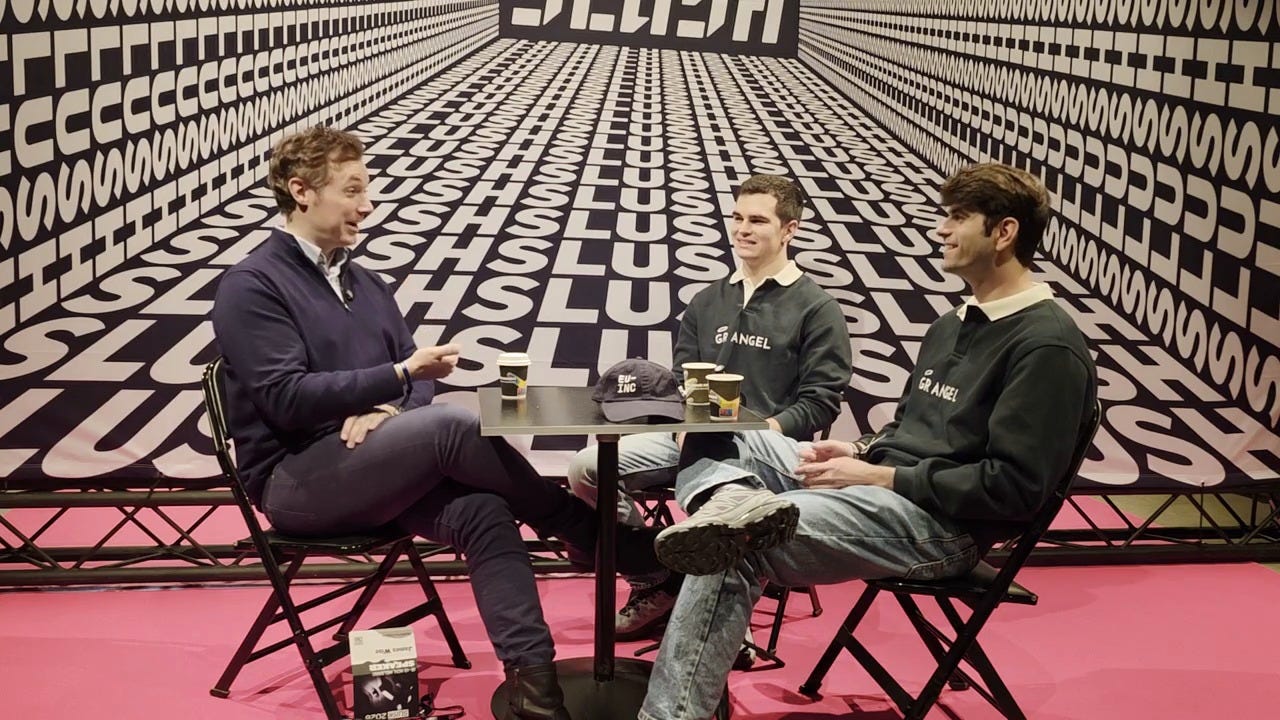
Who James Wise is
James joined Balderton in 2013 and made partner in 2016, at the time one of the youngest VC partners in Europe. Before venture he worked at McKinsey and helped run one of the UK’s first social venture funds.
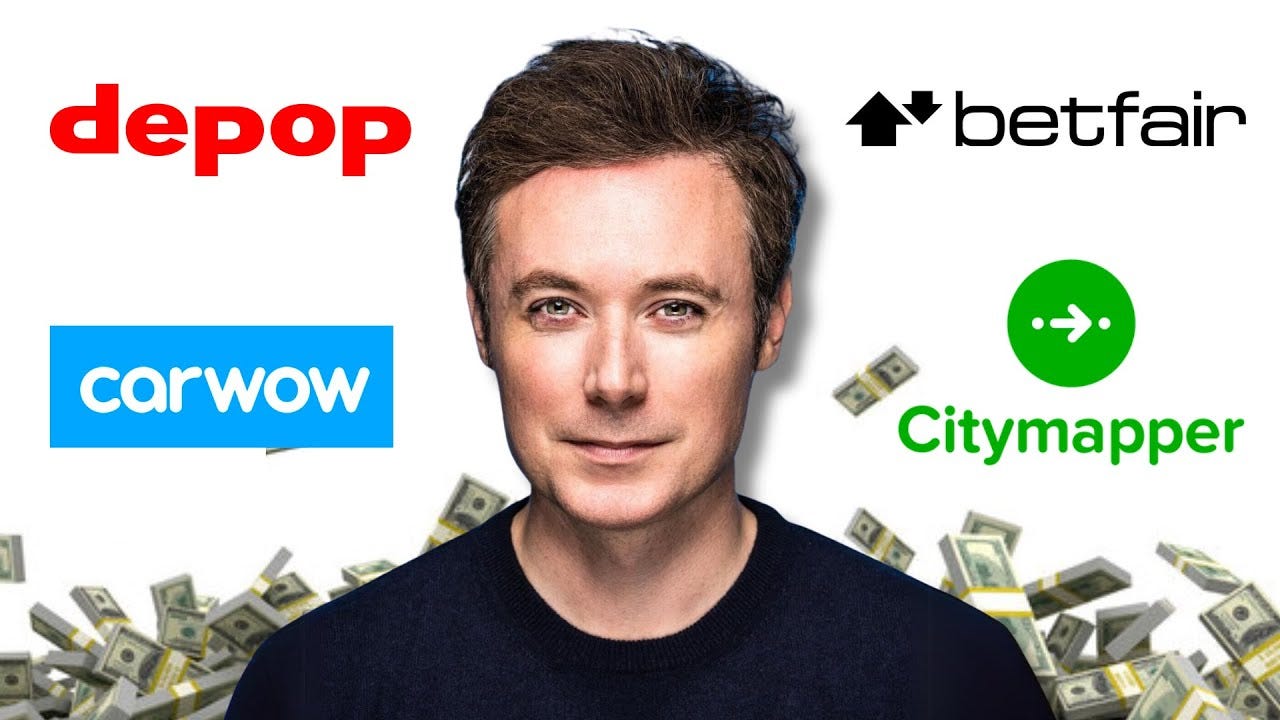
He invests across AI, sustainability, productivity and health. He has worked with Depop, which Etsy bought, and GoCardless, which Mollie agreed to buy for about $1.1bn in December 2025, plus Sophia Genetics and the energy app Tibber. Bloomsbury published his book, Start-Up Century, in 2023, and Computer Weekly ranked him second on its UKtech50 list this year.
The public role came in 2025, when the UK government picked him as the first chair of the Sovereign AI Unit. The unit launched in April with £500M to back British AI startups, and its first equity check went to Callosum. James answered the critics of that model on Sifted’s podcast, where he also named the one company he wishes he had backed.
What Balderton is
Balderton began in 2000 as Benchmark Capital’s European fund and went independent after three funds. Twenty-five years later it has backed more than 275 companies and raised $5.7bn in total, including $1.3bn in August 2024 across a $615M early-stage fund and a $685M growth fund.
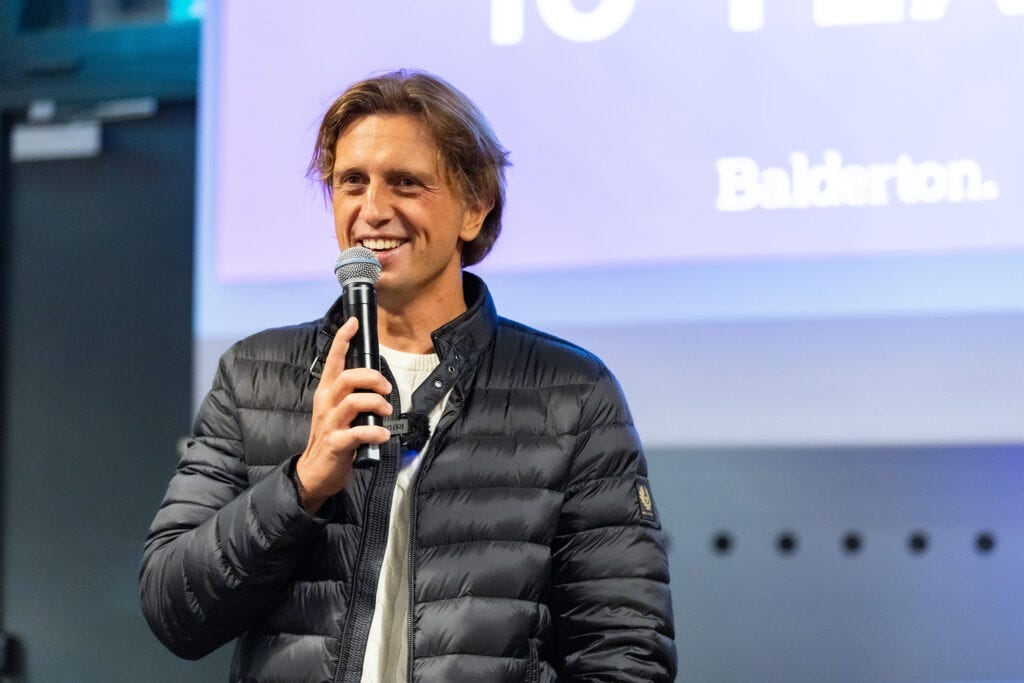
The exits read like a history of European tech: MySQL, Talend, Darktrace, Recorded Future, Peakon, Depop and THG. The newer bets lean into hardware and AI, with Wayve, the drone maker Quantum Systems, Proxima Fusion, Fuse Energy and The Exploration Company.
Revolut carries the book. Balderton wrote that 2015 check from Fund V, a $305M fund that FT sources say has returned more than 25 times its money, and it sold about $2bn of Revolut shares in 2025. A secondary sale in July 2026 valued Revolut at $115bn.
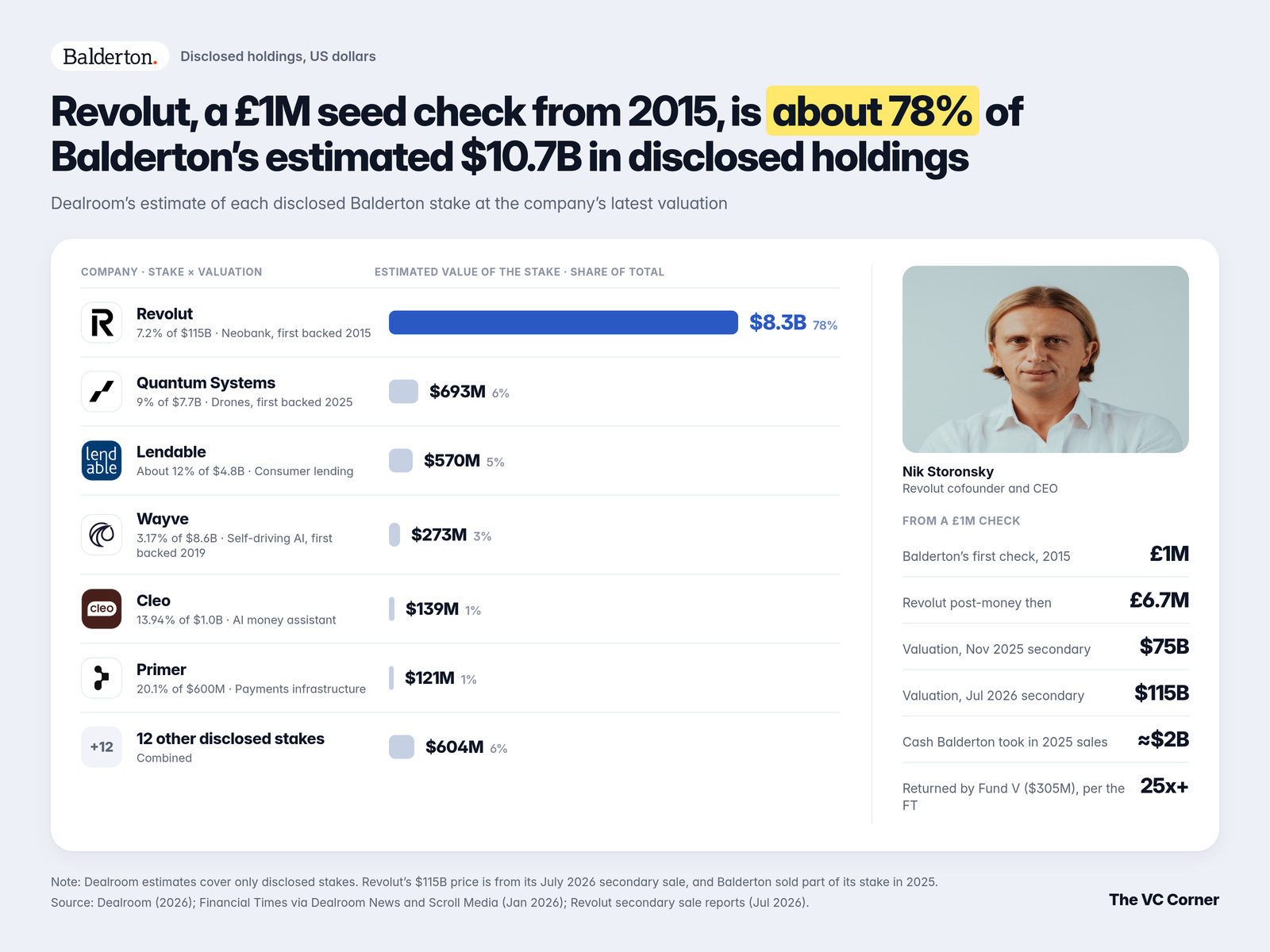
I would read the 78% with care. Dealroom counts only the stakes it can see, priced at the last round, so most of the 275 companies sit outside the total and the Revolut line rests on one secondary sale. The shape still teaches the main lesson of venture: one check from 2015 carries most of a 25-year firm. Our breakdown of the fund math most people get wrong shows why that pattern repeats at almost every top fund.
What he told us, in 9 clips
1. The one trait he screens for
James starts from the ways a company can fail. Most of them sit outside a founder’s control, like a downturn or bad timing, and he calls those “forgivable reasons.”
And the one thing I really focus on is complete obsession.
His test borrows the five whys, the technique Toyota used to trace a defect back to its root cause. He likes founders who can answer why five levels deep about their customer and their market. Obsession also shows up in small choices: the founder who goes to the industry event everyone else skips to hire an operator out of an incumbent, or who works the extra hours.
Obsession is the one founder trait an investor can check before a company has revenue or a product. Our breakdown of what top VCs check in due diligence shows how other firms run the same test.
2. Europe’s problem with wanting to make money
When James interviews people who want to join Balderton, he asks whether they want to make money. He thinks Europe handles that question badly.
His argument works even for founders driven by a mission like better banking or cheaper energy. Building a company is the fastest way to change those industries, and a company only gets big by selling something many people want to buy, or something a few people will pay a lot for.
People paying you is the best validation method.
He wants to “get rid of this shame,” and he says a company that prints money is great. If you build in the US, this will sound obvious. In Europe it still needs saying, because it changes how founders price and how they pitch.
Monzo is a good case study of a European company that got comfortable with revenue: it just posted £1.7bn in revenue, and the pitch deck that started it all is in that piece.
3. A term sheet before the company exists
James expects to do one “foundational” round this year, which means backing a team before it has started a company. He had backed the same founder once before, also at founding.
The team came out of frontier AI labs and wanted to build a specialized model, an orthogonal bet to the general models their old employers make. Balderton moved before the paperwork did.
They had negotiated their gardening leave, and then we wrote the term sheet and we wired the money the day after they formally legally set up the company.
He says Balderton has done that a few times. If you are a researcher planning to leave a lab, read how Mistral raised €105M at seed with six employees and no customers, four weeks after founding. Investors trying to find these teams before everyone else can use our AI sourcing playbook.
4. Illiquidity and patient capital
I actually think illiquidity is a feature, not a bug.
Locked-up shares give founders time to live through the down years, James says. When the venture market pulled back in 2022 and 2023, an employee who could watch the stock price dive every week would have lost motivation. Balderton sometimes pays a premium for shares that stay locked up for years.
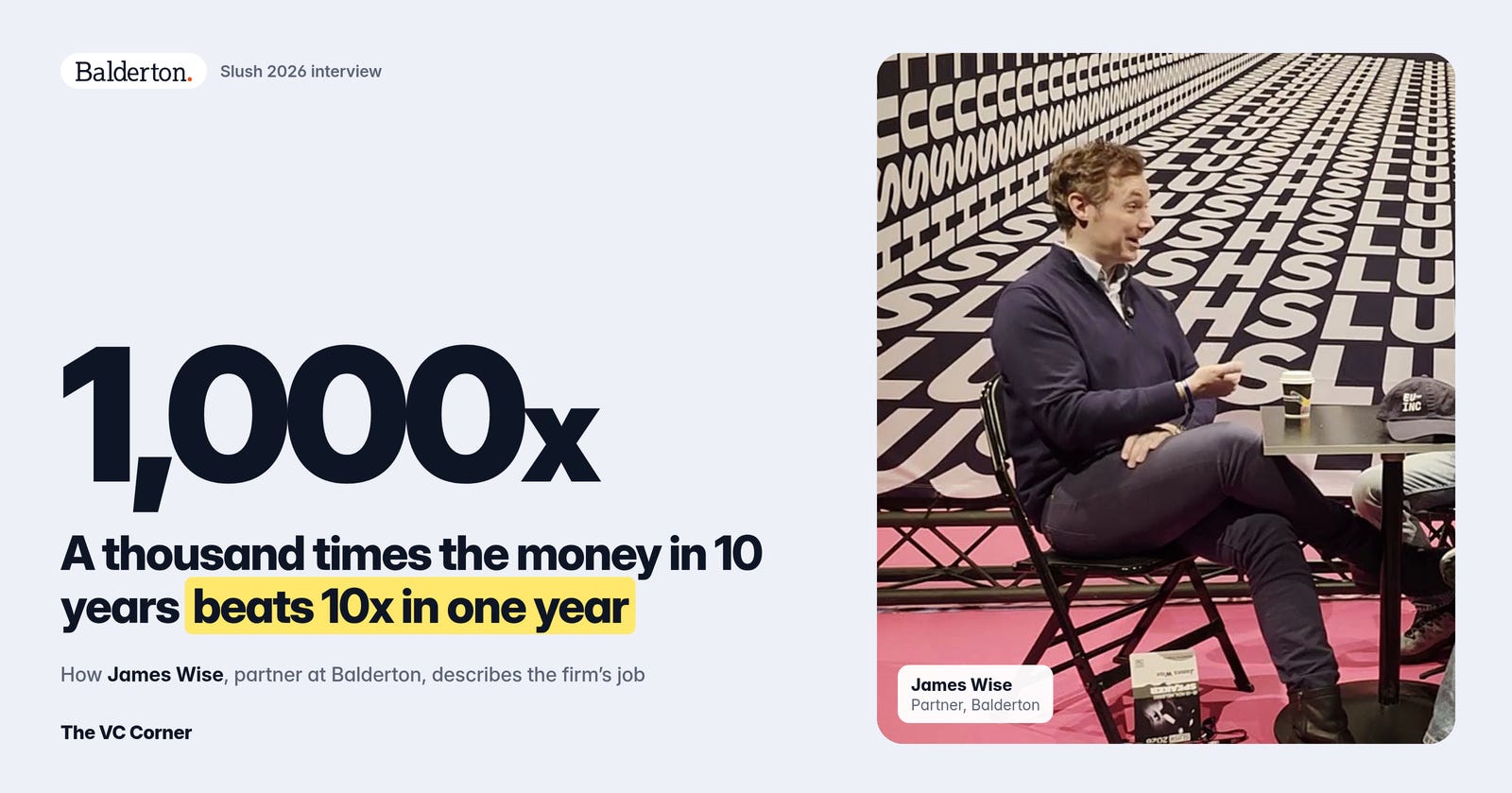
Our job is to make a thousand times return on our money over 10 years.
Patience has an end date, and Balderton reached it with Revolut, selling about $2bn of shares in 2025, ten years after its first check. That timing fits his 10-year math almost exactly.
Wayve, from a Cambridge PhD to robotaxis
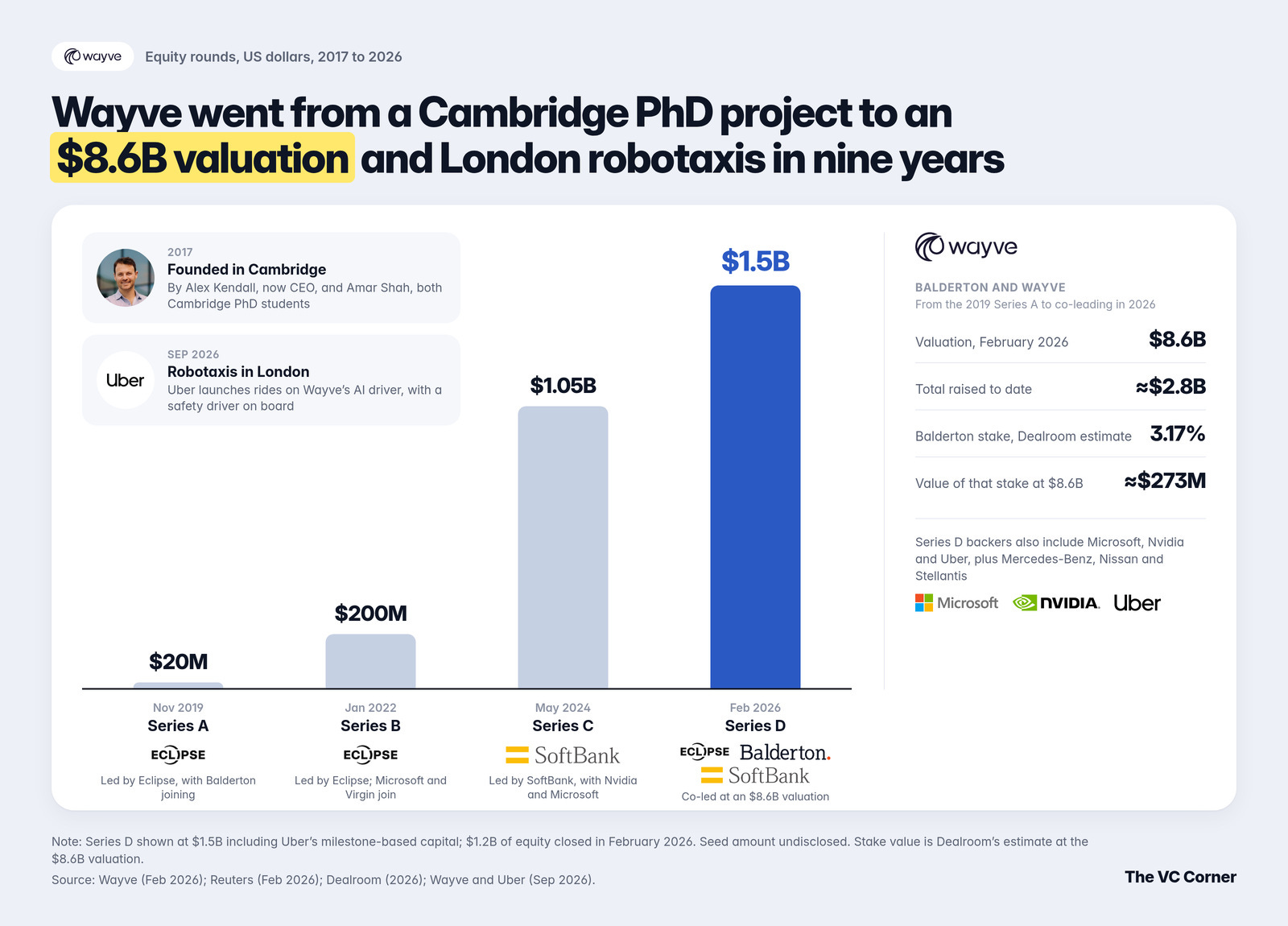
Wayve is the company James uses to explain the approach. Alex Kendall and Amar Shah founded it in Cambridge in 2017 to build self-driving software that learns end to end from data, instead of relying on expensive lidar and hand-written rules. Balderton joined the $20M Series A led by Eclipse in 2019 and backed the later rounds too.
In February 2026, Balderton co-led the $1.5bn Series D with Eclipse and SoftBank at an $8.6bn valuation, with Microsoft, Nvidia, Uber and several carmakers in the round. In September, Uber and Wayve started supervised robotaxi rides in London, with a safety driver on board. Dealroom estimates Balderton’s 3.17% stake at about $273M.
James found Kendall while reading PhD theses on end-to-end approaches to computer vision. Lidar was expensive, and he doubted autonomous driving could scale without end-to-end learning. He expected the first meeting to happen in an office and ended up in Kendall’s room at Cambridge. His Balderton partner Suranga Chandratillake lived in the city, and Suranga later wrote up how and why Balderton invested.
He describes Wayve as patient capital in practice: six years invested, and still going. For the investment side of robots and cars, The AI Corner’s physical AI investment OS maps where the money is going.
5. AI and the last mile of venture
AI has changed how fast Balderton works, James says, and every fund has it, so everyone now sees the same data and the same signals. Venture is still private equity, though, and the edge moved to the private side of the job: conversations with founders and customers, and the extra data point you pick up by going to the event or reading the Substack.
Being able to read people is something which is very difficult for AI to do.
His view is that the commodity part of the job got cheaper, which makes the human part worth more. I agree with him, and it is how we built our own Claude for investing system: let the model do the screening, then spend the saved hours with founders.
6. Where he would invest today
His answer came fast: cyber. People are changing how they use technology more than at any point in the 30 or 40 years that modern software has existed, and James says every part of security has to change with it.
A phenomenal time to be investing in cyber, sadly, because there’s so many problems.
He pointed to formal verification and smarter use of AI agents as two ways in, out of many, and said the field needs a lot more good people. Crunchbase counts $10.6bn raised by privacy and cybersecurity startups worldwide in the first half of 2026, including Cyera’s $600M round at a $12bn valuation. In Europe, Tech.eu’s cybersecurity tracker shows €2.5bn raised through November 20, more than double 2025’s €1.1bn, although it also counts defence companies like Stark and Hypersonica.
For the wider picture of where venture money went this year, read our global VC report for Q3 2026.
7. How Europe’s venture market changed since 2012
When James started in 2012, people gave him two pieces of advice: venture loses money, and anyone who makes money in it does so in San Francisco. Around that time, a pizza meetup for non-partner VCs in London drew six people, and two pizzas fed the room.
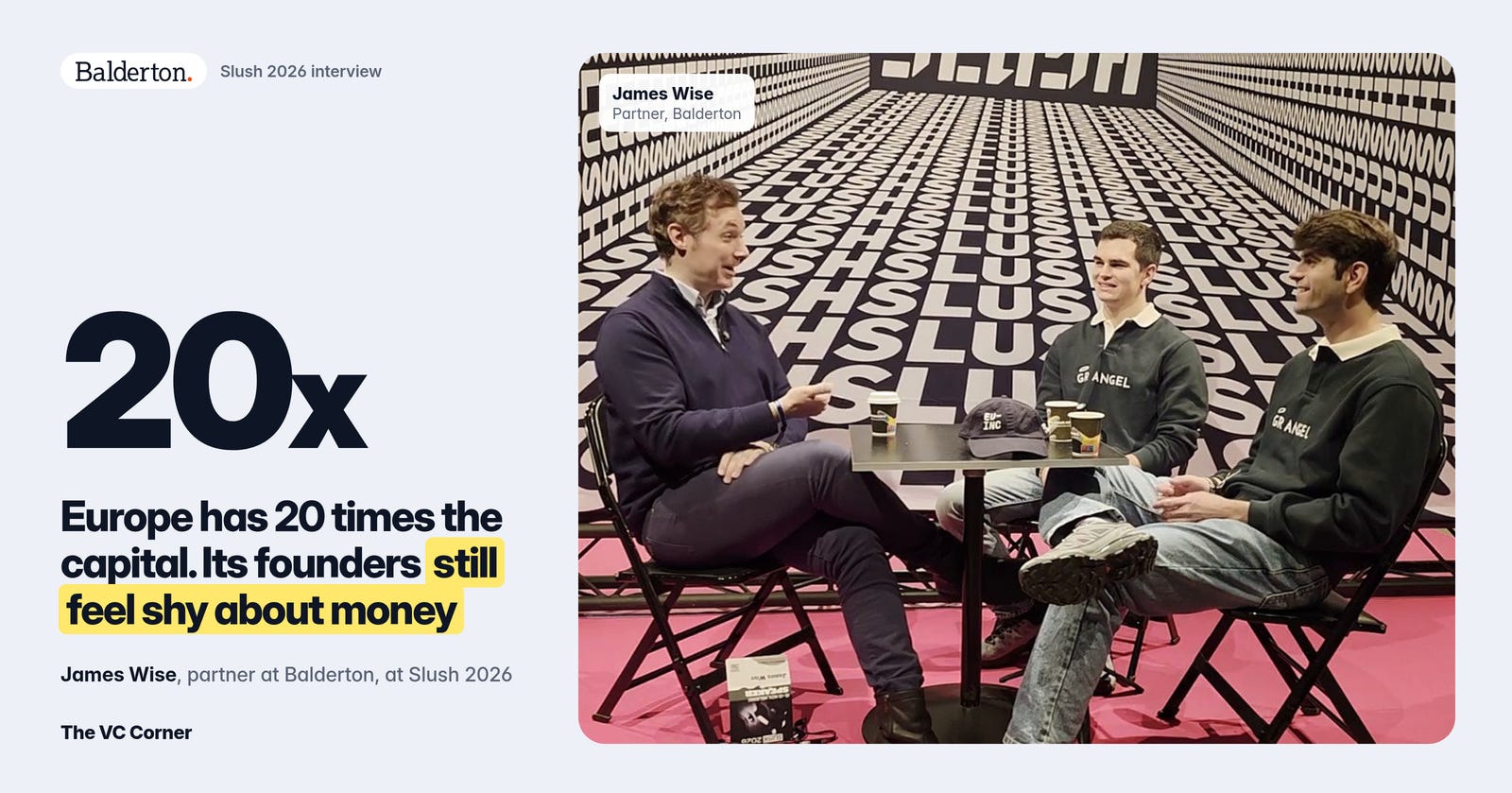
Since then, he says, the capital available from European funds has grown about 20 times, and every major international fund wants to back European founders who want to win globally. More money lets founders experiment and scale faster, and the competition for deals is a part of the job he enjoys.
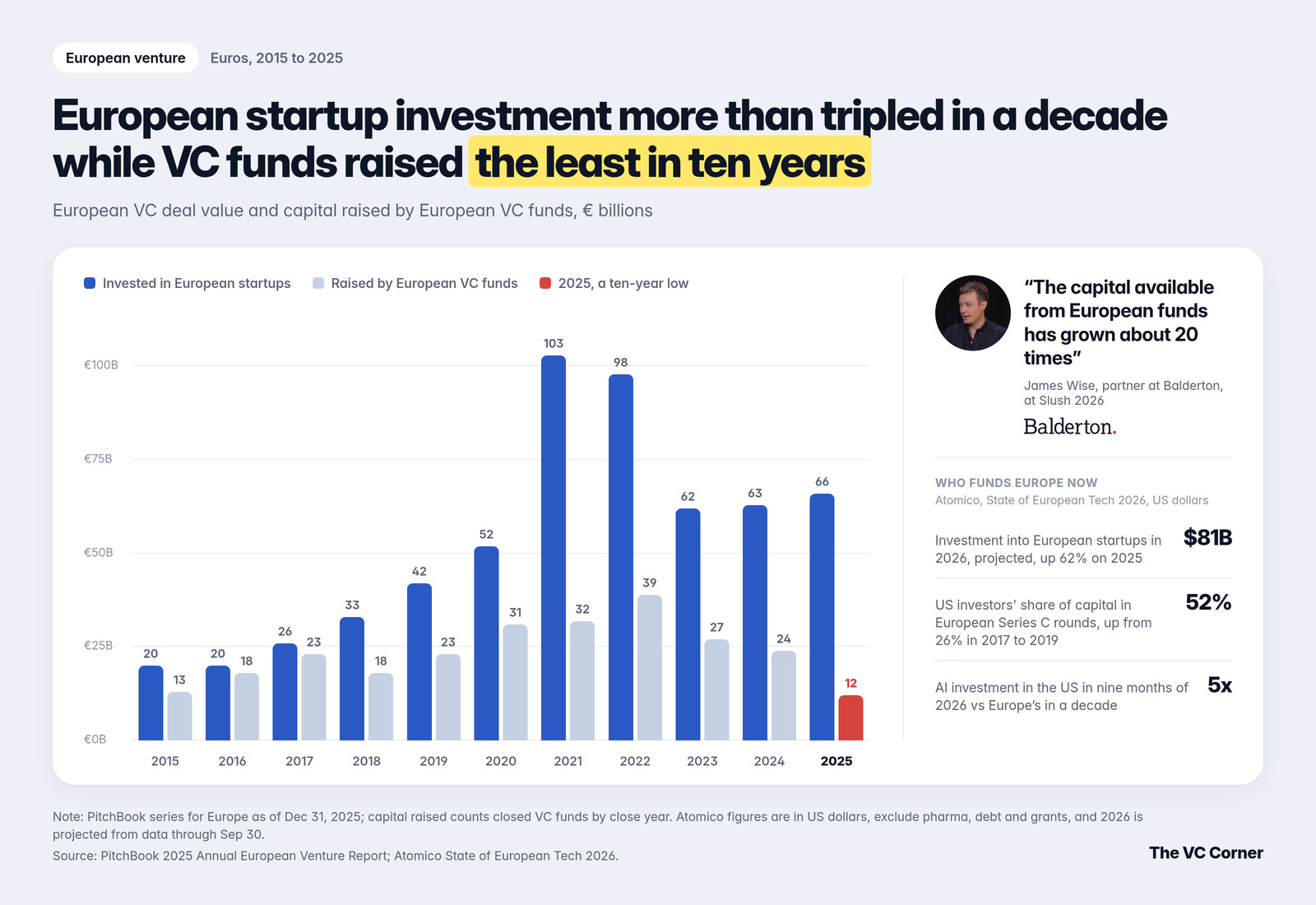
I would check the 20x against the data. PitchBook shows European VC funds raised €13.4bn in 2015, peaked at €38.8bn in 2022 and fell to €12.0bn in 2025, the lowest in a decade. Money invested in European startups moved the other way, from €19.8bn in 2015 to €66.2bn in 2025, and Atomico’s State of European Tech projects $81bn for 2026, up 62%. The gap gets filled from abroad: Atomico says US investors supplied 52% of Series C money. Founders have far more capital to draw on than in 2012, as James says, and a growing share of it is American.
When founders ask why they should work with him, James asks them to call every founder he has worked with. That includes the companies that stalled before anyone heard of them, the big wins, the IPOs and the acquisitions, across Balderton’s 25 years.
Venture runs on fund lives of 10 to 15 years, so a reputation has time to compound, and he says Balderton’s competitive position rests on it.
If you’ve got one great founder say, I really trust Balderton and I really trust James, that helps you get more great founders.
Founders can run that check on any fund before they sign. Our list of the 100 best-performing VC firms is a good place to pick who to call.
What I’m taking from Slush
Guillermo and I run GR Angel together, and Slush is where we do these interviews every year. James gave us the longest view of the week: a firm that judges itself on 10-year returns and earns most of its value from one check written in 2015.
If you are raising in Europe, take two things from him. Show the obsession early, through the five whys and the event everyone else skipped, and say out loud that you want to build a company that makes a lot of money.
Find the investors
80 Seed AI Funds That Invested in the Last 180 Days: The Scored Sheet and the Syndicate Map
973 VC Funds Under $200M, Cleaned and Scored: The Fresh Fund Sheet and the Fit Finder Prompt
Decks and memos from companies that went big
The Fund That Backed Revolut at £300K. Now Raising $320M for What Comes Next
Monzo Just Posted £1.7B in Revenue. Here Is the Pitch Deck That Started It All
Inside Synthesia: The AI Startup That Just Turned Down Adobe’s $3B Offer
SpaceX: How to Build and Pitch the Most Ambitious Company of Our Time